Table of Contents >> Show >> Hide
- Who Is Colby Tunick?
- Why This Profile Matters Beyond the Icebreakers
- The Real Problem He Is Trying to Solve: Insurance Servicing
- AI Should Make Agencies More Human, Not Less
- What Colby Tunick Represents for the Next Generation of Insurance Leadership
- Five Lessons Agencies Can Take from His Story
- Extended Reflections: Real-World Experiences from the Modern Agency Front Line
- Conclusion
- SEO Tags
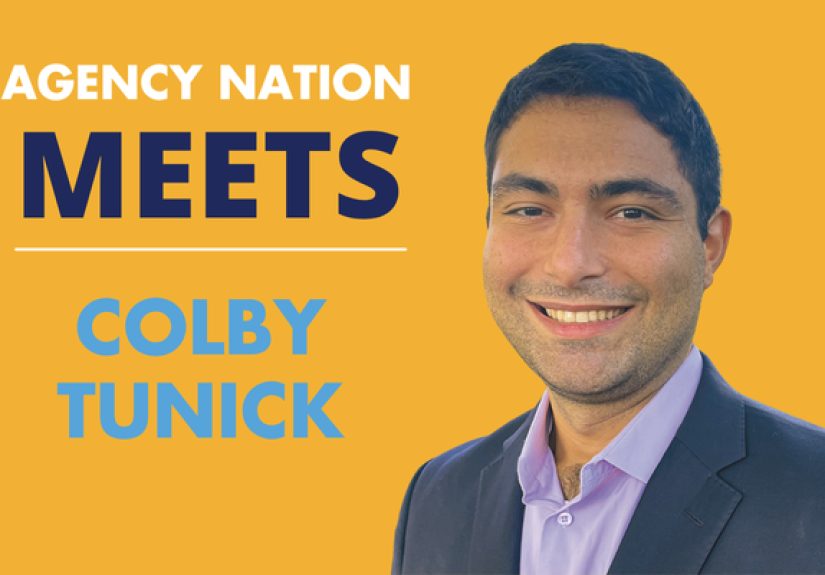
If you only met Colby Tunick through a quick Agency Nation-style icebreaker, you might remember the zombie-apocalypse oil-rig strategy, the rye old fashioned, the trail running, the dad joke that lands with all the force of a fish hitting a wall, and the admission that sometimes a piña colada is the correct strategic decision. Fair enough. But underneath the playful answers sits a serious story about where the independent insurance business is headed.
Tunick is part operator, part builder, and part translator between two worlds that do not always speak the same language: the human, relationship-driven reality of insurance and the machine-powered future of automation, analytics, and AI. That combination makes him a compelling figure for an IA Magazine-style profile because his career says something larger than, “Here is a smart founder doing interesting things.” It says this: the modern agency is under pressure, the old workflow is creaking, and the next generation of leaders is trying to save time without sacrificing trust.
In other words, Colby Tunick is not interesting only because he works in insurance technology. He is interesting because the problems he is trying to solve are the same ones agency owners, producers, account managers, and service teams wrestle with every week. How do you keep clients from drifting away? How do you create room for growth when service work eats the calendar alive? How do you use AI without turning your agency into a cold, robotic help desk that sounds like it was raised by a spreadsheet?
Who Is Colby Tunick?
Colby Tunick is the founder and CEO of ReFocus, an insurance technology company built around a bold idea: servicing should not consume so much agency energy that growth becomes harder every time the business succeeds. Before launching deeper into insurtech, he worked at the California Earthquake Authority, where he handled change-management work inside the Project Management Office. Earlier chapters of his career included defense consulting and the space sector, which is a sentence that almost sounds made up by a career counselor trying to keep things exciting.
That background matters. People who come into insurance from outside the traditional pathway often notice what insiders have normalized. They see the friction. They notice the manual handoffs, the duplicated effort, the hidden delays, the “this is just how we’ve always done it” processes that quietly drain profit and morale. Tunick appears to bring exactly that outsider-insider mix: enough operational seriousness to understand insurance, and enough distance to question why agencies still spend so much time wrestling with preventable work.
He also comes across as deeply human, which is not a small detail in a sector currently obsessed with AI. He runs trails to stay sane. He reads with his family. He mountain bikes. He has a household with a dog and two cats. He is writing fiction. He is 3D-printing a remote-control submarine, which is not essential to underwriting success but does suggest a brain that likes building things just to see whether they can be made better, faster, or a little more fun.
Why This Profile Matters Beyond the Icebreakers
The charm of an Agency Nation interview is that it sneaks substance in through the side door. A favorite movie, a karaoke song, a bad biking wipeout, a goofy apocalypse plan: these details make a person memorable. But with Tunick, the personality profile also becomes a clue. His answers suggest someone who is practical, curious, slightly irreverent, and comfortable with complexity. Those qualities fit the exact kind of leader the agency system needs right now.
Independent agencies are navigating a business environment that rewards better communication, cleaner operations, smarter use of data, and more visible value to clients. The old model of “renew it, remarket it, answer the phone, survive the week, repeat” is no longer enough. Clients expect responsiveness. Teams are stretched thin. Producers want more time to sell. Service staff want fewer repetitive tasks and less administrative drag. Owners want growth, but not the kind of growth that feels like buying a treadmill that gets faster every quarter.
That is where Tunick’s story becomes relevant. He is not selling the fantasy that technology eliminates the need for agents. He is making the more believable argument that technology should eliminate the work that prevents agents from being as valuable as they can be. That is a much better story. It is also a much more realistic one.
The Real Problem He Is Trying to Solve: Insurance Servicing
If there is one central theme tied to Tunick’s work, it is this: agencies often grow into a service burden that quietly punishes success. The bigger the book, the more touchpoints, renewals, follow-ups, document handling, remarketing decisions, and account reviews pile up. Teams become busy in the least glamorous way possible. Everybody is moving. Not everybody is moving forward.
This is why Tunick’s “driverless car of insurance servicing” idea lands so well as a metaphor. He is describing a future in which routine service activity becomes far more automated, more predictive, and more intelligently prioritized. Not because humans are optional, but because humans are expensive, limited, and best used where judgment actually matters.
That distinction is everything. AI in insurance should not be measured by how many tasks it can touch. It should be measured by whether it returns time, improves consistency, helps agencies spot at-risk accounts earlier, uncovers better rounding opportunities, and allows client-facing professionals to spend more energy on advice, explanation, and relationship management. If it cannot do that, then it is probably just an expensive gadget wearing a business-casual blazer.
Tunick’s broader argument also reflects a growing consensus across the industry: agencies need technology that supports retention, communication, onboarding, and workflow efficiency, but they also need clean processes and usable data before the shiny tools can actually deliver. You cannot pour AI over operational chaos and call it digital transformation. That is not transformation. That is garnish.
AI Should Make Agencies More Human, Not Less
One of the smartest ways to read Tunick’s profile is to resist the lazy interpretation. He is not standing for a future where the machine does the relationship work. He is pointing toward a future where the machine does the repetitive prep work, so the relationship work gets better.
That matters because insurance is not an abstract product. It lives in moments of confusion, urgency, transition, and risk. Clients call when premiums move, when exposure changes, when a claim arrives, when they buy something new, when regulations shift, when they are worried, or when they simply do not understand what is happening. In those moments, nobody wants to feel processed. They want to feel guided.
The best use of AI in this environment is not to impersonate empathy. It is to create more room for actual empathy. Let the software summarize the account, flag the likely retention risk, surface policy gaps, prepare the file, and prompt the next best conversation. Then let a real person step in and do what great advisors do: listen, explain, recommend, reassure, and sometimes say, “No, you really do need that coverage.”
This is also why Tunick’s comments around internal process discipline are so important. Agencies cannot treat AI as a party trick. If there is no standard workflow, no clear ownership, no trusted data, and no business goal attached to the implementation, the result is usually a noisy pilot program followed by quiet disappointment. The technology gets blamed, but the real culprit is often a weak operating system inside the organization.
What Colby Tunick Represents for the Next Generation of Insurance Leadership
Tunick also fits a larger pattern that is reshaping the independent channel: leadership is becoming more hybrid. The next influential voices in insurance are not all coming from one classic mold. Some are producers. Some are owners. Some are operators. Some are technologists. Some can move between all of those worlds. The common thread is not title; it is usefulness.
Useful leaders help agencies answer practical questions. Where are we wasting time? Which clients need attention now? Which workflows should never be manual again? Which tasks demand a human? Which ones only flatter a human ego while secretly wasting payroll? That is the kind of thinking that creates resilient agencies.
There is also something culturally important in Tunick’s style. He does not present modernization as a war on people. He presents it as a way to preserve what people do best. That framing matters in a business where many teams are already tired, already stretched, and already suspicious of being told that the next software purchase will magically fix everything by Tuesday.
Good agency leadership in 2026 requires emotional credibility as much as technical ambition. You need both. Talk only about innovation, and your team hears buzzwords. Talk only about relationships, and your agency risks falling behind. The strongest leaders can explain why better systems create better service, and why better service protects both growth and culture.
Five Lessons Agencies Can Take from His Story
1. Start with the pain point, not the product.
The most convincing part of Tunick’s approach is that he focuses on a real operational choke point: servicing overload. Agencies should do the same. Do not begin with, “We need AI.” Begin with, “Where are we losing time, money, consistency, or retention?”
2. Retention is not passive.
Agencies often treat retention as the happy result of being generally competent. That is not enough anymore. Retention is increasingly tied to communication, onboarding, timing, responsiveness, and the ability to engage clients before dissatisfaction becomes visible.
3. Clean processes beat clever demos.
If the handoffs are unclear and the data is unreliable, even a brilliant tool will underperform. Agencies need process discipline before they need applause-worthy screenshots.
4. Human expertise still wins the hard conversations.
Complex risk, difficult claims, nuanced coverage decisions, and sensitive client moments still belong to experienced professionals. Technology should tee up those interactions, not flatten them.
5. Personality still matters.
One reason Agency Nation-style features work so well is that they remind readers insurance is a people business. Clients remember clarity, confidence, warmth, and judgment. Teams remember humor, perspective, and leadership that feels human. Never automate yourself into being forgettable.
Extended Reflections: Real-World Experiences from the Modern Agency Front Line
To really understand why Tunick’s story resonates, it helps to look at the kinds of experiences agencies are having every day. Picture a mid-sized independent agency on a renewal-heavy week. The phones are ringing, inboxes are breeding overnight, account managers are chasing carrier updates, and producers are trying to have proactive client conversations while also being dragged into service issues that were never supposed to land on their desks. Nobody in that office is lazy. Everybody is busy. But busyness and progress are not the same thing.
Now picture what often happens next. A valuable client calls with a simple question, but the account history is scattered across systems and email threads. Someone spends ten minutes gathering context before spending five minutes answering the question. Later, another client with a real cross-sell opportunity gets less attention because the team is buried in routine work. By Friday afternoon, the agency has worked heroically and still feels behind. That experience is not rare. It is the norm in many firms.
This is exactly why Tunick’s focus on servicing automation feels less like futuristic hype and more like overdue housekeeping. Agencies do not need technology for bragging rights. They need relief. They need tools that can summarize accounts, prioritize outreach, identify likely churn, support better timing, and reduce the amount of manual hunting and pecking that steals energy from meaningful conversations. When those improvements happen, the culture changes too. People feel less like task jugglers and more like professionals.
There is also a recruiting and retention angle here that agency leaders should not ignore. Younger talent does not dream of entering a career where the daily workflow feels like digital archaeology. If every answer requires searching four systems, opening twelve browser tabs, and whispering a small prayer to the download button, then the agency has a workflow problem, not a motivation problem. Smarter systems make the business more attractive to the next generation because they allow new hires to learn the craft faster and contribute sooner.
Another common agency experience is the communication gap. Clients often believe their broker should anticipate needs, explain changes early, and make renewal season feel less like a surprise attack. Agencies know that too, but the challenge is scale. A team may genuinely want to provide more proactive outreach, better onboarding, and more frequent check-ins, yet still struggle because the operational load is already too heavy. This is where a Tunick-style vision becomes practical. Better data, better prompts, and better automation can make proactive service possible at scale instead of leaving it as a noble intention scribbled on a whiteboard.
And then there is the emotional side of agency work, which technology vendors sometimes underestimate. Insurance professionals are trusted because they help people make decisions under uncertainty. That trust grows when the advisor sounds prepared, informed, and calm. If technology helps the advisor enter the conversation with better context, cleaner recommendations, and a clearer picture of the account, then the client experience improves without becoming less human. In fact, it often becomes more human because the advisor is not distracted by clerical chaos.
That is why Colby Tunick’s profile works as more than a personality feature. It reflects the lived experience of an industry trying to protect the human side of the business by redesigning the operational side of the business. The agencies that understand that balance will not just move faster. They will probably feel better to work in, easier to buy from, and harder to leave.
Conclusion
Colby Tunick makes for a memorable Agency Nation subject because he is both entertaining and relevant. Yes, the zombie plan is funny. Yes, the dad joke is painfully effective. Yes, the remote-control submarine is delightfully unhinged. But the lasting value of his story is not the personality trivia. It is the business signal.
His career sits at the intersection of three forces reshaping independent insurance agencies: rising service expectations, increasing operational strain, and a more serious, less theatrical phase of AI adoption. The agencies that thrive will not be the ones that chase every trendy tool. They will be the ones that identify real workflow pain, fix the process, use data intelligently, and let technology create more time for high-trust human work.
That is the big takeaway from “Agency Nation Meets: Colby Tunick.” In a business built on relationships, the future probably does not belong to agencies that become less human. It belongs to agencies that use technology so well that their people finally have the time to act more human than ever.