Table of Contents >> Show >> Hide
- What Is a Kilonova, Exactly?
- Could a Kilonova Really “End All Life” on Earth?
- How Close Is “Too Close” for a Kilonova-Related Event?
- How Likely Is It That This Happens in Our Lifetime?
- Would We Get Any Warning?
- So What Would Actually Happen to Earth?
- Why Scientists Study Kilonovae Anyway (Even Though They’re Scary)
- FAQ: The Questions Everyone Asks (Right After “Wait, What?”)
- Experiences: Living With the Idea That the Universe Has “Surprise Boss Fights” (≈)
If you’ve ever looked up at the night sky and thought, “Wow, that’s peaceful,” the universe would like to respond with a gentle, respectful cough and a reminder: space is basically a fireworks factory with a customer support line that never answers.
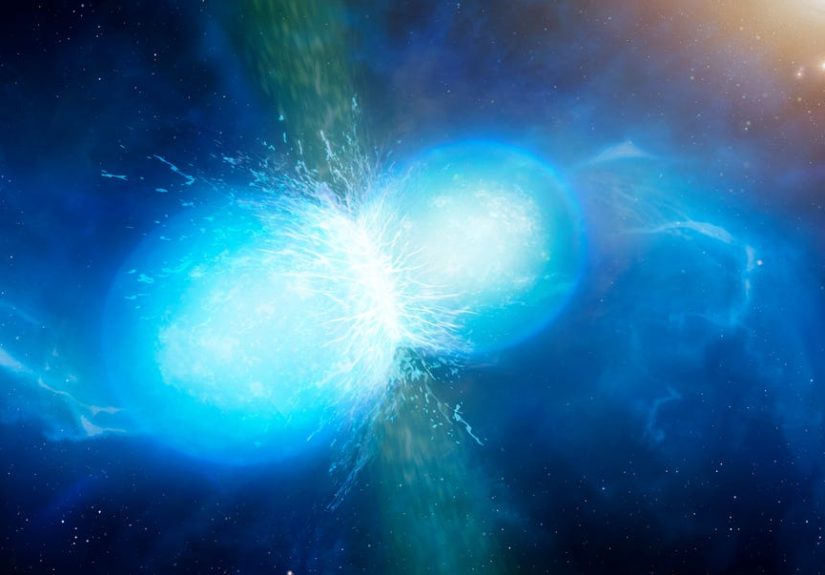
One of the flashiest cosmic events we know about is a kilonovaa short-lived blaze of light sparked when two neutron stars collide. It’s beautiful, scientifically priceless, and (in the wrong neighborhood) potentially catastrophic. The headline claim“a nearby kilonova could end all life on Earth”is the kind of sentence that makes you sit up straight and stop scrolling. So let’s unpack what’s real, what’s exaggerated, and what “nearby” actually means when you’re talking about a galaxy-sized playing field.
What Is a Kilonova, Exactly?
The neutron-star merger: tiny objects, ridiculous energy
A neutron star is what you get after a massive star dies and its core collapses so completely that protons and electrons fuse into neutrons. The result is a city-sized sphere with more mass than the Sun. It’s dense enough that, in the astrophysical sense, it basically has no chill. Put two neutron stars in a binary system and time becomes their enemy: as they orbit, they lose energy via gravitational waves, spiral inward, and eventually collide.
Why “kilo”-nova?
The name is a brightness clue. A kilonova is often described as roughly 1,000 times brighter than a typical nova (a thermonuclear flare-up on a white dwarf), but generally dimmer and faster than a supernova. In other words: it’s the “limited-edition drop” of cosmic explosionsbrief, intense, and gone before you finish explaining it to your group chat.
Kilonovae matter for a reason that’s almost poetic: these collisions forge many heavy elementsthink gold, platinum, and other r-process elementsand fling them into space. Your jewelry has a dramatic origin story. So does the metal in your phone. The universe is nothing if not committed to the bit.
Could a Kilonova Really “End All Life” on Earth?
Here’s the key twist: the kilonova’s visible light is not the scary part. The dangerif there is onecomes from what can accompany a neutron-star merger: a short gamma-ray burst (sGRB), plus additional high-energy radiation and particle fallout. Think of the kilonova as the beautiful “after-party lighting,” and the gamma rays as the “please do not stand directly in front of the jet engine.”
The real threat: a gamma-ray burst aimed at Earth
Many neutron-star mergers are linked to short gamma-ray burstsultra-energetic flashes of gamma rays that typically last less than a couple seconds. The important detail is direction. Gamma-ray bursts are thought to be produced in narrow, relativistic jets. If you’re not in the beam, you may see a weaker signal or an “off-axis” afterglow. If you are in the beam… well, you’ve won the worst lottery.
A direct hit from a sufficiently nearby GRB could dump enough high-energy radiation into Earth’s upper atmosphere to cause major chemical changes, especially ozone depletion. Ozone is Earth’s sunscreen. Without it, the Sun’s UVB radiation becomes far more damaging to living tissueparticularly plankton and other organisms that form the base of ocean food webs.
Atmospheric chemistry: how gamma rays can break a planet’s “skin”
The leading “planetary damage” mechanism is not that gamma rays cook the surface like a microwave. Instead, gamma rays ionize the atmosphere, triggering reactions that reduce stratospheric ozone and create nitrogen oxides. Less ozone means more UVB reaches the surface for years, increasing DNA damage and stressing ecosystems. That’s the type of chain reaction that can contribute to mass-extinction-level disruptions.
Would it literally end all life? That’s where the dramatic headline starts to wobble. Even severe ozone loss and ecosystem collapse doesn’t guarantee total sterilization. Life is stubborn. Microbes in deep oceans, underground ecosystems, and extremophiles can survive conditions that would absolutely ruin your weekend plansand your species. A nearby, on-axis GRB could plausibly cause global catastrophe, but “every single living thing, gone” is a bigger claim than the evidence comfortably supports.
The long tail: cosmic rays and delayed effects
Some scenarios also consider longer-term particle radiation (cosmic rays accelerated by the blast and its afterglow) arriving much later. Compared to the initial gamma flash, these effects are less like a single punch and more like a stressful, extended medical bill for the biosphere. The details depend on distance, jet structure, magnetic fields, and how efficiently particles are accelerated.
How Close Is “Too Close” for a Kilonova-Related Event?
In astronomy, “nearby” is a word that can mean anything from “in our solar system” to “in the same galaxy, give or take a few thousand light-years.” For biological risk discussions involving gamma-ray bursts, research commonly talks about distances on the order of kiloparsecs. One kiloparsec (kpc) is about 3,260 light-years.
Studies modeling atmospheric impacts suggest that a GRB within a few kiloparsecs could cause substantial ozone depletion, with the severity depending on burst energy and how directly the jet is aimed at Earth. That’s the “danger zone” most often cited in the scientific conversation. Closer events raise the stakes; farther events fade rapidly in impact.
A useful way to think about this is not as a clean “safe vs. unsafe” line, but as a sliding scale: the closer and more directly aligned the jet, the worse the atmospheric and ecological consequences. And because the jet is narrow, alignment is the rare, crucial factor.
How Likely Is It That This Happens in Our Lifetime?
The honest answer: extraordinarily unlikely. Neutron-star mergers in a Milky Way–type galaxy are not everyday events. Estimates vary, but they’re often discussed on the scale of tens per million years for our galaxymeaning one every tens of thousands of years, give or take. That alone sounds spooky until you remember how huge the Milky Way is.
A quick back-of-the-envelope risk check
Let’s do a rough, sanity-check style estimate (the kind scientists do on whiteboards, napkins, and the backs of conference badges):
- Step 1: Assume the Milky Way has a disk radius of ~50,000 light-years (~15 kpc).
- Step 2: Suppose the “serious ozone impact” distance is a few kpc (say 1–3 kpc) and the GRB jet must point at Earth.
- Step 3: Even if mergers happen occasionally in the galaxy, only a fraction occur close enough to us.
- Step 4: Only a small fraction of jets point our way because the beam is narrow.
The beaming factor is where the odds really collapse. Observational and modeling work often places short-GRB jet opening angles in the “few degrees to a few tens of degrees” range, which means only a few percent (or less) of bursts point at any given target. Combine that with the low rate of local-enough mergers and you land in “rare over geological timescales,” not “add to your Tuesday planner.”
Would We Get Any Warning?
This is the part where science fiction likes to swoop in with a heroic countdown. Reality is less cinematic. If a neutron-star merger happened in our galaxy, we would detect the gravitational waves when they reached Earth, not years in advance. Gravitational waves travel at the speed of light, so detection is essentially “the news arriving,” not “the event being scheduled.”
The good news is that our detection networks are fast. In the 2017 neutron-star merger event (GW170817), gamma rays were detected just seconds after the gravitational-wave signal, and telescopes worldwide scrambled to observe the afterglow and kilonova. That kind of coordination is now the blueprint for multi-messenger astronomy.
The bad news is that “fast” still means “we might get seconds to minutes of heads-up” for the first flashgreat for telescopes, not great for biology. You can’t apply sunscreen to the stratosphere in five minutes. (If you can, please call NASA. And your dermatologist.)
So What Would Actually Happen to Earth?
In a worst-case, nearby, on-axis scenario, the most plausible chain of harm looks like this:
- High-energy photons arrive: A short, intense burst of gamma rays hits the upper atmosphere.
- Atmospheric chemistry shifts: Ionization triggers reactions that deplete ozone and create nitrogen oxides.
- More UVB reaches the surface: For years, UV stress increasesespecially dangerous for surface and near-surface ecosystems.
- Food webs destabilize: Plankton declines can ripple upward through ocean ecosystems; agriculture and terrestrial ecosystems could also suffer.
- Climate side effects are possible: Depending on nitrogen compounds and aerosol effects, cooling or other changes could add stress.
In other words, the danger is less “instant planet incineration” and more “multi-year ecological breakdown with mass die-offs.” That’s still horrifying, but it’s a different category than “Earth becomes a sterile rock.”
Why Scientists Study Kilonovae Anyway (Even Though They’re Scary)
Because they answer enormous questions: Where do heavy elements come from? How do jets form? What is matter like at nuclear density? How do gravitational waves connect to light and particles? Every kilonova we observe helps refine models of neutron stars, nuclear physics, and cosmic chemical evolution.
Also, studying rare dangers is part of being a technologically advanced species. We can’t stop every cosmic hazard, but we can understand themand that knowledge tends to spill into other fields: atmospheric chemistry, radiation physics, detection networks, and better ways to monitor the sky.
FAQ: The Questions Everyone Asks (Right After “Wait, What?”)
Is a kilonova the same as a supernova?
Nope. A supernova is the explosive death (or thermonuclear disruption) of a star. A kilonova is the luminous aftermath of a neutron-star merger. Different engines, different timelines, different kinds of debristhough both are spectacular in the “please do not stand near it” way.
Would we see it in the sky?
If a kilonova happened in our galaxy, yesvery likely. It could appear as a “new star” brightening and fading over days. The exact brightness depends on distance and dust, but it would be an all-hands-on-deck event for astronomers and observatories.
Has anything like this affected Earth before?
Some researchers have explored whether gamma-ray bursts could be linked to past mass extinctions, largely because the ozone-depletion mechanism has the right kind of global fingerprint. But pinning a specific extinction on a specific astrophysical event is difficult. Earth’s history is messy, and catastrophes rarely come with neat name tags.
Experiences: Living With the Idea That the Universe Has “Surprise Boss Fights” (≈)
Most of us will never “experience” a kilonova in the direct, personal senseand that’s something you can celebrate without guilt. But there’s a very real human layer to this topic: the experience of knowing such events exist, of watching scientists chase them, and of feeling your sense of scale get politely rearranged.
One kind of experience is the modern astronomer’s version of adrenaline: the alert. Imagine you’re on a team monitoring gravitational-wave detectors. The data pipeline flags a candidate signal. Phones light up. Slack channels (or whatever the universe’s current group chat is) start moving faster than you can read. You’re not thinking, “This will end life on Earth.” You’re thinking, “Is it real?” and “Can we get telescopes on target?” because this is how you catch the universe in the act. There’s a strange mix of calm procedure and sheer awe: check the statistics, verify the waveform, notify partners, coordinate observations. It’s not a Hollywood countdownit’s disciplined curiosity with a pulse.
Another experience belongs to the rest of us: the perspective shift. You read that neutron stars colliding can forge gold, and suddenly your wedding ring feels less like jewelry and more like a souvenir from a cosmic demolition derby. You hear that gamma-ray bursts are narrowly beamed, and you start imagining the Milky Way as a dark room with invisible laser pointers randomly sweeping past. Your brain does that thing where it tries to make a giant concept feel manageable by turning it into a metaphor. (“So… space is a lighthouse, but with doom?”) Close enough.
Then there’s the backyard stargazer’s experience: looking up and realizing that most of what you see is ancient light. If a kilonova went off “nearby” in our galaxy, the photons could arrive in a way that makes the sky feel suddenly activelike the universe is not just a background, but a live event. That thought can be unsettling, sure, but it’s also oddly grounding. It reminds you that Earth is not the center of the story, and also that Earth is unbelievably good at hosting life despite the chaos around it.
Finally, there’s the experience of talking about this at a dinner table (or writing about it online) and watching the emotional arc in real time: curiosity → alarm → questions → relief. Because the ending matters: the science says this is possible in principle, but the odds are tiny on human timescales. The most realistic “kilonova experience” you’ll have is learning about one detected far away, seeing a false-color image, and feeling that jolt of wonder: two dead stars collided, made heavy elements, shook spacetime, and wetiny creatures on a small planetnoticed.
And if that doesn’t make you want to look up more often, I don’t know what will. (Other than maybe the Wi-Fi going out.)