Table of Contents >> Show >> Hide
- What Crystallization Means in Organic Chemistry
- Before You Start: Choose the Right Solvent
- 1. Single-Solvent Recrystallization
- 2. Mixed-Solvent Recrystallization
- 3. Slow Cooling Crystallization
- 4. Slow Evaporation
- 5. Anti-Solvent Addition
- 6. Vapor Diffusion
- 7. Liquid-Liquid Layer Diffusion
- 8. Seeding and Scratching
- 9. Sublimation Crystallization
- Common Problems When Crystallizing Organic Compounds
- Safety Notes for Organic Crystallization
- Practical Experiences: What Actually Helps Crystals Grow
- Conclusion
Crystallizing organic compounds is one of those laboratory skills that looks almost magical from the outside: a cloudy liquid sits quietly in a flask, and thenlike tiny architectural blueprints obeying orderssolid crystals begin to appear. In reality, crystallization is not magic. It is chemistry, patience, solvent choice, temperature control, and occasionally the humble glass rod playing the role of motivational coach.
In organic chemistry, crystallization is commonly used to purify solid compounds, grow crystals for structure analysis, improve product handling, and separate one compound from a mixture. The basic idea is simple: dissolve the compound, create conditions where it becomes less soluble, and let molecules arrange themselves into an orderly crystal lattice. The tricky part is doing it cleanly without turning your precious sample into oil, powder, tar, or the mysterious brown goo that haunts every lab notebook.
This guide explains 9 ways to crystallize organic compounds, from classic single-solvent recrystallization to vapor diffusion, seeding, and sublimation. Whether you are purifying benzoic acid, coaxing an aromatic compound into crystals, or trying to grow a single crystal good enough for X-ray diffraction, these methods will help you understand what is happening inside the flaskand why sometimes the flask behaves like it has a personality problem.
What Crystallization Means in Organic Chemistry
Crystallization is the formation of a solid crystal from a solution, melt, or vapor. For organic compounds, the most common route is crystallization from solution. A compound is dissolved in a suitable solvent, then the solution is made supersaturated by cooling, evaporation, adding another solvent, or changing conditions. Once supersaturation occurs, molecules begin to gather into nuclei. If those nuclei survive and grow, crystals form.
The reason crystallization purifies organic compounds is beautifully practical. Molecules of the desired compound fit best into their own crystal lattice, while many impurities are either too soluble to join the crystal or too structurally different to fit neatly. Think of it like trying to sneak a sofa into a room designed for folding chairs. The crystal lattice notices.
Before You Start: Choose the Right Solvent
Solvent selection is the heart of crystallization. A good crystallization solvent dissolves the organic compound well when hot but poorly when cold. It should not react with the compound, should leave impurities either fully dissolved or insoluble enough to filter away, and should be reasonably easy to remove during drying.
Common solvents for organic crystallization include water, ethanol, methanol, ethyl acetate, acetone, acetonitrile, toluene, hexane, heptane, dichloromethane, and mixtures such as ethanol-water or ethyl acetate-hexane. The best choice depends on polarity, hydrogen bonding, molecular structure, melting point, and impurity profile. In short: the solvent and solute need chemistry, but not too much chemistry.
1. Single-Solvent Recrystallization
Single-solvent recrystallization is the classic method every organic chemistry student meets, usually while nervously holding a hot Erlenmeyer flask. The compound is dissolved in the minimum amount of hot solvent, insoluble impurities are removed if necessary, and the solution is allowed to cool slowly. As the temperature falls, the compound becomes less soluble and crystallizes.
How it works
The key principle is temperature-dependent solubility. Many organic solids dissolve much better in hot solvent than cold solvent. For example, benzoic acid can be recrystallized from hot water because it is significantly more soluble at high temperature than at room temperature. Acetanilide is often recrystallized from water or ethanol-water systems, depending on the sample and lab procedure.
Best for
This method is ideal for solid organic compounds with a strong solubility difference between hot and cold solvent. It is especially useful for routine purification after synthesis.
Practical tip
Use the minimum amount of hot solvent needed to dissolve the compound. Too much solvent leaves too much product dissolved after cooling, which lowers recovery. Too little solvent creates a gritty mess that filters poorly. The sweet spot is hot, clear, and slightly dramatic.
2. Mixed-Solvent Recrystallization
Mixed-solvent recrystallization uses two miscible solvents: one that dissolves the compound well and one that dissolves it poorly. The compound is first dissolved in a small amount of the good solvent, usually hot. Then the poor solvent is added slowly until the solution becomes cloudy. A little heat may be used to clear the cloudiness, and the solution is then cooled to grow crystals.
How it works
This technique adjusts solubility by changing the solvent environment. A common pair is ethanol and water. Ethanol dissolves many organic compounds better than water, while water reduces solubility and encourages crystallization. Another common pair is ethyl acetate and hexane, especially for moderately nonpolar organic molecules.
Best for
Mixed-solvent recrystallization is excellent when no single solvent gives the right hot-cold solubility behavior. It is also useful for compounds that dissolve too well in one solvent but barely dissolve in another.
Practical tip
The two solvents must be miscible. If they form layers, you are no longer doing mixed-solvent recrystallizationyou are hosting a tiny solvent divorce in a test tube.
3. Slow Cooling Crystallization
Slow cooling crystallization is a gentler version of recrystallization designed to grow larger, cleaner crystals. Instead of rapidly chilling the hot solution in an ice bath, the solution is allowed to cool gradually from hot to room temperature, and only later may it be placed in an ice bath to maximize yield.
How it works
Slow cooling gives molecules more time to arrange themselves properly. Rapid cooling creates many nucleation sites at once, often producing small crystals or powder. Slow cooling favors fewer nuclei and better crystal growth, which is helpful when purity, crystal size, or crystal appearance matters.
Best for
This method is useful for compounds that crystallize readily but tend to form fine powder when cooled too quickly. It is also a good starting point when growing crystals for melting point analysis or visual inspection.
Practical tip
Do not disturb the flask while it cools. Crystals enjoy peace and quiet. Shaking the flask too soon can trigger uncontrolled nucleation, and your elegant crystals may become chemical snow.
4. Slow Evaporation
Slow evaporation is one of the simplest ways to crystallize organic compounds, especially when the goal is to grow larger crystals rather than quickly purify a large sample. The compound is dissolved in a suitable solvent at room temperature or slightly warm conditions, then the solvent is allowed to evaporate slowly.
How it works
As solvent evaporates, the solution becomes more concentrated. Eventually, it reaches supersaturation and crystals begin to form. Because the process is slow, molecules often have time to organize into larger, well-defined crystals. This is why slow evaporation is commonly used when attempting to obtain crystals for X-ray crystallography.
Best for
Slow evaporation works well for compounds that are stable in air and soluble in volatile organic solvents such as dichloromethane, acetone, ethyl acetate, or methanol. It is not ideal for compounds that oxidize, absorb water, or decompose while waiting around like they are in a chemistry-themed waiting room.
Practical tip
Cover the vial loosely with perforated film, a watch glass, or foil with small holes. You want slow evaporation, not a dust collection contest.
5. Anti-Solvent Addition
Anti-solvent crystallization involves dissolving the organic compound in a good solvent and then slowly adding a poor solvent, also called an anti-solvent. As the anti-solvent changes the overall solvent composition, the compound becomes less soluble and crystallizes.
How it works
Suppose a compound dissolves well in acetone but poorly in water. If water is slowly added to an acetone solution, the compound may begin to crystallize as the mixture becomes less favorable for solubility. In pharmaceutical and fine chemical work, anti-solvent crystallization is widely used because it can be controlled by addition rate, temperature, concentration, and mixing.
Best for
This method is useful for compounds that are too soluble in common solvents and refuse to crystallize by cooling alone. It can also improve recovery when a product remains dissolved after standard recrystallization.
Practical tip
Add the anti-solvent slowly. Dumping it in all at once may cause oiling out or precipitation of amorphous solid instead of crystals. Organic compounds do not appreciate being startled.
6. Vapor Diffusion
Vapor diffusion is a favorite method for growing single crystals of organic compounds. A small vial containing the compound dissolved in a good solvent is placed inside a larger sealed container holding a volatile anti-solvent. Over time, vapor from the anti-solvent diffuses into the sample vial, slowly reducing solubility and encouraging crystal growth.
How it works
For example, a compound may be dissolved in dichloromethane in a small vial, while hexane or diethyl ether is placed in the outer container. As the anti-solvent vapor enters the inner vial, the solvent composition changes gradually. This slow change can produce better crystals than direct anti-solvent addition.
Best for
Vapor diffusion is excellent for small amounts of material, air-stable compounds, and crystal growth for structural analysis. It is especially helpful when direct mixing gives powder or oil.
Practical tip
Use clean vials and avoid bumping the setup. A vapor diffusion experiment is basically a tiny spa retreat for molecules. Loud handling ruins the mood.
7. Liquid-Liquid Layer Diffusion
Liquid-liquid diffusion, also called layering, uses two solvents with different densities or carefully controlled mixing behavior. The compound is dissolved in one solvent, and a second solvent is gently layered above or below it. As the solvents slowly diffuse into each other, the compound gradually becomes less soluble and crystallizes near the interface.
How it works
A common approach is to dissolve the compound in a good solvent such as dichloromethane, then carefully layer hexane or ether on top. The interface between the solvents becomes a slow-moving zone of changing solubility. Crystals may appear along the boundary, often with better shape than crystals produced by fast precipitation.
Best for
This method is useful for growing crystals when evaporation is too slow, cooling gives poor results, or vapor diffusion needs more direct solvent contact. It is especially common in research labs working with small organic molecules and coordination compounds.
Practical tip
Add the top solvent slowly down the side of the vial or through a pipette. If the layers mix immediately, the method becomes anti-solvent addition with extra steps and slightly more disappointment.
8. Seeding and Scratching
Seeding and scratching are not complete crystallization methods by themselves; they are ways to start crystallization when a supersaturated solution refuses to cooperate. Sometimes a solution is ready to crystallize but lacks a nucleation site. That is when a seed crystal or scratched glass surface can help.
How it works
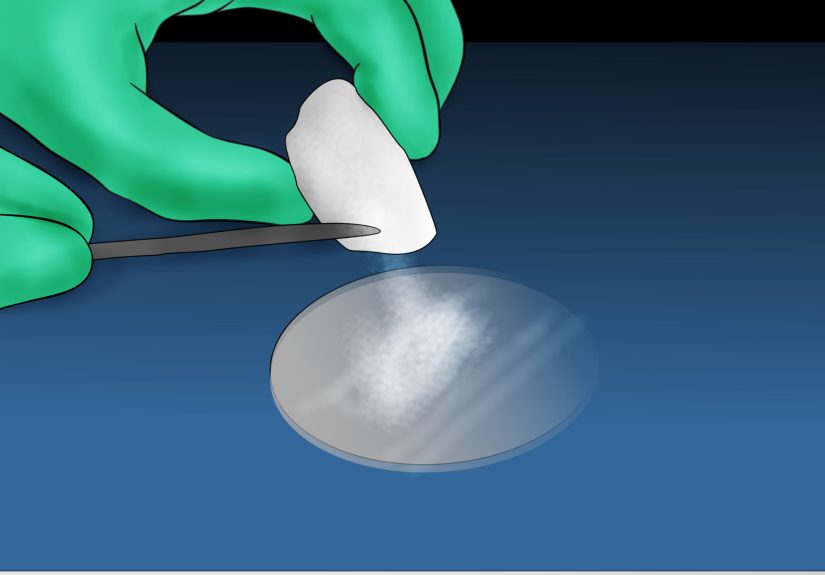
In seeding, a tiny crystal of the desired compound is added to the supersaturated solution. The seed provides a template for crystal growth. In scratching, the inside of the flask or test tube is scratched with a glass rod, creating microscopic rough spots where molecules can begin organizing.
Best for
These techniques are useful when the solution remains clear after cooling, even though crystallization should occur. They are also helpful for compounds that supercool or form oils before crystallizing.
Practical tip
Always save a tiny amount of crude solid before dissolving everything. That speck may become your seed crystal later. It is the chemical equivalent of keeping a spare key under the mat.
9. Sublimation Crystallization
Sublimation is a special method for organic compounds that can pass from solid to vapor and then back to solid without decomposing. The impure solid is gently heated, often under reduced pressure, and the vapor deposits as crystals on a cooler surface.
How it works
Some organic compounds have enough vapor pressure to sublime. Naphthalene, camphor, caffeine, anthracene, and certain aromatic compounds may be purified or crystallized by sublimation under the right conditions. Nonvolatile impurities remain behind, while the desired compound deposits as cleaner crystals.
Best for
Sublimation is best for relatively small quantities of thermally stable, sublimable compounds. It is not suitable for compounds that melt, decompose, oxidize, or react before vaporizing.
Practical tip
Use gentle heating and good temperature control. Too much heat can decompose the sample, and nothing says “learning experience” like converting a white solid into a smoky brown memory.
Common Problems When Crystallizing Organic Compounds
Oiling out
Oiling out happens when the compound separates as a liquid instead of forming crystals. This often occurs when the solution is too concentrated, the cooling is too fast, or the solvent is not ideal. Try adding more solvent, reheating, cooling more slowly, or choosing a different solvent system.
No crystals form
If no crystals appear, the solution may not be supersaturated. You may have used too much solvent. Evaporate some solvent, cool further, scratch the glass, or add a seed crystal.
Crystals are too small
Small crystals usually result from rapid nucleation. Cool more slowly, use a less concentrated solution, or try vapor diffusion or slow evaporation.
Product recovery is low
Low recovery can happen when too much solvent is used, the product is too soluble at low temperature, or crystals are washed with too much solvent. Wash crystals with a small amount of cold solvent, not a generous splash worthy of a cooking show.
Safety Notes for Organic Crystallization
Many organic solvents are flammable, toxic, volatile, or irritating. Never heat organic solvents with an open flame. Use a hot plate, water bath, oil bath, or heating mantle as appropriate. Work in a fume hood when handling volatile solvents such as dichloromethane, ether, acetone, hexane, or ethyl acetate. Wear splash goggles, gloves, and a lab coat. Label containers clearly, dispose of waste properly, and remember that “it smells fine” is not a safety analysis.
Practical Experiences: What Actually Helps Crystals Grow
After watching many crystallization attempts succeed, fail, and perform interpretive dance somewhere in between, one lesson stands out: crystallization rewards patience more than force. Beginners often try to make crystals appear by cooling aggressively, adding lots of anti-solvent, shaking the flask, or scraping like they are trying to erase a parking ticket. Sometimes that works, but often it produces powder, oil, or a stubborn suspension that refuses to filter cleanly.
The first practical experience worth remembering is to test solvents on a small scale before committing the entire sample. A few milligrams in small test tubes can save a full batch from disaster. Add a little solvent, warm gently, observe solubility, then cool and see whether crystals form. This simple screening step is not glamorous, but neither is losing three days of synthesis because ethanol seemed friendly.
The second experience is that clarity matters. Before cooling, the hot solution should usually be clear. If insoluble particles remain, hot gravity filtration may be needed. If the solution is strongly colored because of impurities, a small amount of activated charcoal can sometimes help, but it should be used carefully. Too much charcoal can adsorb the desired compound along with the impurity. Activated charcoal is useful, not magical; treat it like a powerful seasoning, not the main ingredient.
The third experience is to respect cooling speed. When a solution is removed from heat, let it cool slowly at room temperature first. Once crystals have formed, an ice bath can improve recovery. Starting with an ice bath may feel efficient, but it often creates many tiny crystals that trap impurities. Large, slow-grown crystals are easier to wash and filter, and they usually look more convincing in a vial.
The fourth experience is to keep notes on exact solvent volumes. “Added some ethanol” is not a useful record unless your future self owns a time machine. Write down the compound mass, solvent type, hot solvent volume, cooling conditions, anti-solvent volume, and crystal appearance. Good crystallization often depends on small details. A method that works once can work again only if you know what you actually did.
The fifth experience is to avoid over-washing crystals. Washing removes mother liquor and impurities, but it can also dissolve product. Use cold solvent and small portions. If the compound is very soluble, pre-chill the wash solvent. A beautiful crop of crystals can disappear surprisingly fast when treated like dirty laundry.
The sixth experience is that failed crystallization is information, not defeat. Oiling out suggests the solvent system or concentration needs adjustment. Fine powder suggests too much nucleation. No crystals may mean too much solvent or insufficient supersaturation. Dark crystals may indicate impurity inclusion or decomposition. Each failure points toward the next experiment.
Finally, remember that different goals require different methods. If the goal is quick purification, single-solvent or mixed-solvent recrystallization may be best. If the goal is beautiful single crystals, slow evaporation, vapor diffusion, or layering may be better. If the compound is volatile and stable, sublimation may be surprisingly elegant. Crystallization is less about memorizing one recipe and more about learning how molecules respond to concentration, temperature, solvent polarity, and time.
Conclusion
Crystallizing organic compounds is one of the most valuable skills in organic chemistry because it combines purification, observation, and molecular behavior in one process. The nine methods covered heresingle-solvent recrystallization, mixed-solvent recrystallization, slow cooling, slow evaporation, anti-solvent addition, vapor diffusion, liquid-liquid diffusion, seeding or scratching, and sublimationgive chemists a flexible toolkit for different compounds and goals.
The best method depends on solubility, stability, available material, impurity profile, and whether you need routine purification or high-quality single crystals. With careful solvent choice, clean glassware, controlled cooling, and patient observation, crystallization becomes less mysterious and far more reliable. And when crystals finally appear after a stubborn wait, yes, you are allowed to feel a little proud. Molecules just built tiny architecture for you.
Note: This article is for educational and informational purposes. Organic crystallization should be performed only in a properly equipped laboratory with appropriate supervision, ventilation, personal protective equipment, and chemical waste handling.