Table of Contents >> Show >> Hide
- Why “Sci-Fi” Risks Are a Real Government Planning Category
- 1) The Next Pandemic: Invisible Enemy, Very Real Playbook
- 2) Cyberattack Cascade + AI-Accelerated Disruption
- 3) Solar Superstorm: When the Sun Decides to Be Dramatic
- 4) Asteroid or Comet Impact: Planetary Defense Is Not a Movie Trailer
- 5) Nuclear/Radiological Emergency: The Scenario Nobody Wants, The Plan Everyone Needs
- The Big Pattern: Governments Plan for Systems Failure, Not Just Single Events
- 500-Word Experience Add-On: What Preparedness Looks Like on the Ground
- Conclusion
If your streaming queue has ever convinced you that the end of the world is coming in five seasons and a spin-off, here’s the plot twist:
a lot of “sci-fi apocalypse” scenarios are quietly sitting inside real emergency planning binders. Not because officials think aliens are
parking over Kansas next Tuesday, but because modern risk management is all about low-probability, high-impact events.
In other words, governments don’t prepare for disasters because they are certain; they prepare because uncertainty is expensive. A city
can recover from a Tuesday thunderstorm with coffee and grit. A city hit by a pandemic surge, major grid disruption, or radiological event
needs planning done long before the first alert goes off.
This guide breaks down five scenarios that feel straight out of science fiction, but are absolutely part of serious planning conversations:
pandemics, cyber cascades, solar superstorms, asteroid threats, and radiological emergencies. You’ll see what’s actually being prepared,
what that means in plain English, and how regular people can be more resilient without turning their garage into a bunker-themed hardware store.
Why “Sci-Fi” Risks Are a Real Government Planning Category
Emergency planners work in an “all-hazards” framework: instead of treating each disaster like a totally separate universe, they build
capabilities that can work across many crises (communications, logistics, healthcare surge, public warning, continuity of operations, and
infrastructure restoration). The hazard changes, but the choreography of response often rhymes.
That means the same institutions that plan for hurricanes and floods also game out events that sound cinematic. The goal is not to
predict one specific doomsday. The goal is to reduce chaos when something rare but plausible happens.
1) The Next Pandemic: Invisible Enemy, Very Real Playbook
Why it feels like science fiction
A microscopic pathogen crossing borders faster than policy memos? That’s basically every outbreak thriller ever made. But unlike movies,
real-world pandemic response is less dramatic monologue and more logistics marathon: testing, surveillance, hospital capacity, workforce
protection, risk communication, supply chains, and international coordination.
What the government is planning for
The U.S. has explicitly continued “next pandemic” planning through national health security and biodefense frameworks, with federal,
state, local, and global coordination components. Agencies are refining outbreak forecasting, improving guidance processes, and trying to
close preparedness gaps exposed by COVID-era operations.
- Whole-of-government preparedness: pandemic readiness is treated as national security and public health security.
- Forecasting and analytics: disease modeling and scenario tools are used to support decision-making during outbreaks.
- Planning resources: federal pandemic planning guides support public health, healthcare systems, and local officials.
- Gap correction: post-COVID accountability work highlights where planning and implementation need improvement.
What this means for everyone else
Preparedness is no longer just “buy hand sanitizer and hope.” It includes better communication channels, trusted data, flexible care systems,
and practical household planning. If your family can quickly answer “Where do we get updates?” and “What changes if schools or clinics shift operations?”
you’re already ahead of the average panic scroll.
2) Cyberattack Cascade + AI-Accelerated Disruption
Why it feels like science fiction
One day the lights flicker, payment systems go weird, and your fridge can connect to Wi-Fi but can’t keep milk cold because the grid is unstable.
That’s less “robot uprising” and more “critical infrastructure interdependence.” In a hyper-connected economy, cyber incidents can ripple across
energy, water, transportation, healthcare, and financial systems.
What the government is planning for
Federal cyber planning focuses on resilience of essential services, shared responsibility across sectors, and practical baseline controls for
organizations that run critical systems. AI adds a second layer: agencies are required to manage AI risk, especially where rights and safety are involved.
- Cyber baselines for infrastructure: guidance emphasizes high-impact, practical security actions for critical sectors.
- National cyber strategy execution: implementation planning prioritizes resilience, disruption of threat actors, and secure-by-design improvements.
- AI governance in government: federal agencies have explicit requirements around AI oversight, risk controls, and responsible use.
- Transparency and accountability: agencies inventory AI use cases and identify systems that affect rights or safety.
What this means for people and businesses
The best cyber-prep mindset is boring and effective: backups, patching, access controls, rehearsed incident response, and recovery drills.
In a crisis, “Can we restore operations quickly?” matters more than “Did we buy the fanciest software with neon branding?” Cyber resilience
is operational fitness, not just IT decoration.
3) Solar Superstorm: When the Sun Decides to Be Dramatic
Why it feels like science fiction
A star 93 million miles away causing problems for your power grid sounds wildly unfair. Yet strong space weather can interfere with power transmission,
satellite operations, GPS reliability, and radio communications. No villain neededjust physics.
What the government is planning for
U.S. agencies monitor and communicate space weather severity, and infrastructure regulators have reliability standards tied to geomagnetic disturbance risk.
Policy and operational roles are distributed across forecasting, warning, grid planning, emergency management, and interagency coordination.
- Severity scales and alerts: federal space weather services categorize event intensity and expected impacts.
- Grid reliability requirements: standards address transmission performance under geomagnetic disturbance scenarios.
- Policy coordination: congressional and executive frameworks define agency roles in preparedness, response, and recovery.
What this means for households
A “solar apocalypse kit” is really just a robust outage plan: backup power for essentials, offline copies of critical information, radio-based
updates, and a calm approach to temporary service disruptions. You don’t need a tinfoil hat. You need batteries that are not from 2013.
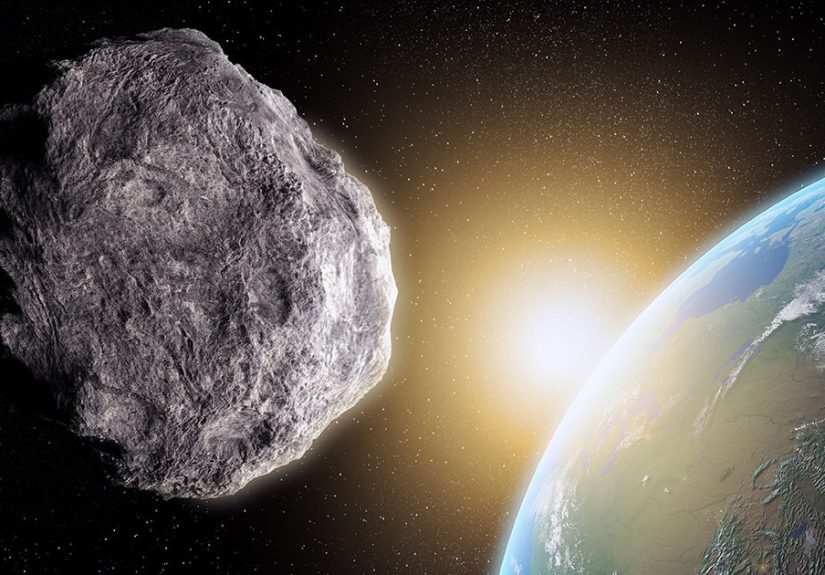
4) Asteroid or Comet Impact: Planetary Defense Is Not a Movie Trailer
Why it feels like science fiction
Asteroids, impact probabilities, and orbital deflection sound like blockbuster vocabulary because they arebut they’re also part of active
scientific and emergency planning workflows.
What the government is planning for
U.S. planetary defense efforts include finding and tracking near-Earth objects, continuously monitoring impact probability, running interagency
tabletop exercises, and maturing deflection capabilities.
- Dedicated coordination: NASA’s planetary defense office manages hazard detection and tracking efforts.
- Continuous risk monitoring: automated systems evaluate potential Earth impacts over long time horizons.
- Interagency exercises: NASA and FEMA run scenario-based tabletop events for decision-making and response readiness.
- Deflection proof-of-concept: DART demonstrated that intentionally changing an asteroid’s orbit is feasible.
- Next-gen detection: NEO Surveyor is designed to improve detection and characterization of hazardous objects.
What this means for regular life
No, you do not need to check the sky every seven minutes. Yes, you should appreciate that this is one of the clearest examples of long-horizon
risk management done right: detect early, model uncertainty, coordinate internationally, and develop options before the clock gets loud.
5) Nuclear/Radiological Emergency: The Scenario Nobody Wants, The Plan Everyone Needs
Why it feels like science fiction
Sirens, fallout maps, and emergency broadcasts can feel like retro-futurist nightmare fuel. But radiological planning is deeply practical:
sheltering guidance, contamination reduction, medical triage, communication protocols, and public instruction.
What the government is planning for
U.S. guidance distinguishes between different radiological events (dirty bomb, nuclear facility incident, transport incident, nuclear detonation),
because response actions can differ by hazard type and timing.
- Clear protective action messaging: “get inside, stay inside, stay tuned” is central across radiation guidance.
- Public health specifics: agencies provide actionable steps for decontamination and exposure reduction.
- Multi-agency coordination: emergency management, public health, environmental, and regulatory bodies all have defined roles.
- Preparedness education: citizens are encouraged to maintain basic emergency kits and communication plans.
What this means for people at home
In a radiation emergency, your first moves matter more than your opinions on the internet. Getting indoors quickly, following official updates,
and avoiding unnecessary travel can dramatically reduce risk. Calm, informed action beats cinematic panic every time.
The Big Pattern: Governments Plan for Systems Failure, Not Just Single Events
These five “sci-fi” scenarios look different on paper, but they stress similar systems: healthcare, information trust, logistics, energy,
and local coordination. That’s why preparedness planning focuses on capability stacks rather than one-off heroics.
The smartest takeaway is not fearit’s literacy. Know your local alerts. Build a practical household emergency plan. Keep essentials updated.
Understand that resilience is mostly repetitive, often unglamorous, and incredibly effective.
If this sounds less like a movie and more like project management with higher stakes, congratulations: you now understand emergency preparedness
better than most comment sections.
500-Word Experience Add-On: What Preparedness Looks Like on the Ground
The clearest way to understand “apocalypse planning” is to watch what happens during exercises. Not the headlinesthe room. In a typical local
preparedness drill, nobody says “doom.” They say things like “resource request,” “communications failure,” and “who has authority for this decision?”
It sounds bureaucratic until you realize every one of those phrases is standing between order and confusion.
In public health exercises, teams often begin with uncertainty: incomplete case counts, conflicting reports, and a rumor wave moving faster than
confirmed data. The first lesson is humility. Good response leaders don’t pretend to know everything; they build a rhythm for updating decisions
as better information arrives. Messaging gets tested hard. If the public hears three different instructions in two hours, trust drops. So planners
rehearse plain-language scripts that can be updated without sounding contradictory. It’s a surprisingly human skill: tell the truth, admit uncertainty,
and explain what people should do right now.
Cyber drills feel different. They are quieter, more technical, and weirdly tense. You may see a utility team run through a simulated ransomware
attack while operations staff ask, “Can we safely maintain service if we isolate this network segment?” The exercise quickly shifts from IT to
continuity: payroll, dispatch, customer communications, legal reporting, vendor coordination. One practical insight appears in nearly every drill:
recovery speed depends less on fancy software and more on preparation disciplinebackups tested recently, contact lists updated, responsibilities
clear, and decision rights pre-agreed.
Space weather scenarios expose interdependence. Grid operators, emergency managers, telecom teams, and transportation planners all discover the
same thing: if timing signals degrade and communications become patchy, ordinary systems become fragile. Planners then prioritize “graceful degradation”
keeping critical services operating at reduced capacity rather than chasing perfect service. This is a mature mindset: preserve life safety first,
then stabilize essentials, then restore normal.
Planetary defense exercises are the most cinematic on paper and the most analytical in practice. Teams debate probabilities, warning times, and
whether to commit to action under uncertainty. The valuable experience is not the fictional asteroid itself; it’s practicing decision-making when
data evolves and stakes are global. These exercises force institutions to coordinate across science, diplomacy, emergency management, and public communication.
They also reveal a truth relevant to every hazard: preparedness is collaborative math plus social trust.
Radiological drills are often the most misunderstood by the public, yet among the most practical in execution. Responders train on simple, high-impact
instructions: where to shelter, how to reduce contamination, how to triage without causing secondary exposure, how to communicate risk without triggering
mass self-evacuation. Participants repeatedly report that clarity saves more time than complexity. A short, accurate instruction delivered quickly can
outperform a perfect explanation delivered too late.
Across all these exercises, one experience keeps repeating: preparedness is less about predicting the exact nightmare and more about building the capacity
to absorb shocks. Teams that practice together make faster, calmer decisions. Communities that understand basic protective actions recover with less harm.
And individuals who prepare modestlyplans, supplies, trusted info channelsare not paranoid; they are resilient. That is the lived reality behind
“sci-fi apocalypse planning”: less drama, more competence, better outcomes.
Conclusion
Governments are not “planning for the end of the world” in a movie sensethey are planning for extreme but plausible disruptions that can threaten
public safety and national stability. The five scenarios above prove a simple point: readiness is an ongoing practice, not a panic purchase.
The most useful response for readers is practical: strengthen your household emergency basics, stay connected to reliable public guidance, and treat
preparedness as civic common sense. The future may still be unpredictable, but your response to uncertainty does not have to be.