Table of Contents >> Show >> Hide
- What Makes an Insult Become a Symbol?
- 1. The Democratic Donkey: From “Jackass” Joke to Political Power Animal
- 2. The Republican Elephant: A Nervous Cartoon Beast Becomes a Party Icon
- 3. “Gothic”: The Architecture Insult That Became Breathtaking
- 4. “Impressionism”: The Art Insult That Now Sells Museum Tickets
- 5. “Yankee Doodle”: The Mocking Song That Became Patriotic Swagger
- Why Insult-Based Symbols Are So Powerful
- Experience Section: What These Symbols Teach Us About Reputation, Branding, and Everyday Life
- Conclusion
History has a wicked sense of humor. It loves taking something meant to sting, polishing it until it shines, and then putting it on a flag, a bumper sticker, a museum wall, or a cathedral tour brochure. Some of the world’s most famous symbols, labels, and cultural emblems did not begin as compliments. They began as mockery. They were verbal tomatoes thrown by critics, rivals, enemies, and people who absolutely believed they had landed the final punchline.
Then the targets did something even more annoying: they kept the insult.
That is the strange magic behind many famous symbols with insulting origins. A donkey became a political mascot. A clumsy elephant became a party emblem. “Gothic” went from “barbaric mess” to “please photograph this cathedral from every angle.” “Impressionist” changed from “unfinished art” to “expensive museum masterpiece.” And “Yankee Doodle,” originally used to mock scruffy colonists, became one of America’s cheekiest patriotic tunes.
This article explores five famous symbols that were created to be horrible insults, and how each one survived the trash talk, stole the microphone, and became unforgettable.
What Makes an Insult Become a Symbol?
A symbol is more than a logo. It can be an animal, a nickname, an artistic label, a song, a visual style, or a cultural shorthand that carries meaning beyond itself. The odd thing about insults is that they often contain enough punch to be memorable. A boring insult dies in the hallway. A vivid insult grows legs, puts on sunglasses, and walks into history.
When a group adopts a mocking label, it can transform shame into identity. That process is called reclamation: taking a word or image designed to belittle people and using it as a badge of confidence. It is not always neat, and it does not erase the original cruelty, but it shows how meaning changes when the people being mocked get the final say.
1. The Democratic Donkey: From “Jackass” Joke to Political Power Animal
The insult behind the symbol
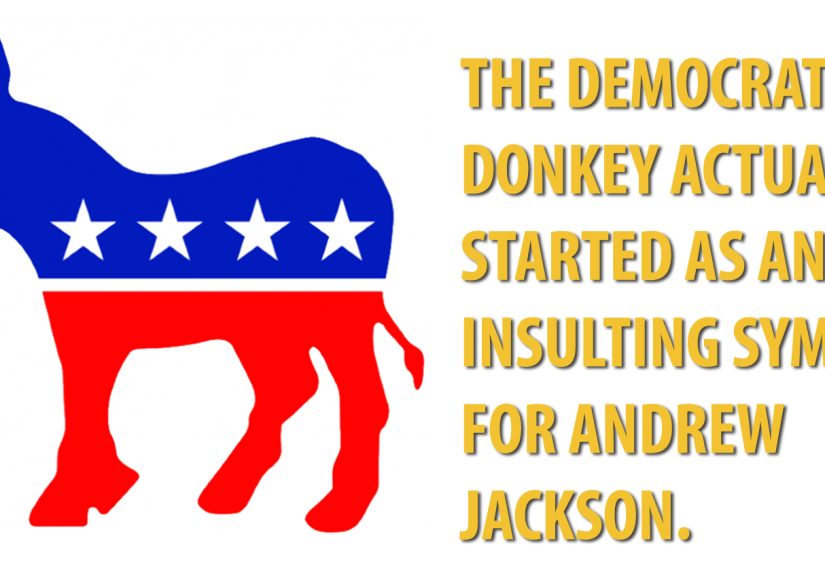
The Democratic donkey traces back to Andrew Jackson’s 1828 presidential campaign. Jackson’s opponents mocked him by calling him a “jackass,” a jab aimed at making him look stubborn, crude, and unfit for polite political society. In modern terms, it was basically a campaign meme before memes had fonts.
Instead of running from the insult, Jackson leaned into it. The donkey’s reputation for stubbornness could also be spun as determination, toughness, and refusal to bow to elites. Suddenly, the insult had a second meaning. One person’s “jackass” became another person’s “fighter who will not move.”
How it became famous
The donkey did not instantly become the official Democratic symbol. Political cartoonist Thomas Nast helped popularize it in the late 19th century through widely circulated cartoons. Nast understood that animals made politics easier to recognize. A donkey could say “Democrats” faster than a paragraph of newspaper analysis, and it looked better in ink.
Today, the Democratic donkey is so familiar that many people forget it began as mockery. It appears on campaign buttons, political graphics, classroom posters, election explainers, and endless internet debates where nobody changes their mind but everybody uses bold text.
Why the insult worked in reverse
The donkey survived because it carried useful symbolism. Donkeys are hardworking, persistent, and difficult to intimidate. That made the animal flexible enough to become a proud political emblem rather than just an insult. The joke did not disappear; it was domesticated, fed, and put to work.
2. The Republican Elephant: A Nervous Cartoon Beast Becomes a Party Icon
The cartoon that started it
The Republican elephant also owes much of its fame to Thomas Nast. In an 1874 cartoon called “The Third Term Panic,” Nast used an elephant labeled “Republican Vote” to represent Republican voters. The animal was large and powerful, but not exactly calm. It was shown as uneasy, uncertain, and in danger of stumbling through its own political platform.
That was not exactly a Hallmark card. The elephant was not introduced as a majestic creature standing proudly under fireworks. It was a nervous political beast, large enough to matter but not necessarily wise enough to avoid trouble.
From satire to symbol
Yet the elephant had one major advantage: it was unforgettable. In political cartoons, a huge animal can dominate the page. It suggests size, strength, memory, and force. Over time, the negative edge softened, while the useful qualities remained.
Like the donkey, the elephant became visual shorthand. It helped readers identify party politics quickly at a time when cartoons were powerful public communication tools. Before cable news panels, before viral clips, before social media arguments at 2 a.m., there were cartoons. And those cartoons turned animals into political celebrities.
Why it stuck
The elephant worked because it could be read in multiple ways. Critics could see it as bulky, frightened, and clumsy. Supporters could see it as strong, dignified, and hard to push around. That double meaning made the symbol durable. The insult gave it energy; the party gave it permanence.
3. “Gothic”: The Architecture Insult That Became Breathtaking
When “Gothic” meant “barbaric”
Today, “Gothic architecture” makes people think of soaring cathedrals, pointed arches, stained glass, ribbed vaults, and flying buttresses doing dramatic stone gymnastics. But the word “Gothic” was not originally a compliment. Renaissance writers used it to criticize medieval architecture by linking it to the Goths, Germanic peoples associated in Roman memory with the fall of the classical world.
In plain English, calling a cathedral “Gothic” was like saying, “Nice building, shame it looks like barbarians designed it during a thunderstorm.” The term suggested that the style was crude, nonclassical, and inferior to ancient Greek and Roman ideals.
The insult missed the engineering miracle
The insult was unfair for one obvious reason: Gothic architecture was brilliant. Builders used pointed arches, rib vaults, and flying buttresses to create taller, lighter, more luminous churches than earlier styles allowed. Walls opened up for stained glass. Ceilings climbed. Stone seemed to float. The architecture practically whispered, “Gravity? Cute.”
Medieval builders were not trying to be “barbaric.” They were solving difficult structural problems with creativity and ambition. The result was a style that gave Europe some of its most recognizable buildings, from Notre-Dame de Paris to Chartres Cathedral and beyond.
How Gothic became glamorous
Centuries later, Gothic stopped sounding like an insult and started sounding mysterious, romantic, dramatic, and historically rich. The Gothic Revival of the 19th century brought pointed arches and medieval flavor back into fashion. Eventually, “Gothic” expanded beyond architecture into literature, fashion, music, and visual culture.
What began as a sneer from Renaissance tastemakers became one of the most powerful aesthetic labels in Western culture. Not bad for a word that originally meant, “This is not Roman enough for my taste.”
4. “Impressionism”: The Art Insult That Now Sells Museum Tickets
A critic throws shade at Monet
In 1874, Claude Monet exhibited Impression, Sunrise, a hazy painting of the port of Le Havre. Instead of carefully polished academic detail, Monet gave viewers atmosphere, light, motion, and a scene that felt like a fleeting moment. Some critics were not amused. Journalist and critic Louis Leroy used the word “Impressionists” in a mocking review, suggesting the works looked unfinished.
Imagine telling Monet, Renoir, Degas, Pissarro, and their circle, “This looks like a rough draft,” and accidentally naming one of the most beloved art movements in history. That is not just missing the point. That is missing the point so thoroughly that the point buys a villa and becomes famous.
Why the insult hurt
Academic art standards of the time prized polished surfaces, historical subjects, careful drawing, and finished appearances. Impressionist painters broke those expectations. They painted modern life, changing light, casual scenes, and quick visual sensations. Their brushwork looked loose because they were chasing perception, not porcelain smoothness.
To critics trained to admire finish above all else, Impressionist paintings could seem sloppy. But to later audiences, that looseness became part of the charm. The paintings feel alive because they do not pretend the world holds still long enough to be pinned down.
The insult becomes a movement
The artists and public eventually embraced the name. “Impressionism” became a recognized movement associated with light, color, modernity, and artistic freedom. Today, Impressionist exhibitions draw crowds around the world. People line up to see the very kind of brushwork that once made critics clutch their pearls.
The lesson is delicious: sometimes a critic’s insult becomes better branding than any marketing team could invent.
5. “Yankee Doodle”: The Mocking Song That Became Patriotic Swagger
A tune meant to make colonists look ridiculous
“Yankee Doodle” sounds cheerful today, almost cartoonishly upbeat. But before it became patriotic, it was used by British soldiers to mock American colonists. The song painted colonial fighters as unsophisticated, badly dressed, and foolish enough to think sticking a feather in a cap made them fashionable.
The line about calling it “macaroni” was not about lunch. In 18th-century British slang, “macaroni” referred to an exaggerated fashionable style associated with elite young men. So the joke was that a rough colonial “Yankee” thought a feather could magically turn him into a stylish gentleman. It was fashion criticism with a drumbeat.
How Americans flipped the meaning
American troops eventually adopted the song themselves. By singing it proudly, they turned British mockery into defiance. The tune became a way of saying, “Yes, that is us. And now you have to listen to us sing about it.”
This is one of history’s most satisfying reversals. The song meant to make colonists seem laughable became associated with Revolutionary confidence. It transformed from ridicule into patriotic identity, proving that even a silly tune can become a symbol when people attach courage and memory to it.
Why the song still matters
“Yankee Doodle” endures because it captures a classic underdog move: take the insult, repeat it louder, and make it yours. The tune’s playful energy helps too. It does not sound like a solemn national hymn. It sounds like someone marching into history while refusing to take the enemy’s joke seriously.
Why Insult-Based Symbols Are So Powerful
Insult-based symbols last because they contain conflict. A symbol born from praise can be bland, but a symbol born from mockery has a built-in story. It tells us there was a struggle over meaning. Someone tried to define another person, group, or style from the outside. Then the target seized the label and changed the ending.
That is why these famous symbols with insulting origins remain fascinating. The Democratic donkey and Republican elephant show how political cartoons can shape national identity. Gothic architecture shows how critics can misunderstand innovation. Impressionism shows how art movements can grow from ridicule. “Yankee Doodle” shows how mockery can become patriotic confidence.
In each case, the insult did not disappear. Instead, it was transformed. The sting became structure. The joke became memory. The label became a brand.
Experience Section: What These Symbols Teach Us About Reputation, Branding, and Everyday Life
The most useful lesson from these five insult-born symbols is that meaning is not fixed forever. A label can start ugly and become powerful depending on who uses it, how often it is repeated, and what achievements become attached to it. This is true in politics, art, culture, business, and ordinary life.
Think about a student who gets called “too serious” because they study every night. At first, it sounds like an insult. But if that same student wins scholarships, builds discipline, and becomes the person everyone asks for help before exams, “too serious” quietly transforms into “focused.” The original words may not change, but the reputation around them does.
The same thing happens in creative work. Many new ideas are mocked because they do not look like old ideas. Impressionism looked unfinished to critics because critics expected a different kind of finish. Gothic architecture looked barbaric to Renaissance thinkers because they preferred classical rules. In both cases, the insult revealed more about the critic’s expectations than about the work itself.
That matters for modern branding. Some of the strongest brands, movements, and communities are built around qualities that outsiders once dismissed. A small company may be called “too niche” until that niche becomes a loyal audience. A designer may be called “weird” until the weirdness becomes a signature style. A public figure may be mocked for being stubborn, only to turn that stubbornness into a message of resilience.
Of course, not every insult should be embraced. Some insults are harmful and deserve to be rejected completely. Reclaiming a label works best when the people targeted choose it for themselves and attach it to values they genuinely want to express. The power comes from agency. The donkey worked because Jackson and later Democratic imagery could frame stubbornness as strength. “Yankee Doodle” worked because American troops sang it as defiance, not defeat.
For writers, marketers, and content creators, these stories are a reminder to look for the twist. The best history content often lives in reversals: the insult that became an emblem, the failure that became a movement, the joke that became a national tune. Readers love those turns because they feel human. Everyone knows what it is like to be underestimated. Everyone enjoys seeing the underestimated thing win.
So the next time you see a famous symbol, ask a nosy little historical question: who first used it, and were they being nice? Sometimes the answer is no. Sometimes the first person to name a movement, style, or identity was rolling their eyes. But history does not always reward the eye-roller. Sometimes it rewards the people who take the insult, frame it, and hang it in the museum.
Conclusion
The history of famous symbols that were created to be horrible insults proves that culture is not controlled only by the people who throw the first punch. A mocking nickname, cartoon animal, critical label, or silly song can be transformed when people claim it with confidence and attach new meaning to it.
The Democratic donkey began as a “jackass” insult. The Republican elephant started as a nervous cartoon creature. Gothic architecture was dismissed as barbaric. Impressionism was mocked as unfinished. “Yankee Doodle” was sung to make colonists look foolish. Yet all five became lasting cultural symbols.
That is the beautiful revenge of history: sometimes the insult survives, but not the way the insulter intended.