Table of Contents >> Show >> Hide
- Why the “Parents vs. Me at the Same Age” Trend Went Viral
- 36 Funny Differences People Notice Between Their Parents and Themselves
- 1. Parents Had Kids; Their Kids Have Houseplants
- 2. Parents Bought Homes; Their Kids Save Zillow Listings
- 3. Parents Had Formal Photos; Their Kids Have Camera Rolls of Screenshots
- 4. Parents Dressed Like Adults; Their Kids Dress Like Comfortable Wi-Fi
- 5. Parents Knew How to Fix Things; Their Kids Know How to Google Things
- 6. Parents Went Out Without GPS; Their Kids Panic When Maps Reload
- 7. Parents Had One Phone in the House; Their Kids Have 47 Group Chats
- 8. Parents Took Vacations Without Posting; Their Kids Need Proof They Relaxed
- 9. Parents Had Career Paths; Their Kids Have LinkedIn Existential Crises
- 10. Parents Cooked Dinner; Their Kids “Assemble” Dinner
- The Real Reasons Adulthood Looks So Different Now
- Why the Internet Loves These Comparisons
- Experiences Related to the Topic: When Family Comparisons Get Too Real
- Conclusion: Same Age, Different World, Still Funny
There is a special kind of comedy that happens when you compare your parents’ life at your age with your own. Your mom at 26? Married, raising two children, hosting dinner, remembering everyone’s birthdays, and somehow owning a set of matching towels. You at 26? Eating cereal from a mug because the bowls are “in rotation,” avoiding a dentist appointment, and calling your best friend to ask whether a suspicious email from your bank is real.
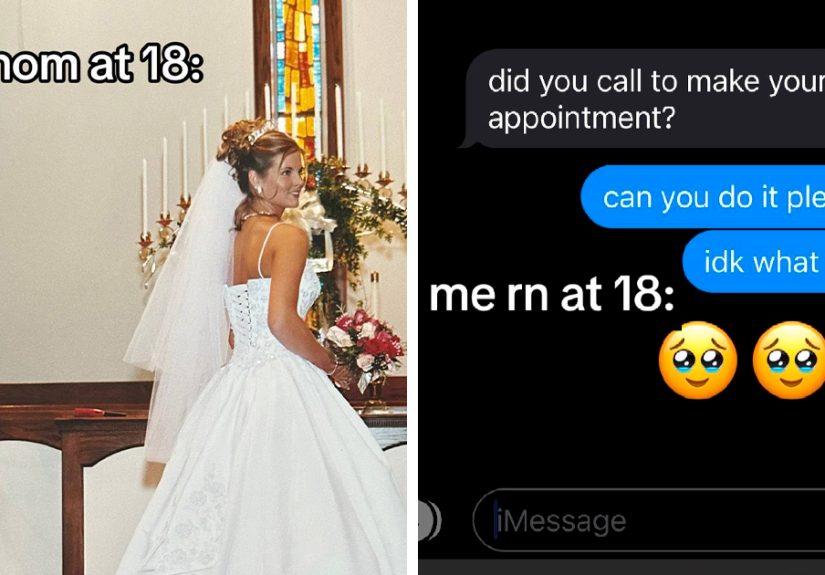
That is the magic behind the “parents vs. me at the same age” trend that has charmed the internet. People post side-by-side comparisons showing their parents as young adults beside themselves at the exact same age. The results are hilarious, slightly humbling, and weirdly comforting. In one frame, a parent looks like they could run a household, file taxes by candlelight, and negotiate a mortgage. In the next, their adult child looks proud because they remembered to bring a reusable bag to the grocery store.
But beneath the jokes is something bigger than a meme. These funny differences between parents and children reveal how adulthood has changed. Marriage, homeownership, careers, family planning, education, social media, mental health, and money all look different now. The punchline is simple: our parents did not necessarily have it easier, but they were living in a very different world. And today’s young adults are not “behind” as much as they are playing a different game with a more expensive controller.
Why the “Parents vs. Me at the Same Age” Trend Went Viral
The trend works because it is instantly understandable. You do not need a sociology degree to laugh at the contrast between “my dad at 23: building a house” and “me at 23: building a personality around iced coffee.” The format is visual, emotional, and brutally efficient. It turns family history into a comedy sketch with only two photos.
What makes it especially lovable is that it is not mean-spirited. Most posts are affectionate. People admire their parents, but they also recognize the absurdity of comparing two very different eras. A father at 25 may have looked like a regional bank manager even when he was technically just a guy with a mustache and one good jacket. A 25-year-old today may look younger because casual clothes, skincare, selfies, and internet culture have changed how adulthood presents itself.
The Humor Comes From the Gap Between Expectation and Reality
For decades, adulthood was sold as a checklist: graduate, get a job, marry, buy a home, have kids, become the mysterious person who owns a ladder. Today, many young adults are still doing those things, but often later, in a different order, or not at all. That gap creates comedy. When someone says, “My parents at my age had three kids. I have three streaming subscriptions and one emotional support water bottle,” the internet nods because it feels painfully accurate.
It Is Also a Soft Rebellion Against Old Timelines
The trend says what many people are thinking: adulthood no longer has one official schedule. Some people are married at 24. Some are still living with roommates at 34. Some are raising children, some are raising dogs, and some are trying to keep basil alive on a windowsill like it is a tiny green hostage negotiation. The joke is not that one path is better. The joke is that the comparison is wildly unfairand often hilarious.
36 Funny Differences People Notice Between Their Parents and Themselves
While every family story is different, the internet’s favorite comparisons tend to fall into familiar categories. These are the kinds of “same age, different universe” moments people love sharing.
1. Parents Had Kids; Their Kids Have Houseplants
One of the biggest recurring jokes is parenthood. Many people look at photos of their parents holding babies at 24 or 25, then compare that to their own life: holding a latte, a cat, or a succulent named Gary. The humor lands because parenting once happened earlier for many families. Today, people often delay having children because of education, careers, housing costs, personal choice, or the radical discovery that sleep is actually quite nice.
2. Parents Bought Homes; Their Kids Save Zillow Listings
Homeownership is another major theme. Parents at 30 may have been standing proudly in front of a starter home. Their children at 30 may be standing proudly in front of a rental apartment with “great natural light” and a dishwasher that sounds like a helicopter trying to leave the building. With the median age of first-time home buyers rising sharply, buying a home now often feels less like a milestone and more like unlocking a secret level.
3. Parents Had Formal Photos; Their Kids Have Camera Rolls of Screenshots
Older family photos often look cinematic: soft lighting, pressed clothes, actual film, maybe a wood-paneled wall. Modern photo albums contain 12,000 images, including blurry concert videos, memes, receipts, screenshots of recipes never cooked, and one mysteriously saved picture of a parking spot. Our parents had photo albums. We have cloud storage anxiety.
4. Parents Dressed Like Adults; Their Kids Dress Like Comfortable Wi-Fi
Fashion also fuels the joke. Many parents looked surprisingly mature at young ages because people dressed more formally in everyday life. A 27-year-old dad in the 1980s could look like he was about to approve a loan. A 27-year-old today may be wearing sneakers, joggers, and a hoodie that says “Do Not Perceive Me.” Comfort has won the culture war, and frankly, elastic waistbands deserve a medal.
5. Parents Knew How to Fix Things; Their Kids Know How to Google Things
Plenty of people joke that their parents could change a tire, patch drywall, cook for 15 people, and negotiate with a plumber. Meanwhile, today’s adults may know how to reset a router, compare insurance plans online, and diagnose a washing machine noise by watching six videos at 1.5x speed. Different skills, same survival instinct.
6. Parents Went Out Without GPS; Their Kids Panic When Maps Reload
Older generations navigated with paper maps, landmarks, and confidence that frankly seems suspicious. Today, many adults feel betrayed when their phone briefly loses signal. If a modern person says, “I know a shortcut,” it usually means Google Maps said so, and everyone in the car is quietly praying.
7. Parents Had One Phone in the House; Their Kids Have 47 Group Chats
Communication has changed dramatically. Parents may remember waiting by a landline, while their children manage work messages, family texts, memes, app notifications, and a group chat named something unpublishable. Older generations had busy signals. Younger generations have notification fatigue and the moral burden of leaving someone on read.
8. Parents Took Vacations Without Posting; Their Kids Need Proof They Relaxed
Parents went on vacation, took a few pictures, and returned to normal life. Today, travel often comes with stories, reels, captions, location tags, and the silent pressure to prove the trip was both spontaneous and aesthetically coordinated. Did the vacation happen if nobody posted a sunset photo with a vague caption about healing? Philosophers remain divided.
9. Parents Had Career Paths; Their Kids Have LinkedIn Existential Crises
Many parents stayed in one field or even one company for years. Today’s careers are often less linear. People switch industries, freelance, work remotely, start side hustles, or update LinkedIn with phrases like “excited to announce” while privately whispering, “What am I doing?” The modern career ladder looks less like a ladder and more like a rock-climbing wall in bad lighting.
10. Parents Cooked Dinner; Their Kids “Assemble” Dinner
A lot of parents cooked because takeout was less available, food delivery apps did not exist, and “What’s for dinner?” had fewer digital escape routes. Today, dinner can mean roasted vegetables, a meal kit, leftovers, sushi delivery, or crackers eaten while standing near the fridge. It is called range.
The Real Reasons Adulthood Looks So Different Now
The jokes are funny because they exaggerate, but they are rooted in real social change. Compared with previous generations, young adults today often face a different combination of student debt, housing costs, changing relationship norms, longer education timelines, and digital pressure. The result is not immaturity. It is adaptation.
Marriage and Family Are Happening Later
In the past, marriage and children were often treated as early-adulthood defaults. Today, more people see them as choices that require emotional, financial, and practical readiness. The median age at first marriage has risen over time, and young adults are less likely to have children at the same ages their parents did. That is why so many trend posts compare a parent holding a baby to an adult child holding a burrito with deep affection.
This shift does not mean people value family less. In many surveys, family remains one of the most important values Americans name. What has changed is the timing, structure, and definition of family life. Some people marry later. Some cohabit. Some stay single. Some become parents later. Some pour all their nurturing energy into dogs, nieces, nephews, plants, communities, or group chats that function like emotional emergency rooms.
Housing Has Become a Bigger Mountain
One of the sharpest differences is homeownership. The idea that a young couple could buy a modest first home on a modest income is still possible in some places, but for many Americans it has become much harder. Higher home prices, interest rates, down payments, competition, and student loans all make the dream feel more complicated.
That is why “my parents at 29 bought a house” jokes hit so hard. They are not just jokes about maturity; they are jokes about economics. A young adult today may be responsible, employed, and financially careful, yet still find homeownership far away. Renting is not always a failure. Sometimes it is the logical response to a market that looked at everyone’s budget and said, “Cute.”
Debt Changed the Starting Line
Education opened doors for many people, but it also left plenty of young adults carrying student loans. That changes decisions about marriage, housing, family planning, and career risks. If your parents entered adulthood with fewer education-related expenses, comparing timelines can feel like comparing a bicycle race to a bicycle race where one person is also towing a refrigerator.
Money stress also changes the emotional tone of adulthood. People may laugh online about being unable to afford a house, but behind the joke is a serious reality: financial security is harder to build when rent, healthcare, childcare, groceries, and debt all compete for the same paycheck.
Technology Made Young Adults Look Youngerand Feel Busier
Another funny difference is how digital life affects identity. Older family photos capture one moment. Modern people document everything. They have selfies from every angle, filters, memes, private stories, professional profiles, and years of digital evidence proving they once had questionable bangs.
Technology also keeps modern adults connected to friends, work, news, entertainment, and anxiety at all times. Parents may have worried about bills and family responsibilities, but they were not also processing 300 opinions before breakfast. Today’s young adults live with constant comparison. They see someone their age buying a house, someone else traveling the world, someone else having a baby, and someone else making homemade pasta in a kitchen bigger than their apartment. No wonder everyone needs a nap.
Why the Internet Loves These Comparisons
The “parents at my age vs. me at my age” format is popular because it gives people permission to laugh at insecurity. Instead of silently wondering whether they are behind, people turn the feeling into a shared joke. That is powerful. A person who posts, “My mother had me at 23; I just learned how to properly fold a fitted sheet at 31,” is not only being funny. They are inviting others to admit, “Same.”
It Turns Shame Into Community
Many young adults feel pressure to meet invisible deadlines. Be successful by 25. Own a home by 30. Be married before everyone at Thanksgiving starts asking questions. The trend punctures that pressure. It says: look, a lot of us are figuring it out. Some of us are doing great. Some of us are doing laundry in two separate emotional stages. Both are human.
It Celebrates Parents Without Pretending Life Was Perfect
The trend also reminds people that parents were once young, stylish, overwhelmed, and probably making it up as they went along. Old photos can make them look impossibly competent, but they were not born knowing how to be adults. They learned by doing, and sometimes by quietly panicking in kitchens with linoleum floors.
That perspective can create empathy in both directions. Children realize their parents carried serious responsibilities early. Parents realize their adult children are navigating a world with different pressures. Everyone gets to laugh, and maybe the Thanksgiving conversation becomes 4% less stressful. That is growth.
Experiences Related to the Topic: When Family Comparisons Get Too Real
Almost everyone has a moment when they suddenly compare themselves to their parents and think, “Wait, what were they doing at my age?” It can happen while looking through old photo albums, attending a cousin’s wedding, paying rent, or realizing your mother had already given birth to you by the age when you still considered scheduling your own haircut a personal victory.
One common experience is the family photo discovery. You are flipping through pictures and find your dad at 28, standing beside a car, wearing jeans that somehow look both terrible and iconic. He has a baby on one hip, a mortgage, and the expression of a man who knows how to operate a grill in public. Then you check the date and realize he was younger than you are now. Suddenly, your evening has become a documentary called “Am I the Child?”
Another relatable experience is the holiday comparison. A parent casually says, “When I was your age, we had already bought our first house.” They may not mean it as criticism, but everyone at the table hears the record scratch. The modern adult smiles politely while doing mental math involving rent, groceries, student loans, car insurance, and the fact that a single couch can cost more than a used car did in 1997. The correct response is usually, “That’s amazing,” followed by eating mashed potatoes with strategic intensity.
There is also the skills gap experience. Parents often seem to know how to do practical things without consulting the internet. They can identify tools, fix loose hinges, host guests, cook for a crowd, and understand insurance forms. Many younger adults can do impressive things too, but the skill set looks different. They can build a website, edit a video, compare apartment listings, spot a scam text, use three productivity apps, and explain why a printer is not working even though it absolutely should be. The modern adult is not helpless; they are just specialized in surviving a digital jungle.
Then there is the emotional honesty gap. Many young adults talk openly about therapy, burnout, boundaries, anxiety, and mental health. Their parents may have grown up in a culture where people simply “pushed through” and called every emotion “being tired.” That difference can be funny and meaningful. A parent might say, “We didn’t have anxiety back then,” while their child thinks, “You did. You just called it stomach trouble and reorganized the garage.”
Dating is another area where the contrast feels almost unfair. Parents may have met at school, work, church, a party, or through friends. Today, many people meet through apps, which means romance now includes profile photos, bios, red flags, ghosting, voice notes, and the existential question of whether “hey” counts as effort. Your parents may have had awkward dates, but they did not have to interpret a flame emoji from someone named Tyler who is “figuring things out.”
Career expectations create their own comedy. A parent might have entered one industry and stayed there for decades. A modern adult may have a resume that looks like a playlist: customer service, marketing, freelance design, remote project coordination, content strategy, part-time consulting, and one mysterious summer job that taught resilience. It is easy to joke about job-hopping, but many younger workers are responding to unstable industries, changing technology, and the need to keep growing. They are not lost; they are updating software in real time.
The sweetest experience, though, is realizing that both generations are a little impressed by each other. Young adults admire how much their parents handled without apps, delivery services, or online tutorials. Parents admire how their children navigate technology, talk about feelings, challenge unhealthy norms, and build lives that may not follow tradition but still have meaning. The comparison starts as comedy, but it often ends with gratitude. Our parents survived their version of adulthood. We are surviving ourswith better skincare, more passwords, and a suspicious number of tote bags.
Conclusion: Same Age, Different World, Still Funny
The internet loves these 36 funny differences between parents and themselves at the same age because they capture something true: adulthood has changed, and everyone is trying to make sense of it. Parents may have married earlier, bought homes sooner, and looked more mature in photographs. Their children may delay milestones, redefine success, rent longer, talk more openly about mental health, and treat pets like tiny roommates with legal rights.
Neither generation has the whole story. Parents faced their own hardships, limits, and pressures. Younger adults face a world shaped by high costs, digital life, flexible careers, and changing values. The funniest comparisons work because they do not shame anyone. They simply reveal that “growing up” has never been one-size-fits-all.
So the next time you see a post comparing “my parents at 25” with “me at 25,” laughbut also give yourself a break. Maybe your parents had a baby by your age. Maybe you have a rescued dog, a side hustle, a therapist, a rice cooker, and a plan that is still loading. That counts. Adulthood is not a race against old photo albums. It is a long, strange group project, and somehow, everyone forgot to read the instructions.
Note: This article is written in original American English for web publication and synthesizes public research, cultural context, and online trend analysis without copying source text.