Table of Contents >> Show >> Hide
- Why So Many Powerful Depression Photos Exist
- How to “Read” a Great Depression Photo Like a Historian (Without Ruining the Vibe)
- 34 Rare Photo Moments That Make the Great Depression Feel Real
- 1) The job board that looks like a crowded comment section
- 2) A family car packed like a moving-day confession
- 3) A storefront window with more signs than products
- 4) Children dressed for school with clothes that have seen things
- 5) A soup line that feels like a civic ritual
- 6) A farmer’s hands holding the whole story
- 7) The “company store” stare-down
- 8) A tenant cabin with wallpaper made of newspapers
- 9) A lunch pail that is more hope than lunch
- 10) The dust that turns daylight into sepia
- 11) A migrant camp built from whatever said “yes”
- 12) Laundry day: the great equalizer
- 13) A radio gathering that feels like a shared heartbeat
- 14) A small-town main street with too much empty space
- 15) A relief office line that bends around the building
- 16) A farm auction where everyone pretends it’s “just business”
- 17) The farm kitchen that doubles as headquarters
- 18) Children playing in a yard that’s mostly dirt
- 19) A worker’s face lit by factory windows
- 20) A Civilian Conservation Corps camp morning
- 21) A roadside stand with homemade signs and small miracles
- 22) A dance hall night that refuses to be canceled
- 23) A church gathering in worn Sunday best
- 24) A schoolhouse scene with serious faces and simple supplies
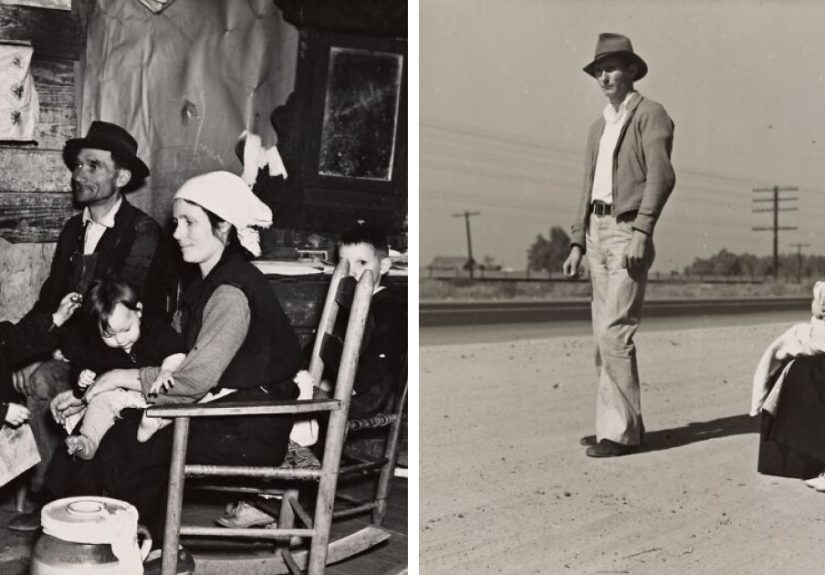
- 25) A sharecropper family portrait that’s part pride, part proof
- 26) A kitchen shelf with more jars than groceries
- 27) A “No Credit” sign that reads like a broken promise
- 28) A working mother balancing a child and a task
- 29) A neighborhood barbershop as informal news headquarters
- 30) A “Migrant Mother”–type momentexhaustion, protection, resolve
- 31) A packed boarding house room with “just enough” space
- 32) A Works Progress Administration project in motion
- 33) A movie theater marquee still glowing
- 34) A quiet portrait where the person looks back like an equal
- What These Photos Teach Us (Beyond “Wow, History Was Intense”)
- Experiences That Make Depression-Era Photos Hit Even Harder (500+ Words)
- Conclusion: Let the Photos Do What They Were Always Meant to Do
The Great Depression can feel like a chapter title you skimmed in a textbook: stock market crash, bank failures, unemployment, dust, New Deal, repeat. But then you land on a photographone frozen second in the 1930sand suddenly the era stops being an “event” and starts being a set of real Tuesdays.
You notice the scuffed shoes. The hand-me-down coat that’s doing overtime. The sign in a storefront window that reads like a plot twist. The kind of details nobody writes down because they’re too normaluntil they’re gone.
This is why Depression-era photography hits so hard: it turns big economic headlines into human-scale evidence. These images aren’t just “sad pictures.” They’re also about problem-solving, improvising, community, stubborn dignity, and the strangely timeless habit of people trying to look presentable even when their budget says, “Absolutely not.”
Why So Many Powerful Depression Photos Exist
A lot of the most famous images from the era weren’t accidental. During the New Deal, the federal government sponsored documentary photography to show Americans what the crisis looked like on the groundespecially in rural communities and among migrant workers. That effort created a massive visual archive of American life, including scenes of work, school, church, main streets, farms, camps, and the long, quiet math of “How do we make this week last?”
The result is a time capsule with more emotional accuracy than any timeline. You can study it for economics (prices, jobs, migration), sociology (race, labor, housing), design (posters, storefronts, tools), and everyday culture (haircuts, lunches, dances, radio nights). And because many of these photographs were produced through government programs, a huge portion survives as public historical recordmeaning you can zoom in and get lost in the details without needing a DeLorean.
How to “Read” a Great Depression Photo Like a Historian (Without Ruining the Vibe)
If you want these images to really come alive, try looking for four things:
- Signals of the economy: closed banks, pawn shops, “Help Wanted” boards, empty shelves, handmade signs, or lines outside offices.
- Workarounds: patched clothing, repurposed materials, home gardens, shared rides, makeshift repairscreativity under pressure.
- Community: churches, schools, union meetings, dances, marketsplaces people kept showing up, even when life got weird.
- What’s outside the frame: Who took the photo? Why? What story were they trying to telland what might they have missed?
Now, let’s step into 34 moments that feel less like “history” and more like you’re standing there, hearing the wind, and realizing the past had the same volume as the present.
34 Rare Photo Moments That Make the Great Depression Feel Real
-
1) The job board that looks like a crowded comment section
Men lean in toward a public hiring notice, reading it like it might change mid-sentence. It’s not just a search for workit’s a search for proof that work still exists.
-
2) A family car packed like a moving-day confession
Mattresses, pans, crates, and a few stubborn hopes are stacked high. You can practically feel the weight of deciding what your whole life is allowed to be.
-
3) A storefront window with more signs than products
“For Rent,” “Cash Only,” “No Credit,” “Sale.” The glass becomes a bulletin board for economic realitypolite lettering, brutal message.
-
4) Children dressed for school with clothes that have seen things
Coats hang a little too long, cuffs are turned, and shoes look borrowed from the past. The photo quietly insists: learning still happens, even when money doesn’t.
-
5) A soup line that feels like a civic ritual
No chaosjust people waiting, shoulders slightly rounded, conversations muted. The tragedy isn’t drama; it’s routine.
-
6) A farmer’s hands holding the whole story
Sometimes the face is secondary. The photo focuses on cracked hands, a tool handle, a frayed gloveevidence of work that didn’t pay what it used to.
-
7) The “company store” stare-down
A rural store counter, a ledger, and a look that says credit is both lifeline and leash. The scene is quiet, but the power dynamics are loud.
-
8) A tenant cabin with wallpaper made of newspapers
Walls layered in headlines like insulation. It’s practical, yesbut also symbolic: the news literally becomes shelter.
-
9) A lunch pail that is more hope than lunch
A worker sits with a simple meal, posture tired but composed. The image isn’t about miseryit’s about endurance, one bite at a time.
-
10) The dust that turns daylight into sepia
A landscape where the sky looks heavy and the horizon fades. The photo makes you understand the Dust Bowl not as a concept, but as a daily opponent.
-
11) A migrant camp built from whatever said “yes”
Scrap wood, canvas, cratesarchitecture by necessity. The layout tells you people were building community out of leftovers.
-
12) Laundry day: the great equalizer
Clotheslines stretch like flags of persistence. In hard times, cleanliness isn’t vanityit’s control, one of the few things still negotiable.
-
13) A radio gathering that feels like a shared heartbeat
Neighbors sit close to a radio, listening together. Entertainment becomes information, comfort, and social glue in one wooden box.
-
14) A small-town main street with too much empty space
Fewer cars, quieter sidewalks, a storefront half-lit. The photo captures the economic slowdown the way your body feels a winter draft.
-
15) A relief office line that bends around the building
People wait with papers in hand, hats on, eyes forward. Bureaucracy becomes a doorwayand everyone is trying to fit through it at once.
-
16) A farm auction where everyone pretends it’s “just business”
A crowd stands around tools and livestock, faces tight. The photo documents the moment a family’s work becomes inventory.
-
17) The farm kitchen that doubles as headquarters
A table with bills, food, and maybe a seed catalog. Depression-era survival often happened in kitchens: planning, feeding, deciding, repeating.
-
18) Children playing in a yard that’s mostly dirt
No fancy toys neededkids invent games anyway. The image quietly argues that joy didn’t go bankrupt, even when banks did.
-
19) A worker’s face lit by factory windows
Where jobs exist, the photos show pride and fatigue cohabiting. Industry scenes reveal that “having work” and “being secure” weren’t always the same thing.
-
20) A Civilian Conservation Corps camp morning
Rows of bunks, uniforms, and young men learning structure and skills. It’s a picture of government intervention made visible: jobs, discipline, and a paycheck sent home.
-
21) A roadside stand with homemade signs and small miracles
Produce, eggs, or piepriced to move. The photo shows micro-entrepreneurship before it was trendy, fueled by necessity instead of hashtags.
-
22) A dance hall night that refuses to be canceled
Even in hardship, people danced. The image captures how social life didn’t disappearit adapted, budgeted, and carried on.
-
23) A church gathering in worn Sunday best
Pressed shirts, repaired dresses, polished shoes that have no business shining anymore. Faith communities offered stability when other institutions faltered.
-
24) A schoolhouse scene with serious faces and simple supplies
Desks, chalkboards, and kids trying to focus. Education becomes a promise: the future is still allowed to exist.
-
25) A sharecropper family portrait that’s part pride, part proof
The camera meets steady eyes. The image resists stereotypes by emphasizing personhoodfamilies as complex as any balance sheet.
-
26) A kitchen shelf with more jars than groceries
Preserved foods line up like savings accounts. Canning, storing, stretchingthis is household economics in glass containers.
-
27) A “No Credit” sign that reads like a broken promise
Credit had once greased daily life. In this photo, the sign is a boundary line: the old normal isn’t coming back today.
-
28) A working mother balancing a child and a task
The scene is domestic, but the meaning is structural: caregiving and labor were always intertwined, especially when safety nets were thin.
-
29) A neighborhood barbershop as informal news headquarters
Haircuts continue, conversations continue, and community identity continues. Some businesses survived by becoming social institutions, not just services.
-
30) A “Migrant Mother”–type momentexhaustion, protection, resolve
A parent’s face holds worry and calculation while children press close. These portraits became iconic because they compress the era into one human expression: keep going.
-
31) A packed boarding house room with “just enough” space
Renting beds, sharing kitchens, stacking lives into tight quarters. The photo shows how housing insecurity looked long before the term became common.
-
32) A Works Progress Administration project in motion
Men pour concrete, build roads, paint murals, repair public spaces. The image says: the country didn’t just “recover”it built its way forward.
-
33) A movie theater marquee still glowing
Even if money is tight, the posters promise two hours of elsewhere. Entertainment isn’t escapism so much as emotional maintenance.
-
34) A quiet portrait where the person looks back like an equal
Not every photo is action. Some are simply presencesomeone standing tall enough to remind you that poverty is a condition, not an identity.
What These Photos Teach Us (Beyond “Wow, History Was Intense”)
First, the Great Depression wasn’t one single experience. Urban unemployment lines, rural tenant farming, Dust Bowl displacement, and New Deal work programs all overlapped, but they didn’t look the same everywhere.
Second, recovery wasn’t a switchit was a patchwork. You can see that in the mix of images: despair next to determination, scarcity next to ingenuity, collapse next to construction.
And third, photographs are never neutral. Many of these images were created for documentation and persuasion. That doesn’t make them “fake”it makes them purposeful. The best way to honor them is to look closely, learn context, and treat the people in the frame like neighbors, not props.
Experiences That Make Depression-Era Photos Hit Even Harder (500+ Words)
There’s a particular kind of rabbit hole that starts innocently: you search for “Great Depression photos,” click into a digital archive, and tell yourself you’ll browse for five minutes. Then it’s suddenly an hour later, your coffee is cold, and you’re zoomed in on the corner of a photograph because you’re trying to read a hand-lettered sign taped to a window. It feels weirdly modernlike investigative scrollingexcept the “feed” is a nation trying to stay on its feet.
One experience that changes everything is learning to slow down. At first, your brain wants to categorize: breadline, dust, migrant camp, closed factory. But the longer you look, the more the “categories” dissolve into individual choices and small details. Someone’s collar is carefully buttoned. A kid’s hair is combed. A porch has a swept edge even though the yard is chaos. Those details aren’t trivialthey’re strategies. When money is scarce, dignity becomes something you make with whatever you still control: posture, cleanliness, routine, care for children, care for elders, care for the tiny patch of space you can call yours.
Another powerful experience is reading the captions and realizing how much context rides on a few lines. A photo of a family in a bare room can look like a timeless symbol of povertyuntil the caption tells you the county, the job lost, the crop failure, or the temporary camp built to create safer living conditions. Suddenly the image shifts from “tragedy” to “systems.” It’s not just that people were struggling; it’s that housing, labor arrangements, banking stability, weather disasters, and public policy all collided in the same decade. That realization can be uncomfortable, but it’s also clarifying: history wasn’t a mood. It was a structure.
If you ever visit a museum exhibit of Depression-era photography, the experience hits differently than online viewing. In person, prints have scale and texturegrain, contrast, and the physical “weight” of the moment. You notice how people are posed (or not posed), how light falls across worn fabric, how the background tells its own story. You also notice what you don’t notice online: the silence. In a gallery, you’re not multitasking. You’re standing there with nothing to do but witness. That can feel heavy, but it can also feel respectful, like you’re giving someone your full attention across time.
There’s also a surprisingly personal experience that happens when you start talking about these photos with family. Someone says, “My grandparents kept everything.” Someone else says, “My great-aunt used flour sacks for dresses.” You realize the Great Depression wasn’t just an “era”it left habits that lingered for decades: saving string, reusing jars, turning off lights, fearing debt, cooking with what’s available, distrusting financial institutions, trusting community networks. The photos become less like distant documentary evidence and more like an explanation for family stories you’ve heard your whole life.
Finally, the most unexpected experience is noticing how the photos don’t only show hardshipthey show competence. People fixing machines, organizing camp meetings, building roads, running classrooms, cooking huge meals, playing music, holding babies, planting gardens. It’s a reminder that even in collapse, society keeps producing care. And once you see that, these images stop being “rare photos of a sad time” and start being what they really are: proof that humans, collectively, are extremely stubborn about continuing.
Conclusion: Let the Photos Do What They Were Always Meant to Do
The Great Depression is often summarized in numbersGDP decline, unemployment, bank failures. But photographs translate those numbers into lived reality: faces, streets, hands, meals, repairs, lines, laughter, and the sheer daily effort of getting through.
If you want to understand the era “like never before,” don’t just glancelinger. Look at the edges of the frame. Read captions. Compare regions. Notice what’s missing. And remember: every image is a collaboration between a moment, a person being photographed, and a photographer trying to make the country pay attention.