Table of Contents >> Show >> Hide
- How to Pick the Right Divider (So It Doesn’t Eat Your Space)
- 31 Creative Room Divider Ideas for Small Spaces
- 1. Ceiling-track curtains (the “instant room” button)
- 2. Tension-rod curtains for renters
- 3. Sheer curtains to keep the glow
- 4. A split “noren” curtain (small, stylish, surprisingly useful)
- 5. Beaded curtains (retro, but make it modern)
- 6. Macramé or woven hanging for soft separation
- 7. A tapestry as a flexible “wall”
- 8. Folding screen (the classic for a reason)
- 9. Upholstered screen for a cozier, quieter nook
- 10. Wallpaper-covered DIY screen (cheap drama, high impact)
- 11. Open bookcase divider (storage + separation)
- 12. Cube storage unit as a “half wall” you can move later
- 13. Double-sided shelving with baskets (organized on purpose)
- 14. Wardrobe system as a divider (hello, extra closet)
- 15. Freestanding garment rack for a lightweight closet wall
- 16. Back-of-sofa console to define the living zone
- 17. Desk-behind-sofa “work wall”
- 18. Narrow kitchen cart or island to separate cooking from living
- 19. Tall plants in a long planter (a living divider)
- 20. A vertical plant stand “screen”
- 21. Hanging plants to create a soft curtain effect
- 22. Slatted wood divider (airy, modern, and very “designer”)
- 23. Cane or woven panel partition (warm texture, small-space friendly)
- 24. Pegboard divider (storage wall + room divider)
- 25. Wire grid panel divider (light, modular, and renter-friendly)
- 26. Glass-and-metal partition (the “I live in a magazine” move)
- 27. Frosted glass (privacy without darkness)
- 28. Half wall (pony wall) with a ledge
- 29. Sliding barn-style door for flexible separation
- 30. Accordion or folding door (compact, practical, underrated)
- 31. Repurposed vintage doors or window frames (instant character)
- Small-Space Room Divider Tips That Prevent Regret
- Experience Notes: What People Learn After Living With a Divider (About )
Small space, big life. If you’re living in a studio, sharing a room, or trying to convince your brain that your “WFH corner” is not, in fact, your “sleep corner,” a room divider can be the design equivalent of drawing a neat little boundary line… without starting a renovation that eats your security deposit.
The best room divider ideas for small spaces do three things at once: they create privacy (or at least the illusion of it), keep light flowing (because nobody wants to work in a cave), and add function (storage, organization, sound-softening, or all of the above). Below are 31 creative, practical optionsfrom renter-friendly curtains to semi-permanent partitionsso you can carve out “rooms” without sacrificing precious square footage.
How to Pick the Right Divider (So It Doesn’t Eat Your Space)
1) Decide what “privacy” means for you
Are you hiding a bed from your living room? Blocking a messy hobby zone? Creating a calmer Zoom background? The more privacy you need, the more solid your divider should be. If you mainly want visual separation, open or see-through dividers will feel lighter and more breathable.
2) Protect your light and sightlines
In small rooms, darkness spreads faster than gossip. Favor dividers that let light pass throughslats, cane, glass, acrylic, open shelving, or sheer curtainsespecially if your windows are limited.
3) Make it work harder than a basic wall
A divider can be storage, display, a closet, a plant stand, or a sound buffer. When square footage is scarce, every item should earn its keep. If your divider can’t do double duty, it’s just freeloading.
4) Respect renter reality
If you rent, prioritize no-drill (or minimal-drill) options like tension rods, freestanding screens, bookcases, or furniture placement. If you own, you can level up to slat walls, half walls, sliding doors, or glass partitions.
31 Creative Room Divider Ideas for Small Spaces
1. Ceiling-track curtains (the “instant room” button)
Mount a ceiling track and hang linen or cotton panels to divide a sleeping area from a living area. Open them during the day for light; close them at night for privacy. Bonus: fabric also softens sound a little.
2. Tension-rod curtains for renters
If drilling isn’t an option, use a tension rod in a doorway or between two walls. Choose heavier curtains for better coverage, or lighter panels if you want separation without a blackout effect.
3. Sheer curtains to keep the glow
Want separation without losing daylight? Sheer panels are the “I have boundaries, but I’m still fun” choice. They define zones, blur clutter, and keep a small room feeling open.
4. A split “noren” curtain (small, stylish, surprisingly useful)
A noren-style split curtain works beautifully for doorways, kitchenette zones, or a micro-office nook. It’s compact, adds texture, and feels intentionallike you meant to do this, not like you ran out of room.
5. Beaded curtains (retro, but make it modern)
Beads create a visual divider that still lets air move freely. Choose wood for warmth, acrylic for sparkle, or mixed materials for a more contemporary vibe. It’s playfuland honestly, kind of a mood.
6. Macramé or woven hanging for soft separation
A macramé panel gives you a boundary without a bulky footprint. It’s great for separating a reading corner or meditation spot, and it layers well with plants and warm lighting.
7. A tapestry as a flexible “wall”
Hang a large textile from a curtain rod or ceiling hooks to create separation. It’s renter-friendly, adds color, and can hide a bed or storage area in a pinch. Pick something you’d actually want to stare at.
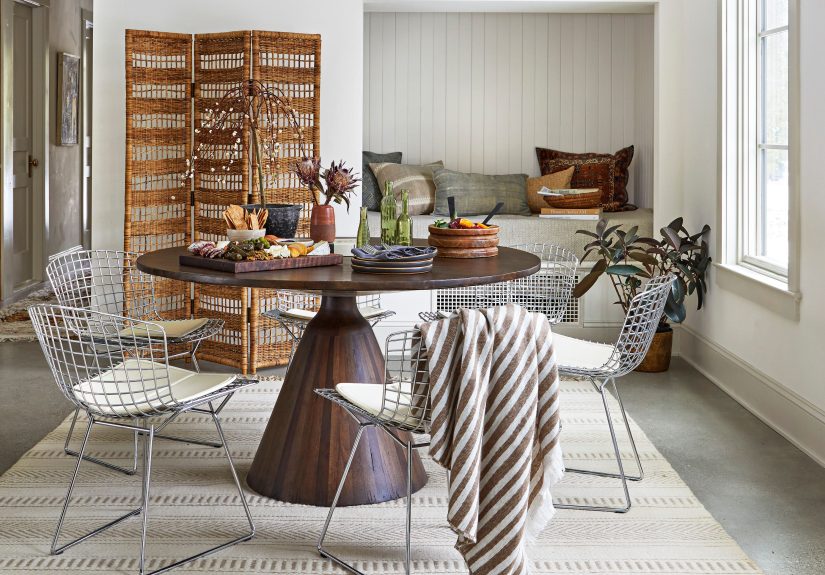
8. Folding screen (the classic for a reason)
Folding screens are portable, quick, and easy to store. Use rattan/cane for an airy feel, or a solid panel for more privacy. They’re perfect for “I need a room… now.”
9. Upholstered screen for a cozier, quieter nook
Upholstered or fabric-covered panels can soften echoes more than wood or metal. That makes them great for dividing a work zone from a living zoneespecially if your calls are frequent and your walls are thin.
10. Wallpaper-covered DIY screen (cheap drama, high impact)
Take a plain screen or hinged panels and cover them in peel-and-stick wallpaper. You get a custom statement piece that doubles as a room divider and a design feature. Function wearing a fancy outfit.
11. Open bookcase divider (storage + separation)
A tall, open-backed bookcase can split a room while still letting light through. Style it from both sides so it looks finished, not like you shoved a shelf in the middle and hoped for the best.
12. Cube storage unit as a “half wall” you can move later
A cube organizer creates separation, adds storage bins, and gives you display space. Keep the top clear or add a few plants. If you anchor it safely, it can feel surprisingly architectural for a simple piece of furniture.
13. Double-sided shelving with baskets (organized on purpose)
Use open shelving as a divider, then add baskets for the stuff you don’t want on display. It’s ideal for separating a living area from a sleeping area while keeping essentials close.
14. Wardrobe system as a divider (hello, extra closet)
In small spaces, closets are often the missing “room.” A wardrobe can act as a divider between bed and living zones, while also adding serious storage. It’s basically a wall that holds your life together.
15. Freestanding garment rack for a lightweight closet wall
A clothing rack can divide a bedroom area while keeping outfits accessible. Use matching hangers and a cover or curtain if you want it to look tidy. Minimal footprint, maximum utility.
16. Back-of-sofa console to define the living zone
Put a slim console table behind your sofa to create a clear boundary between zones. Add lamps for “room lighting,” a tray for keys, and suddenly your space feels structured instead of like furniture drifted into place.
17. Desk-behind-sofa “work wall”
If you WFH, place a desk behind the sofa to form a dedicated office strip. The sofa becomes a visual barrier, and your work setup gets its own territoryso you’re not emailing from your pillow.
18. Narrow kitchen cart or island to separate cooking from living
A slim rolling cart can act as a divider between kitchen and living areas, while adding prep space and storage. Locking wheels help keep it stable, and you can move it when you need more floor space.
19. Tall plants in a long planter (a living divider)
Line up tall plantslike palms or sturdy upright varietiesin a trough planter to create a green boundary. It feels fresh, soft, and calming, and it won’t block light the way a solid wall would.
20. A vertical plant stand “screen”
A tall plant stand or planter frame can divide zones while bringing biophilic vibes into the room. Add a few levels of greenery and you get separation that feels lighterand prettierthan most furniture dividers.
21. Hanging plants to create a soft curtain effect
Instead of a fabric curtain, try a row of hanging plants on a ceiling-mounted rod or shelf. It’s a divider that still lets air move and creates a cozy “garden edge” between spaces.
22. Slatted wood divider (airy, modern, and very “designer”)
Vertical wood slats define space while allowing light to pass through. This style works especially well for separating entry areas, dining nooks, or a bed zonewithout making the room feel chopped in half.
23. Cane or woven panel partition (warm texture, small-space friendly)
Cane and woven panels bring texture and a lighter visual weight than solid wood. Use them in a folding screen or custom frame for a divider that feels breezy but still creates a distinct zone.
24. Pegboard divider (storage wall + room divider)
Pegboard is underrated genius: it can divide a workspace from a living space while holding tools, supplies, hooks, and shelves. Choose a clean layout and it reads as modern, not “garage chic.”
25. Wire grid panel divider (light, modular, and renter-friendly)
Wire grid panels can act like a transparent wall you can clip onto. Add baskets, hooks, and small shelves. It’s ideal for tiny craft corners or a compact entry “drop zone.”
26. Glass-and-metal partition (the “I live in a magazine” move)
A glass partition with a slim metal frame separates zones while keeping light flowing. It’s a bigger project, but it can make a studio feel like it has roomswithout shrinking it.
27. Frosted glass (privacy without darkness)
If you like the idea of glass but want more privacy, frosted glass (or removable window film) can blur the view while still letting in light. Great for separating a sleeping area or dressing zone.
28. Half wall (pony wall) with a ledge
A half wall defines space without blocking sightlines. Add a ledge for plants, books, or art. It’s especially useful between a kitchen and living area when you want structure, not a full barrier.
29. Sliding barn-style door for flexible separation
A sliding door can close off a bedroom nook, office corner, or laundry area when neededthen disappear when you want openness. If you’re short on swing space, sliding beats traditional doors.
30. Accordion or folding door (compact, practical, underrated)
Folding doors can separate areas like a closet-office combo or a sleeping nook without requiring a lot of room to open. It’s a functional option when you want “real” separation but can’t spare floor space.
31. Repurposed vintage doors or window frames (instant character)
Old doors, shutters, or window frames can become a one-of-a-kind dividerhinged as a screen or mounted to a track for a sliding effect. It’s part partition, part art, and it brings personality that flat drywall never will.
Small-Space Room Divider Tips That Prevent Regret
Keep walkways generous
A divider that forces you into a sideways crab-walk is not a win. Aim for clear, easy paths around itespecially between the kitchen, bathroom, and the main “everything zone.”
Anchor tall pieces safely
Bookcases and wardrobes used as dividers should be stable and properly secured if possible. In small spaces, you’ll bump things more often than you think, usually while carrying laundry and questioning your life choices.
Use lighting to “finish” each zone
A divider works best when each side has its own lighting plan. A floor lamp for the living zone and a small lamp or wall light for the sleeping zone makes it feel like two intentional roomsnot one room that got into a disagreement.
Experience Notes: What People Learn After Living With a Divider (About )
Once you start dividing a small space, you quickly discover that the divider isn’t the whole storythe habits around it are. People often begin with the dream: “I’ll have a cozy bedroom nook and a clean living area.” Then real life shows up with backpacks, laundry piles, and that one chair that becomes a clothing museum. The best dividers don’t just block a view; they create a gentle system that makes the “tidy version” of your space easier to maintain than the chaotic version.
One common lesson: the most successful small-space room divider ideas preserve light. Homeowners and renters alike frequently report that solid, opaque partitions can make a studio feel smaller fasteven if the privacy is great. That’s why airy options (open shelving, slats, cane, glass, sheer curtains) tend to stay in place long-term. They provide separation for your brain without turning your entire apartment into a dim hallway.
Another pattern: dividers work best when they “solve two problems.” A folding screen that only hides a bed is helpful, but a bookcase divider that hides a bed and stores linens is transformational. People who switch from a purely decorative divider to a storage divider often describe it as getting back square footage they didn’t realize they’d lost. Suddenly your room divider is also your closet overflow, your library, your plant stand, and your “please don’t look at that” shield.
Sound surprises a lot of folks. Many expect a divider to create silence, but most room dividers are visual boundaries more than acoustic ones. Fabric helps a bit, and upholstered panels help more, but if you share a space with someone, you’ll still want behavior boundariesheadphones, quiet hours, or a simple routine like “curtain closed means I’m off-duty.” The divider becomes a signal as much as a structure, which can be incredibly calming in tight quarters.
People also learn that placement matters more than perfection. The “right” divider in the wrong spot can wreck flow. A bookcase placed a few inches too far can block a walkway; a curtain that opens the wrong direction can become annoying fast. Those who succeed tend to test first: painter’s tape on the floor to mark boundaries, moving furniture for a weekend trial run, and adjusting until the space feels natural. Small spaces reward experimentationbecause you’ll feel a bad layout immediately.
Finally, there’s an emotional shift that happens when a room gains zones. A tiny home with defined areas often feels more restful, because your brain stops treating the entire space as one never-ending to-do list. When your bed isn’t visible from your work setup, you sleep better. When your desk isn’t staring at you during dinner, you unwind faster. That’s the real magic of room dividers in small spaces: not just privacy, but permissionpermission to do one thing at a time.