Table of Contents >> Show >> Hide
- Inside the Viral “Hard to Clean” Design List
- Why Designers Keep Forgetting About Cleaning
- 30 Cleaning-Nightmare Design Choices You’ll See Again and Again
- 1. Tiny Tiles and Endless Grout Lines
- 2. Vessel and Above-Mount Sinks
- 3. Open Kitchen Shelving Near the Stove
- 4. Cabinets That Don’t Reach the Ceiling
- 5. Fancy Slatted and 3D Feature Walls
- 6. Intricate Light Fixtures and Chandeliers
- 7. Textured Walls and Brick Behind the Stove
- 8. Rattan, Cane, and Woven Everything
- 9. Pebble Shower Floors and Overly Busy Patterns
- 10. Barn Doors and Dusty Tracks
- 11. Floating Cabinets and Tight Gaps
- 12. High-Gloss Dark Surfaces and Black Appliances
- 13. Floor-to-Ceiling Glass and Mirror Walls
- 14. Upholstered Dining Chairs in High-Use Homes
- 15. Deep Decorative Ledges and High Built-Ins
- Designing a Home That Looks Good and Cleans Fast
- Real-Life Experiences: What Living With These Designs Actually Feels Like
- Conclusion: Beautiful, But Make It Wipeable
There are two kinds of people in this world: those who design glossy, gravity-defying interiors for Instagram,
and those who have to scrub the dust, grease, and mystery gunk out of them every week.
Spoiler: they are rarely the same person.
That’s why a viral collection of photos titled
“30 Things Whose Designers Forgot They Will Have To Be Cleaned” hit such a nerve online. The images,
featured by Bored Panda, show everything from staircase railings that look like dust magnets to bathrooms covered
in tiny grout lines that could haunt your dreams. The common theme? Somewhere between “Wow, that’s stunning” and
“Who actually lives here?” someone forgot a very basic fact of life: everything eventually gets dirty.
While the photos are hilarious, they also double as a free masterclass in what not to do in design if you
ever plan on cleaning your home in under three hours. In this guide, we’ll break down the kinds of design choices
that show up in those “what were they thinking?” photos, why they’re so hard to maintain, and how you can get a
stylish look without signing up for a part-time job with a scrub brush.
Whether you’re renovating, building, or just daydreaming on your lunch break, consider this your friendly reminder:
your future self with the mop and the vacuum deserves a seat at the design table.
Inside the Viral “Hard to Clean” Design List
The Bored Panda list pulls together photos shared by people who’ve encountered beautifully ridiculous design
decisions in real life – homes, hotels, restaurants, and public spaces that clearly prioritized looks over
cleaning practicality. Think:
- A staircase with hundreds of tiny, dust-collecting cutouts.
- A bathroom where every surface is tiny tile and white grout.
- A fancy sink sitting on top of the counter like a decorative bowl, with grime collecting all around its base.
- Light fixtures so intricate you’d need a toothbrush and three vacation days to dust them properly.
These aren’t just isolated “oops” moments. Designers, builders, and DIY fans keep making the same choices:
they chase trends, dramatic shapes, and high-impact finishes, while the boring question of
“How do we actually clean this?” gets left on read.
Why Designers Keep Forgetting About Cleaning
1. Form Over Function (And Over the Vacuum)
Many modern interiors are designed first for photography and second for real life. Glossy magazine shots and social
media feeds love drama: backlit slatted walls, black high-gloss cabinets, miles of glass, and sculptural staircases.
The fact that every extra seam, groove, and ledge becomes a dust trap? Less photogenic.
Cleaning pros and organizing experts constantly warn that complex shapes and layered textures are harder to maintain
because dirt settles into every recess: deep cabinet details, ornate moldings, 3D wall panels, and slatted room
dividers all look chic on day one and grimy by month three if you don’t keep up.
2. Trend-Driven Choices That Age (And Soil) Fast
A lot of the “hard to clean” offenders are trends that exploded on Pinterest: open kitchen shelving, vessel sinks,
matte black everything, and floor-to-ceiling glass. Designers and homeowners love the look until the fingerprints,
water spots, soap scum, and grease splatters arrive.
Design editors and interior pros now frequently call out trends like open shelving and certain glossy finishes as
high-maintenance choices that date quickly and demand constant wiping to look decent. The more “statement” a material
or shape is, the more likely it is to show every crumb, streak, and paw print.
3. No One Asked the Person With the Mop
In many projects, the people who will actually clean the space don’t get a say during design. Professional cleaners
and experienced homeowners will tell you the same thing: if you’ve ever had to scrub it, you design very differently
next time. You think about:
- How far you have to reach to wipe the backsplash behind the stove.
- Whether you can vacuum under furniture without moving it.
- How many grout lines are in that “beautiful” shower floor.
- Where airborne grease lands when you cook every day.
The Bored Panda photos are basically a visual cautionary tale: this is what happens when “maintenance” is an afterthought.
30 Cleaning-Nightmare Design Choices You’ll See Again and Again
You don’t need the exact 30 pictures to recognize the patterns. The same types of “forgot this has to be cleaned”
decisions show up over and over. Here’s a breakdown of some of the most notorious categories together, they easily
add up to 30+ examples from real-life homes and public spaces.
1. Tiny Tiles and Endless Grout Lines
Mosaic tiles in showers, floors covered in river pebbles, and micro-hex tile backsplashes look artisanal. But every
grout line is a channel for soap scum, hard water, and mildew. Dark or white grout makes it even more obvious when
it’s dirty, and scrubbing all those lines is a full workout.
Cleaner alternative: Larger-format tile, solid-surface panels, or continuous stone with minimal grout
lines. If you really want texture, limit it to a small accent area you can realistically scrub.
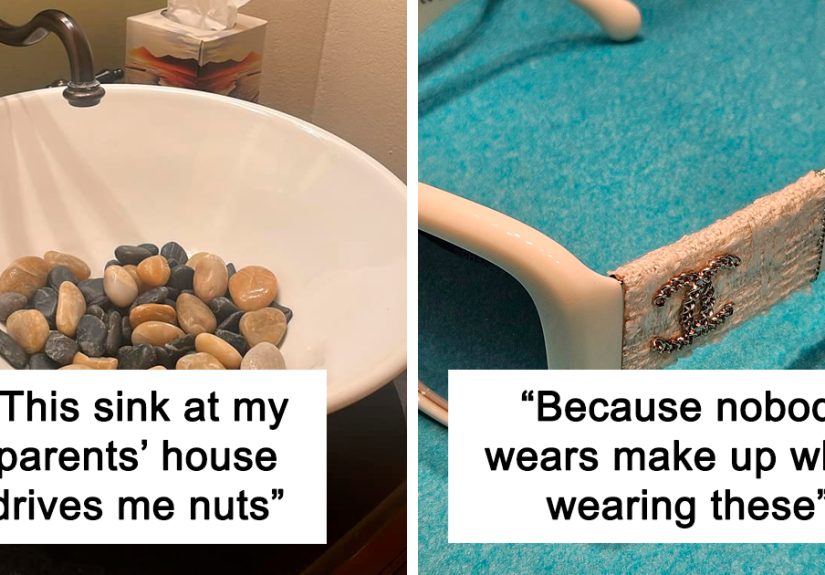
2. Vessel and Above-Mount Sinks
Those bowl-style sinks perched on top of the counter photograph beautifully. In reality, water, toothpaste, and soap
drip down the sides and collect around the base. The seam where the sink meets the counter is notoriously tough to
wipe clean, and you often need a small brush to get the gunk out.
Cleaner alternative: Undermount or integrated sinks with smooth transitions to the counter, so a quick
swipe with a cloth is all it takes.
3. Open Kitchen Shelving Near the Stove
Open shelves are the poster child for “looks great, lives terribly.” Any shelf within range of your cooktop gets
coated with a combo of dust and grease that sticks to plates, cups, and decor. Instead of just wiping a cabinet door,
you suddenly have to wash everything sitting out in the open.
Cleaner alternative: Closed upper cabinets for most storage, and maybe a single small open shelf away
from the stove if you really love the look.
4. Cabinets That Don’t Reach the Ceiling
That gap above kitchen cabinets? It becomes a dusty, greasy ledge that basically no one can reach without a ladder.
The Bored Panda-style photos often show this exact problem: décor items up there slowly turning a shade of “cooking haze.”
Cleaner alternative: Run cabinets to the ceiling, add a closed soffit, or fill the space with easily
removable, washable boxes or baskets.
5. Fancy Slatted and 3D Feature Walls
Wood slat walls, ribbed paneling, and deep 3D wall art give great shadows in photos and fantastic nesting spots for
dust in real life. Every groove is another line you’ll have to vacuum or wipe individually if you want it truly clean.
Cleaner alternative: Use textured walls in low-dust areas (like behind a headboard) or choose shallow,
easy-to-wipe textures instead of deep grooves.
6. Intricate Light Fixtures and Chandeliers
Multi-armed chandeliers, feather lamps, and ultra-detailed fixtures are common in “design fail” photos because they
look incredible but collect dust on every little edge. Add the fact that they’re often 10 feet in the air, and you’ve
just created a cleaning nightmare that requires ladders and special tools.
Cleaner alternative: Sleeker fixtures with fewer small parts and smooth surfaces you can dust with one
quick swipe.
7. Textured Walls and Brick Behind the Stove
Raw brick, stone, or textured plaster behind a stove may give a rustic vibe, but grease sticks to every bump and pore.
Trying to degrease irregular masonry is… let’s just say you’ll do it once and never again.
Cleaner alternative: A smooth tile or glass backsplash that still looks interesting but lets you wipe
down splatters without a toothbrush.
8. Rattan, Cane, and Woven Everything
Woven chairs, bedheads, and cabinets are trendy and airy and basically a dust-and-crumb net. Those small holes and
overlapping fibers grab debris and are hard to vacuum without damaging the material.
Cleaner alternative: Mix in some woven textures, but keep them away from heavy-use, high-crumb zones
like dining tables and kids’ spaces.
9. Pebble Shower Floors and Overly Busy Patterns
Pebble floors feel spa-like underfoot, but each stone is surrounded by grout that soaks up soap and minerals.
Busy patterned tile that looks “old-world charming” can also hide dirt, making it hard to tell what’s clean and
what isn’t.
Cleaner alternative: More even surfaces with slip-resistant texture, larger tiles, and well-sealed
grout in a mid-tone shade.
10. Barn Doors and Dusty Tracks
Sliding barn doors look industrial-chic… until the track fills with dust, hair, and grime that’s awkward to clean
out. When used for bathrooms, they often don’t close tightly, which adds privacy issues on top of maintenance.
Cleaner alternative: Traditional swinging doors or pocket doors if you need to save space, with
hardware that’s mostly enclosed.
11. Floating Cabinets and Tight Gaps
Cabinets that hover a couple of inches off the floor, or built-ins that stop just shy of walls, create perfect
slots for dust bunnies, toys, and random debris. You can’t easily sweep, and your vacuum probably doesn’t fit.
Cleaner alternative: Either go fully to the floor (with a toe kick) or leave a gap high enough to
vacuum under comfortably.
12. High-Gloss Dark Surfaces and Black Appliances
Shiny black appliances, countertops, and cabinets are dramatic, but they show everything fingerprints, water
spots, dust, and streaks. In the wrong lighting, you can see every swipe you missed.
Cleaner alternative: Satin or matte finishes in mid-tone colors that camouflage smudges a bit better,
without needing constant polishing.
13. Floor-to-Ceiling Glass and Mirror Walls
Large mirrors can make a space feel bigger, and big glass railings feel modern and open. But daily life – kids’
handprints, pets’ noses, and everyday splashes – turns them into full-time cleaning projects.
Cleaner alternative: Use large glass strategically and keep it where you can easily reach it. Combine
glass with solid railings or partial walls for less surface to polish.
14. Upholstered Dining Chairs in High-Use Homes
Fully upholstered seats look cozy and upscale, but every spill, crumb, and sauce splatter becomes a stain risk.
In households with kids, pets, or enthusiastic dinner guests, those chairs will age fast.
Cleaner alternative: Wipeable seat surfaces or performance fabrics that can handle regular spot
cleaning.
15. Deep Decorative Ledges and High Built-Ins
Those dramatic built-in niches or high display ledges seem like fun styling opportunities until you realize you
need a ladder to dust them. That’s how you end up with “permanently fuzzy” décor, just like in so many of those
viral photos.
Cleaner alternative: Keep everyday décor at heights you can dust without acrobatics, and reserve high
spaces for minimal, easy-to-wipe items.
Designing a Home That Looks Good and Cleans Fast
The good news: you don’t have to choose between style and sanity. Many designers now intentionally focus on “easy
to clean” as a design goal. That means:
- Continuous surfaces: Fewer seams, joints, and grout lines wherever possible.
- Closed storage: Doors and drawers hiding most clutter and dust-prone items.
- Mid-tone materials: Finishes that don’t show every speck of dust or every splash.
- Accessible layouts: Enough clearance to vacuum, mop, and wipe without gymnastics.
- Thoughtful lighting: Fixtures that are easy to reach and simple to dust.
Whenever you’re tempted by a bold design idea, ask one simple question: “How would I clean this in under five
minutes?” If the answer involves special tools, ladders, or existential dread, it probably belongs in a photo
gallery, not your daily life.
Real-Life Experiences: What Living With These Designs Actually Feels Like
The funniest part of those Bored Panda-style photo collections is that behind every “look at this ridiculous design”
picture, there’s a real person who has to live with it. Here are some very relatable experiences that mirror what
many people share online when they talk about hard-to-clean design.
The Pebble Shower Floor “Spa” That Wasn’t
Imagine moving into a new place with a shower floor made of smooth river pebbles. It feels spa-like and looks like
an ad for luxury resorts. For the first week, you’re thrilled. Then you notice the grout between the stones darkening,
and suddenly your “spa” looks suspiciously like a science experiment.
You try scrubbing on your hands and knees, but there’s just so much surface area. Each pebble is surrounded by
grout, and soap scum plus minerals from your water supply settle in like permanent tenants. Eventually, you learn
what many homeowners have: pretty surfaces that are always wet need to be as simple and seamless as possible.
The Open-Shelf Kitchen That Became a Dust Collection Display
Maybe you’ve seen this one in real life: a beautifully remodeled kitchen with long, open wood shelves instead of
upper cabinets. Stacked dishes, color-coordinated bowls, plants. Perfect for photos.
Now fast-forward six months. Every bowl has a faint sticky layer from tiny grease particles drifting over from the
stove. The wine glasses need rinsing before every use. That artfully stacked pile of plates? They get wiped down more
often than actually used.
The lesson people share again and again is that open shelving works best in very limited doses and far away from
active cooking zones. Otherwise, it’s like installing a decorative dust trap right at eye level.
The Vessel Sink That Needed Its Own Cleaning Routine
Vessel sinks look like sculptures in design catalogs. In daily use, people quickly discover the downside:
splashes on the countertop, water trickling around the base, and little drips running down the outside of the bowl.
The ring where the sink meets the counter becomes a magnet for toothpaste, soap, and stray hair.
Many homeowners end up having to clean not just the inside of the sink, but the outside, the base, and the counter
around it. It turns what should be a quick wipe-down into a multi-step process that’s easy to skip which is how
you wind up in those “look at this crusty sink” photo compilations.
The Glass Railing Nobody Wants to Windex
Glass balustrades on stairs or balconies are beloved by architects. They’re sleek, minimal, and let light flow
everywhere. To anyone who lives with kids, pets, or frequent guests, they’re also one giant fingerprint canvas.
It’s very common to hear homeowners say they love the look but resent the constant smears at hand height.
The bigger the glass panel, the more obvious the streaks and the more awkward it is to clean safely on stairs
or high landings.
Learning From Everyone Else’s “Never Again” Moments
What makes the Bored Panda-style collections so useful (beyond the comedy value) is that they’re filled with
real-world test cases. Someone else has already lived with the white grout, the complicated chandelier, the
checkerboard glass partition, and the dust-collecting stair rails and they’re practically begging you not to
repeat their mistakes.
Before you lock in a design decision, it’s worth running through a quick mental checklist inspired by these stories:
- Can I reach every part of this feature with a normal cleaning tool?
- Are there gaps, seams, or grooves that will trap dust, grease, or moisture?
- Does this material show every smudge and fingerprint?
- Will this still feel manageable to clean in five years, not just during the first month of excitement?
- If someone posted a photo of this online, would the caption be “beautiful” or “how do you even clean that?”
Design trends come and go, but the reality of wiping, scrubbing, and vacuuming is forever. Learning from the
“30 things whose designers forgot they will have to be cleaned” isn’t just entertaining it’s one of the easiest
ways to build a home that looks gorgeous and actually works for the person who lives there.
Conclusion: Beautiful, But Make It Wipeable
The photos that inspired this article are funny because they’re extreme sinks that splash everywhere, ceilings
covered in dust-catching beams, showers with more grout lines than tiles. But the underlying lesson is surprisingly
practical: if it’s hard to clean, it’s hard to love long-term.
You don’t need to swear off cool design ideas; you just need to filter them through the lens of maintenance.
Favor smoother surfaces, smarter storage, accessible layouts, and materials that don’t turn every speck of dust
into a headline. Your future self, cleaning on a Sunday afternoon, will thank you.
In other words: enjoy the “New Pics” for inspiration and laughs and let everyone else’s design regrets guide you
toward a home that’s both camera-ready and mop-approved.