Table of Contents >> Show >> Hide
- Why this is an “awesome thing” (even when it’s mildly alarming)
- The science behind the face-grab
- What your baby might be “saying” with those tiny hands
- How to enjoy it without sacrificing your face
- Mini field guide: how the face-grab changes over the first year
- Turn it into bonding: simple games that teach “gentle”
- When it’s worth checking in with a pediatrician
- Conclusion: an “awesome thing” you can feel on your skin
- Extra: of face-grab experiences (the messy, sweet kind)
There is a very specific kind of intimacy that only happens in the early-baby era: you’re holding a tiny human who
can’t say your name, can’t tell you what they need, can’t even reliably keep their own socks on…
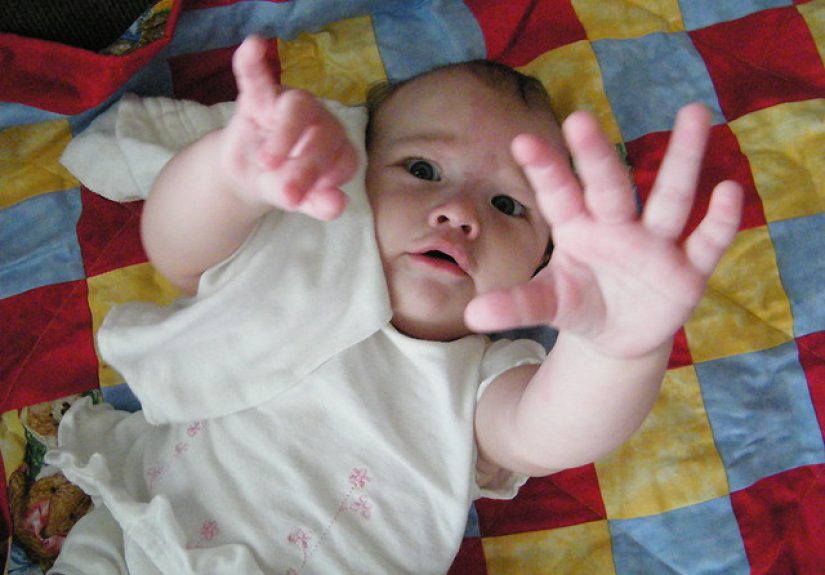
and yet they reach up like, “Ah yes. This face. I remember this face.” Then they grab your cheeks with
all the seriousness of a tiny museum curator examining a rare artifact.
It’s adorable. It’s startling. It’s occasionally painful in the way that only something cute can be painful.
(Why are baby nails both made of angel feathers and also razor wire?) And somehow, even when your nose gets
honked like a bicycle horn, it feels like a small miracle: connection you can literally feel.
Why this is an “awesome thing” (even when it’s mildly alarming)
A face-grab isn’t just random flailing. It’s a whole bundle of early development happening right on your skin:
reflexes fading, voluntary control growing, curiosity igniting, and bonding deepening. Your baby is learning that
their hands can change the world. Your face just happens to be the closest, warmest, most familiar “world object”
with excellent customer service.
And for you? It’s a weirdly perfect reminder that love isn’t always poetic. Sometimes love is a chubby fist pulling
your lower lip like it’s testing a trampoline.
The science behind the face-grab
1) It starts with a reflex: “If it’s in my palm, I’m holding it”
Newborns arrive with built-in reflexes that help them interact with their environment before they can control their
movements on purpose. One of the most famous is the palmar grasp reflex: touch a baby’s palm and they clamp down.
Early on, that grip is automatic and surprisingly strong, like a tiny, determined paperclip.
Over the first months, this reflex gradually fades and gets replaced by voluntary grasping. Translation: your baby
moves from “my hand did a thing” to “I did a thing with my hand.” That shift is a big deal. It’s the beginning of
intentional reach-and-grab… which is great news for their development and neutral-to-bad news for your eyeballs.
2) Then comes reaching: the “I can get to you” era
As babies gain head control, core strength, and coordination, reaching becomes smoother and more purposeful. They
start batting at toys, bringing hands to midline, and grabbing whatever is close enough to count as “mine now.”
This is also when they become more aware of their surroundings and more motivated to interact with the people in
front of them.
If you’ve ever leaned in for a sweet kiss and gotten your nostrils pinched shut, congratulations: your baby is
practicing hand-eye coordination on a live model.
3) Faces are premium content
Your baby’s world is full of interesting stimuli, but your face is the headline act. It’s high value because it’s
familiar, emotionally meaningful, and packed with cues: eyes that blink, a mouth that smiles, sounds that change,
and expressions that respond instantly. Babies learn through their senses, and the face is a sensory buffet.
Plus, human connection is soothing. Warmth, skin contact, and responsive caregiving all support bonding and stress
regulation in early life. So when your baby grabs your cheeks, sometimes it’s not “I want to squish this.”
It’s “This is home base.”
What your baby might be “saying” with those tiny hands
Babies aren’t being dramatic when they grab your face. They’re being scientific. Here are a few common “translations”
for the face-grab:
-
“I’m checking in.” Your face is the most reliable source of comfort and information. Grabbing it
is a way to anchor themselves. -
“I’m exploring texture.” Skin, hair, eyebrows, and lips feel different. Babies love different.
They also love repeating experiments 400 times for peer review. -
“I want your attention.” Face grabs are very effective at getting a response. Even a gentle
“Ouch, buddy” is still interaction. Babies are motivated by feedback. -
“I’m practicing control.” Their hands are learning precision, grip strength, and timing.
(You are essentially a supportive gym coach with cheeks.) -
“I like you.” Sometimes the simplest explanation is the best one. Your baby is reaching for you
because you are their favorite person-shaped thing.
How to enjoy it without sacrificing your face
The goal is not to stop the grabbing entirely. It’s to keep it sweet, safe, and not scratchy. Think “gentle
boundaries,” not “no hands allowed.” Here’s what actually works in real life:
Keep nails short (because baby nails are tiny plot twists)
Babies don’t have great control over their hands early on, and long nails can turn affectionate grabbing into
accidental scratching. Keeping nails trimmed and smoothly filed helps a lot. Many parents find it easiest after a
bath (so nails are softer) or when the baby is asleep (so the “wiggle factor” is lower).
Protect the eyes like you’re starring in an action movie
Eye pokes happen fast. If your baby’s hand comes toward your eyes, gently catch their wrist or guide their hand to
a safer spot (your cheek, your chin, your shoulder). You’re not “rejecting” them; you’re teaching where hands can go.
Label it: “Gentle hands” (and demonstrate what that means)
Babies learn from repetition. Use a consistent phrase like “gentle hands” and model a soft touch by taking their
hand and stroking your cheek lightly. Then praise the gentle moment like it’s a big win (because it is).
Offer a substitute that still feels like “you”
Sometimes the grabbing is sensory seeking. Offer something safe to hold that still connects them to you: your finger,
a soft lovey, a textured teether, or even the collar of your shirt (if it’s safe and you’re okay with mild fashion
destruction).
Don’t panic about the occasional scratch
It’s normal. You’re not failing. Babies are learning. Clean minor scratches as you normally would, keep nails smooth,
and move on. The bigger picture is a baby practicing connection, not a baby plotting your downfall.
Mini field guide: how the face-grab changes over the first year
0–2 months: reflex-powered gripping
Hands are often fisted. Grasping is largely reflexive, and movements can feel jerky or random. If your baby grabs
your finger and won’t let go, that’s the early reflex system doing its thing.
3–4 months: reaching shows up (and it’s dramatic)
Reaching becomes more intentional. Babies start bringing hands together, exploring their own hands, and grabbing
objects that are close. If you hold your baby face-to-face, you’re within prime grabbing range. Expect enthusiastic
contact with cheeks, lips, and hair.
5–6 months: voluntary grabbing gets stronger
Many babies gain better control and stronger grasping. They can grab and hold longer, often pulling things toward
their mouth for inspection. Your face is still fascinating, but now the grip can be more deliberate: the “I chose
your nose” phase.
7–9 months: the “rake and pinch” practice zone
Babies often use a raking grasp to collect small items, and they may experiment with more precise finger movements.
They’re also becoming more social and responsive, which can make face grabbing feel like part bonding, part game.
9–12 months: precision improves (hello, pincer grasp)
Many babies begin developing a pincer grasp (thumb and index finger) and refining it over time. That’s great for
self-feeding and play, and it can also mean they discover new “features” on your face: eyelashes, earlobes, and that
one eyebrow hair that always grows faster than the others.
Turn it into bonding: simple games that teach “gentle”
Mirror time: “That’s us!”
Sit with your baby in front of a mirror. Let them touch your face, then their own reflection, then your face again.
Narrate it casually: “That’s your nose. That’s my nose.” It supports awareness, attention, and playful connection.
Cheek pat practice
Guide your baby’s hand to softly pat your cheek. Use the same phrase each time: “gentle hands.” Keep it short and
cheerful. The goal is a positive pattern, not perfection.
Hand squeezes and finger holds
If your baby needs to grab, offer your finger (or two fingers) and let them hold. It satisfies the urge while
keeping their grip away from sensitive areas like eyes and lips.
When it’s worth checking in with a pediatrician
Most face grabbing is normal and delightful chaos. But it’s reasonable to ask questions if you notice:
- no grasp response at all in the newborn period,
- very stiff, tightly fisted hands that don’t relax over time,
- little interest in reaching or bringing hands to midline by around the middle of the first year,
- or any sudden loss of skills your baby previously had.
Development varies widely, and a clinician can help you interpret what’s normal for your baby’s unique timeline.
Conclusion: an “awesome thing” you can feel on your skin
One day, your baby will stop grabbing your face. They’ll use those hands for crayons, zippers, snack wrappers,
and (eventually) refusing to hold your hand in the parking lot because they are “a big kid.” But right now,
those tiny hands reach for you with total confidence, like they already know you’re safe.
So yes: trim the nails. Save the eyeballs. Teach “gentle hands.” But also soak it in. Because being someone’s whole
world is exhausting and sacred and wildly funny – and sometimes it comes with a free facial massage performed by
a person who still thinks toes are comedy.
Extra: of face-grab experiences (the messy, sweet kind)
The first time a baby grabs your face, it feels like you’ve been chosen for a tiny, unofficial role: “Human
Comfort Object.” It usually happens when you’re least prepared – mid-diaper change, half-asleep on the couch, or
attempting a sip of coffee that’s already gone lukewarm because parenting runs on the same physics as black holes.
You lean in to coo something reassuring, and suddenly a small hand is on your cheek like a miniature starfish
trying to remember where it parked its keys.
Sometimes it’s gentle, almost reverent. The baby’s fingers open slowly, pressing and releasing as if they’re
learning the shape of you. A thumb rests near your lip. A palm warms your jaw. You can practically see the gears
turning: “This face makes the milk happen. This face makes the songs happen. This face looks at me like I’m the
greatest invention since blankets.” In those moments, you forget your laundry pile, your email, your entire
personality outside of keeping a small human alive. You’re just there, being held back.
Other times, it’s less “tender connection” and more “grab bag at a carnival.” Your baby hooks a finger into your
nostril with the confidence of someone who has never read a social rule in their life. They yank your hair like
they’re starting a lawn mower. They slap your mouth shut right as you’re saying “Aaaaand gentle hands,” which is
honestly iconic. You realize you’re living with a creature who’s both adorable and completely ungovernable, like a
kitten who can’t be bribed because it doesn’t understand currency.
The funniest part is how personal the grabbing feels, even though it’s not meant that way. A baby will lock eyes
with you, smile, and then choose your face as the place to practice their strongest grip. You’ll think, “Is this
affection?” and the baby will respond by pinching your cheek with two fingers as if they’re testing avocado ripeness.
And yet, somehow, you still melt. Because the smile is real. The reaching is real. The “I want you close” is real.
Eventually, you develop your own parent reflexes. You learn to angle your face like you’re dodging paparazzi.
You become weirdly proud of your nail-trimming technique. You can catch a baby wrist midair with the smoothness
of a secret service agent. And you start collecting these tiny moments like souvenirs: the sleepy face-hold during
a night feed, the post-bath cuddle with damp fingers on your neck, the giggle that happens when you pretend their
hand is a tiny microphone interviewing your nose.
Then, one day, the face grabs get rarer. Your baby is busy grabbing toys, snacks, remote controls, and absolutely
anything you just told them not to touch. You’ll miss the simple sweetness of being the most interesting thing in
the room. So if you’re in the thick of it now – the cheeks, the scratches, the surprise nostril exploration –
take a mental picture. It’s chaos, yes. But it’s also the purest kind of closeness: love with tiny hands, reaching
for proof that you’re still right there.