Table of Contents >> Show >> Hide
- The Workhouse System in 3 Minutes (So the Stories Make Sense)
- 10 Heartbreaking Stories From Britain’s Workhouses
- 1) The Andover Bone Yard: When Hunger Turned Work Into Desperation
- 2) “Offer the House”: The Cliff-Edge Choice That Wasn’t Really a Choice
- 3) The Day a Family Was Split at the Gate
- 4) The Uniform and the Routine: How Institutions Erased Personhood
- 5) The Lying-In Ward: When Childbirth Came With Shame Attached
- 6) Pauper Apprentices: Children Sent Away Like Postage
- 7) The Infirmary Before Reform: Being Sick Without Real Care
- 8) Agnes Jones at Brownlow Hill: The Day Compassion Walked In (and Found Chaos)
- 9) “Unclaimed”: The Fear That Poverty Could Follow You Past Death
- 10) Petty Crime as an Escape Hatch: Choosing Jail Over the Workhouse
- What These Stories Reveal (Beyond the Dickens Fog)
- Modern-Day Experiences: What It Feels Like to Meet the Workhouse in Real Life (500+ Words)
- Conclusion: Remembering the People Behind the Policy
If you grew up thinking a “workhouse” was basically a gloomy Dickens set where someone yells “MORE!” and an adult faints dramatically into a pot of gruelgood news: your brain nailed the vibe. Bad news: the vibe was real.
Britain’s workhouses were part of a system meant to “manage” poverty. The idea sounded tidy on paper: if public help existed, it should be structured so that only the truly desperate would ask for it. In practice, that principle often translated into a place designed to feel less like a helping hand and more like a warning label.
This isn’t a tour of every workhouse in every county. It’s a collection of ten historically grounded storiessome tied to specific scandals and reforms, others drawn from patterns repeated across the systemshowing how policy choices landed on actual human lives. And yes, we’ll keep it readable. History is heavy enough without writing it like a haunted dictionary.
The Workhouse System in 3 Minutes (So the Stories Make Sense)
Before we dive into the heartbreak, a quick orientationbecause the workhouse wasn’t just a building. It was an idea with rules, routines, and consequences.
- Workhouses expanded under the “New Poor Law” era (often associated with reforms after 1834), aiming to centralize poor relief and cut costs.
- The “workhouse test” meant many people could only receive help if they entered the workhouse.
- “Less eligibility” was the guiding philosophy: conditions inside should be worse than the lowest-paid labor outside, to discourage dependence.
- Families were commonly separated into different wards (men, women, children), even when they arrived together.
- Daily life was regimented: uniforms, strict schedules, monotonous diets, assigned labor, and rules enforced by staff and local guardians.
On paper, this was meant to prevent fraud and “encourage work.” In real life, it often punished unemployment, illness, disability, old age, and social stigma as if they were personality flaws.
10 Heartbreaking Stories From Britain’s Workhouses
1) The Andover Bone Yard: When Hunger Turned Work Into Desperation
One of the most infamous workhouse scandals broke into public view in the mid-1840s at Andover. Able-bodied men were assigned to crush animal bones for fertilizerbrutal labor with a cruel irony: the “work” was literally leftovers. Reports emerged that inmates were so hungry they scraped marrow and bits from the bones they were meant to grind. That detailmen competing for scraps stuck to boneshit Victorian Britain like a moral thunderclap.
The Andover scandal didn’t just expose hunger; it exposed a chain of failure. Local oversight was weak. Power could be abused. And the system’s deterrent logic created conditions where suffering wasn’t a side effectit was a feature. Public outrage helped push reforms in supervision, but the men in that bone yard didn’t get their dignity back on a timetable.
2) “Offer the House”: The Cliff-Edge Choice That Wasn’t Really a Choice
Imagine being out of work in a bad yearharvests fail, prices rise, or industry slows. You do what people do: you ask for help to keep your family afloat until you find wages again. The response you’re given is technically assistance, but it comes with a condition: enter the workhouse.
That’s the workhouse test in plain language. It transformed relief into an ultimatum: accept institutional life (with rules, separation, and stigma) or try to survive without support. For many, the decision wasn’t “Do I want help?” It was “Which kind of harm can I live with?” In a system built to deter, the moral cost was that ordinary hardshipjob loss, seasonal unemploymentcould be treated like a character defect needing correction.
3) The Day a Family Was Split at the Gate
Workhouse rules often separated men from women, parents from children, and sometimes even older children from younger ones. The logic was administrative: different wards, different routines, fewer complications. But at the human level, it was a psychological wrecking ball.
Picture a family arriving with one shared crisis: no money, no food, nowhere to go. Inside, that crisis becomes three separate lives. A father is sent to the men’s ward, a mother to the women’s ward, and children to a children’s area with its own discipline and schedule. The family is now “managed” like inventory.
The heartbreak here isn’t only the separationit’s the message. The system didn’t just say, “You need help.” It said, “You lose togetherness as the price of help.” Poverty didn’t merely empty pockets; it could legally fracture a household.
4) The Uniform and the Routine: How Institutions Erased Personhood
Workhouses were designed to be orderly. Order sounds harmless until it becomes a machine that treats people as problems to be sorted. Uniforms, strict mealtimes, and regulated movement weren’t just about efficiencythey were about reshaping behavior through control.
For many inmates, the daily grind carried a quiet humiliation: your clothes aren’t yours, your time isn’t yours, your choices are rationed like food. Small expressions of identityhow you dress, when you walk, what you eatbecame privileges rather than basics.
And then there was the diet: repetitive, bland, and predictable. It wasn’t simply “cheap food.” It was food engineered to be survival, not comfort. The emotional loss is easy to overlook until you remember what meals representfamily, culture, normal life. In the workhouse, eating became a reminder that you had fallen out of society’s warm circle.
5) The Lying-In Ward: When Childbirth Came With Shame Attached
Workhouses weren’t only for the “able-bodied.” They were also where many women ended up during childbirthespecially unmarried mothers who had few socially acceptable options. Some charitable maternity services favored married women, while unmarried pregnant women often faced stigma, rejection, or the practical problem of having nowhere safe to deliver.
Add the reality that infant mortality was high across the Victorian era, and the workhouse becomes the setting for a specific kind of dread: giving birth in a place not designed for tenderness. Even when staff did their best, resources could be thin, the environment institutional, and the mother’s social standing painfully low.
The heartbreaking story here is not just medical risk; it’s social punishment. Pregnancyan event that should bring community supportcould instead trigger isolation. In the workhouse, motherhood could begin under a cloud of judgment, with the mother treated less like a person and more like a cautionary tale.
6) Pauper Apprentices: Children Sent Away Like Postage
One of the most haunting patterns in the Poor Law world involved children removed from workhouses and sent out as apprenticessometimes far from home. In theory, apprenticeship offered training and a path to work. In reality, many placements were shaped by labor demand, distance, and the simple convenience of moving “mouths to feed” out of the institution.
For a child, the experience could feel like exile. New place, new rules, unfamiliar adults, and little control over what came next. The separation wasn’t just physical; it was emotional and cultural. A kid might leave an urban workhouse and be placed in rural or industrial settings where they were valued mainly for labor.
Even when conditions weren’t overtly abusive, the loss of family contact and stability could be life-defining. Childhood became an economic tool: the system’s version of “resource management,” except the resource was a living person with a small hand and a big fear.
7) The Infirmary Before Reform: Being Sick Without Real Care
Workhouse infirmaries are a grim reminder that “indoor relief” didn’t automatically mean good care. For decades, many infirmaries suffered from understaffing, poor sanitation, and inadequate nursing. In some reports and testimonies, the sick were described as neglected in ways that made recovery harder and dignity rarer.
And yet, this story has a painful twist: the very awfulness of some infirmaries sparked reform movements. Advocates pushed for trained nurses and better standards. The workhouse system, built to deter, accidentally became a stage where early arguments for public healthcare quality played out.
The heartbreak is twofold. First, people endured illness in a place that could treat them like a burden. Second, reforms often arrived because the suffering became too visible to ignorenot because suffering was unacceptable in principle.
8) Agnes Jones at Brownlow Hill: The Day Compassion Walked In (and Found Chaos)
In Liverpool’s workhouse infirmary at Brownlow Hill, reformer Agnes Jones became a symbol of what professional nursing could change. When trained nurses arrived under her leadership in the 1860s, accounts described a world of disorder and mismanagement that demanded not just kindness but systems: cleanliness, routines built for care (not punishment), and standards that treated patients like humans.
Jones’s work mattered because it highlighted an uncomfortable truth: the poor were not sick “differently.” They were simply treated differently. Her efforts helped prove that trained nursing and organized care weren’t luxuries reserved for people with money.
The heartbreaking part? The fact that such reform was remarkable at all. When basic care becomes headline-worthy, you’re looking at a society that had normalized neglectuntil someone insisted neglect wasn’t inevitable.
9) “Unclaimed”: The Fear That Poverty Could Follow You Past Death
Death inside a workhouse carried a particular dread: being forgotten. Under laws regulating anatomical study, “unclaimed” bodies could be used for dissection in medical training. The intention was to replace grave-robbing and provide legal access to bodies for science. The social consequence, however, was that poor people often feared their bodies would be taken because they lacked family or influence.
That fear wasn’t only about the body; it was about the final insult. In many communities, a “good death” included rituals, mourning, and respectful burial. Poverty threatened those customs. The workhouse, in this story, is not just a place where people struggled to liveit’s a place where they worried they might not be allowed to die with dignity.
It’s hard to overstate how chilling that is: the idea that your economic status could determine what happens to you after you’re gone.
10) Petty Crime as an Escape Hatch: Choosing Jail Over the Workhouse
When a system is designed to be miserable, people will look for exitseven terrible ones. Some evidence from the period suggests that inmates sometimes committed minor offenses to be imprisoned, because prison could mean different rules, different food, or simply a break from the workhouse regime. That is not a sentence any society should be able to write with a straight face: “He stole so he wouldn’t have to be helped.”
This story flips the intended deterrent logic upside down. The workhouse was supposed to discourage dependency by being unpleasant. But if it became more feared than jail, the system didn’t just failit inverted its own moral purpose.
The heartbreak here is the desperation. When “relief” feels like punishment, people will choose any alternative that offers a shred of controleven if it comes with bars.
What These Stories Reveal (Beyond the Dickens Fog)
Workhouses weren’t uniformly identical, and not every guardian or staff member was cruel. But the system’s DNA mattered: deterrence shaped design, and design shaped lives. When policy assumes that poverty is mostly a moral problem, it produces solutions that prioritize discipline over care.
The stories above show repeating themes:
- Stigma as policy: help was paired with humiliation to reduce demand.
- Family disruption: togetherness was treated like a privilege, not a stabilizing necessity.
- Children as “future costs”: moved, trained, or placed with an eye on budgets and labor needs.
- Health treated as a ledger item: infirmaries improved when reformers forced the issue, not because care was always prioritized.
If there’s a lesson that travels well into the modern world, it’s this: the way a society designs assistance tells you what it believes about people who need it.
Modern-Day Experiences: What It Feels Like to Meet the Workhouse in Real Life (500+ Words)
Most of us “meet” the workhouse through storiesDickens on a school syllabus, a gloomy photograph on a history page, or a line in a period drama where someone threatens, “You’ll end up in the workhouse!” (Usually said with the same energy as “You’ll be eaten by wolves,” even in a city.)
But there’s a different kind of encounter that happens when the workhouse stops being an abstract concept and becomes a physical placeor a paper trail with your family name on it.
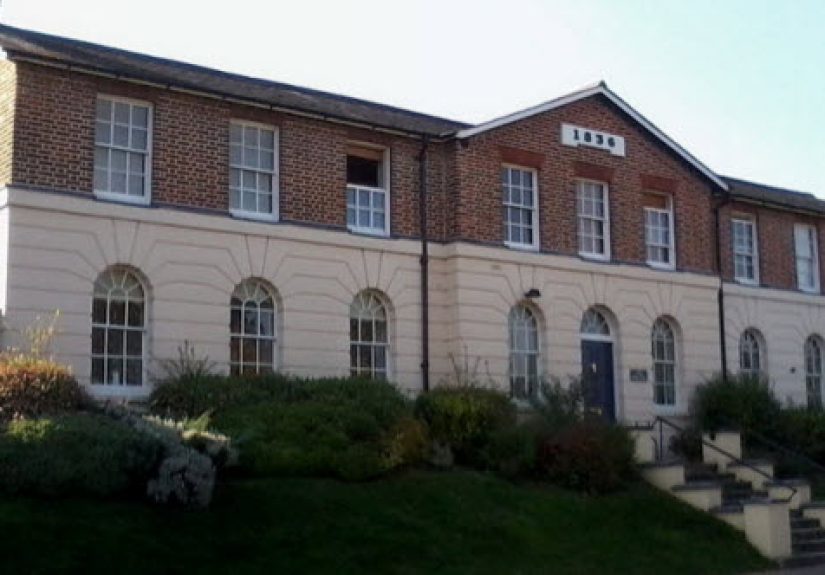
Start with the physical experience. People who visit preserved workhouse buildings or exhibitions often describe a specific kind of quiet. Not spooky, exactlymore like the silence you feel in places where routine once swallowed conversation. Corridors seem longer than they need to be. Rooms look sturdier than they need to be. You notice how architecture can enforce behavior: doors that separate, walls that channel, windows that allow light but not comfort. It’s not hard to imagine the daily choreographylining up, being counted, being told where to standbecause the building practically gives stage directions.
Then there’s the emotional whiplash of recognizing familiar human needs in an unfamiliar setting. You look at a dining space and think about the normalcy of mealshow food should bring people togetherthen you remember that many workhouses separated people by sex and age, and that eating could be part of discipline rather than comfort. You look at a children’s area and think about how kids fill spaces with noise, then you realize how an institution’s goal can be to make children quieter, more “manageable,” more efficient. It’s a strange feeling: you don’t need graphic details to sense the weight. The austerity does the talking.
The second modern-day experience is more personal for a lot of readers, especially Americans with British or Irish ancestry: genealogy. For some families, the workhouse shows up as a surprising line in an archivean admission record, a birth entry, a note about “indoor relief.” At first, it can read like a simple administrative fact. Then it hits you: this wasn’t a quirky historical footnote. This was a moment when someone in your family ran out of options.
People often describe a mix of emotions when they find that record. There’s sadness, of course. But also a kind of fierce respect: somebody survived a system designed to be discouraging. Somebody endured the stigma, the rules, the loss of privacy, and still made it far enough down the timeline for you to exist and read their name on a screen. The record is cold, but your reaction is not.
And then there’s the third experience: perspective. Once you’ve walked through the spaces (or read the documents), modern conversations about assistance can sound different. You start noticing the language we still usewho “deserves” help, who might be “taking advantage,” whether aid should be made uncomfortable to reduce demand. The workhouse era becomes a cautionary tale about designing systems around suspicion. It’s hard to unsee how quickly “deterrence” can become cruelty when the people making rules are insulated from the people living under them.
In that way, the workhouse isn’t only history. It’s a mirror. It asks a blunt question: when people fall, do we build a netor a lesson?
Conclusion: Remembering the People Behind the Policy
Britain’s workhouses were shaped by a belief that poverty could be managed through deterrence. The ten stories herescandal, separation, childbirth under stigma, children sent away, sickness without care, fear after deathshow how that belief played out in ordinary lives.
The workhouse is often remembered as a symbol, but symbols can be too neat. Real people lived inside these walls. They felt hunger, shame, loneliness, and the exhausting effort of staying human in a system that sometimes treated humanity as optional.
If we take anything from this history, let it be the reminder that social policy is never just numbers and rules. It’s architecture, meals, family ties, medical care, and dignity. It’s what happens on a Tuesday when someone is broke, sick, or scaredand needs help without losing themselves.