Table of Contents >> Show >> Hide
- Before You Start: Why Foam Runners Can Be Tricky
- Yeezy Foam Runner Real vs Fake: 12 Differences to Look For
- 1) Box Label Consistency (Style Code, Size, Color Name)
- 2) Barcode/UPC Behavior (Scan Results That Make Sense)
- 3) Box Quality and Print Sharpness
- 4) Molded Inside Markings (Font, Depth, and Alignment)
- 5) Footbed Feel and Top Layer Texture
- 6) Upper Finish: Matte vs. “Shiny Plastic”
- 7) Vent Hole Shape (Proportions and Cut Cleanliness)
- 8) Symmetry Check: Left Shoe vs Right Shoe
- 9) Silhouette Accuracy (Toe, Instep, and Heel Cup)
- 10) Outsole Tread: Depth, Sharpness, and Pattern “Confidence”
- 11) Injection Gate Mark (Mold Point on the Outsole)
- 12) Weight, Flex, and “Rebound” Test
- How to Authenticate Without Losing Your Mind
- Buying Smarter: Reduce Risk Before the Box Even Arrives
- Conclusion: Authenticity Is a Pattern, Not a Single Clue
- Experiences: What It’s Really Like Checking Foam Runners in the Wild
The Yeezy Foam Runner is the rare “ugly shoe” that became an it shoeand when something gets that popular,
counterfeits don’t just show up. They move in, redecorate, and try to convince your feet they belong there.
If you’re buying on the resale market (or even trading with a friend-of-a-friend who “totally knows a guy”),
this guide will help you spot the red flags fast.
Here’s the good news: Foam Runners are molded, minimal, and covered in repeatable details. That means fakes have fewer places to hide.
Here’s the annoying news: there are legit variations across production runs (including different manufacturing locations),
so you want to look for a pattern of inconsistenciesnot just one tiny “gotcha.”
Before You Start: Why Foam Runners Can Be Tricky
Foam Runners are made from a single molded foam construction, often described as a blend of EVA and algae-based foam.
That material choice is part of the model’s identityand a big reason why comfort and texture matter when authenticating.
But because they’re molded, pairs can vary slightly: softness, finish, and even “Made in” markings may differ by release and factory.
Your job isn’t to find one perfect “tell.” Your job is to decide whether the story of the shoe makes sense from box to bottom.
Yeezy Foam Runner Real vs Fake: 12 Differences to Look For
1) Box Label Consistency (Style Code, Size, Color Name)
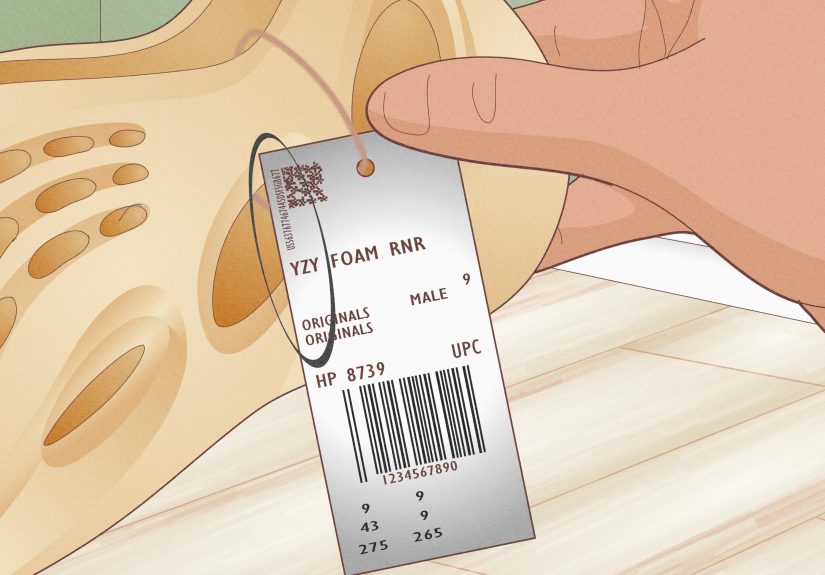
Start with the boring stuffbecause boring stuff is where fakes get lazy. Check the box label for:
style code, size run, and color name. Then compare that to what you’re holding.
- Real: Label info looks clean and consistent; size formatting matches typical adidas labeling style.
- Fake: Wrong style code for the colorway, messy spacing, mismatched size conversions, or label printing that looks “homemade.”
Example: If the box claims an Onyx-style code but the shoe’s molded markings suggest a different release, treat it like a bad alibi.
2) Barcode/UPC Behavior (Scan Results That Make Sense)
A barcode isn’t magic, but it’s a quick credibility check. When you scan the UPC (or search the style code + size),
the results should align with the colorway and general product identity.
- Real: Search results match the model and colorway family (even if sellers list it differently).
- Fake: Barcode pulls up a totally different shoe, random product, or nothing consistent at all.
Pro tip: One mismatch could be a label swap. Multiple mismatches usually mean “fiction.”
3) Box Quality and Print Sharpness
Foam Runner boxes are not luxury packaging, but they’re not fuzzy either. Look at edge sharpness, text clarity, and label adhesion.
- Real: Cleanly cut cardboard edges; label is properly aligned; print looks crisp at normal viewing distance.
- Fake: Soft/blurred printing, crooked labels, sloppy glue, or cardboard that feels unusually thin.
4) Molded Inside Markings (Font, Depth, and Alignment)
Foam Runners typically have molded/embossed information inside: size, country of manufacture, and other production details.
This is one of the strongest tells because molds are expensiveand fakes often mess up spacing and font weight.
- Real: Letters and numbers are evenly formed, consistently spaced, and cleanly molded.
- Fake: Text looks too thick, too thin, uneven, or misaligned. Characters can appear “puffy” or oddly sharp.
Important: “Made in” can vary (USA vs China) depending on the release. Don’t fail a pair just because the country surprises youfail it if the
molding quality looks wrong.
5) Footbed Feel and Top Layer Texture
The footbed on legit pairs typically has a specific “step-in” comfort feel, with a top surface that doesn’t feel like cheap pool float foam.
You’re evaluating both texture and rebound.
- Real: Comfortable step-in feel; surface texture is consistent and not overly slick.
- Fake: Footbed feels flat, plasticky, or overly spongy in a way that collapses instead of rebounding.
6) Upper Finish: Matte vs. “Shiny Plastic”
Authentic Foam Runners usually read as matte or softly satinnot glossy like a toy.
Lighting matters here: check under daylight and indoor light.
- Real: Subtle finish; looks like molded foam with depth.
- Fake: Suspicious shine, slick surface, or a finish that looks painted/coated instead of molded.
7) Vent Hole Shape (Proportions and Cut Cleanliness)
The Foam Runner’s oval cutouts are a signature feature, and they should look intentional: smooth edges, consistent shape, and correct proportions.
This is where many replicas lose the plot.
- Real: Holes look cleanly formed; edges are smooth; shapes are consistent side-to-side.
- Fake: Rough edges, leftover material “tags,” or holes that look too bulky, too round, or oddly narrow.
8) Symmetry Check: Left Shoe vs Right Shoe
No pair is perfect, but the left and right shoe should look like siblings, not distant cousins who met at a family reunion.
Compare the hole placement, the “ribs” along the upper, and the heel contour.
- Real: Overall symmetry is strong; small variation is plausible but not dramatic.
- Fake: Noticeable mismatch in hole placement, shape, or spacing between the two shoes.
9) Silhouette Accuracy (Toe, Instep, and Heel Cup)
Shape is a quiet authenticator. Look at the toe profile from the side, the height of the instep opening,
and how the heel cup curves upward.
- Real: Structured silhouette that holds form; toe and heel look purposeful and sculpted.
- Fake: Collapsed shape, overly bulbous toe, or heel cup that looks flat/awkward.
If the shoe looks like it melted slightly on the way to your house… it might have.
10) Outsole Tread: Depth, Sharpness, and Pattern “Confidence”
Flip the pair over. The outsole pattern should have clean geometry and decent definition.
Counterfeits often soften edges because cheaper molds don’t capture fine detail well.
- Real: Tread edges look defined; pattern spacing feels consistent and engineered.
- Fake: Blurred tread lines, shallow grooves, or a pattern that looks “approximate.”
11) Injection Gate Mark (Mold Point on the Outsole)
Molded footwear often shows a small “gate” or injection point mark where material entered the mold.
On authentic pairs, this tends to look cleaner and more controlled; on fakes it can look oversized or messy.
- Real: Gate mark is subtle and neatly formed.
- Fake: Gate mark looks overly large, rough, or poorly finished.
12) Weight, Flex, and “Rebound” Test
This is the real-world test: pick them up, gently flex them, and see how they respond.
You’re looking for a balancesoft enough for comfort, structured enough to hold shape.
- Real: Light but not flimsy; flex has resistance; shape recovers well.
- Fake: Either too rigid like cheap plastic or too squishy like a discount garden clog; poor rebound and easy creasing.
How to Authenticate Without Losing Your Mind
If you’re doing a legit check at home, follow a simple sequence so you don’t get distracted by one “maybe.”
Step 1: Do a “Story Check” (Box + Label + General Match)
- Does the label match the colorway you bought?
- Do size markings and formatting look consistent and clean?
- Do you see obvious quality issues that don’t fit a molded adidas/Yeezy product?
Step 2: Do a “Mold Check” (Markings + Holes + Outsole)
- Inspect the molded inside text for clean font, spacing, and alignment.
- Check vent hole edges for leftover material or rough cuts.
- Look at the outsole for crisp tread geometry and a tidy gate mark.
Step 3: Do a “Wear Check” (Comfort + Structure)
- Try them on briefly (on a clean surface). Do they feel stable and supportive for foam footwear?
- Does the footbed feel like a designed surfacenot a slippery foam slab?
- Does the silhouette hold shape on foot?
Buying Smarter: Reduce Risk Before the Box Even Arrives
Authentication is easiest when you lower the odds of fakes in the first place.
Resale platforms and services often advertise multi-step verification or inspection programs, which can reduce risk
(though nothing is perfect).
- Marketplace authentication programs: Some platforms route eligible sneakers to authenticators for multi-point inspection and tagging.
- Verification approaches vary: Some services describe using combinations of in-hand checks, digital methods, and machine learning-assisted tools.
- Keep receipts and photos: If you need to dispute authenticity, clear photos of labels, inside markings, outsole, and box label help a lot.
Conclusion: Authenticity Is a Pattern, Not a Single Clue
The best way to spot a fake Yeezy Foam Runner is to stack evidence. One odd detail might be normal variation.
Three to five “off” detailsespecially around molded text, hole geometry, outsole definition, and overall structureusually means you’re holding a replica.
When in doubt, compare against a verified pair, use a reputable authentication route, and remember:
if the deal feels like it fell off the back of a spaceship, it might not be from the official mothership.
Experiences: What It’s Really Like Checking Foam Runners in the Wild
Here’s the part nobody tells you: most “real vs fake” checks don’t happen under museum lighting with white gloves.
They happen on a kitchen floor, with your phone flashlight on, while someone in the house asks why you’re sniffing shoes like a truffle dog.
A super common first experience is the unboxing moment. With Foam Runners, the box often looks basicso buyers expect “basic.”
Then they see a label that’s slightly crooked or ink that looks a little soft, and panic sets in. This is where you learn a hard lesson:
the box alone rarely convicts the shoe. Instead, it’s the relationship between the box and the shoe that matters. If the label says one thing,
and the molded inside markings tell a different story, your confidence should drop fast.
Another real-world experience: discovering that two authentic pairs can feel different. People compare a “Made in USA” pair with a “Made in China” pair
and assume one must be fake because the foam feels softer or the finish looks slightly different. In practice, legit variations happenespecially across
factories and runsso the better move is to check whether the differences still look intentional. Authentic pairs usually differ like
“two batches of the same recipe.” Fakes differ like “someone cooked without measuring.”
The hole inspection is where most buyers have their “aha” moment. At first glance, the vents look fine.
Then you tilt the shoe and notice rough edges, leftover bits of material, or holes that don’t match side-to-side.
It feels almost unfair, like your eyes upgraded to 4K halfway through the process. This is also where you realize how useful it is to compare left and right shoes.
Replicas can look okay until you ask them to be consistentthen they crumble.
Comfort is another tell you only appreciate once you’ve worn a pair (or tried a suspicious pair on for thirty seconds).
Authentic Foam Runners often feel like a designed object: the footbed texture, the way the heel sits, the way the shape holds.
Many fakes feel “foamy” in the generic senseeither too squishy and unstable or weirdly stiff like hard plastic pretending to be foam.
And yes, the smell test comes up in real life more than sneakerheads want to admit. A strong chemical odor isn’t a courtroom verdict,
but it’s definitely a reason to slow down and check everything else more carefully.
Then there’s the photo-to-verify experience. People take pictures for friends, community groups, or authentication services and learn quickly:
blurry photos create blurry answers. The best photos are simplebox label straight-on, inside markings close-up, outsole centered, and a clean side profile.
When you do that, patterns appear. If the molded text is sloppy, the outsole is soft-edged, and the holes look messy, you don’t need a dramatic reveal.
You need a refund.
Finally, one of the most relatable experiences is realizing that the best “authenticator” is your own consistency.
When you follow the same checklist every timelabel, markings, holes, outsole, shape, feelyou get faster, calmer, and more accurate.
It stops being a stressful guessing game and becomes a quick routine. And that’s the real flex:
not just owning Foam Runners, but knowing whether they’re the real deal before your bank account learns the hard way.