Table of Contents >> Show >> Hide
- Why the 2021 Best Drama Series Race Was So Competitive
- The Nominees: A Quick Look at the 2021 Emmy Drama Field
- Why The Crown Should Win Best Drama Series
- The Crown’s Biggest Advantage: Complete Craftsmanship
- Why The Mandalorian Was the Strongest Challenger
- Why Pose Deserved Serious Consideration
- Why Bridgerton Changed the Conversation
- The Final Verdict: The Crown Was the Right Choice
- Viewer Experience: Watching the 2021 Emmy Drama Race Like a TV Fan
- Conclusion
The 2021 Emmy race for Best Drama Series was not exactly a quiet tea party. It was more like eight prestige television giants walking into one room, each carrying a different weapon: royal scandal, space adventure, superhero satire, social romance, dystopian fury, family tears, historical horror, and ballroom brilliance. In other words, the Outstanding Drama Series category at the 73rd Primetime Emmy Awards had range. A lot of range.
The nominees were The Boys, Bridgerton, The Crown, The Handmaid’s Tale, Lovecraft Country, The Mandalorian, Pose, and This Is Us. Each series had a real argument. Some had enormous fan bases. Some pushed representation forward. Some delivered technical spectacle. Some made viewers cry into their couch snacks. But if the question is “Which show should win Best Drama Series at the 2021 Emmys?” the strongest overall answer is The Crown.
That does not mean the other nominees were weak. Far from it. This was one of those Emmy lineups where almost every title could walk away with the trophy and still make sense. But The Crown Season 4 combined acting, writing, directing, production design, cultural conversation, emotional tension, and awards momentum into one polished, dangerous-looking tiara. It was not just a good season of television. It was the kind of season that looked engineered in a secret laboratory for Emmy voters.
Why the 2021 Best Drama Series Race Was So Competitive
The 2021 Emmys arrived during a strange period for television. Streaming platforms were no longer knocking politely on the door of traditional TV; they had kicked the door open, rearranged the furniture, and asked where the snacks were kept. Netflix, Disney+, Amazon Prime Video, Hulu, HBO, and network television all had major contenders in the drama race.
This made the Best Drama Series category especially interesting. It was not simply a battle between “old TV” and “new TV.” It was a battle between different definitions of drama. Should a drama winner be the show with the grandest scale? The deepest emotional impact? The boldest social message? The most technically impressive world-building? The most consistent writing? Or the series that manages to do a little bit of everything without dropping the royal china?
That is why this category deserves more than a quick “my favorite show should win because I shouted at the TV the loudest.” A great Emmy winner should represent the best of television craft in that year. It should have strong performances, memorable storytelling, visual confidence, cultural relevance, and enough staying power to remain interesting after the hype machine cools down.
The Nominees: A Quick Look at the 2021 Emmy Drama Field
The Boys
The Boys gave the superhero genre a caffeinated slap across the face. Instead of heroic capes and noble speeches, the Amazon series delivered corporate corruption, media manipulation, violence, satire, and a very unhealthy relationship with power. Its second season sharpened its social commentary and proved that comic-book television could be messy, political, funny, disgusting, and surprisingly thoughtful all at once.
Bridgerton
Bridgerton was the glossy romantic explosion nobody could ignore. Netflix’s period drama mixed Regency-era costumes with modern energy, diverse casting, scandal-sheet intrigue, and enough longing glances to power a small city. It was not the most traditional Emmy drama, but it was a massive pop-culture event and helped redefine what a mainstream period series could look and feel like.
The Crown
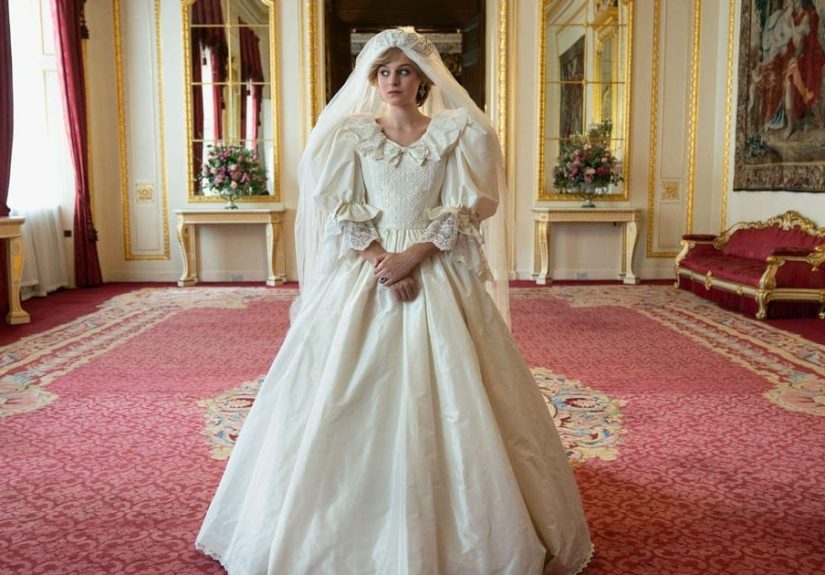
The Crown Season 4 was the category’s heavyweight contender. The season introduced Princess Diana and Margaret Thatcher into the royal chessboard, giving the series two cultural figures who instantly raised the emotional and political stakes. With Emma Corrin as Diana, Gillian Anderson as Thatcher, Olivia Colman as Queen Elizabeth II, Josh O’Connor as Prince Charles, and Tobias Menzies as Prince Philip, the season felt like an acting masterclass disguised as a palace drama.
The Handmaid’s Tale
The Handmaid’s Tale remained one of television’s most intense dystopian dramas. Its 2021 season continued June Osborne’s brutal journey through trauma, resistance, and moral complexity. The show’s visual language was still striking, and Elisabeth Moss remained a force of nature. Still, by 2021, some viewers felt the series had become emotionally punishing in a way that made its excellence harder to enjoy.
Lovecraft Country
Lovecraft Country was one of the boldest nominees in the category. It blended horror, science fiction, fantasy, historical trauma, family secrets, and racial terror into a wildly ambitious HBO series. It did not always move in a straight line, but that was part of its electricity. The show took big swings, and even when every swing did not land perfectly, it was impossible to accuse it of playing safe.
The Mandalorian
The Mandalorian brought blockbuster-level production to weekly television. With its cinematic visuals, Star Wars mythology, western structure, and the internet’s favorite tiny green scene-stealer, the Disney+ series became a defining streaming hit. It was arguably the most technically impressive nominee in the category, especially in visual effects, sound, design, and world-building.
Pose
Pose entered the race with emotional power and historic importance. Its final season celebrated ballroom culture, chosen family, queer resilience, and trans representation with warmth and dignity. Few dramas in the category carried such a clear sense of mission. It was not only a television show; it was a cultural milestone with a beating heart.
This Is Us
This Is Us represented network drama at its most emotionally effective. The NBC series had long mastered the art of making viewers say, “I am not crying,” while absolutely crying. In a field dominated by streamers and premium platforms, its nomination was a reminder that traditional network storytelling could still hold its own when powered by strong characters and sincere emotional writing.
Why The Crown Should Win Best Drama Series
So why choose The Crown over such a strong field? Because Season 4 operated at the highest level across nearly every category that matters in a drama series. It was not only well acted. It was not only beautifully produced. It was not only culturally relevant. It was all of those things at the same time, and it made them feel connected.
The central brilliance of The Crown Season 4 is that it turned familiar public history into intimate private tragedy. Viewers already knew the names: Diana, Charles, Elizabeth, Thatcher. The challenge was not introducing unknown characters. The challenge was making world-famous figures feel emotionally unpredictable again. The season did that by focusing on pressure: the pressure of monarchy, marriage, government, media, tradition, and public performance.
Emma Corrin’s Princess Diana was the season’s emotional doorway. Her performance captured Diana’s youth, charm, loneliness, confusion, and growing awareness that royal life was not a fairy tale but a carefully upholstered cage. The early episodes played with the idea of romance, but the show slowly peeled away the fantasy until only isolation remained. It was a smart dramatic choice: the audience entered with the glow of myth and left with the sting of reality.
Gillian Anderson’s Margaret Thatcher gave the season a completely different kind of power. Her performance was controlled, precise, and almost architectural. Thatcher did not simply appear as a political opponent to the monarchy; she became a mirror. Like the royal family, she believed in duty, hierarchy, discipline, and sacrifice. Unlike the royals, she came from outside the aristocratic system, which made her presence both disruptive and oddly familiar.
That Diana-Thatcher contrast gave Season 4 a fascinating structure. Diana represented vulnerability swallowed by institution. Thatcher represented willpower hardened into ideology. Between them stood Queen Elizabeth II, played with quiet restraint by Olivia Colman, trying to preserve a monarchy that could not fully understand the emotional weather changing around it.
The Crown’s Biggest Advantage: Complete Craftsmanship
Some Emmy contenders win because they dominate one area. A show may have the best writing, the most daring concept, the strongest performance, or the biggest cultural footprint. The Crown Season 4 had the advantage of balance. It looked expensive, but it did not rely only on luxury. It had major performances, but it was not simply an acting showcase. It had political themes, but it did not become a lecture wearing pearls.
The writing found drama in restraint. Many of the season’s best scenes were not explosive arguments but controlled conversations where every pause had the emotional weight of a thrown vase. The direction understood how to use space: giant rooms, long halls, formal dinners, hunting trips, palace interiors, and public ceremonies all became visual reminders that these characters lived inside systems larger than themselves.
The production design and costumes also did more than look pretty. They helped tell the story. Diana’s wardrobe evolution, Thatcher’s severe silhouettes, the chilly grandeur of royal estates, and the carefully managed public appearances all created a world where image and identity were constantly at war. In The Crown, clothing is never just clothing. It is armor, branding, rebellion, and sometimes a cry for help with shoulder pads.
Why The Mandalorian Was the Strongest Challenger
If The Crown was the best traditional Emmy drama, The Mandalorian was the strongest argument for the future of television spectacle. Season 2 expanded the Star Wars universe with confidence, bringing in beloved characters, deepening Din Djarin’s bond with Grogu, and delivering action sequences that felt theatrical in scale.
The case for The Mandalorian is simple: television can now create blockbuster fantasy worlds without feeling like a smaller cousin of cinema. The show was visually groundbreaking, emotionally accessible, and wildly entertaining. It also proved that franchise storytelling could work episodically when built around a clean emotional core. Beneath the armor and laser fire, it was a story about parenthood, loyalty, and learning to care.
Still, Best Drama Series is not only about production achievement. The Mandalorian had heart and spectacle, but The Crown had more complex character architecture. The Disney+ series was superb entertainment; the Netflix drama felt more complete as a drama-season argument.
Why Pose Deserved Serious Consideration
No discussion of the 2021 Emmy race should ignore Pose. Its final season carried emotional and historical significance that few nominees could match. The show gave space to characters and communities often marginalized by mainstream television, and it did so with style, music, humor, grief, and love.
Pose was a reminder that drama is not only about prestige polish. It is also about whose stories get told and how deeply a show can make viewers feel seen. The series built a world where ballroom performance was not background decoration but a language of survival and self-creation. Its best moments were full of joy and heartbreak at the same time, which is not easy to pull off unless everyone involved knows exactly what they are doing.
If the Emmy were awarded for cultural importance alone, Pose would have a powerful claim. But in the overall race, The Crown still had the edge in season-wide consistency, technical command, and awards-friendly craft.
Why Bridgerton Changed the Conversation
Bridgerton may not have been the most serious drama in the category, but seriousness is not the only measurement of quality. The show understood pleasure as a storytelling engine. It gave viewers romance, color, music, gossip, longing, and escapism at a time when escapism was not exactly a luxury item.
The series also mattered because it challenged old assumptions about period drama. It did not treat history as a museum exhibit where everyone whispers near the furniture. Instead, it made the genre feel playful, inclusive, stylish, and alive. That kind of popular reinvention deserves respect, even if the show’s frothier tone made it less likely to beat a prestige machine like The Crown.
The Final Verdict: The Crown Was the Right Choice
When judging the 2021 Emmy nominees for Best Drama Series, the winning question is not “Which show did I enjoy the most?” Enjoyment matters, of course. Television should not feel like homework assigned by a professor in a velvet blazer. But the Emmy for Outstanding Drama Series should go to the show that best combines ambition, execution, performance, writing, direction, and cultural impact.
On those terms, The Crown was the strongest candidate. Season 4 gave viewers a near-perfect awards-season package: historical relevance, emotional tragedy, elegant production, sharp performances, and a story that transformed public memory into private drama. It was polished without being empty, grand without losing intimacy, and familiar without becoming predictable.
The other nominees each brought something valuable. The Boys brought bite. Bridgerton brought romance and reinvention. The Handmaid’s Tale brought intensity. Lovecraft Country brought ambition. The Mandalorian brought spectacle. Pose brought heart and representation. This Is Us brought emotional sincerity. But The Crown brought the fullest dramatic package.
So, which show should win Best Drama Series at the 2021 Emmys? The answer is The Crown. The royal drama did not merely wear the crown; it earned it. And yes, that pun was unavoidable. We all must live with it now.
Viewer Experience: Watching the 2021 Emmy Drama Race Like a TV Fan
Watching the 2021 Best Drama Series race as a television fan felt a little like being asked to choose one favorite dessert from an entire bakery. You might love chocolate cake, but then someone rolls out cheesecake, cinnamon rolls, lemon bars, and a suspiciously perfect croissant. Suddenly, your confidence disappears. That was the feeling of looking at the 2021 drama lineup. Every nominee had a different flavor, and most of them were delicious in their own way.
The Crown was the show I would recommend to someone who wants television that feels carefully carved. It is not casual background viewing. You do not fold laundry during The Crown unless you want to accidentally match socks while a royal marriage collapses in devastating silence. The pleasure of the show is in the details: the glances, the stiff greetings, the family conversations where nobody says what they actually mean, and the way a palace can feel colder than a refrigerator with better wallpaper.
The Mandalorian, by contrast, was pure weekly excitement. It had the rare ability to make viewers feel like kids again without treating them like children. The relationship between Din Djarin and Grogu worked because it was simple, sincere, and emotionally direct. Sometimes a helmeted bounty hunter protecting a tiny alien is all the therapy a person needs. The show was fun in a way many prestige dramas are afraid to be.
Bridgerton offered a completely different experience. It was the television equivalent of opening a box of expensive candy and deciding that, yes, you will try every piece for research purposes. The show was romantic, dramatic, visually rich, and shamelessly entertaining. It knew exactly what it was doing, and that confidence made it easy to forgive its occasional melodramatic swerves.
Pose was the emotional knockout. It had glamour, but it also had weight. Watching it meant becoming invested in a chosen family that fought for joy in a world determined to deny it to them. The series could be dazzling one minute and heartbreaking the next. That combination gave it a human force that awards conversations sometimes fail to measure properly.
Lovecraft Country was the wild card. It felt unpredictable, sometimes chaotic, often brilliant, and always alive. Even when it was uneven, it was never boring. In an era when many prestige dramas can feel polished to the point of sterility, Lovecraft Country had danger in its bloodstream. It took risks, and risk is part of what keeps television interesting.
That is what made the 2021 Emmy race memorable: there was no single definition of excellence. A viewer could reasonably prefer the emotional sincerity of This Is Us, the brutal urgency of The Handmaid’s Tale, the satire of The Boys, or the escapist shine of Bridgerton. But after sitting with the full field, The Crown still feels like the most complete winner. It had the craft, the performances, the themes, and the season-long control. It was not necessarily the easiest show to love, but it was the hardest to deny.
Conclusion
The 2021 Emmy race for Best Drama Series was packed with worthy contenders, but The Crown stood above the field because it delivered excellence from nearly every angle. Its fourth season transformed familiar royal history into gripping personal drama, anchored by unforgettable performances and elegant storytelling. While The Mandalorian, Pose, Bridgerton, and the rest of the nominees all made strong cases, The Crown offered the most complete example of what an Outstanding Drama Series can be: ambitious, emotional, intelligent, beautifully made, and culturally resonant.
Note: This article is based on publicly reported 2021 Emmy nominations, winners, and entertainment-industry coverage. Source links are intentionally not included in the article body per publishing requirements.