Table of Contents >> Show >> Hide
- Starliner, in Plain English: What It’s Supposed to Do
- The Starliner Timeline: A Comedy of (Very Expensive) Errors
- What Went Wrong in 2024, and Why It Mattered
- Why NASA Still Wants Starliner
- The Fix-It List: How You Actually Earn a “Fly Again”
- Experiences: The “Fly, Fly Again” Mindset (What It Feels Like in Real Projects)
- Conclusion
Spaceflight has a special talent for turning ordinary words into punchlines. “Minor leak.” “Off-nominal.” “Anomaly.” These are the polite, buttoned-up terms engineers use when a spacecraft decides to freestyle at 17,000 miles an hour. And if you want a masterclass in how the universe keeps your ego in check, look no further than Boeing’s CST-100 Starliner: the astronaut taxi that kept showing up to the group project like, “Hey team, sorry I’m latetraffic was space.”
Starliner’s story isn’t “haha, rockets go boom.” It’s far more interesting: a long, expensive, very human journey through software surprises, stubborn valves, tiny helium molecules with big attitudes, and a 2024 crewed test flight that was supposed to last about a weekbut ended up stretching into months of analysis, hard calls, and a safety-first reroute for the astronauts’ ride home. If you’ve ever had a plan collapse because one component refused to cooperate, congratulations: you already understand aerospace.
Starliner, in Plain English: What It’s Supposed to Do
Starliner exists for a simple reason: NASA wants reliable, routine transportation to and from the International Space Station (ISS), with more than one American vehicle available. The agency’s Commercial Crew Program is built around that ideasafe, reliable, cost-effective access to low Earth orbit that doesn’t require NASA to own every bolt on the spacecraft.
In theory, Starliner is straightforward: launch on a United Launch Alliance Atlas V, rendezvous and dock with the ISS, support a crew, then come home and land on landparachutes plus airbagslike a space capsule that studied the “touch grass” meme and took it personally. NASA’s own landing timeline notes the sequence: parachutes deploy after reentry events, and airbags inflate just before touchdown, with a slow, controlled landing speed in the single-digit mph range. It’s a cool design choiceand it’s one of the things that makes Starliner genuinely different from SpaceX’s Crew Dragon, which splashes down in the ocean.
The Starliner Timeline: A Comedy of (Very Expensive) Errors
OFT-1 (2019): When the Clock Lies, Everything Lies
Starliner’s first orbital test flight in 2019 didn’t dock with the ISS. One of the headline problems involved timing: if your spacecraft thinks it’s in a different part of the mission than it actually is, it can burn propellant at the wrong time, chase the wrong targets, and generally behave like a GPS that insists you’re “arriving” while you’re still on the highway. The lesson was brutal but classic aerospace: autonomy is wonderful, until it confidently does the wrong thing.
OFT-2 Scrub (2021): The Valves That Wouldn’t
In 2021, Starliner ran into a propulsion-valve problem during the countdown for an OFT-2 attempt. NASA described the work to restore functionality to valves that did not open as designedparts that matter because they connect to thrusters needed for abort and in-orbit maneuvering. Translation: the spacecraft’s “move and survive” system wasn’t fully cooperating, so the mission paused until teams could understand why.
OFT-2 (2022): Docking, Data, and a Desert Landing
In 2022, Starliner completed Orbital Flight Test-2, reached the ISS, undocked, and returned to Earth for a parachute-assisted landing. NASA’s OFT-2 coverage highlights the capsule settling onto airbags after landingan important proof point for the vehicle’s overall concept. It was progress, and in space programs, progress matters even when it comes with footnotes.
Crew Flight Test (2024): The Week That Became 93 Days
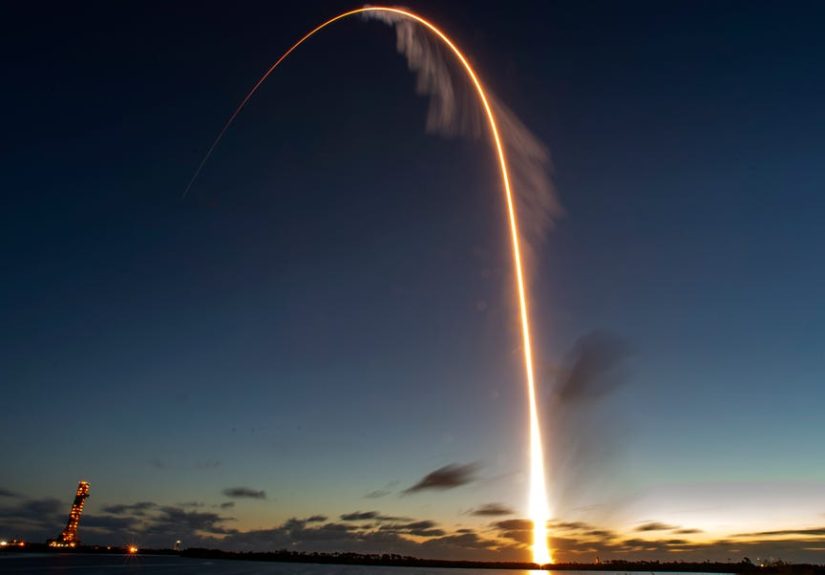
Starliner launched its first astronautsButch Wilmore and Suni Williamsin June 2024. NASA later summarized that the mission was originally planned for about eight to 14 days, but was extended to 93 days after propulsion system anomalies were identified in orbit. That alone tells you how test flights work: you don’t just “go.” You go, you learn, and sometimes you learn so much you need a whole new calendar.
As Starliner approached the ISS, NASA and Boeing identified helium leaks and experienced issues with reaction control thrusters. After weeks of in-space and ground testing, technical interchange meetings, and agency reviews, NASA chose to return Starliner without its crew. The spacecraft landed uncrewed at White Sands Space Harbor in New Mexico in early September 2024, concluding a three-month flight test. Wilmore and Williams stayed aboard the ISS and later returned via SpaceX’s Crew-9 mission.
What Went Wrong in 2024, and Why It Mattered
Spacecraft don’t fail in one dramatic moment like a movie villain falling into lava. They fail like real life: small problems that stack, interact, and start charging rent in your schedule. Starliner’s 2024 issues centered on propulsion performance and the risks that come with uncertainty.
Helium Leaks: Small Molecules, Big Headaches
Helium is famously good at escaping. NASA and Boeing discussed how a helium leaktiny in sizestill deserved serious attention because helium is part of the pressurization side of propulsion. Space reporting around the launch period described the challenge as “complicated,” with teams weighing what the leak meant for safe operations and contingency planning. In other words: the leak wasn’t a Hollywood explosion, but it was the kind of subtle problem that can quietly narrow your margins.
Thrusters and Fault Protection: When Safety Trips at the Worst Time
Reaction control thrusters are the “fine steering” tools a spacecraft uses to orient itself, rendezvous, and dock. On Starliner’s approach to the ISS, NASA described issues with reaction control thrusters, and later investigations emphasized that the docking phase made the technical difficulties “very apparent.” The spacecraft ultimately dockedbut the story wasn’t “we docked, so it’s fine.” The story was: “we docked, and now we need to understand why we had to work so hard to do it.”
If you want a mental image: imagine parallel-parking a moving van in a crowded city… while the steering wheel occasionally decides it’s on a coffee break… and your backup camera is politely refusing to speculate. That’s not an insult to the team; it’s the reality of managing risk in real time.
The Hard Part: Knowing When to Stop
NASA’s decision to return Starliner uncrewed wasn’t a dramatic breakup text; it was a safety call rooted in uncertainty. In NASA’s words, the lack of expert concurrence didn’t meet the agency’s safety and performance requirements for human spaceflight. That’s the key: you can’t “hope” a spacecraft into being safe. You need confidence earned through data, testing, and agreement among experts.
Why NASA Still Wants Starliner
If Starliner has been so difficult, why not just stick with what works? Because space programs plan for the day something stops working. NASA has repeatedly stressed the value of two independent U.S. crew transportation systemsredundancy that reduces single-point dependence. If one vehicle is grounded for technical reasons (it happens), you don’t want your entire station access strategy to become “well, let’s all be very calm and hope the next launch goes fine.”
That redundancy is not theoretical. Reuters has reported NASA’s position that it needs two U.S. rides to the ISS so it won’t rely solely on one capsule. Spaceflight Now has also noted NASA’s contract adjustments and planning logic as Starliner’s next flight shifts to cargo-only. The idea is blunt and practical: keep two doors open, because locking yourself into one door is how you end up knocking on the neighbor’s door asking to borrow some access to orbit.
The Fix-It List: How You Actually Earn a “Fly Again”
“Fly, fly again” is a great motivational phrase. It’s also meaningless without a checklist. In 2026, NASA publicly released findings from its program investigation into the 2024 crewed test flight and formally declared it a Type A mishaplanguage reserved for the most serious class of events. The agency’s statement pointed to a mix of hardware failures, qualification gaps, leadership missteps, and cultural breakdowns that created risks inconsistent with NASA’s human spaceflight safety standards.
Qualification and test realism
Space hardware must be qualified for the environments it actually sees, not the environments you wish it saw. When propulsion anomalies show up in orbit, the fix isn’t a PowerPoint slide labeled “Resolved.” It’s test campaigns, component-level analysis, and envelope-expanding verification until the system behaves predictablyeven when it’s hot, cold, stressed, and inconvenient.
Culture, leadership, and decision discipline
The investigation narrative also highlighted programmatic pressures. NASA leadership acknowledged that the goal of having two providers influenced engineering and operational decisionsespecially during and immediately after the mission. That’s the grown-up version of a universal workplace problem: when the objective becomes “make it succeed,” teams can start treating risks like negotiable suggestions instead of hard constraints.
Boeing, for its part, stated it had made substantial progress on corrective actions and driven cultural changes aligned with the findings, emphasizing that crew safety is the highest priority. That’s the right sentence to sayand the hard work is proving it with the next flight.
Contract changes and a cargo-only next step
The immediate path forward is intentionally cautious. NASA and Boeing modified their plans so the next mission, Starliner-1, will fly no earlier than April 2026 carrying cargo instead of astronauts. NASA also reduced the number of missions it’s obligated to buy, shifting the program’s near-term goal to certification work and a stepwise return to flight readiness.
That cargo mission matters because it’s a test flight that can be instrumented, stressed, and analyzed without putting a crew in the blast radius of uncertainty. It’s the aerospace equivalent of: “Let’s run the software in production… with the training wheels… and a fire extinguisher… and three people watching the logs.” Not glamorous. Extremely smart.
Experiences: The “Fly, Fly Again” Mindset (What It Feels Like in Real Projects)
You don’t have to be an astronaut to recognize the emotional physics of a test flight. Anyone who’s shipped something complicatedhardware, software, a new process, a new businessknows the moment where you stare at a dashboard and think, “That number is not supposed to be doing that.” The Starliner story is basically that moment, scaled up until it has its own launch pad.
One of the weirdest experiences in high-stakes work is learning to respect “small” problems. A helium leak sounds like a nuisance until you remember it touches propulsion pressurization. A thruster hiccup sounds like a blip until you’re approaching a space station and your fault-protection logic starts making safety decisions faster than humans can debate them. The lesson is humbling: small anomalies are often early chapters, not footnotes.
Another experience that feels painfully familiar is “decision fatigue.” When schedules slip, the calendar becomes a pressure vessel. People start asking for certainty in a world that only offers probabilities. Meetings multiply. Everyone is tired. And that’s exactly when you need your best disciplineclear criteria, documented risk posture, and leadership willing to say, “We don’t have enough confidence yet.” It’s not dramatic. It’s not heroic. It’s how you avoid turning a tough day into a catastrophic one.
There’s also a quiet experience of teamwork that doesn’t show up in glossy mission videos: the kind where you’re solving problems across organizations, vendors, and interfaces, while the public wants a simple answer like “Is it safe, yes or no?” Real programs live in the gray. Engineers argue because they care. Managers negotiate because resources are finite. Everyone has to translate their concerns into decisions that can be defended laterespecially if those decisions affect human lives.
And finally, the most relatable experience of all: the reset. After a hard test, you don’t just “move on.” You rebuild trustinside the team and with the customer. You audit assumptions. You tighten validation. You change what you measure. You stop accepting unexplained behavior as “normal enough.” “Fly again” isn’t optimism; it’s an agreement to do the unglamorous work until the system is boring in the best possible way.
If Starliner returns to regular crew missions, it won’t be because someone delivered a better pep talk. It’ll be because teams treated every anomaly like a clue, every fix like a hypothesis that needs proof, and every schedule like a toolnot a weapon. That’s the fly-fly-again mindset: not stubbornness, but rigor.
Conclusion
Starliner’s saga is a reminder that spaceflight doesn’t reward confidence; it rewards correctness. NASA still wants Starliner because redundancy is strategic, and because the U.S. benefits from multiple paths to orbit. But “want” is not “ready.” The 2024 crewed test flight became a turning point precisely because it forced a hard reckoning: technical performance, qualification evidence, and decision culture all have to meet the standardevery time.
So yes: when at first your Starliner doesn’t succeed, fly, fly again. Just make sure the “again” is powered by data, discipline, and a healthy fear of helium. Space is generous with lessons. It’s not generous with second chances.