Table of Contents >> Show >> Hide
- Is a “Bruised Retina” a Real Diagnosis?
- How a Hit Can “Bruise” the Retina
- Symptoms: What You May Notice (and What You Should Never Ignore)
- What To Do Right After You Get Hit in the Eye
- How Eye Doctors Diagnose a Bruised Retina
- Treatment: From “Watch and Wait” to Active Repair
- Recovery Timeline and Prognosis
- Possible Complications (Yes, Even if You Feel Fine Today)
- Prevention: How to Keep Your Retina Out of the Drama
- Quick FAQ (Because Your Brain Loves a Checklist)
- Real-World Experiences (500+ Words): What People Often Go Through
- Conclusion
Getting hit in the eye is one of life’s least charming surprises. One second you’re playing pickleball, opening a stubborn bungee cord, or trusting a toddler with a toy… and the next, your eyeball is auditioning for an action movie. If someone tells you, “I think you bruised your retina,” you may picture a tiny purple mark on the back of your eye (like your retina got bumped into a coffee table). Not exactly. But the phrase is commonand the underlying problem can be very real.
This guide explains what a “bruised retina” usually means, what symptoms to watch for, how doctors diagnose it, and how recovery typically goes. It’s written for normal humans (not just people who own anatomical posters), with a little humorbecause the only thing that should be dramatic is your playlist, not your vision.
Is a “Bruised Retina” a Real Diagnosis?
“Bruised retina” isn’t usually the official label in your medical chart. It’s a casual way to describe retinal injury from blunt trauma, especially a condition called commotio retinae (also known as Berlin’s edema when the central retina is involved). Think of it as the retina being “stunned” by an impactmore like a concussion than a bruise on skin.
People also use “bruised retina” to describe nearby trauma-related issues that can show up after a hit, including:
- Retinal hemorrhage (bleeding in or on the retina)
- Vitreous hemorrhage (bleeding into the gel inside the eye that can cloud vision)
- Retinal tears or retinal detachment (when the retina starts to peel awayan emergency)
- Traumatic macular hole (a hole in the central retina that affects sharp vision)
Bottom line: “Bruised retina” is shorthand. The key is figuring out which injury you actually havebecause the treatment and urgency can vary wildly.
How a Hit Can “Bruise” the Retina
The retina is delicate, and physics is rude
Your eye is basically a fluid-filled camera. When something strikes it (a ball, an elbow, an airbag, a fall), the eyeball can compress and then rebound. That rapid change sends a shockwave through the eye. The retinathin, light-sensitive tissue lining the back of the eyecan be affected at the point of impact or even on the opposite side (because your eye enjoys irony).
What happens in commotio retinae (retinal contusion)
In commotio retinae, doctors often see an area of retinal whitening during a dilated exam. Under the hood, the impact can disrupt layers of the retina, including the photoreceptors that help you see fine detail. Many cases improve as the retina recovers, but outcomes depend on whether the macula (your “HD vision” center) was involved and whether other injuries occurred.
Why your doctor cares about “associated injuries”
Blunt trauma can injure multiple eye structures at once. Even if the retina is “only bruised,” doctors watch carefully for complications that can threaten vision: retinal tears, detachment, bleeding, lens problems, pressure spikes (glaucoma), and more.
Symptoms: What You May Notice (and What You Should Never Ignore)
Some people feel symptoms immediately. Others feel “mostly fine” and then notice changes hours or days lateroften when they stop adrenaline-scrolling their phone. Common symptoms after retinal trauma include:
- Blurry vision or a drop in sharpness (especially for reading)
- Central smudge or missing spot (a scotoma)
- Flashes of light (photopsia), especially in dim rooms
- New floaters (dark specks, cobwebs, squiggles)
- Distortion (straight lines looking wavy)
- Reduced peripheral vision or a shadow creeping in from the side
- Pain, redness, or light sensitivity (may suggest additional injuries)
Red-flag symptoms that need urgent evaluation
Seek urgent eye care (same day, often immediately) if you notice:
- A “curtain”, shadow, or sudden loss of part of your vision
- Sudden shower of floaters, especially with flashes
- Rapidly worsening vision, especially after trauma
- Severe pain, nausea, or vomiting with eye symptoms (pressure-related issues can do this)
- Blood visible inside the eye, or the pupil looking irregular
Those can signal a retinal tear/detachment or other emergencies that can’t be fixed with “just resting it” and hoping for the best.
What To Do Right After You Get Hit in the Eye
First: don’t panic. Second: don’t do the classic “rub it until it behaves.” Your eye is not a misbehaving remote control.
Smart first-aid moves
- Stop the activity that caused the injury (yes, even if your team needs you).
- Avoid pressure on the eyeball. No pushing, no “checking,” no aggressive icing.
- Use a cool compress gently on the closed eyelid to help swelling (light touch only).
- Remove contact lenses only if they come out easily and there’s no suspicion of a serious injury.
- Do not try to remove an object stuck in the eye. Cover and get emergency care.
When in doubt, get checked
Any meaningful impact plus vision change is a solid reason for a prompt exam. A dilated retinal exam can reveal injuries you can’t see in the mirror, and some complications can appear latereven if you feel “okay” right after the hit.
How Eye Doctors Diagnose a Bruised Retina
Diagnosing a retina injury is like detective work, but with bright lights and a chair that reclines at emotionally inconvenient angles. Here’s what typically happens:
1) History and symptom review
They’ll ask what hit you, how fast it was moving, whether you had protective eyewear, and what symptoms started when. High-speed impacts (balls, airbags) raise concern for deeper injuries.
2) Vision and pupil tests
Doctors check visual acuity, pupils, eye pressure, and eye movements. Some injuries can affect pressure or indicate deeper trauma.
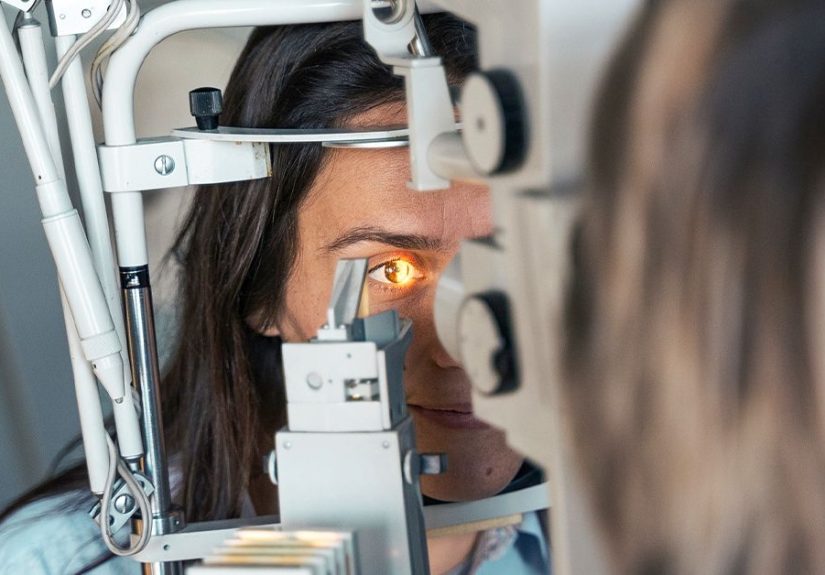
3) Dilated eye exam
Dilation allows the clinician to examine the retina and optic nerve. In commotio retinae, they may see localized retinal whitening. They also look carefully for retinal tears, bleeding, or signs of detachment.
4) Imaging (often OCT; sometimes ultrasound)
Optical coherence tomography (OCT) is a common, painless scan that shows detailed retinal layersespecially helpful if symptoms suggest macular involvement. If there’s significant bleeding that blocks the view, a B-scan ultrasound may be used to check for detachment or tears behind the haze.
Treatment: From “Watch and Wait” to Active Repair
Treatment depends on what’s actually injured. A simple retinal contusion is often managed differently than a retinal tear or detachment.
If it’s commotio retinae (retinal contusion)
Many cases are managed with observation and follow-up. The retina often clears as the eye recovers, and vision may improve over days to weeks. Your doctor may recommend:
- Follow-up exams to ensure no delayed complications
- Activity restrictions for a short period (depending on severity)
- Protective eyewear and avoiding another hit while healing
You may hear about medications like steroids in some discussions, but there isn’t a single universal regimen; management is individualized and focused on identifying and treating complications.
If there’s bleeding (retinal or vitreous hemorrhage)
Small amounts of bleeding may be monitored. More significant vitreous hemorrhage can cause dramatic “foggy” vision and may require further evaluation to find the source (for example, a retinal tear). In certain casesespecially when blood doesn’t clear, or when the retina can’t be safely evaluated surgery such as a vitrectomy may be considered to remove the blood and address underlying problems.
If there’s a retinal tear or detachment
This is where urgency ramps up. A retinal tear may be treated with laser or freezing (cryopexy) to “spot-weld” the retina in place and prevent detachment. A retinal detachment often needs surgical repair. Timing mattersespecially if central vision is threatened.
If there are other injuries (hyphema, lens damage, pressure spikes)
Trauma can cause blood in the front of the eye (hyphema), inflammation, or pressure problems. Treatment can include prescription drops, careful monitoring, and specific activity limits (often including sleeping with the head elevated). These issues are separate from the retina but can affect overall outcomeand deserve the same respect as a smoke alarm at 2 a.m.
Recovery Timeline and Prognosis
Recovery depends on the injury pattern:
- Mild commotio retinae away from the macula: symptoms may improve quickly, sometimes within days to a couple of weeks.
- Macular involvement: central blur or distortion can take longer, and some people have residual visual changes.
- Complications (tear/detachment/hemorrhage): recovery can take weeks to months and may involve procedures or surgery.
The most important thing isn’t guessing your timeline from internet anecdotesit’s getting the right diagnosis, then showing up for follow-ups so delayed problems don’t sneak in wearing a fake mustache.
Possible Complications (Yes, Even if You Feel Fine Today)
After blunt trauma, eye specialists watch for problems that can develop immediately or later:
Retinal tears and retinal detachment
Trauma can create weak points in the retina. Tears can lead to detachment, sometimes long after the original injury. Flashes, new floaters, and a shadow/curtain in vision are classic warning signs.
Traumatic macular hole
A hit can damage the macula and create a hole that affects fine detail. Symptoms often include central blur or distortion.
Vitreous hemorrhage
Bleeding into the vitreous can cause sudden hazy vision or floating dark clouds. It can also mask a retinal tearone reason doctors take it seriously.
Late issues
Some people develop late effects after traumalike cataract, glaucoma, or scarring changesdepending on the structures involved. This is why an eye doctor might recommend periodic checks after a significant injury.
Prevention: How to Keep Your Retina Out of the Drama
- Wear protective eyewear for sports with balls, racquets, or flying objects. Regular glasses are not safety goggles.
- Use job-appropriate eye protection for construction, yard work, and DIY projects.
- Wear your seatbelt. Airbags save lives, but the force involved can still injure eyes.
- Teach kids “no throwing at faces”. It’s a life skill, not a personality trait.
Quick FAQ (Because Your Brain Loves a Checklist)
Can I see a bruised retina by looking in a mirror?
No. The retina is inside the eye. You might see redness on the white of the eye or a black eye around it, but retinal findings require an exam.
Is a “bloodshot eye” the same as retinal bleeding?
Usually not. A bloodshot eye often means surface or conjunctival blood vessels are irritated or broken. Retinal bleeding is inside the eye and needs evaluation.
Should I keep exercising if I feel okay?
After a significant eye hit, it’s safer to pause and get medical guidanceespecially if you have vision changes, flashes, floaters, or pain. Some trauma-related conditions come with short-term restrictions to reduce bleeding risk or pressure spikes.
What if symptoms start tomorrow instead of today?
Still counts. New flashes, floaters, blurred vision, or a shadow in your vision after recent trauma should be evaluated promptly.
Real-World Experiences (500+ Words): What People Often Go Through
Let’s talk about what “bruised retina” feels like in real lifebecause symptoms don’t always show up as a neon sign that says “Hello, I am a posterior segment injury.” The stories below are composites of common scenarios people describe after blunt eye trauma, meant to help you recognize patterns (not to replace professional care).
Experience #1: The Sports Ball That “Wasn’t Even That Hard”
Someone takes a ball to the eye during basketball, baseball, pickleball, or soccer. They insist it was “more of a tap,” mostly because admitting it was a fast-moving projectile feels embarrassing. For the first hour, the main complaint is watering, soreness, and the urge to keep the eye closed. Later that night, they notice reading is harder with that eyelike the words have a faint smudge over them. The next morning, straight lines on a phone screen look slightly wavy.
In clinic, the diagnosis might be commotio retinaesometimes mild, sometimes affecting the macula. The surprise for many people is that you can have a “bruised retina” without dramatic pain. The lesson: vision changes matter more than pain levels. If the impact was real and vision isn’t normal, get checked.
Experience #2: The Airbag “Saved Me… and Also Punched My Eye”
After a minor car crash, someone feels generally okayshaken, but okay. The airbag deployed, and there’s facial soreness. A few hours later, they notice new floaters: tiny pepper specks drifting across vision. That evening, there are occasional flashes in the dark. They shrug it off as stress until a friend says, “Uh, that sounds like the retina.”
This scenario often leads to an urgent dilated exam to rule out a retinal tear or early detachment. Sometimes the retina is fine and symptoms are from the vitreous pulling; sometimes there’s bleeding or a small tear that needs treatment. The lesson: after high-force trauma, don’t bargain with your eyeball. Flashes and a sudden flood of floaters deserve fast attention.
Experience #3: The DIY Project That Turned Into a Plot Twist
Yard work, drilling, hammering, bungee cordsanything with stored energycreates classic “I didn’t think it would recoil like that” moments. People often describe immediate pain and tearing, then later a foggy patch or “dirty windshield” effect in vision. Sometimes the eye looks okay from the outside, which gives false confidence.
In some cases, foggy vision can be from bleeding inside the eye (vitreous hemorrhage), which may hide the retina and require imaging to make sure there’s no detachment. The lesson: external appearance doesn’t predict internal damage. Your retina doesn’t care that your coworker says it “looks fine.”
Experience #4: The “It’s Just a Black Eye” Underestimation
This is common after a fist, elbow, or fall. The bruise around the eyelid gets all the attention, so the person focuses on swelling and cosmetics (“Will I look normal by Friday?”) instead of vision quality. A few days later, they notice a shadow at the edge of visionor they can’t see as well in dim light. Sometimes they realize it only when covering the uninjured eye.
The “aha” moment is learning that retinal tears and detachment symptoms can appear after the initial swelling has improved. The lesson: do a quick daily vision check in each eye after a significant injury. Cover one eye at a time, notice distortions, and pay attention to new floaters, flashes, or shadows.
What people wish they’d known sooner
- “I thought floaters were normaluntil there were suddenly so many.”
- “I didn’t know a retinal detachment can be painless.”
- “I wish I’d gone in the same day instead of waiting for it to ‘settle.’”
- “Protective eyewear would have been cheaper than my copay.”
If you take one thing from these experiences, let it be this: a bruised retina is not a DIY diagnosis. Eye doctors can tell the difference between a contusion that needs monitoring and a problem that needs urgent treatment. And your future selfwith clear visionwill be extremely grateful you didn’t “walk it off.”
Conclusion
A “bruised retina” usually means the retina took a hit and reactedoften as commotio retinae or another trauma-related retinal injury. Many cases improve with time and monitoring, but blunt eye trauma can also trigger tears, bleeding, or detachment that require urgent care. If you have vision changes, flashes, lots of floaters, or any shadow/curtain effect, don’t wait. Get a dilated eye exam so you know exactly what you’re dealing withand so your retina can get back to its primary job: letting you see the world, not star in a cautionary tale.