Table of Contents >> Show >> Hide
- What makes an “animal massacre” happen?
- The countdown: 10 terrible animal massacres and what they reveal
- 10) The British Columbia Sled Dog Killings (Canada, 2010)
- 9) The Barceloneta “Pet Massacre” (Puerto Rico, 2007)
- 8) Stray Dog Killings Ahead of Euro 2012 (Ukraine, 2011–2012)
- 7) The “Pre-War Pet Culling” (United Kingdom, 1939)
- 6) The Ueno Zoo Massacre (Tokyo, 1943)
- 5) The Zanesville Killing Fields (Ohio, 2011)
- 4) The Great Cat Massacre (Paris, 1730s)
- 3) Cat Burning and “Festivals” of Cruelty (Medieval to Early Modern Europe)
- 2) Egypt’s Swine Flu Pig Culling (2009)
- 1) The Gadhimai Festival Animal Sacrifices (Nepal, most recently 2024)
- Patterns we should not ignore
- What “better” looks like in the real world
- Experiences: the human side of learning about animal massacres (and what people do with it)
- Conclusion
Some lists are fun. This is not one of those lists.
Still, it’s worth looking straight at the moments when humansthrough panic, profit, superstition, war, or plain old “we didn’t think this through”wiped out large numbers of animals in a short period of time.
Not to rubberneck. To understand the pattern… and stop repeating it.
A quick note on tone: this article keeps details non-graphic out of respect for readers and (more importantly) the animals.
The humor here is aimed at human decision-making and the ways institutions rationalize harmnot at suffering.
What makes an “animal massacre” happen?
Across history and headlines, mass killings of animals tend to cluster around the same triggers:
(1) fear (war, disease outbreaks, public safety), (2) symbolism (ritual, superstition, scapegoating),
(3) economics (too expensive to feed, no longer profitable), and (4) image management (“We have a big event comingmake the streets look clean.”).
The grim part is how often the plan is less “solution” and more “shortcut.”
You’ll notice another shared ingredient: distance. The decision-makers aren’t the ones doing the caring, feeding, walking, cleaning, or grieving.
When living beings get converted into “inventory,” “nuisance,” “biosecurity risk,” or “bad optics,” it gets easiersocially, politically, emotionallyto do the unthinkable.
The countdown: 10 terrible animal massacres and what they reveal
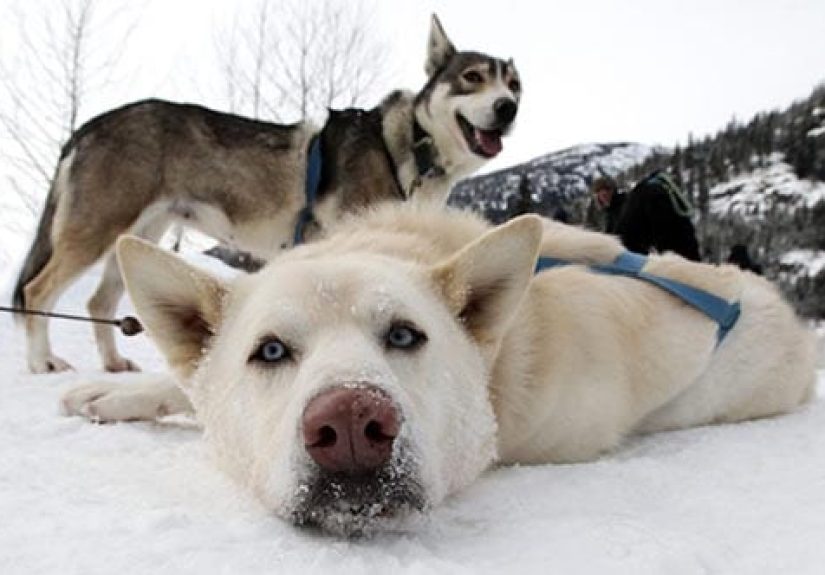
10) The British Columbia Sled Dog Killings (Canada, 2010)
In the wake of shifting tourism demand, a sled-dog operation in British Columbia became the center of an infamous mass cull.
The dogs weren’t “wild” or “pests”they were working animals, raised and trained for tours.
When the business side collapsed, the animals became a cost line item. That’s the moment where ethics either shows up… or doesn’t.
What makes this case especially haunting is how preventable it was. There were alternatives: rehoming, partnering with rescues, scaled-down operations, or staged retirement programs.
Instead, the situation turned into a lesson on what happens when animals are treated as disposable equipment.
The public backlash was intense, and the legal aftermath highlighted how difficult it can be to align animal welfare laws with real accountability.
9) The Barceloneta “Pet Massacre” (Puerto Rico, 2007)
One of the most upsetting mass-cruelty stories doesn’t involve a war zone or a wilderness “cull.”
It involves petsdogs and cats seized from a housing community and then reportedly killed in a way that sparked island-wide outrage.
Protests, investigations, and international attention followed, and the incident became a flashpoint for animal protection reform.
Here’s the broader takeaway: when communities lack humane, funded, transparent animal-control systemsintake policies, shelter capacity, spay/neuter programs, adoption pipelinescruelty can hide inside “services.”
Calling something “animal control” doesn’t make it ethical. It just makes it official.
8) Stray Dog Killings Ahead of Euro 2012 (Ukraine, 2011–2012)
When a country hosts a global sports event, the pressure to look “presentable” can turn ugly fast.
In the run-up to Euro 2012, animal welfare groups and international observers reported widespread killing of stray dogs in multiple cities.
The logic was presented as public safety and sanitation. But the timing made the subtext hard to miss: “clean up the streets before the cameras arrive.”
The tragedy here is that humane options exist and are proven: sterilization programs, shelter partnerships, vaccination campaigns, and adoption networks.
They cost money and time, which is exactly why mass killing becomes the temptationespecially when officials want quick, visible results.
The backlash did lead to official statements about stopping the killings and building shelters, but it also exposed how fragile enforcement can be when attention fades.
7) The “Pre-War Pet Culling” (United Kingdom, 1939)
When World War II began, fear and uncertainty hit households like a storm surge.
In Britain, a huge number of people euthanized their pets at the start of the waroften preemptivelydue to anxiety about bombing, food shortages, and evacuation logistics.
It became one of the saddest examples of how panic can turn “preparation” into tragedy.
The awful irony is that many animal charities and professionals advised against mass euthanasia.
But when a population is scared, advice can lose to rumor, dread, and the desire to “do something.”
This episode is a reminder that emergencies don’t just test infrastructure; they test the emotional systems of a society.
And sometimes the casualties include the ones who never got a vote.
6) The Ueno Zoo Massacre (Tokyo, 1943)
War doesn’t only consume soldiers and cities. It also consumes the moral imagination.
In wartime Tokyo, Ueno Zoo killed a number of animals in 1943an event later remembered and retold in Japanese culture, including children’s stories and educational materials.
The rationale involved fear of air raids and animals escaping, but the episode also became entangled with propaganda and public messaging about “shared sacrifice.”
It’s a devastating case study in how institutions justify harm under pressure.
Once “total war” becomes the frame, even a zoo can be drafted into the story: animals become symbols, and their deaths become a performance of loyalty.
And when tragedy is made symbolic, it can be repeated, retold, and normalizedunless people insist on remembering it as a warning instead of a lesson in obedience.
5) The Zanesville Killing Fields (Ohio, 2011)
In 2011, a private exotic-animal facility in Ohio became the center of a nightmare: animals were released, the owner died, and law enforcement faced an immediate public-safety emergency.
With limited time and high risk, many animals were killed to protect the community.
The images and headlines traveled fast, and so did the argument it forced into public view: should private ownership of dangerous exotics be allowed at all?
This wasn’t a “hunting” story or a “wildlife management” story.
It was a regulation storyabout what happens when powerful, dangerous animals exist in places never designed for them, managed by people who may not have the resources, training, or long-term stability required.
Afterward, the political momentum for tighter rules around exotic ownership became much harder to ignore.
4) The Great Cat Massacre (Paris, 1730s)
Not all mass animal killings are framed as “policy.” Some are framed as “a joke,” which somehow makes them worse.
In 1730s Paris, apprentices in a print shop reportedly killed cats in a ritualized episode later analyzed by historians as a bizarre mix of workplace resentment, social hierarchy, and cultural symbolism.
The catsfavored by the shop ownersbecame stand-ins for privilege and power.
This is not a story about cats “causing problems.”
It’s a story about humans redirecting anger toward a safer target than the real source of their suffering.
That mechanismscapegoating the powerless because confronting the powerful is dangerousshows up again and again in human history.
The animals change. The excuse changes. The pattern stays depressingly familiar.
3) Cat Burning and “Festivals” of Cruelty (Medieval to Early Modern Europe)
It’s hard to believe now, but historical records and scholarship describe public spectacles in parts of Europe where animalsespecially catswere harmed in connection with seasonal rituals, superstition, or “purification” celebrations.
Cats were linked in folklore with witchcraft or bad luck, and cruelty could be framed as symbolic cleansing.
Two important clarifications matter here.
First, historians debate how widespread some of these practices truly were and how much later storytelling exaggerated certain claims.
Second, even when the scale is debated, the existence of ritualized cruelty is realand it shows how a culture can normalize harm when it’s wrapped in tradition.
The good news is that many modern “echoes” of these events (like cat parades) now use symbolsstuffed toys, costumes, satireinstead of living victims.
That shift is proof that “tradition” can evolve without losing community identity.
2) Egypt’s Swine Flu Pig Culling (2009)
In 2009, during global fear around H1N1 (“swine flu”), Egypt ordered a mass cull of pigshundreds of thousands by many reports.
The move was widely criticized as ineffective for controlling a virus spreading primarily among humans, and it also carried social and political dimensions because pig farming was closely associated with a minority community.
This is one of those moments where the word “public health” gets used like a magic spell: say it, and anything becomes permissible.
But real biosecurity is supposed to be evidence-based, not anxiety-based.
Mass killing can look decisive on television. It can also be scientifically misguidedand ethically catastrophicespecially when the target has become a convenient symbol for fear.
1) The Gadhimai Festival Animal Sacrifices (Nepal, most recently 2024)
The Gadhimai festival, held roughly every five years in Nepal, is often described as one of the world’s largest mass animal sacrifice events.
It has drawn global condemnation for decades and has been the subject of legal efforts, advocacy campaigns, and public promises to reduce or end blood sacrifice.
Despite that pressure, reports around the 2024 festival indicated large-scale killing continued.
This is where the conversation gets complicatedbecause it involves faith, culture, poverty, social authority, and community identity.
Still, “complicated” doesn’t mean “untouchable.”
Many critics, including regional voices, argue that devotion doesn’t require sufferingand that compassion is not a foreign import, but a value that exists within religious traditions themselves.
The ongoing push is less about insulting belief and more about proving a humane alternative can exist, scale, and endure.
Patterns we should not ignore
When you line these events up, the through-lines are clearer than any one story:
- Panic accelerates cruelty. War and disease don’t automatically cause mass killing; fear plus bad policy does.
- “Quick fixes” are usually optics. Stray dog killings before a tournament are about appearances, not solutions.
- Scapegoating finds the powerless. Cats, pigs, strays, captive animalsnone of them created the human systems that failed them.
- Tradition can change. Communities can keep meaning while removing suffering, but it requires leadership and patience.
- Law matters, but enforcement matters more. A rule without resources is a wish dressed up as policy.
What “better” looks like in the real world
If this list leaves you feeling angry or helpless, goodthose feelings are a sign your empathy circuits are functioning normally.
The next step is turning emotion into action that actually works:
support spay/neuter programs, advocate for transparent municipal sheltering, report cruelty, back evidence-based public health responses, and push for stronger regulation of exotic animal ownership.
On the cultural side, the most durable change comes from partnerships with local leadersnot lectures from outsiders.
Experiences: the human side of learning about animal massacres (and what people do with it)
Most people don’t stumble into this topic because they woke up craving despair for breakfast.
They find it the way you found it: a headline, a list, a documentary clip, a “Wait, that really happened?” moment that sticks in your throat.
And then the mind does what it always does when reality is too heavyit tries to set the weight down somewhere.
One common experience is moral whiplash: you read about a tragedy, feel furious, then immediately run into a rationalization“it was war,” “it was disease,” “it was tradition,” “it was safety.”
Your brain wants an explanation because explanations feel like control.
But explanations are not excuses. People who work in shelters and rescue often say the same thing in simpler language:
understanding why something happened is the first step to preventing it, not the last step before shrugging.
Another experience is the helplessness spiral.
These events are large, institutional, and sometimes international. You can’t “fix” them alone, so the mind tries a shortcut:
it downgrades empathy into numbness. Numbness is a coping strategy, not a personality trait.
If you’ve ever felt yourself scrolling faster, skimming more, or thinking, “I can’t handle this today,” that’s normal.
A practical antidote is to pair learning with a small, concrete actiondonate to a local shelter, foster for a weekend, share an adoption post, or support a spay/neuter drive.
Tiny actions don’t erase huge harm, but they do restore your sense of agency.
Many people also report a strange form of grief that doesn’t have an obvious place to land.
There’s no funeral, no shared ritual, no community permission to mourn animals you never met.
That grief can show up as irritability, sadness, or a sudden protectiveness toward your own pets.
Some families process it by visiting a humane society with their kids and turning discomfort into education:
“Here’s what happens when animals are treated as disposable. Here’s what kindness looks like instead.”
It’s not about traumatizing children; it’s about teaching that compassion is a skill you practice, not a mood you wait for.
There’s also the “institutional betrayal” feelingespecially with events tied to government contractors, city policies, or “official” decisions.
People expect institutions to be boring, not brutal.
When cruelty wears a badge, a uniform, or a memo header, it hits differently.
That’s often the moment readers become advocates: they start paying attention to local ordinances, shelter budgets, oversight boards, and the unglamorous mechanics of prevention.
Real change is frequently a spreadsheet and a committee meeting away, which is both depressing and oddly hopeful.
Finally, some people process these stories through community: book clubs, classroom discussions, faith communities debating reform, or even online groups pushing for better laws.
It can feel corny to say “talk about it,” but silence is one of cruelty’s favorite hiding places.
The goal isn’t to stay stuck in outrageit’s to translate outrage into better systems:
humane animal control, responsible ownership standards, transparent enforcement, and cultural practices that evolve toward compassion.
If this topic leaves you with one lasting experience, let it be this: the world changes when people refuse to treat suffering as normal.
Conclusion
These ten stories are separated by centuries and continents, but they rhyme in a grim way.
Animals become targets when humans are scared, angry, impatient, or eager to perform control.
The most important lesson is also the simplest: mass cruelty is not inevitable.
It’s a choiceoften made in a hurry, under pressure, with poor oversight, and with too little imagination.
The antidote is not just compassion in the abstract, but compassion engineered into policy, culture, and everyday systems.