Table of Contents >> Show >> Hide
- Quick Vocabulary (So We Don’t Argue in the Comments)
- 1) “Quarantine” Literally Started as a 40-Day Time-Out
- 2) Quarantine Was a Big Deal Before Antibioticsand It Still Matters
- 3) The U.S. Built Quarantine Stations for PortsLong Before Air Travel Took Over
- 4) The Yellow Flag Was Basically the Original “Do Not Disturb” Sign
- 5) Quarantine Didn’t Only Happen in BuildingsSometimes It Happened on Islands
- 6) “Typhoid Mary” Shows the Moral Tension of Quarantine
- 7) Courts Have Checked Quarantine When It Becomes Discriminatory
- 8) Quarantine Isn’t Just for HumansPlants Get “Grounded,” Too
- 9) NASA Quarantined the Apollo 11 AstronautsYes, for “Moon Germs”
- 10) Modern Quarantine Is a Legal ToolNot Just a Recommendation
- What These 10 Facts Tell Us (Without Making It Weird)
- Experiences of Quarantine: What It Feels Like in Real Life (About )
- 1) The harbor wait: “Land is right there… and still not allowed.”
- 2) The quarantine island: “Your world shrinks to a shoreline.”
- 3) The asymptomatic dilemma: “I feel fine… so why am I confined?”
- 4) The modern home quarantine: “Welcome to your one-bedroom universe.”
- 5) The astronaut quarantine: “You went to the Moon, and now you can’t go outside.”
- Conclusion
If the word “quarantine” makes you picture sweatpants, sourdough starters, and a suspiciously close relationship with your refrigerator, you’re not alone.
But quarantines are way older (and way weirder) than your group chat remembers.
From medieval port rules and yellow flags to astronaut “moon germs” protocols and plant pest crackdowns, quarantine has evolved into a surprisingly sophisticated public health tool
one that sits right at the intersection of science, law, culture, and human behavior (aka: chaos).
Below are ten fascinating facts about quarantinesplus a longer, experience-based section at the end that captures what quarantine feels like in real life,
from history’s quarantine islands to modern “please don’t leave your house” moments.
Quick Vocabulary (So We Don’t Argue in the Comments)
Quarantine vs. isolation
Quarantine is about people who might become infectious because they were exposed. Isolation is for people who are already sick (or known to be infected)
and need separation to prevent transmission. In practice, the two often get mixed up in everyday conversation, especially during outbreaks.
Think of quarantine as “wait and watch,” and isolation as “separate and treat.” Both are meant to reduce spread, but the timingand the targetis different.
1) “Quarantine” Literally Started as a 40-Day Time-Out
The term “quarantine” traces back to the idea of fortyas in forty days. In European port cities during plague eras, ships and travelers were required
to wait before entering, based on the belief that illness would show itself within a defined period.
Why forty?
The short version: forty became a culturally and medically meaningful numberlinked to long-standing ideas about how quickly acute diseases reveal themselves.
The longer version includes ancient medical traditions, early public health policy, and a lot of people staring at boats from a safe distance.
Over time, quarantine periods shifted away from a fixed “40” toward durations based on incubation periodsa more science-forward way to estimate how long
it takes between exposure and illness.
2) Quarantine Was a Big Deal Before Antibioticsand It Still Matters
Before modern treatments, prevention was the main option. Quarantine became a practical way to slow outbreaks when medicine couldn’t quickly cure them.
That’s also why early quarantine systems focused heavily on ports and shipstravel was the “international flight” of its day.
Modern twist: quarantine is more targeted now
Today, quarantine policies are typically designed around how a specific disease spreads (airborne vs. contact), how long it incubates, and how contagious someone can be
before symptoms appear. The goal isn’t to “pause society forever,” but to break chains of transmissionideally with the least disruption possible.
3) The U.S. Built Quarantine Stations for PortsLong Before Air Travel Took Over
In the United States, quarantine infrastructure grew alongside shipping and immigration. Quarantine stations weren’t just a concept; they were physical places
staffed, supplied, and designed to examine travelers, isolate illness, and disinfect ships or goods.
A concrete milestone
After yellow fever outbreaks in the late 1700s, early American quarantine efforts expanded, including dedicated stations and hospitals connected to major ports.
These systems evolved as diseases, trade patterns, and scientific knowledge changed.
From “quarantine stations” to broader “port health”
Federal port health responsibilities later consolidated and modernized. The public health role at ports now covers more than classic quarantinethink surveillance,
coordination, and rapid response for travelers and transport routes.
4) The Yellow Flag Was Basically the Original “Do Not Disturb” Sign
Ships historically used flags to signal health status. A yellow quarantine flag could indicate restrictions, inspections, or that nobody should board or disembark
until authorities cleared the vessel.
It wasn’t just symbolism
The flag system was a communication tool in an era when “public health notification” couldn’t be pushed as an alert to your phone. It was also a legal and logistical
checkpointpart warning, part procedure.
If you’ve ever wished you could hang a flag outside your home reading “Under Quarantine: Please Leave Snacks and Leave Quietly,” congratulations:
you’re emotionally aligned with maritime history.
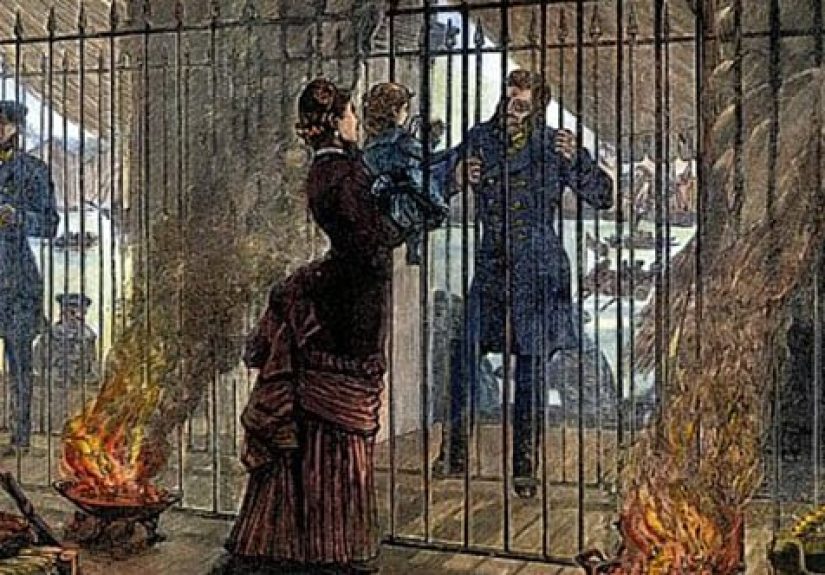
5) Quarantine Didn’t Only Happen in BuildingsSometimes It Happened on Islands
Isolation is easier when geography does some of the work. That’s one reason islands (natural or constructed) were used for quarantine functions near busy harbors.
They allowed officials to separate travelers and contain outbreaks without mixing them into dense city populations.
Quarantine and immigration are historically entangled
In the U.S., quarantine-related facilities and immigrant medical systems sometimes overlapped or operated in parallel. Not every medical exam site was a quarantine site,
and some quarantine operations happened on separate islands specifically designated for that purpose.
These places weren’t just clinical spaces; they were emotional oneswhere people waited, worried, hoped, and sometimes recovered, and sometimes didn’t.
6) “Typhoid Mary” Shows the Moral Tension of Quarantine
One of the most famous quarantine stories in American history involves Mary Mallonnicknamed “Typhoid Mary”a cook linked to multiple typhoid outbreaks.
Her case became a long-running public debate about individual rights, public risk, and what authorities should do when someone can spread disease without feeling sick.
Why it still matters
Mallon’s situation highlights a problem that remains relevant: asymptomatic transmission. Public health measures often need to manage uncertainty
people who may be infectious before symptoms, or without symptoms at all.
It also demonstrates that quarantine is not just biology. It’s policy, ethics, communication, trust, and the human tendency to resist being told what to do
(especially by someone in a uniform holding paperwork).
7) Courts Have Checked Quarantine When It Becomes Discriminatory
Quarantine has sometimes been applied unevenlytargeting certain communities more harshly than others. U.S. history includes examples where quarantine measures,
especially during outbreaks, were entangled with xenophobia and racism.
A hard lesson from 1900-era policies
During plague-era fear in the early 1900s, parts of San Francisco saw public health actions that disproportionately targeted Chinese residents.
Federal court rulings in that period emphasized that public health powers must still meet constitutional standards and cannot be used as a mask for discrimination.
The takeaway: quarantine authority is real, but it isn’t unlimited. In the U.S., it operates within legal frameworks that require reasonableness, due process,
and equality under the law.
8) Quarantine Isn’t Just for HumansPlants Get “Grounded,” Too
If you think people have complicated travel rules, meet plants. The United States runs extensive plant protection and quarantine programs designed to prevent
harmful pests and diseases from entering or spreading across the country.
Why plant quarantine matters
Invasive pests can devastate crops, forests, and ecosystems. Plant quarantine programs focus on inspection, containment, and monitoringbecause once a pest
establishes itself, eradication can be expensive, difficult, or impossible.
In other words: quarantine isn’t just about keeping the sniffly guy off your flight. Sometimes it’s about stopping an invasive species from turning agriculture
into a very expensive science experiment.
9) NASA Quarantined the Apollo 11 AstronautsYes, for “Moon Germs”
After Apollo 11 returned from the Moon, the astronauts completed a quarantine period in a specialized facility known as the Lunar Receiving Laboratory.
The concern wasn’t that the Moon looked “a little dusty.” It was an abundance-of-caution move to prevent any hypothetical lunar microorganisms from interacting
with Earth’s biosphere.
Science + uncertainty = quarantine
The Apollo quarantine program shows quarantine at its most philosophical: the risk was unproven, but the stakes were huge, and the science was incomplete.
When you’re dealing with unknowns, sometimes the safest option is to isolate first and study carefully.
It’s also a reminder that quarantine doesn’t always come from fear. Sometimes it comes from responsible humility: “We don’t know enough yet, so let’s not be reckless.”
10) Modern Quarantine Is a Legal ToolNot Just a Recommendation
In the U.S., quarantine operates under a layered system of authority. States generally hold primary power for quarantine and isolation within their borders,
while the federal government has specific authoritiesparticularly around international entry and certain interstate concerns.
How it works in plain English
- Local/state public health usually leads in community outbreaks and enforces many day-to-day health orders.
- Federal authority becomes especially relevant at borders, ports of entry, and for certain designated communicable diseases.
- Rules can be voluntary or mandatory, depending on the situation, disease, and legal basis.
This matters because “quarantine” isn’t just a vibe. It’s a policy instrument that has to be legally grounded, scientifically informed, and implemented in a way that
is workable for real humans with jobs, kids, rent, and limited patience.
What These 10 Facts Tell Us (Without Making It Weird)
Quarantine is a surprisingly versatile tool. It’s been used to manage plague-era shipping, protect crowded port cities, navigate the uncertainty of space exploration,
and prevent invasive pests from chewing through entire ecosystems.
But it’s also a stress test for society. Quarantine policies only work well when the public understands the goal, trusts the messengers, and can realistically comply.
That’s why modern public health emphasizes not just restrictions, but communication, support, and fairness.
Experiences of Quarantine: What It Feels Like in Real Life (About )
Facts are tidy. Quarantine experiences are not. Below are five experience-based snapshotscomposite scenes based on widely reported accounts and historical records
that capture the lived reality behind the policy.
1) The harbor wait: “Land is right there… and still not allowed.”
Imagine sailing for weeks and finally seeing a city skylineonly to be told your ship must remain offshore until health inspectors clear it. Historically, quarantine
at ports meant boredom, anxiety, and rumor. You’d watch small boats approach, officials board, and paperwork multiply. A yellow flag could turn a bustling arrival
into a floating waiting room. People measured time in meals, not days; every cough sounded louder; every delay felt personal. Quarantine wasn’t only about disease
it was about uncertainty.
2) The quarantine island: “Your world shrinks to a shoreline.”
Quarantine facilities near major ports could feel like an in-between placeneither home nor destination. For an immigrant family, the emotional weight was heavy:
they were close to a new life, yet physically separated from it. The days were filled with medical checks, rules, and waiting. Some people recovered and continued
their journey; others faced extended holds. Even when treatment was compassionate, the experience could be lonelybecause quarantine is isolation with an official
stamp.
3) The asymptomatic dilemma: “I feel fine… so why am I confined?”
The most psychologically difficult quarantine is often the one where you feel healthy. That’s where the logic of incubation periods collides with human instinct.
When you’re asked to stay home because you were exposed, it can feel like punishment without proof. The mind starts bargaining: “Maybe I wasn’t close enough.
Maybe it was nothing.” Effective quarantine depends on trust and practical supportclear instructions, job protection when possible, and help with food or medications
because willpower is not a supply chain.
4) The modern home quarantine: “Welcome to your one-bedroom universe.”
In the COVID era, home quarantine turned kitchens into offices, bedrooms into classrooms, and calendars into abstract art. People created micro-rituals:
disinfecting groceries, timing walks for empty sidewalks, waving at loved ones through windows. Many found unexpected tendernessneighbors leaving soup,
friends video-calling just to sit quietly together. Others experienced the harder side: loneliness, strained relationships, and the mental fatigue of constant vigilance.
Quarantine wasn’t a single experience; it was a million different households improvising stability.
5) The astronaut quarantine: “You went to the Moon, and now you can’t go outside.”
The Apollo quarantine is a reminder that quarantine can be strangely anticlimactic. Imagine returning from the most historic mission of your lifetime and then:
“Please proceed to the quarantine facility.” The purpose was seriousprotecting Earth from unknown biological riskbut the human experience was oddly relatable.
Even heroes get told where they can’t go. Quarantine, at its core, is society saying: “We’re going to slow down for safety.” The difference is whether we also
say: “And we’re going to help you through it.”
In every era, quarantine has asked the same question: how do we balance individual freedom with collective safety when time matters and certainty is limited?
The best answers tend to be the ones that combine science, law, empathy, and the practical reality that humans are not robotsalthough some of us did learn to
bake like one.