Table of Contents >> Show >> Hide
- Why These Filipino-to-American Culture Shocks Resonate
- 15 Culture Shocks After Moving From the Philippines to the USA
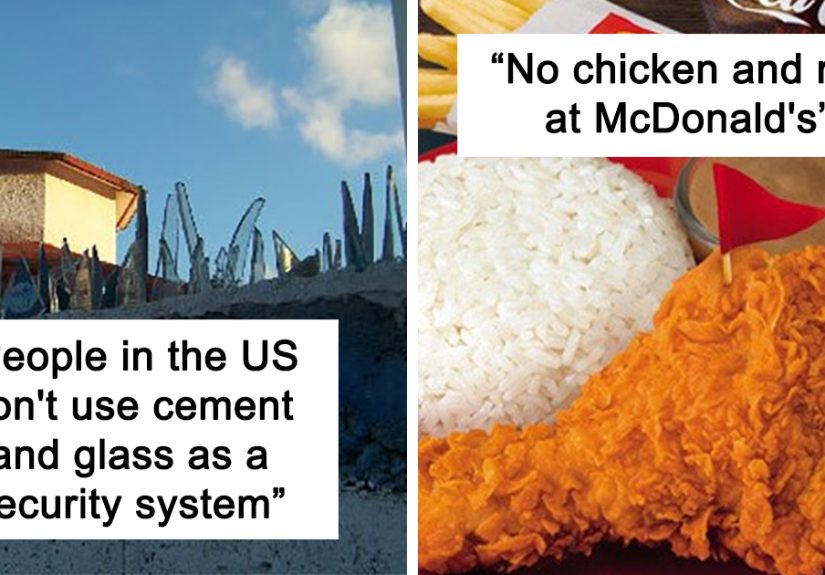
- 1. Home security looked completely different
- 2. American breakfast can feel like dessert wearing a disguise
- 3. The house felt too quiet without geckos on the wall
- 4. Staring is rude in America, even when you are just being curious
- 5. McDonald’s was still McDonald’s, but emotionally it was not the same place
- 6. Leaving the house with wet hair suddenly became a thing people noticed
- 7. American brooms can seem hilariously wrong
- 8. Bread showed up everywhere, while rice lost its main-character energy
- 9. There were no sari-sari stores on every corner
- 10. American roads felt strangely quiet because there was less honking
- 11. There were fewer stray dogs just roaming around
- 12. Some familiar words suddenly meant totally different things
- 13. Even shortened words were somehow controversial
- 14. Familiar products disappeared, and the replacements did not feel emotionally acceptable
- 15. Daily life in the U.S. was more scheduled, more formalized, and more rule-bound than expected
- What These Culture Shocks Actually Reveal About America
- More Experiences That Often Go With This Filipino-American Adjustment
- Final Thoughts
Moving to another country is a little like opening a mystery snack box: some things are delightful, some are confusing, and some make you stare at the packaging and ask, “Wait… this is normal here?” That is exactly why one Filipina TikToker’s list of culture shocks after moving to the United States hit such a nerve online. Her stories are funny, hyper-specific, and surprisingly revealing. They are not just random observations. They are tiny windows into how daily life in the U.S. can feel wildly different from life in the Philippines.
And that matters because Filipino migration to America is not some niche side story. It is a major part of the American experience. Millions of people in the United States have Filipino roots, and many newcomers still go through the same disorienting adjustment period: different food, different manners, different expectations, and different definitions of what counts as “totally normal.” In other words, culture shock is not a bug in the immigration experience. It is basically part of the setup.
This article breaks down the 15 culture shocks that stood out in the viral story, explains why they feel so big, and adds context about what these moments say about American culture. Because yes, a broom can become a personality test, and yes, breakfast can spark an identity crisis before 8 a.m.
Why These Filipino-to-American Culture Shocks Resonate
What makes this story work is that it is not about giant political ideas or textbook-level “cultural differences.” It is about the stuff people actually notice when they are trying to live a regular life: what you eat in the morning, how people act in public, whether strangers talk to you, what stores sell, and why a simple checkout receipt suddenly needs a calculator. Those are the details that can make a new country feel either welcoming or wonderfully weird.
For someone moving from the Philippines to the USA, the adjustment can be especially layered. The two countries share history, English is widely spoken in the Philippines, and Filipino communities are deeply rooted across the U.S. So from the outside, the move might look smooth. In reality, familiarity can make the surprises even sharper. You think you know the culture, and then McDonald’s refuses to serve rice. That is how the emotional damage begins.
15 Culture Shocks After Moving From the Philippines to the USA
-
1. Home security looked completely different
One of the first surprises in the viral story was realizing that American homes often rely on alarm systems, sensors, and smoke detectors rather than improvised physical barriers. In parts of the Philippines, practical neighborhood-style security can look much more visibly defensive. So arriving in the U.S. and seeing a quieter, more system-based approach to home safety can feel oddly sterile at first. It is one of those moments where you realize “normal” is deeply local. What feels secure in one country can feel strange, overbuilt, or even underbuilt in another.
-
2. American breakfast can feel like dessert wearing a disguise
For many Filipinos, rice is not a side character. It is the lead actor with excellent range. Breakfast with rice, eggs, spam, sausage, or other savory food feels hearty and logical. By contrast, the American breakfast lineup can seem suspiciously sweet: cereal, pastries, flavored yogurt, syrup-heavy pancakes, and drinks that taste like someone whispered “vanilla” into a milkshake. That difference is more than food preference. It reflects a broader U.S. convenience culture, packaged breakfast habits, and a long love affair with sugar. To a newcomer, it can feel like the day starts with dessert and everyone just agreed not to mention it.
-
3. The house felt too quiet without geckos on the wall
This one sounds tiny until you remember how everyday environments shape what people consider comforting. In tropical homes in the Philippines, seeing small lizards or geckos around the house may barely register. They are part of the visual background, and in some homes they are even appreciated for dealing with insects. In the U.S., especially in cooler regions, the absence of that kind of house life can feel eerie. A quiet wall is not just a quiet wall. It is proof that you are no longer home.
-
4. Staring is rude in America, even when you are just being curious
One of the funniest culture shocks on the list is also one of the most revealing. In the U.S., prolonged staring is generally interpreted as intrusive, confrontational, or socially awkward. Americans tend to guard personal space and visual boundaries more carefully, especially with strangers. In many other cultures, including parts of the Philippines, looking openly at people can feel less loaded. So when a newcomer watches people the way they always have, Americans may react like an invisible alarm went off. Suddenly, your face has committed a social crime.
-
5. McDonald’s was still McDonald’s, but emotionally it was not the same place
Fast food is one of the quickest ways to discover that global brands are not actually global in the same way. In the Philippines, McDonald’s menus are shaped around local taste, which means rice meals, chicken, spaghetti, and flavors that make sense to Filipino customers. In the U.S., the menu feels more bread-based, potato-based, and less rice-centered. That can be a real culture shock because global branding tricks people into expecting familiarity. The logo says “home away from home,” but the tray says, “Actually, welcome to America. Here is a burger and a life lesson.”
-
6. Leaving the house with wet hair suddenly became a thing people noticed
Some culture shocks are not about laws or systems. They are about tiny grooming habits that carry unspoken social meaning. A person who grows up casually stepping out with wet hair may not expect it to be noticed at all. But in the U.S., depending on the region and social setting, styled and dried hair can read as more “put together.” That does not mean every American cares. Plenty do not. But to a newcomer, even the fact that people have an opinion on it can feel absurd. It is just hair, not a diplomatic incident.
-
7. American brooms can seem hilariously wrong
Yes, the broom complaint is real, and yes, it is surprisingly relatable. Household tools reflect housing design, floor surfaces, and cleaning habits. A broom that works perfectly well on one kind of floor may feel useless on another. So when someone moves countries and discovers that the “normal” broom shape is different, it can trigger a weird amount of frustration. This is what culture shock looks like in real life: not a dramatic airport montage, but two adults standing in a kitchen arguing over cleaning technology like it is a matter of national pride.
-
8. Bread showed up everywhere, while rice lost its main-character energy
Another food shock involved how often Americans eat bread. Sandwiches, toast, rolls, burger buns, bagels, pizza crust, tortillas, pastries, and random dinner bread all compete for table space. For someone from a rice-centered food culture, this can feel less like variety and more like an organized campaign. Rice is still available in the U.S., of course, especially in diverse cities and Asian grocery stores. But in mainstream American meals, bread often carries the role that rice does in Filipino homes: reliable, filling, and assumed. The shift can make a person miss plain steamed rice more than they ever thought possible.
-
9. There were no sari-sari stores on every corner
The disappearance of sari-sari store culture is not just about shopping. It is about how neighborhoods function. In the Philippines, small hyperlocal stores can be social hubs, convenience points, and tiny lifelines for snacks, drinks, and household basics. In the U.S., convenience exists, but it often arrives in a different form: bigger stores, chain convenience shops, gas station markets, pharmacy aisles, and grocery runs that require a car. That can make American convenience feel less personal and less woven into neighborhood life. You can buy more stuff, sure, but you may not get the same sense of community from the transaction.
-
10. American roads felt strangely quiet because there was less honking
Traffic culture is one of the fastest ways to feel like you landed on another planet. In places where honking is woven into the flow of everyday driving, road noise becomes a language: warning, signaling, impatience, survival, all in one. In much of the U.S., honking happens, but usually less casually. That makes American streets sound calmer, even when traffic is awful. The silence can be so noticeable that it feels suspicious. A newcomer may wonder whether drivers are unusually polite, deeply repressed, or just communicating with telepathy.
-
11. There were fewer stray dogs just roaming around
Animals tell you a lot about a place. Seeing fewer stray dogs in many U.S. neighborhoods can be a real surprise for someone used to them being part of the street environment. In America, pet ownership is often tightly regulated, veterinary care is heavily commercialized, and animals are more likely to be indoors, fenced, leashed, or in shelters. That creates a very different visual landscape. To a newcomer, the streets can look cleaner and more controlled, but also slightly uncanny. Where did all the dogs go? Apparently, inside, on orthopedic beds, with birthday hats.
-
12. Some familiar words suddenly meant totally different things
Language shock is sneaky because it can hit even when you speak excellent English. Filipino English, regional vocabulary, and words borrowed through everyday use can create moments of total misunderstanding in the U.S. A term that feels ordinary back home may sound outdated, overly formal, too vague, or just plain wrong in America. That can be embarrassing at first, but it also reveals how English is never one single thing. It is a family of dialects pretending to be one language and then acting shocked when cousins disagree.
-
13. Even shortened words were somehow controversial
The TikToker joked about using shortened terms like “ref” for refrigerator and getting blank stares. That is a classic immigrant-language moment. You are technically speaking English, but not the right flavor of English for that room. Americans use plenty of abbreviations too, but they are often attached to regional habits or specific social circles. The result is weirdly comic. You know the object. They know the object. Both of you speak English. And yet the conversation still crashes into a ditch because everyone is defending their preferred nickname for cold food storage.
-
14. Familiar products disappeared, and the replacements did not feel emotionally acceptable
Newcomers often underestimate how attached they are to specific brands until those brands vanish. Hair products, toiletries, snacks, seasonings, and comfort items can carry more emotional weight than people expect. When you cannot find the conditioner, crackers, instant coffee, or soap you grew up with, the homesickness hits differently. It is not dramatic in a cinematic sense, but it is deeply human. Sometimes migration grief shows up not as tears at the window, but as rage in the shampoo aisle.
-
15. Daily life in the U.S. was more scheduled, more formalized, and more rule-bound than expected
This final culture shock ties the others together. American life often runs on appointments, posted prices that do not include tax, expected tips, strict timing, classroom participation norms, car dependence, and a constant need to understand little systems. You do not just buy something; you calculate it. You do not just see a doctor; you decode deductibles and copays. You do not just visit someone; you text first, arrive on time, and read the room. For many immigrants, the biggest shock is not one weird detail. It is realizing how many invisible rules are packed into ordinary American life.
What These Culture Shocks Actually Reveal About America
Underneath the humor, these stories point to a few major American themes. First, the U.S. prizes individual boundaries. That shows up in personal space, eye contact, staring etiquette, and the way friendliness can coexist with emotional distance. Americans may chat casually with strangers, but that does not always mean instant closeness. Small talk is often social lubricant, not a friendship contract.
Second, American daily life is heavily structured by systems. Price tags often do not include the full total because sales tax varies. Restaurant bills often assume tipping. Healthcare involves deductibles, copays, coinsurance, and paperwork that can make an otherwise healthy person want to lie down dramatically on a couch. Transportation is also system-heavy, especially in areas where a car is less a luxury and more a survival tool with cup holders.
Third, American culture often values convenience over ritual. Bigger stores, bulk buying, food on the go, fast breakfast options, chain dining, and less neighborhood-based retail all reflect that. This can feel efficient, but it can also feel impersonal to someone used to more relational and local rhythms. The tradeoff is clear: the U.S. can offer variety and scale, yet sometimes at the expense of intimacy and texture.
More Experiences That Often Go With This Filipino-American Adjustment
These 15 culture shocks also open the door to a bigger truth: immigrant adjustment rarely happens in neat categories. A person might laugh about bread replacing rice, then quietly struggle with homesickness at the grocery store. They may joke about awkward American brooms while also learning a new work culture, new classroom rules, new healthcare terms, and new forms of politeness. That combination of comedy and exhaustion is common.
Many Filipino newcomers describe being surprised by how casual Americans can seem on the surface and how structured they can be underneath. A professor may invite students to use a first name, but still expect active class participation, punctuality, and independent opinions. A cashier may greet you warmly, but the total at checkout still jumps because tax was not in the listed price. A server may be very friendly, but the bill still silently asks whether you understand U.S. tipping culture. In other words, American informality often comes with invisible instructions.
Another common experience is realizing how large everything feels. Portions are bigger, supermarkets are bigger, roads are bigger, and the distance between places can be much bigger than expected. For someone raised with neighborhood stores, walkable routines, or tighter community patterns, the scale of American life can feel both exciting and exhausting. You can buy almost anything, but you may need a car, a map, and a snack just to get there.
Food can also become a surprisingly emotional battlefield. Missing rice at breakfast is not really just about rice. Missing a favorite conditioner is not really just about conditioner. These details represent continuity, memory, and the quiet comfort of not having to explain yourself. When those things disappear, even temporary inconveniences can feel symbolic. That is why immigrant stories often swing so easily between humor and tenderness. One minute you are laughing about “McDo” versus “McDonald’s.” The next minute you are trying not to get emotional over a brand of instant noodles.
Then there is the social adjustment. Americans often smile, make small talk, and seem approachable, but that does not always translate into quick intimacy. For newcomers from more communal environments, this can feel confusing at first. People are nice, but they are busy. They are open, but scheduled. They are chatty, but private. Friendships absolutely form, but they may grow differently than expected. Once immigrants understand that difference, many find a rhythm that works: keeping the warmth they brought from home while learning the codes of American personal space, timing, and independence.
That is why stories like this TikToker’s land so well. They remind people that culture shock is not failure. It is evidence that you are paying attention. It means you noticed the world change around you, and you survived long enough to laugh about it. Honestly, that may be the most American ending of all.
Final Thoughts
The viral list of culture shocks after moving from the Philippines to the USA is entertaining because it is specific, but it sticks with people because it is true to the immigrant experience. New countries do not just challenge your passport status. They challenge your breakfast, your vocabulary, your timing, your expectations, your cleaning tools, and occasionally your emotional attachment to conditioner packets.
For readers curious about Filipino-American life, this story offers a useful reminder: cultural adjustment is built from ordinary details. And for anyone who has ever moved countries, it is a comforting one too. The confusion is real, the awkwardness is normal, and yes, sometimes the bread really is everywhere.