Table of Contents >> Show >> Hide
- Why Quick Front Porch Updates Work So Well
- Update #1: Refresh the Front Door and Its Supporting Cast
- Update #2: Upgrade the Lighting for Warmth, Safety, and Style
- Update #3: Add Planters, Texture, and One Comfortable Place to Pause
- Common Mistakes That Make a Porch Look Worse, Not Better
- A One-Weekend Plan for Better Curb Appeal
- What These Front Porch Updates Feel Like in Real Life
- Conclusion
- SEO Tags
Your front porch is the handshake of your house. It says hello before you do, and on some days it says, “Welcome in,” while on other days it quietly whispers, “We meant to sweep last week.” The good news is that a full makeover is not required to make your entry feel polished, warm, and noticeably more stylish. A few smart front porch updates can shift the entire mood of your home without turning your weekend into a home improvement soap opera.
If you want more curb appeal, better first impressions, and a front entry that feels intentional instead of accidental, focus on the small details that do the heavy lifting. Designers and home experts consistently point to the same big winners: the front door, the lighting, and the finishing layer of planters or seating. Translation: you do not need a contractor, a crane, or a mysterious “artisan masonry phase.” You need a plan.
This guide breaks down three quick front porch updates that are easy to pull off, friendly to most budgets, and effective in almost every style of home. Whether your porch is a grand wraparound beauty or a tiny rectangle where one package and a potted fern already feel crowded, these ideas can help your entry look more welcoming, more current, and more put together.
Why Quick Front Porch Updates Work So Well
The front porch sits at the intersection of function and personality. It helps people find your house, protects the entry, and sets the tone for what is inside. Because it is such a visible space, even small changes create an outsized impact. A fresh front door color catches the eye. Better porch lighting improves safety and atmosphere. Matching planters or updated house numbers make the space feel curated instead of random.
That is why the best porch decor ideas are not always the most expensive ones. In fact, the most effective updates are usually the most focused. Instead of filling the porch with too many accessories, choose a few elements that improve color, light, scale, and comfort. Think of it like getting dressed: a great coat, good shoes, and one confident accessory beat seventeen bracelets and a panic decision.
When done right, quick front porch updates can make a home look cleaner, brighter, and more cared for. They also make daily life a little nicer. Coming home to a tidy, well-lit porch with a cheerful door and healthy plants feels good. That matters, even if the only regular guest is the delivery driver who now knows your home has excellent taste.
Update #1: Refresh the Front Door and Its Supporting Cast
Start with the star of the show
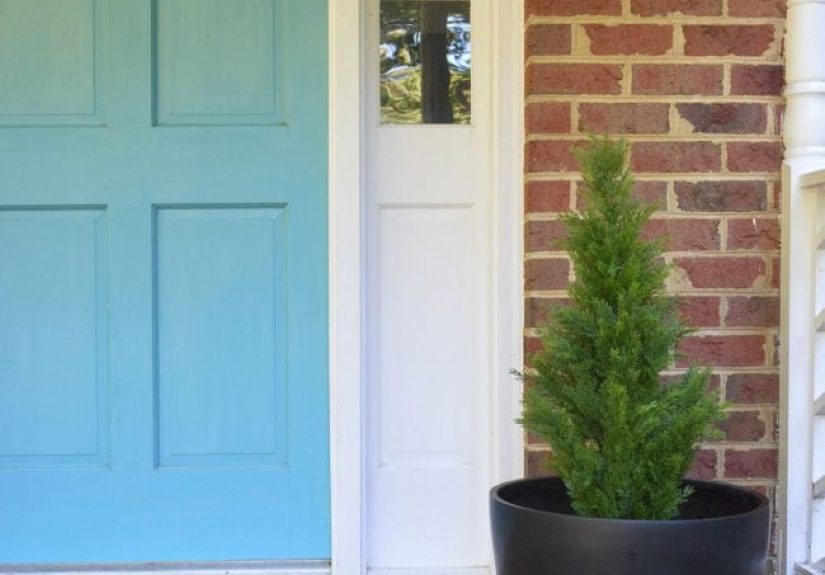
The front door is the focal point of most entries, which is why repainting it remains one of the fastest ways to boost curb appeal. If your current door color looks faded, dusty, or stuck in a decade that also thought inflatable furniture was a good idea, give it a refresh. A crisp black, deep navy, rich green, warm red, or muted blue can instantly sharpen the look of the exterior. If your house is more traditional, classic colors usually feel timeless. If your home is more modern, bold contrast can work beautifully.
The trick is to choose a color that feels intentional with the siding, trim, brick, or stone around it. A front door should stand out, but it should not look like it lost a dare. Sample first, especially if your porch gets strong morning or afternoon light, because exterior colors can change dramatically depending on sun exposure.
Then fix the little details people notice more than they admit
Once the door is fresh, look at the hardware. New locksets, a door handle, a knocker, updated house numbers, and even a better mailbox can transform the entry. These are small pieces, but together they act like jewelry for the porch. When finishes coordinate, the whole space looks calmer and more elevated. Matte black, aged brass, oil-rubbed bronze, or brushed nickel can all work well depending on the style of your house.
House numbers deserve special attention. They should be readable from the street, sized appropriately, and high enough in contrast that nobody has to squint like they are deciphering an ancient map. Oversized or sleek house numbers are especially effective on a simple facade because they add both personality and practicality.
Simple example
Imagine a basic builder-grade porch with a beige door, a tired brass knob, tiny faded numbers, and a curled doormat that has emotionally given up. Paint the door a deep blue, swap the knob and lock for matte black hardware, install larger modern numbers, and replace the doormat with a striped or woven outdoor version. Suddenly the entry looks deliberate. No renovation. No drama. Just better choices.
Update #2: Upgrade the Lighting for Warmth, Safety, and Style
Good porch lighting is not optional
Lighting is one of the most overlooked front porch ideas, which is funny because it literally helps people see the porch. Builder-grade fixtures often disappear into the facade during the day and cast an underwhelming glow at night. Replacing them with better-scaled sconces, a pendant, or a lantern-style fixture can change the look of the house after sunset just as much as during daylight hours.
The best porch lighting does three things at once: it helps people safely reach the door, it highlights the architecture, and it creates a warm welcome. In other words, you want “inviting glow,” not “parking lot interrogation scene.” Choose fixtures that fit the size of the porch and the height of the door. Too tiny, and they look apologetic. Too large, and they steal the scene from everything else.
Layer the light instead of relying on one lonely bulb
If your porch allows for it, layer your lighting. Wall sconces can frame the door. A ceiling-mounted light or pendant can brighten the center of the porch. Small path lights can guide the way from the sidewalk or steps. Even one or two subtle solar lights near planters or along a walkway can help the whole entry feel more complete.
LED bulbs are a smart choice for outdoor lighting because they are efficient, long-lasting, and widely available in warm color temperatures that feel cozy rather than harsh. Motion-sensor lighting can also be useful near side entries, steps, or darker corners, especially if you want added security without leaving the house glowing like a stadium all night.
Choose style with restraint
If your home is traditional, lantern sconces or classic black fixtures tend to work well. If it leans modern, try simple geometric lines or mixed materials like metal and glass. What matters most is that the lighting relates to the architecture and the rest of the hardware. When the sconces, door handle, house numbers, and mailbox feel like part of the same visual family, the porch looks edited and intentional.
Also, resist the urge to stack too many lighting ideas in one small space. One clean overhead fixture plus two well-chosen sconces is often enough. This is a front porch, not a stage production of Phantom of the Entryway.
Update #3: Add Planters, Texture, and One Comfortable Place to Pause
Plants are the fastest way to make a porch feel alive
Planters work because they add color, texture, height, and softness to hard architectural lines. They also make the porch feel cared for. Two matching planters flanking the door create symmetry and instant structure. A single oversized planter can make a strong statement on a smaller porch. Window boxes, hanging planters, or grouped containers can all work as long as they feel proportionate to the space.
Choose containers that match the home’s style. Tall black planters look clean and current on modern exteriors. Terra cotta feels warm and classic. Woven or textured containers can add softness to painted wood or brick. The plants themselves should suit your climate, light conditions, and willingness to keep them alive. There is no shame in choosing low-maintenance greenery over a floral arrangement that turns dramatic by Tuesday.
Think in layers, not clutter
Once the plants are in place, add one or two layers of texture. A new outdoor rug or doormat can ground the entry. A porch bench, rocking chair, or compact bistro chair can make the area feel more lived in. Outdoor pillows can add a little color, but do not pile them on like the porch is hosting a decorative pillow convention.
The best front porch decorating ideas leave some breathing room. Negative space matters. That means you do not need a sign, a lantern, a wreath, two chairs, a bench, four planters, a basket, a stool, and a ceramic goose wearing rain boots. Pick a few elements with confidence and stop while the porch still looks sophisticated.
A smart formula for almost any porch
Try this easy formula: one fresh doormat, one seating piece if space allows, and one or two planters sized generously enough to hold visual weight. This works on farmhouses, bungalows, colonials, and simple suburban homes alike. It is easy to update seasonally too. Switch flowers, add a pillow cover, or change the wreath, and the entry feels refreshed without requiring a complete redesign every time the weather changes its mood.
Common Mistakes That Make a Porch Look Worse, Not Better
Ignoring scale
A tiny mat on a wide porch or miniature planters beside a substantial front door can make the whole entry feel off. Size matters. Go a little larger than you think, especially with lighting and containers.
Mixing too many finishes
If your sconce is shiny silver, your house numbers are antique brass, your mailbox is black, and your door handle is gold, your porch may look more confused than curated. Limit your finish palette for a cleaner appearance.
Overdecorating
A porch should feel welcoming, not crowded. Too many signs, seasonal doodads, and random accessories can turn a charming entry into visual noise. A porch does not need to explain itself with wooden word art. The welcome should be implied by the fact that the place looks good.
Forgetting maintenance
The prettiest porch in the neighborhood can still lose points if the spiderwebs are thriving, the plants are crispy, and the door has mysterious smudges. Quick updates work best when paired with simple maintenance: sweep, wipe, trim, water, repeat.
A One-Weekend Plan for Better Curb Appeal
If you want a practical way to tackle these front porch updates, here is a simple order of operations. On day one, clean everything. Sweep the porch, wash the door, wipe down light fixtures, and remove anything broken, faded, or unnecessary. Then repaint the door if needed.
On day two, swap the hardware, upgrade the house numbers, and install the lighting. Finish with planters, a mat, and a seating piece if your layout allows. Step back from the curb and look at the house from a visitor’s point of view. You will usually notice immediately whether the porch feels balanced and bright or whether it still needs one more edit.
That outside perspective matters. Front porch decor is not just about what looks pretty from three inches away. It is about how the whole entry reads from the street, from the walkway, and from the front steps. The best result is one that feels simple, polished, and unmistakably welcoming.
What These Front Porch Updates Feel Like in Real Life
One of the most interesting things about quick front porch updates is how often homeowners expect only a visual improvement and end up noticing an emotional one too. A front porch may seem like a small slice of the house, but it affects the mood of coming and going every single day. That is why even modest changes can feel surprisingly satisfying.
A common experience starts with frustration. The porch looks fine in theory, but in practice it feels dull, cluttered, or unfinished. Maybe the light fixture is too dim, so packages get dropped in the wrong spot. Maybe the front door color looked acceptable five years ago and now just reads as “landlord beige.” Maybe there are three tiny planters on the steps doing their best, but together they have the presence of a shy houseplant committee. The porch is not a disaster, but it is not helping either.
Then the updates begin. The first day usually involves cleaning, and that alone changes more than people expect. Dirt, pollen, old leaves, and worn accessories can make a porch feel neglected even when the bones are good. Once the space is cleared, the homeowner can actually see it again. This is often the moment when people realize they do not need more stuff. They need fewer, better pieces.
Repainting the front door is often the turning point. It is one of those projects that looks minor on paper and dramatic in real life. Suddenly the entry has contrast. It has identity. It looks less like an afterthought and more like the center of the facade. Many homeowners describe the result as the house looking “awake” again, which is a strange thing to say about a building, but somehow completely accurate.
Lighting changes tend to deliver the second big surprise. During the day, new sconces or a pendant make the porch look more finished. At night, the whole character of the entry changes. People notice that they enjoy pulling into the driveway more. Guests can actually find the lock without performing a small interpretive dance in the dark. The porch feels safer, softer, and far more welcoming.
Plants and seating bring in the lived-in feeling. Homeowners often report that once a bench, rocker, or simple chair is added, the porch becomes a place instead of just a pass-through zone. A cup of coffee lasts a little longer out there. A quick phone call migrates outside. Kids sit on the steps. A neighbor stops to chat. The porch starts doing what porches have always done best: creating a gentle transition between private life and the world outside.
Perhaps the most relatable experience of all is realizing that the best results usually come from restraint. People who try to decorate every inch often end up editing things back. People who choose one great planter, one strong light fixture, and one fresh door color often end up happiest. The porch feels stylish without trying too hard, and that is usually the sweet spot.
In the end, these front porch ideas work because they improve daily life in small but visible ways. The house looks better from the street, yes. But it also feels better to come home to. And for most people, that is the real win: not a magazine-perfect porch, but a front entry that feels warm, intentional, and pleasantly free of decorative panic.
Conclusion
If your front entry needs a refresh, start with the three updates that deliver the biggest payoff: repaint the front door and coordinate the hardware, improve the porch lighting, and add planters with one comfortable layer of texture or seating. These quick front porch updates are practical, stylish, and manageable for a normal weekend. They work because they focus on the details people actually notice first: color, light, scale, and care.
The best part is that you can tailor them to any home style. A cottage porch can lean soft and charming. A modern porch can stay sleek and minimal. A classic suburban entry can feel cleaner and more current with only a few thoughtful changes. Better curb appeal does not always come from doing more. Often, it comes from doing the right three things and stopping before the porch starts asking for its own reality show.