Table of Contents >> Show >> Hide
- What This Ultra-Light Pocket Multitool Actually Is
- Why the “Less Than a Penny” Claim Matters
- Why Titanium Makes Sense
- What a Tiny Pocket Multitool Does Better Than a Full-Size One
- Where a Tool This Small Falls Short
- How It Compares to Mainstream Multitool Thinking
- Is It Travel-Friendly?
- Who Should Consider a Minimalist Pocket Multitool?
- What to Look for in a Micro Multitool
- 500 Extra Words: Everyday Experiences With a Pocket Multitool This Small
- Final Verdict
- SEO Tags
If you love everyday carry, you already know the genre has two extremes. On one side, there is the full-size multitool that can practically rebuild a lawn mower, tighten a cabinet hinge, and make you feel emotionally prepared for the apocalypse. On the other side, there is the tiny tool that slips into your pocket so easily you forget it exists until the exact moment you need to open a paint can, twist a screw, or bully a zip tie into submission. This article is about the second campthe gloriously tiny one.
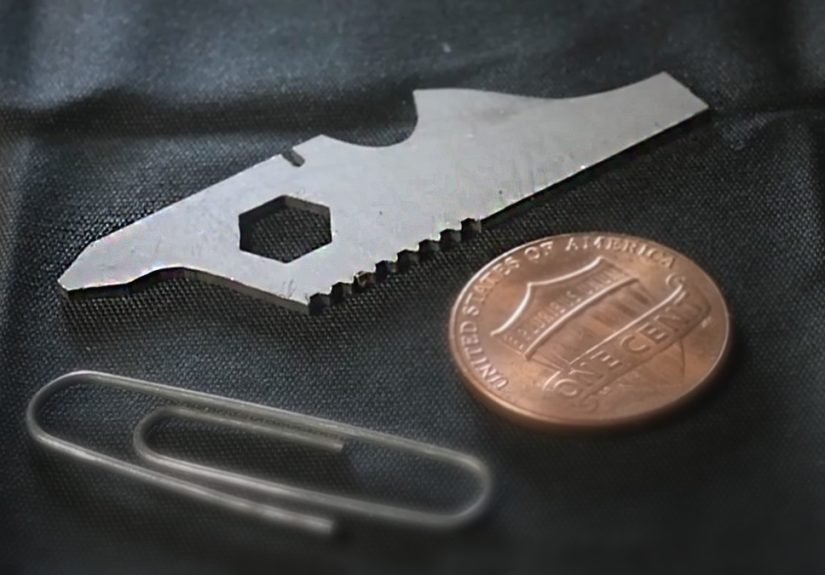
The buzzworthy example inspiring this title is a titanium flat-cut pocket multitool that reportedly weighs just 1.9 grams. That is less than a modern U.S. penny, which weighs 2.5 grams. In other words, this thing is not merely lightweight. It is “Did I accidentally carry a ghost?” lightweight. And yet, despite its almost comical mass, it still manages to function as a real pocket multitool instead of a novelty that exists only to win arguments on the internet.
What makes a micro tool like this interesting is not that it replaces a Leatherman, Gerber, or other full-size multitool. It absolutely does not. What it does offer is something many bigger tools fail to deliver: near-zero carry penalty. That matters more than most people admit. A tool you actually carry beats the larger, smarter, tougher tool you left on your desk because your pocket already felt like a junk drawer with commitment issues.
What This Ultra-Light Pocket Multitool Actually Is
The version making headlines is a minimalist titanium multitool shaped from a thin flat piece of metal. It is not a bulky plier-based multitool, and it is not trying to be. Instead, it is an ultra-compact EDC tool built around the idea that a few useful functions, executed reasonably well, can be more practical in daily life than a brick-sized gadget with 18 features you never use.
According to demonstrations and coverage of the design, the tool includes a Phillips screwdriver, a flathead screwdriver, a small saw-like edge, a paint-lid opener, a wire-bending notch, and a quarter-inch wrench that can also act as a bit driver. It has also been shown scraping wood, popping bottle caps, and handling light-duty household tasks. That is a surprisingly serious résumé for something that weighs less than a penny and probably less than the average key fob drama in your pocket.
Why the “Less Than a Penny” Claim Matters
Weight Changes Carry Habits
In multitool design, weight is not a small detail. Weight decides whether a tool lives in your pocket every day or gets exiled to a drawer after a week. Full-size multitools are incredibly capable, but they are also heavy enough to announce themselves every time you sit down. Compact tools improve portability, but even many “small” multitools still weigh in ounces, not grams.
That is what makes this titanium pocket multitool so interesting. At 1.9 grams, it is dramatically lighter than mainstream compact options. The appeal is not just bragging rights. The appeal is frictionless carry. It can slide into a wallet slot, coin pocket, pouch, or key organizer without making your daily carry feel like a medieval punishment.
It Reframes the Point of a Multitool
Big multitools are about capability. Tiny multitools are about availability. That distinction matters. If you are in the garage, the best tool is usually the proper tool. But if you are in a parking lot, on a hike, at your desk, or halfway through assembling flat-pack furniture with nothing nearby except your remaining patience, an ultra-light multitool can become weirdly heroic.
This is why minimalist EDC continues to grow. People do not always want “more tool.” They want “enough tool” in the smallest, lightest package possible. That is a very different design philosophy, and this headline-making multitool fits it beautifully.
Why Titanium Makes Sense
Titanium has long been popular in premium EDC gear for good reason. It is light, strong for its weight, and highly resistant to corrosion. Those characteristics make it especially appealing in pocket tools, which live hard lives full of humidity, sweat, dust, lint, rain, and the occasional moment when they are forgotten in a pair of jeans and forced to survive the laundry cycle like a tiny metal action hero.
For a multitool this small, material choice is everything. Stainless steel works, but titanium helps slash weight while keeping enough rigidity for light prying, scraping, turning, and poking around in the everyday messes of ordinary life. That is part of what allows a flat-cut tool to remain useful even when it is thinner and smaller than most people would expect.
What a Tiny Pocket Multitool Does Better Than a Full-Size One
1. It wins on convenience
The biggest advantage is simple: you are more likely to carry it. A full-size multitool can feel like overkill for office workers, commuters, casual DIYers, or anyone who does not want eight ounces of steel swinging around in their pants. A minimalist multitool solves that problem by being effectively invisible.
2. It handles the little stuff surprisingly well
Daily life is full of small tasks: tightening a loose battery compartment screw, nudging open a paint lid, scraping adhesive, opening a bottle, bending a wire, or pressing a stubborn clip into place. These jobs do not require industrial-grade hardware. They require a handy little tool right now. That is where a micro multitool earns its keep.
3. It complements, rather than replaces, other gear
The best way to think about this kind of tool is as a backup or supplement. It pairs well with a pocket knife, a mini flashlight, a keychain light, or a small bit kit. It does not need to do everything. It only needs to solve enough problems to justify the negligible space it takes up.
Where a Tool This Small Falls Short
Now for the reality check, because tiny tools are fun but physics remains annoyingly undefeated. A pocket multitool this small will never offer the grip, leverage, comfort, or versatility of a larger multitool. There are no pliers. There is no robust locking mechanism. Extended use will be less comfortable. Torque will be limited. Precision may be great for some tasks and lousy for others. If you are doing serious repair work, this is not your main character. It is the sidekick.
That is why the smartest way to evaluate a minimalist multitool is not by asking, “Can it replace my full workshop?” That is like asking if a granola bar can replace Thanksgiving. The real question is, “Can it solve enough common, annoying, small problems to be worth carrying every day?” For many people, the answer is yes.
How It Compares to Mainstream Multitool Thinking
Mainstream multitool reviews from major U.S. gear and home publications consistently praise usefulness, comfort, driver performance, scissors, pliers, and carry options. Those are the benchmarks that dominate the category for good reason. But the super-light pocket multitool takes a different route. It says, “Forget max features. What is the absolute minimum tool that still earns a permanent place in your pocket?”
That question has become more relevant as EDC trends move toward slimmer, lighter, and more task-specific tools. Keychain tools, slim pry bars, bladeless travel tools, and ultra-compact drivers all point in the same direction: people want gear that disappears until it is needed. In that sense, this sub-penny multitool is not a gimmick from outer space. It is an extreme expression of a very real design trend.
Even better, it highlights something reviewers often note about compact tools: simple tools are often the ones users actually keep on them. If your multitool is too bulky, too awkward, or too specialized, it stays home. A featherweight tool avoids that trap.
Is It Travel-Friendly?
Maybe, but do not get too cocky at the airport. Transportation Security Administration guidance is clear that multitools with knives are prohibited in carry-on bags, while bladeless multitools may be permitted, with the final decision resting with the TSA officer. This particular tool concept appears to lean toward the bladeless side, but that still does not guarantee smooth passage through security. A checkpoint is not the place to test your debate skills or unveil your dissertation on edge geometry.
If air travel matters, a safer strategy is to treat minimalist multitools cautiously and check the latest rules before packing. Tiny does not automatically mean TSA-proof.
Who Should Consider a Minimalist Pocket Multitool?
- EDC fans who want a barely-there backup tool.
- Apartment dwellers and office workers who need occasional utility without carrying a full plier-based multitool.
- DIY beginners who often run into small fixes but do not want bulky gear.
- Cyclists, hikers, and commuters who obsess over weight and packability.
- Minimalists who appreciate clever design and hate pocket clutter with the passion of a thousand overstuffed key rings.
It is less ideal for tradespeople, heavy-duty users, or anyone expecting serious mechanical leverage. If your daily tasks involve real torque, cutting, or gripping, go bigger.
What to Look for in a Micro Multitool
Useful functions, not filler
A great tiny multitool does not need 20 features. It needs a handful of functions you will genuinely use. Screwdrivers, pry edges, bottle openers, hex cutouts, and light scraping functions tend to be more valuable than gimmicks designed purely for packaging copy.
Comfort and safe handling
Even the smallest tool should feel predictable in the hand. Sharp corners, poor grip, and awkward cutouts can turn a clever design into a pocket gremlin. With flat tools especially, edge treatment matters.
Material quality
Titanium, stainless steel, and other durable metals have obvious advantages over cheap stamped mystery metal. Since these tools are small, material quality affects performance even more than usual.
Carry options
Does it fit a wallet, keychain, coin pocket, or organizer? Does it disappear into your routine? The best pocket multitool is the one that becomes automatic to carry.
500 Extra Words: Everyday Experiences With a Pocket Multitool This Small
The real charm of a pocket multitool that weighs less than a penny is not in the spec sheet. It is in the tiny interruptions of ordinary life. Imagine the kind of moments that never justify walking to the garage, opening a full toolbox, or digging through a junk drawer that somehow contains eleven dead batteries and one mystery Allen key from 2009. You notice a loose screw on a toy, a crooked battery cover on a remote, a paint can that refuses to cooperate, or a zip tie that is hanging on for dear life. That is the natural habitat of a micro multitool.
In those situations, a tool like this feels almost unfair. It is so small that expectations are low, which means every successful task feels like a tiny magic trick. You slip it out, turn the screw, pop the lid, scrape the gunk, bend the wire, and put it away before anyone fully understands what just happened. It does not create the same drama as unfolding a full-size multitool with pliers and locking implements. It is quieter than that. Less action movie, more efficient side quest.
There is also a psychological advantage to carrying something so light. Heavier multitools can make you decide whether the day really calls for carrying extra hardware. A nearly weightless pocket tool removes that decision. You just bring it. The habit becomes effortless. Over time, that matters. Many people who own large multitools use them occasionally. Many people who carry tiny tools use them constantly because the tools are always there.
That experience is especially relevant for people who live in cities, work at desks, or spend most of the day moving between normal environments rather than job sites. In those settings, the problems are smaller but more frequent. Tighten eyeglass screws. Open packaging. Pry open a stubborn battery compartment. Lift a paint can lid. Nudge apart plastic tabs without destroying them. Twist a small fastener just enough to get by until you can reach a real screwdriver. The jobs are modest, but the convenience feels huge.
There is, of course, a flip side. The same tiny size that makes the tool wonderfully pocketable can also make it less comfortable during extended use. If you bear down too hard, your fingers will notice. If you expect deep leverage, you may get humbled by basic mechanics. If you are the type who enjoys over-torquing a screw until both you and the fastener regret it, this is not your soulmate. It is best understood as a clever emergency helper, not a workshop replacement.
Still, that limitation is part of the appeal. A micro multitool teaches you to use the right amount of force, solve small problems efficiently, and appreciate smart design over brute size. It is the pocket equivalent of a concise email: short, effective, and far more useful than the bloated version most people pretend to admire. For minimalist EDC fans, that makes a tool like this memorable. It turns almost no weight into real value, which is exactly why the idea sticks.
Final Verdict
This pocket multitool weighs less than a penny, and that is not just a catchy headline. It is a genuinely interesting example of where minimalist EDC is headed. By cutting the format down to a featherweight titanium tool with a handful of practical functions, it proves that usefulness and portability do not always need to fight each other.
No, it will not replace a full-size multitool. No, it is not the last tool you will ever need. But that misses the point. The brilliance of an ultra-light pocket multitool is that it asks very little of you. It takes almost no space, adds almost no weight, and still shows up for the small, irritating, everyday tasks that make life feel slightly more chaotic than it should. For a lot of people, that is more than enough. In the world of everyday carry, “always with you” is often better than “technically superior.” And for that reason alone, this tiny multitool deserves the attention it is getting.