Table of Contents >> Show >> Hide
- Why Air Purifier Placement Matters More Than You Think
- General Rules for Placing Air Purifiers Anywhere
- Room-by-Room Guide to Air Purifier Placement
- Working with Fans and Your HVAC System
- Common Air Purifier Placement Mistakes
- How Many Air Purifiers Do You Really Need?
- Care, Maintenance, and Noise Considerations
- Real-Life Air Purifier Placement Experiences and Practical Tips
- Bottom Line: Let Your Air Purifier Do What You Paid It to Do
You finally brought home that sleek new air purifier, unboxed it, peeled off all the plastic…
and then froze in the middle of your living room asking, “Uh, where does this thing actually go?”
You’re not alone. Placement is one of the most overlooked parts of getting cleaner indoor air,
but it can make the difference between “wow, my allergies are better” and “did this thing do anything?”
The good news: you don’t need a degree in airflow dynamics to get this right. With a few simple rules
and a room-by-room strategy, you can help your air purifier work like it’s supposed toquietly pulling
dust, pollen, smoke, pet dander, and mystery odors out of the air while you get on with your life.
Why Air Purifier Placement Matters More Than You Think
Air purifiers don’t magically clean every cubic inch of air in your house from the corner where you hid them.
They rely on air circulation: the fan pulls in dirty air, pushes out cleaner air, and gradually
reduces pollutants in the space. For that to work, the purifier needs:
- Access to the air you’re actually breathing, not just the air behind a sofa.
- Enough clearance around its intake and exhaust grilles.
- A room size that matches its CADR rating (Clean Air Delivery Rate).
- Stable airflow (not fighting strong drafts or blowing directly into a wall).
Experts and agencies that test and certify air cleaners consistently say the same thing:
placement is key. A well-placed mid-range unit can outperform a top-tier purifier that’s
crammed into a corner, blocked by curtains, or stuck behind furniture. Think “front row seat
to the room’s air,” not “shy appliance hiding in the shadows.”
General Rules for Placing Air Purifiers Anywhere
1. Keep It Close to Where You Spend Time
Start by asking, “Where do we actually live in this room?” In a bedroom, that’s your bed.
In a living room, maybe it’s the sofa. In a home office, it’s your desk. You’ll get the
biggest benefit by placing the air purifier in the same general zone, not across the room
in a decorative dead corner.
If someone in your household has asthma, allergies, or another respiratory condition, prioritize
their spaces firstbedroom, favorite chair, or workspace. Cleaner air where they spend the
most hours can make a noticeable difference in symptoms and comfort.
2. Give It Space to Breathe
Most manufacturers recommend at least a few feet of clearance around the purifier so air can
freely enter and exit the unit. That means:
- Don’t push it directly against a wall.
- Avoid wedging it between furniture pieces.
- Keep it away from long curtains or drapes that can block vents.
Think of your purifier as a tiny, hardworking robot vacuum for air: if it can’t move (or in this case,
if the air can’t move around it), it can’t do its job well.
3. Aim for Mid-Room, Not Just Corners
Corners are great for houseplants and decorative baskets, but they’re rarely ideal for air purifiers.
Air tends to be more stagnant in corners and along walls. A more central position helps the unit
“see” more of the room’s air and improves circulation.
You don’t need the purifier dead center like a modern art sculpture, but placing it along an interior
wall a few feet out, or near the center of the room with clear airflow, is usually more effective than
stuffing it in the farthest corner.
4. Get the Height Right
Many experts suggest placing a purifier a bit off the floorabout table or counter heightso it can better
capture the air in your breathing zone rather than just what’s swirling around your ankles. A sturdy side
table, a low shelf, or a console can all work, as long as vents stay unobstructed.
Some larger, tower-style air purifiers are designed to sit on the floor and pull air from different
heights, so check your manual. If the manufacturer specifies floor placement, follow their directions.
5. Avoid Drafts, Vents, and Open Windows
Strong drafts can actually make your purifier less effective. When it sits right next to an open window,
HVAC vent, or fan blast, the airflow pattern into the device becomes unpredictable. You may be just
cleaning air that’s immediately blown out or diluted by outdoor air.
It’s fine to lightly circulate air in the roomceiling fans on low or gentle circulation can helpbut
don’t park your purifier right in the “wind tunnel” zone.
6. Keep It Away from Heat, Moisture, and Mess
Air purifiers are appliances, not superheroes. Don’t place them:
- Next to hot stoves or ovens.
- Under steamy bathroom vents.
- In splash zones, like right by sinks.
- Where grease, oil, or large amounts of dust can clog the prefilter quickly.
If you’re targeting kitchen odors or smoke, choose a nearby but protected areaclose enough to catch
pollutants, far enough to avoid direct heat and splatter.
Room-by-Room Guide to Air Purifier Placement
Bedroom
For most households, the bedroom should be the first place you deploy an air purifier. You’re in that room
for long stretches, your body is in recovery mode, and allergy and asthma symptoms can flare at night.
-
Distance from the bed: Place the purifier about 6–10 feet from the head of the bed.
That’s close enough to clean the air you breathe while you sleep, but far enough that the airflow
isn’t blowing directly in your face. -
Ideal spot: On a nightstand or low dresser, facing the center of the room. If your unit is
larger and designed for the floor, place it where it has clear intake and exhaust pathways. -
Noise considerations: If you’re sensitive to sound, set the purifier to a “sleep” or low
mode at night. Many people find the low hum doubles as pleasant white noise.
Living Room and Family Room
Living rooms often have the most complex layouts: big sofas, entertainment centers, maybe an open floor plan
onto a dining area or kitchen. The trick is to give the purifier some breathing room in the heart of the action.
-
Near seating, not behind it: Try positioning the purifier near the main seating areabetween
the sofa and the middle of the room, or on a console table tucked behind a loveseat, as long as vents are clear. -
Avoid electronics clusters: Don’t wedge the purifier directly between a TV, game console,
and a nest of cables. Electronics can impact airflow and may add heat. -
Open floor plans: In a combined living-dining-kitchen space, place the unit closer to where
people sit or where pollutants are most common (like near the kitchen but not right next to the stove).
Home Office
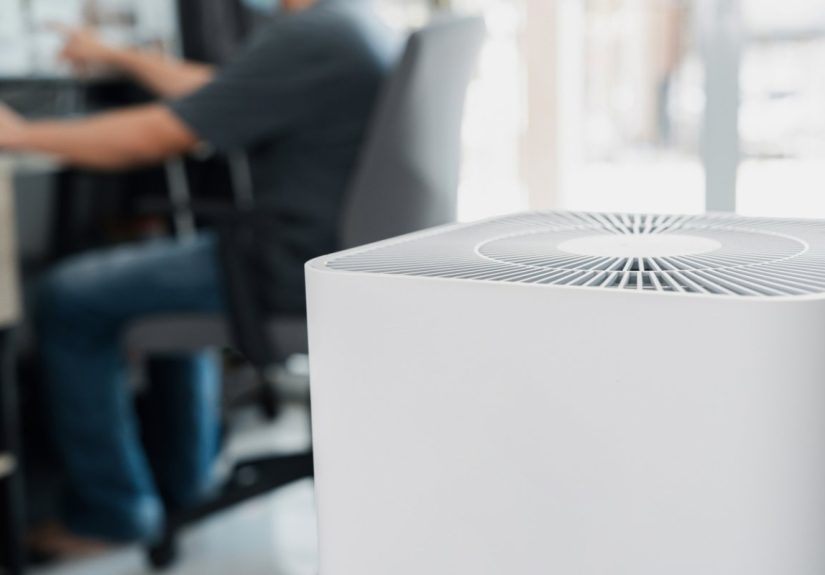
If you’re working from home, you’re probably spending 6–10 hours in your officeeven more than in your living room.
Having an air purifier near your desk can help reduce dust, VOCs from office equipment, and general stale air.
A good approach is to place a compact purifier on a shelf or side table a couple of feet from your desk, ideally at
about head height when you’re seated. Make sure the exhaust isn’t blowing directly on paper stacks (unless you want
your air purifier to moonlight as a paper shredder).
Kitchen and Dining Area
Kitchens are major sources of indoor pollutantscooking smoke, grease, odors, and tiny particles that can linger.
If you use an air purifier here:
-
Keep it a few feet from the stove: Close enough to catch odors and smoke, but not so close that
heat and grease build-up damage the unit. -
Use counter height when possible: A sturdy, non-crowded section of countertop three to five
feet off the floor often works best for smaller units. -
Don’t block airflow with small appliances: Avoid surrounding it with coffee makers, toasters,
and stand mixers. Give it open space on at least two sides.
For dining areas, placing the purifier near the tablebut not under ithelps manage food smells and minimize
pollen and dust that settle on surfaces.
Nursery and Kids’ Rooms
For nurseries and children’s rooms, safety and quiet operation matter just as much as clean air. Choose a spot:
- Out of reach of curious handson a dresser or secured shelf.
- Far enough from the crib or bed so the airflow is gentle, not direct.
- With cords tucked safely away to prevent tripping or pulling.
If your child has allergies or asthma, prioritize their room as one of the first locations for a purifier.
Basement, Laundry Room, and Musty Spaces
Basements and laundry rooms are often damp, dusty, and prone to odors or mold spores. A purifier can help,
but it works best as part of a bigger strategy that includes moisture control and ventilation.
Place the unit in the main area of the basement, not tucked on a window ledge or behind storage boxes. Avoid
setting it directly on cold concrete floors if the manufacturer recommends coverage under or elevation.
Working with Fans and Your HVAC System
You don’t have to choose between an air purifier and your home’s HVAC systemthey can help each other. If your
central system has a good filter and runs regularly, it’s already removing some particles. A purifier placed in
the rooms you use most adds targeted cleaning where you need it.
Ceiling fans on a low setting can actually help distribute cleaned air more evenly through a room. Just avoid
creating a strong direct draft into or out of the purifier that might disrupt its airflow pattern.
Common Air Purifier Placement Mistakes
- Hiding it behind furniture because you don’t like how it looks.
- Parking it in a corner where air is stagnant and intake vents are partially blocked.
- Putting it right next to a window or vent, where drafts can reduce effectiveness.
- Using one small purifier for a huge open floor plan and expecting whole-house coverage.
- Ignoring the manual and placing the unit opposite to what the manufacturer recommends.
The fix: treat your air purifier like a mini appliance that deserves a “prime spot” rather than an eyesore to be hidden.
Once you see the dust on its filter and breathe in the difference, you’ll be glad it’s not banished to the corner.
How Many Air Purifiers Do You Really Need?
In a perfect world, you’d have one purifier per main room: bedrooms, living room, maybe a home office. In reality,
most people start with one or two units and prioritize the spaces that matter most.
Use the CADR rating and recommended coverage area as your guide. If your purifier is rated for a 150-square-foot
bedroom, it won’t be as effective in a 500-square-foot open plan living area. You can still use it there, but it’ll
take longer to reduce particle levels and may not reach all corners.
A reasonable strategy:
- First unit: primary bedroom.
- Second unit: main living room or family room.
- Additional units: kids’ rooms or home office if allergies or sensitivities are a concern.
Care, Maintenance, and Noise Considerations
Even perfect placement can’t rescue a purifier with a clogged filter. Keep an eye on filter-change indicators, or set
reminders based on the manufacturer’s schedule. In high-pollution or high-dust homes, you may need to replace or clean
filters more often.
If noise is a big issue, experiment with:
- Running the purifier on high when you’re out of the room.
- Switching to a lower, quieter setting while you’re sleeping or watching TV.
- Using “auto” mode so the purifier only ramps up when it detects more particles.
The quieter your purifier is in your daily life, the more likely you are to leave it runningand consistency is what
leads to noticeably cleaner air over time.
Real-Life Air Purifier Placement Experiences and Practical Tips
Advice is great, but nothing beats real-world trial and error. Here are some common scenarios homeowners run into, and
what tends to work best.
The Allergy Bedroom Fix
Imagine a primary bedroom with a king-sized bed, two nightstands, a dresser, and a single tall window. The initial
instinct is to slide the purifier under the window or tuck it on the far wall to keep it “out of the way.” The problem?
The bed and furniture block circulation, and most of the room’s air never gets pulled through the filter.
A more effective setup is to place the purifier on the nightstand or a small stand a few feet to the side of the bed,
slightly forward toward the center of the room. Instead of blowing at your face, it cleans the air above and around you.
Many allergy sufferers notice less morning congestion and fewer sneezing fits when the purifier is set up this way and
left running all night.
The Open-Concept Living Room Challenge
In an open-plan living room that flows into the dining area and kitchen, one of the most common missteps is placing the
purifier directly against a wall by the sliding door. The thinking is, “That’s where dust comes in.” In practice, the
sliding door drafts and heavy traffic create very uneven airflow, and the purifier is constantly “chasing” fresh air
from outside instead of steadily cleaning the shared space.
A better option is near the center of where people actually sit and relax. For example, a tower-style purifier placed
on the floor between the living room seating cluster and the dining table, with at least a couple feet of space around
it, often clears the air more efficiently. The clean air spreads out evenly into both zones, and the device doesn’t
have to compete as much with outdoor drafts.
The Kitchen Smoke and Odor Problem
Consider a galley kitchen where someone loves to sear steaks or cook stir-fries. The first instinct is to plug the
purifier right next to the stove, practically under the vent hood. Unfortunately, that’s where hot steam, grease, and
oil droplets are most concentratedand they can quickly clog the prefilter and shorten the life of the main filter.
A smarter placement is on a nearby stretch of counter or a plant stand just outside the main cooking zone, facing into
the kitchen. It still grabs a lot of smoke and odors but is far enough that it isn’t getting blasted by high heat and
grease. Paired with using the range hood and cracking a window briefly after cooking, this setup can dramatically cut
down on lingering smells.
The Pet Corner Compromise
Households with pets often create a “pet zone” with beds, blankets, and toys in a corner of the living room. It’s
tempting to place the purifier right there to catch fur and dander at the source. That can workif you do it right.
If the unit is directly blocked by the pet bed, it may simply be recirculating the same air bubble. Instead, place the
purifier a few feet away, angled so it pulls in air that pets walk through as they move around the room. Many owners
find that this approach, combined with regular vacuuming and washing pet bedding, significantly reduces that constant
“pet hair tumbleweed” effect on floors and furniture.
The Basement Freshen-Up
Basements frequently have that signature “old house smell” thanks to moisture, dust, and limited airflow. An air purifier
can help, but it works best when the source issues are also addressed. Homeowners who see the best results usually:
- Run a dehumidifier to keep humidity under control.
- Place the air purifier near the center of the finished area, not in a storage closet.
- Keep doors open if they want cleaner air to drift up into the rest of the house.
After a few days of continuous use, many people report a noticeable reduction in musty smells and a fresher feel when
they head downstairsespecially when they keep up with filter changes and dust-control cleaning.
Bottom Line: Let Your Air Purifier Do What You Paid It to Do
Your air purifier is most effective when it’s treated like a key part of your home’s comfort system, not an appliance
you hide behind the sofa. Put it where the people and the pollutants are, give it room to circulate air, and match it
to the size and layout of your rooms. With smart placement and regular maintenance, it can quietly work in the
background to help your home’s air feel fresher, cleaner, and easier to breatheexactly what you bought it for in the
first place.