Table of Contents >> Show >> Hide
- Why a Bird-and-Butterfly Garden Works So Well
- The Easy Garden Plan: “The Pollinator Loop” Layout
- Your Plant Palette (Choose Local Native Equivalents)
- Step-by-Step: Build It in a Weekend (Yes, Really)
- Make It Bird-Friendly Without Turning It Into Squirrel Disneyland
- Water, Shelter, and “Leave the Leaves”
- Pesticide-Free by Design (Because “Pollinator Garden” and “Insecticide” Don’t Mix)
- A Simple Season-by-Season Bloom Plan
- Maintenance That Won’t Eat Your Weekends
- Troubleshooting (Because Nature Doesn’t Read Our Plans)
- of Real-World “Garden Experience” (What People Commonly Notice)
- Conclusion
Want a yard that’s louder, livelier, and honestly a little more magicalwithout turning gardening into a second job?
Build a bird-and-butterfly garden that feeds pollinators and supports birds with natural food, water, and shelter.
The trick is simple: design for the full life cycle (nectar for adults, host plants for caterpillars, berries and seeds for birds),
keep blooms coming from spring through fall, and skip the chemical “shortcuts” that quietly sabotage the party.
This guide gives you an easy, repeatable garden plan that works in most of the U.S. because it’s not obsessed with one perfect plant list.
Instead, it’s built around a smart structure (layers + bloom sequence + habitat features). You’ll plug in locally appropriate native plants,
and suddenly your garden becomes the neighborhood’s favorite rest stop for butterflies, bees, and birds.
Why a Bird-and-Butterfly Garden Works So Well
Pollinators need food and safe places to live. Birds need food and safe places to raise babies. Conveniently, a well-designed native garden does both.
Adult butterflies sip nectar. Caterpillars need specific host plants (no host plant, no next generationsad trombone).
Many native bees need bare ground, hollow stems, or old wood for nesting. And birds? Birds love shrubs, seedheads, andespecially during nesting season
the protein buffet of insects that show up when you plant natives.
Translation: when you plant a layered mix of native flowers, grasses, and shrubs that bloom in sequence, you don’t just attract visitorsyou build a tiny ecosystem.
And ecosystems are famously better at “handling problems” than single-plant landscapes that panic at the first aphid.
The Easy Garden Plan: “The Pollinator Loop” Layout
This plan is designed to be beginner-friendly, scalable, and extremely forgiving. It’s based on three ideas:
(1) plant in clumps, (2) include layers (low, medium, tall), and (3) ensure something is blooming across the seasons.
If you do those three things, you’re already ahead of most yards.
Pick a Size (All Work, Just Different Levels of Bragging Rights)
- Starter: 4 ft x 8 ft bed (great for beginners and small yards)
- Standard: 10 ft x 10 ft bed (the sweet spot for noticeable wildlife activity)
- Showstopper: 12 ft x 16 ft (enough to host a real “migration pit stop” vibe)
Where to Put It
Choose a spot with at least 6 hours of sun if possible, because many of the best nectar plants are sun-lovers.
If your yard is partly shady, don’t quitjust choose more shade-tolerant natives and focus on shrubs and spring ephemerals.
Also, try to pick a location sheltered from constant wind. Butterflies can fly… but they’re not trying to train for a hurricane.
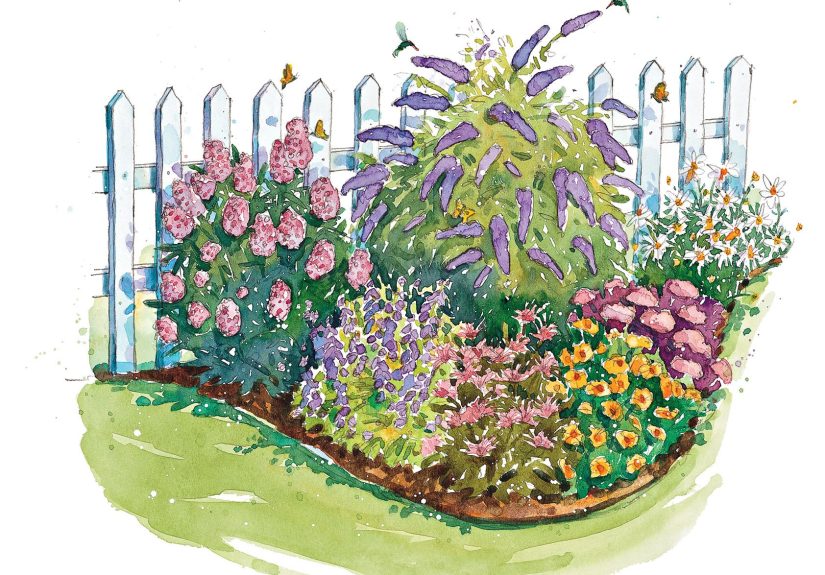
The Layout (Simple on Purpose)
- Back/North side: 2–3 shrubs (bird cover + berries + structure)
- Middle: 6–8 perennial “nectar factories” in repeating clumps
- Front edge: low growers + host plants (caterpillar buffet, but in a classy way)
- One corner feature: water + “puddling” spot for butterflies
- One “messy” zone: leaf litter, stems, or a small brush/log pile for shelter
Your Plant Palette (Choose Local Native Equivalents)
The fastest way to succeed is to select plants that are native to your region and suited to your conditions (sun/shade, soil moisture).
If you want a shortcut: choose about 12 total species, then repeat them in clumps. Repetition looks intentional (not accidental),
helps pollinators forage efficiently, and makes your bed easier to maintain.
Layer 1: Shrubs for Birds, Butterflies, and Structure (Pick 2–3)
- Serviceberry (Amelanchier): spring flowers for pollinators, berries for birds, good multi-season interest
- Elderberry (Sambucus): big flower clusters, berries for birds (give it space)
- Blueberry (Vaccinium): great flowers for pollinators, berries for you and birds (acidic soil helps)
- Spicebush (Lindera benzoin): host plant for spicebush swallowtail (in many eastern regions)
- Native dogwood species (Cornus): flowers + berries + shelter value
Layer 2: Mid-Height Nectar Factories (Pick 6–8)
These plants do the heavy lifting: nectar, pollen, color, and long bloom windows. Aim for at least one plant in each bloom season.
- Bee balm / wild bergamot (Monarda): hummingbirds and bees adore it
- Purple coneflower (Echinacea): nectar for pollinators; seedheads feed finches later
- Blazing star (Liatris): butterfly magnet, especially in late summer
- Black-eyed Susan (Rudbeckia): bright, tough, pollinator-friendly
- Goldenrod (Solidago): critical late-season fuel (not the villainragweed is the usual allergy culprit)
- Asters (Symphyotrichum): fall nectar powerhouses when many gardens are “done”
- Milkweed (Asclepias): nectar + essential host plant for monarchs (choose a native species for your area)
- Joe-Pye weed (Eutrochium): big, bold, and beloved by pollinators (likes moisture)
Layer 3: Low Growers + Host Plants (Pick 3–5)
If you want more butterflies, host plants matter. Nectar brings adults. Host plants create future butterflies.
Add a few low plants that also help cover soil and reduce weeds.
- Wild strawberry (Fragaria virginiana): low groundcover with pollinator value
- Violets (Viola): host plants for fritillaries (plus early blooms)
- Parsley/dill/fennel (in small patches): host plants for swallowtails (grow away from pesticide drift)
- Native grasses (little bluestem, switchgrass): nesting cover, overwintering habitat, garden “glue”
- Yarrow (Achillea): long bloom, helpful insects, tidy form
A quick caution: some popular “butterfly” plants can be invasive or less helpful than natives in parts of the U.S.
If you’re considering butterfly bush, check whether it’s invasive where you live and look for safer alternatives or sterile cultivars.
Even better: prioritize natives that support caterpillars and provide higher habitat value overall.
Step-by-Step: Build It in a Weekend (Yes, Really)
-
Day 1: Mark the bed.
Use a hose or rope to outline a soft curve (curves look natural and hide minor mistakeslike when you plant something 6 inches too far left). -
Remove turf the easy way.
Slice sod or use a “smother” method: cardboard + compost + mulch (no glossy cardboard, no weird inks). -
Improve soil lightly.
Add compost if your soil is poor, but don’t overdo fertilizers. Many natives prefer “average” soil and flop in rich conditions. -
Place plants in pots first.
Arrange shrubs in back, tall perennials behind mid-height ones, low plants in front. Step back. Adjust. Repeat.
This is the gardening version of trying on outfits before you cut the tags off. -
Plant in clumps.
Use groups of 3, 5, or 7 of the same species. Pollinators find patches faster, and the bed looks cohesive. -
Add water + puddling.
A shallow dish with stones, a birdbath, or a small “puddling” area (sand + damp soil) gives butterflies and bees water access. -
Create a tiny shelter zone.
Leave a small area with leaf litter, stems, or a tucked-away log/brush pile. This supports overwintering insects and nesting sites. -
Mulch lightly, then transition.
Mulch helps with weeds while plants establish. As the bed fills in, you’ll rely less on mulch and more on living groundcover.
Make It Bird-Friendly Without Turning It Into Squirrel Disneyland
Bird-friendly gardens are less about feeders and more about habitat. Think: food, water, and cover.
The best bird buffet is often insectsand insects show up when you plant the plants they evolved with.
Shrubs and small trees provide nesting spots and protection, while seedheads and berries provide food through multiple seasons.
Easy bird boosts
- Keep seedheads up through winter: coneflower, rudbeckia, grassesbirds will thank you
- Add one berrying shrub: it’s like putting your garden on the bird map
- Provide clean water: a birdbath with fresh water beats stale puddles every time
- Include dense cover: birds like places to hide from predators and rest
Water, Shelter, and “Leave the Leaves”
Many pollinators don’t just need flowers; they need places to nest and survive the off-season.
Ground-nesting bees may use bare soil patches. Stem-nesting bees use hollow or pithy stems.
Bumble bees may tuck into old rodent holes or dense bunch grasses. Caterpillars and chrysalises often overwinter in leaf litter or plant debris.
If your garden looks a little “lived-in,” you’re doing it right.
Simple habitat additions
- Leave a small patch of bare ground: sunny, well-drained soil is ideal for some native bees
- Delay hard cutbacks: wait until spring to cut down stems (many insects overwinter there)
- Keep a brush pile small and tidy: a hidden corner of sticks/logs helps without looking messy everywhere
- Offer water with landing stones: shallow is safer for insects and birds
Pesticide-Free by Design (Because “Pollinator Garden” and “Insecticide” Don’t Mix)
If you want butterflies, bees, and beneficial insects, pesticides are like blasting heavy metal at a meditation retreat.
Even some “easy” systemic insecticides can end up in pollen and nectar. A pollinator-friendly approach focuses on prevention:
healthy soil, diverse plantings, spacing for airflow, and tolerance for minor leaf damage.
What to do instead
- Hand-pick pests when outbreaks are small (it’s oddly satisfying)
- Use water sprays for aphids on sturdy plants
- Encourage beneficial insects with diverse blooms and shelter
- If you must treat, avoid spraying open flowers and apply at times when pollinators are least active
A Simple Season-by-Season Bloom Plan
Aim for continuous blooms. When one wave fades, the next should start. This is the backbone of a “low-drama, high-wildlife” garden.
Spring (Wake-up fuel)
- Serviceberry blossoms, native columbine, violets, early woodland natives (region-dependent)
Summer (Peak nectar season)
- Milkweed, bee balm, coneflower, rudbeckia, yarrow, blazing star (late summer)
Fall (Migration and winter prep)
- Asters, goldenrod, late-blooming natives, plus seedheads and grasses for cover
Maintenance That Won’t Eat Your Weekends
Year 1: Establishment mode
- Water deeply 1–2 times per week if rain is scarce (especially the first 6–10 weeks)
- Weed early and often (young weeds are the easiest to remove)
- Expect a “sleep, creep, leap” pattern: perennials often look modest in year one
Year 2 and beyond: The fun part
- Reduce watering as plants root in (many natives handle normal dry spells better)
- Divide or thin aggressive spreaders so they don’t bully neighbors
- Leave stems/seedheads through winter; cut back in spring when temperatures warm
Troubleshooting (Because Nature Doesn’t Read Our Plans)
“I’m getting bees but not many butterflies.”
Add host plants and a sunny resting area. Nectar brings adult butterflies, but host plants create repeat visitors.
Also include a shallow water/puddling spotmany butterflies seek minerals and moisture.
“Birds visit, but they don’t stay.”
Increase cover: another shrub, a small native tree, or a denser grass clump can make birds feel safe enough to linger.
Add consistent water, and keep some seedheads through winter.
“My flowers flop.”
You may have very rich soil or too much shade for that species. Consider reducing fertilizer/compost additions and choosing sturdier natives.
Also plant in denser clumps so stems support each other naturally.
of Real-World “Garden Experience” (What People Commonly Notice)
The first thing many gardeners notice after planting a bird-and-butterfly bed is how fast the “new neighbors” arriveand how different the timeline looks for each group.
Bees and other pollinators often show up almost immediately, sometimes within days, especially if you’ve planted in clumps and included a few high-nectar favorites.
Butterflies can be a little more dramatic. They’ll cruise through early on, then act like they’re unimpressed… until you add host plants and a reliable water spot.
That’s when you start seeing the repeat customers: the same species visiting the same clumps at similar times of day, like they’ve got your yard on their calendar.
By mid-summer, people frequently report a “sound change.” Instead of a quiet yard with occasional bird chirps, you get a gentle background buzz and flutter.
It’s not loud in an annoying wayit’s more like your garden switched from silent mode to a nature playlist.
Hummingbirds may join the party if you include tubular flowers like bee balm, and small birds begin to forage in the garden not just for seeds, but for insects.
That’s a huge win: it means your plants are supporting the food web, not just looking pretty.
Another common experience is learning to redefine “perfect.” A caterpillar will chew leaves. A leaf will get spotted.
A flower will lean like it’s telling a secret to the plant next door. The gardeners who end up happiest are the ones who decide that a few ragged leaves are not a failure
they’re proof that the habitat is working. (If everything looks untouched, you might just be hosting a garden museum: lovely, but not alive.)
Year two is often the “wow” year. Plants that seemed small in year one suddenly fill in, shade out weeds, and bloom more heavily.
With more flowers available for longer periods, pollinator activity becomes steadiernot just a quick burst during peak bloom.
People also notice birds using shrubs as cover, especially in hot afternoons or when a hawk passes overhead.
And if you leave seedheads and grasses through winter, you might catch finches and sparrows feeding when other yards look empty.
Finally, gardeners often discover that the easiest gardens aren’t the ones with the fewest plantsthey’re the ones with the best design.
Once the layers are in place, the bloom sequence is covered, and you’ve committed to fewer chemicals and a little more “mess,” the garden does more of the work.
At that point, maintenance starts to feel less like a chore and more like checking in on a tiny outdoor neighborhood you helped buildone that keeps getting better every season.
Conclusion
A bird and butterfly garden doesn’t have to be complicated. Start with a sunny bed, plant in clumps, use layered structure,
include host plants, and make sure something blooms from spring through fall. Add water, shelter, and a little winter “mess,”
and you’ll create an easy, resilient habitat that attracts pollinators and supports birds naturally.
The best part: you don’t need perfectionjust consistency and the right building blocks.