Table of Contents >> Show >> Hide
- Why This Wedding Photo Story Blew Up So Fast
- What Actually Makes Wedding Photos Feel “Bad”?
- So, Should You Redo Your Wedding Photos?
- What Couples Should Try Before Booking a Full Reshoot
- How to Avoid Becoming the Next Viral Wedding Photo Cautionary Tale
- Why the Internet Keeps Siding With the Bride
- The Real Goal Is Not Perfection. It’s Recognition.
- Experiences Couples Keep Sharing About Wedding Photo Regret
- Final Thoughts
- SEO Tags
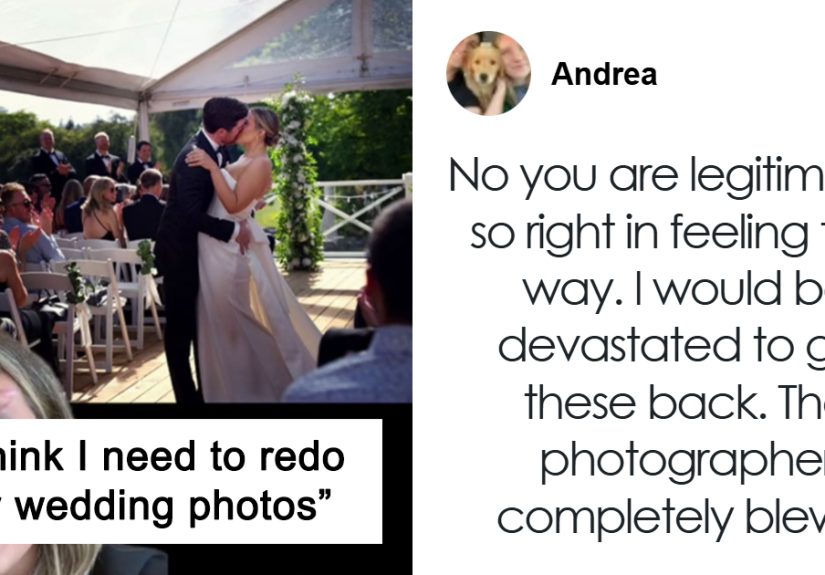
There are few modern horrors more specific than opening your wedding gallery, taking one long look, and realizing your face is somehow shiny, blurry, over-edited, under-lit, and emotionally unsupported all at once. Add the internet to that emotional cocktail, and suddenly a private disappointment becomes a public spectacle. That is exactly why a viral story about a woman wondering whether she should redo her wedding photos hit such a nerve online.
People didn’t just react because the photos were awkward. They reacted because wedding photos sit in a category of their own. They are memory, money, family history, social proof, and emotional time capsules wrapped into one expensive little package. When those images miss the mark, it doesn’t feel like a bad haircut or a mediocre dinner. It feels like someone misplaced part of the day you can never fully recreate.
And that’s the part the internet understands all too well. Beneath the jokes, memes, and brutal comment sections is a real question: if your wedding photos are disappointing, should you actually redo them? The answer is less dramatic than social media would like, but far more useful. Sometimes yes. Sometimes no. And sometimes what couples really need is not a full-on wedding sequel, but a smarter, calmer way to rescue the memory.
Why This Wedding Photo Story Blew Up So Fast
Wedding content already performs like it was raised in a lab for virality. Add a dash of public panic, a gallery of questionable images, and the internet does what it always does: turns into a panel of unpaid judges with unlimited Wi-Fi. But this story exploded for a deeper reason. It tapped into the huge pressure modern couples face to make every part of a wedding look cinematic, editorial, effortless, and somehow also “authentic.”
That is a ridiculous assignment for one day and two human beings who are usually running on stress, champagne, and three hours of sleep.
Social media has changed wedding photography from a personal keepsake into a semi-public performance. Couples are not just thinking about what they will love in twenty years. They are thinking about what looks good in a carousel, what belongs on a save-worthy Pinterest board, and whether Aunt Linda’s iPhone flash is about to blow out the first kiss shot like a tiny chaos goblin. So when a bride asks, “These are bad, right?” the internet answers with the intensity of a Supreme Court hearing.
What Actually Makes Wedding Photos Feel “Bad”?
1. Technical problems that are impossible to ignore
Let’s start with the obvious. If photos are blurry, weirdly cropped, heavily pixelated, badly color-corrected, or edited so aggressively that everyone looks airbrushed into another dimension, that is not just a style issue. That is a quality issue. Recent real-world stories have featured everything from strange edits and missing body parts to galleries that looked fine on a tiny screen but fell apart on a proper display. That is the kind of thing that pushes disappointment into full-scale panic.
Professional wedding photography is hard. It requires technical skill, backup plans, speed, people management, and the ability to work in difficult light while relatives ask if you can “just get one with the cousins.” But hard does not mean optional standards. Couples are paying for competence, not vibes.
2. A style mismatch that no one caught in time
This is where things get tricky. Sometimes the photos are not objectively bad. They are just wrong for that couple. Maybe the photographer has a moody, grainy, documentary style, while the couple expected bright, crisp, classic portraits. Maybe the gallery is technically beautiful, but it feels cold. Maybe the poses are polished, but the couple wanted candid emotion instead of magazine spread energy.
That mismatch happens more often than people admit. Couples fall in love with five gorgeous portfolio images, but never review full galleries, never ask how the photographer works in their actual venue lighting, and never clarify whether “editorial” means chic or just slightly stern. The result is not always a disaster. Sometimes it is worse: a gallery that is perfectly fine and completely not what the couple imagined.
3. Timeline and lighting sabotage
Wedding photographers and planners say this over and over because it remains wildly true: rushed timelines wreck good photos. If the day is packed too tightly, portraits get cut short, genuine moments disappear, and everyone ends up squinting in punishing midday sun like they are auditioning for a survival show.
Lighting matters. Background clutter matters. The direction of the aisle matters. That “cute” getting-ready room with six bags, a half-eaten bagel, three curling irons, and an emotional support steamer in the background? Not as cute in the final gallery. Sometimes the photographer is not the only problem. Sometimes the day itself was structured like a sprint, and the photos paid the price.
4. Emotional disappointment disguised as photo disappointment
Here is the uncomfortable truth: sometimes couples do not hate the photos. They hate how they felt in them. If someone felt rushed, self-conscious, ignored, overheated, over-managed, or pressured all day, the images can become a mirror of that discomfort. A person may say, “I look terrible,” when what they really mean is, “I didn’t feel like myself.” That distinction matters, because the fix may not be a new wedding photo shoot. It may be a gentler perspective, selective editing, or a fresh couples session done under happier circumstances.
So, Should You Redo Your Wedding Photos?
Possibly. But not automatically.
A full redo makes sense when the original gallery has serious technical flaws, when key moments are missing, when the photographer failed to deliver what was promised, or when the couple genuinely has no frame-worthy images from the day. In that case, a post-wedding portrait session, anniversary shoot, or dressed-up newlywed session can be a smart emotional reset. It will not recreate the exact day, but it can create the kind of images the couple hoped to keep.
On the other hand, a redo may not be necessary if the problem is mostly editing style, unflattering selections, or a handful of weak portraits inside an otherwise meaningful gallery. In those cases, a re-edit can go a long way. Softer tones, black-and-white conversions, better cropping, and a different curation strategy can rescue more than people expect.
Think of it this way: if the house has a cracked window, you fix the window. You do not bulldoze the neighborhood.
What Couples Should Try Before Booking a Full Reshoot
First, step away from the gallery for a minute. No, really. The initial emotional response is often dramatic because wedding expectations are dramatic. Give yourself a beat before deciding every image belongs in witness protection.
Then, go in this order:
Talk to the photographer clearly and calmly. Point out specific concerns: editing, color, cropping, missing group shots, overexposure, strange skin tones, or whatever else is bothering you. Vague misery is hard to solve. Specific requests are not.
Review your contract. Look at what was promised: delivery timeline, number of photos, editing scope, albums, print rights, cancellation terms, and any language around artistic style. This is not the glamorous part of wedding planning, but it is the part that keeps you from scream-texting at midnight with no leverage.
Ask about alternate edits. If the issue is style, a re-edit may be possible. If the issue is color, contrast, or overall mood, a different pass can change everything.
Create a “save list.” Pull the best images first. Couples are sometimes so upset by the misses that they overlook the keepers. A smaller, stronger album can be far more satisfying than a giant gallery of “meh.”
Book a newlywed session. If the day itself was too chaotic, a relaxed post-wedding portrait shoot can give you the photos you wanted without pretending to recreate every minute of the original event.
How to Avoid Becoming the Next Viral Wedding Photo Cautionary Tale
Before you book
Look at full galleries, not just Instagram highlights. A highlight reel is a movie trailer. You are buying the full feature film. Ask how many weddings the photographer has shot, how they handle difficult light, whether they have backup gear, and what kind of atmosphere helps them do their best work. Also, make sure you actually like them as a person. This individual will spend an alarming amount of time near your face on a highly emotional day.
In the contract
Read every line. Confirm deliverables, turnaround time, cancellation policies, refund terms, usage rights, print rights, and image ownership. Yes, image ownership matters. Many couples assume wedding photos automatically belong to them in every sense. Not always. If you want to make your own albums, share files freely, or control how your photos are used, sort that out before signing.
On the wedding day
Build in breathing room. Choose spaces with decent light. Declutter the getting-ready area. Consider an unplugged ceremony, or at least make it clear when guests should put their phones down. Professional photographers do not love competing with Uncle Dave, who has stepped into the aisle like he is covering the Super Bowl.
And if you are camera shy, schedule an engagement session or pre-wedding shoot. It helps you understand your angles, your comfort level, and how the photographer directs people. That alone can prevent a lot of “Why do I look weird?” post-wedding soul-searching.
Why the Internet Keeps Siding With the Bride
The internet loves a train wreck, but it also understands regret. People know wedding photos are not random party snapshots. They are often the one vendor category couples refuse to “just wing,” precisely because the day cannot be reproduced on command. So when those photos are disappointing, the reaction is not just mockery. It is empathy mixed with secondhand stress and a little righteous fury.
There is also something deeply relatable about asking strangers to validate your disappointment. A wedding gallery can mess with your head because it blends memory with appearance. Are the photos bad, or do you just hate the angle? Was the editing harsh, or were you exhausted? Is the problem fixable, or are you mourning an expectation that reality never planned to meet?
That is why the question “Should I redo them?” lands so hard. It is not really about photos. It is about whether a memory can be emotionally repaired.
The Real Goal Is Not Perfection. It’s Recognition.
Most couples do not need every image to look like a luxury bridal campaign. They want to recognize themselves. They want warmth, chemistry, family, relief, joy, nerves, laughter, and that weird split-second expression right before the ceremony starts. They want the day to feel like it happened to them, not to some stock-photo couple with suspiciously symmetrical cheekbones.
That is why bad wedding photos hit so hard. When a gallery does not reflect the couple’s experience, it can feel like the record is wrong. But the good news is this: a disappointing gallery does not erase the marriage, the people, or the memory. It just means the visual record may need help, perspective, or a second chance.
Experiences Couples Keep Sharing About Wedding Photo Regret
If this whole conversation feels weirdly personal to so many people, that is because versions of this story keep happening in different ways. One couple laughs because their photos are so bizarre they become instant family lore. Another cries because the images are the only formal pictures they may ever have with an aging parent or a relative who traveled across the world to attend. The emotional stakes vary, but the common thread is the same: wedding photos are never just photos.
Many couples describe the shock phase first. They wait weeks, sometimes months, for the gallery to arrive. They open it expecting a flood of emotion, and instead they get confusion. Maybe the skin tones look off. Maybe the ceremony is documented from odd angles. Maybe there are plenty of pictures, but not the ones that mattered most. It is a uniquely disorienting moment because the anticipation is so high. You are expecting treasure. You are not prepared for “Why is my bouquet in focus but my husband looks like he was photographed through a steamed-up windshield?”
Then comes the comparison spiral. Couples start asking friends what they think. They revisit the photographer’s website. They scroll other weddings online and immediately make themselves miserable. This is where social media becomes extra unhelpful. Every polished image from another wedding starts to feel like evidence that you personally have been wronged by fate, photography, and maybe the sun itself.
But plenty of couples also describe a second phase: perspective. After the initial crash, they start noticing the photos that do work. A grandmother laughing during cocktail hour. A sibling fixing a veil. The exact way the couple looked at each other during the vows. Sometimes the gallery is imperfect but still deeply usable. Sometimes the images that survive are not the glamorous ones, but the truthful ones.
Others decide to make new memories on purpose. They rewear the dress. They book an anniversary shoot. They head to a meaningful location at golden hour with a photographer whose style actually matches their taste. And here is the beautiful part: those sessions are often less stressful and more intimate than the original day. No timeline madness. No seating chart drama. No mystery relative asking where the restroom is while portraits are happening. Just two people, some decent light, and a chance to be fully present.
There are also cautionary experiences couples keep repeating for a reason. Some say they ignored contract details. Some say they picked based on price alone. Some admit they never asked to see a full gallery. Others trusted a friend, a friend of a friend, or a “gifted amateur” and learned the hard way that kindness and skill are not identical twins. That does not mean every budget photographer is bad or every expensive photographer is perfect. It means weddings are high-pressure events, and experience matters.
What makes these stories so sticky is that almost everyone can imagine themselves in them. You do not have to be married to understand the feeling of wanting one important memory handled well and watching it come back wrong. That is why the internet cannot let stories like this go. They are funny for a second, painful on reflection, and oddly universal. Beneath the commentary is a simple human hope: please let the pictures do justice to the moment.
Final Thoughts
So, should someone redo their wedding photos if the originals are bad? Maybe. If the gallery genuinely failed, a reshoot can be worth every penny. If the issue is fixable, a re-edit or newlywed session may be the smarter move. Either way, the lesson is not that weddings need to be more perfect. It is that expectations, communication, contracts, and style fit matter a lot more than people think.
And if your wedding photos do end up a little chaotic, a little imperfect, or a little internet-famous for all the wrong reasons, take heart: there is still a story there. Just maybe keep Uncle Dave out of the aisle next time.