Table of Contents >> Show >> Hide
- Why This Discovery Is So Surprising
- What Researchers Found
- Smoke-Drying: The Ancient Technique Hiding in Plain Sight
- What These Mummies Reveal About Prehistoric Beliefs
- How These Mummies Compare With Egyptian Mummies
- How These Mummies Compare With Chinchorro Mummies
- Why the “Unexpected Part of the World” Matters
- The Role of Modern Science in Rewriting the Story
- What Questions Still Remain?
- Why Mummies Fascinate Us So Much
- A New Chapter in the History of Death
- Experience: What This Discovery Feels Like When You Really Think About It
- Conclusion
When most people hear the word “mummy,” their minds sprint straight to Egypt: pyramids, linen wrappings, golden masks, and a pharaoh looking as if he has been waiting 3,000 years for someone to open the wrong door. But archaeology, as usual, has a talent for flipping the table just when we think the story is settled.
New research suggests that the world’s oldest known mummies may not come from Egypt, or even from Chile’s famously ancient Chinchorro culture. Instead, they may come from a far more unexpected region: southern China and Southeast Asia. These ancient bodies, some dating back as far as 12,000 years, appear to have been preserved by smoke-drying over low fires long before Egyptian embalmers reached for natron, linen, and resin.
The discovery is more than a fun trivia grenade to toss into a dinner conversation. It changes how we think about early hunter-gatherer societies, ancestor worship, prehistoric technology, and the deep human desire to keep the dead closenot just emotionally, but physically. Apparently, humans have been sentimental, inventive, and slightly dramatic for a very long time.
Why This Discovery Is So Surprising
The phrase “world’s oldest mummies” has usually pointed scholars toward two places: the dry deserts of South America and the tombs of ancient Egypt. The Chinchorro people, who lived along the Pacific coast of what is now northern Chile and southern Peru, were long recognized for some of the earliest intentional mummification practices. Their methods began thousands of years before the classic Egyptian mummy tradition became famous.
So why is Southeast Asia such a surprise? Because the region is hot, humid, tropical, and generally terrible for preserving bodies. If the Atacama Desert is nature’s dehydration machine, much of Southeast Asia is nature’s compost bin. Heat and moisture normally speed up decomposition, leaving archaeologists with bones, soil stains, and a lot of unanswered questions.
That is exactly what makes these smoke-dried remains so intriguing. The evidence suggests that ancient communities were not simply lucky. They may have developed a deliberate technique to preserve bodies in an environment where nature was not doing them many favors.
What Researchers Found
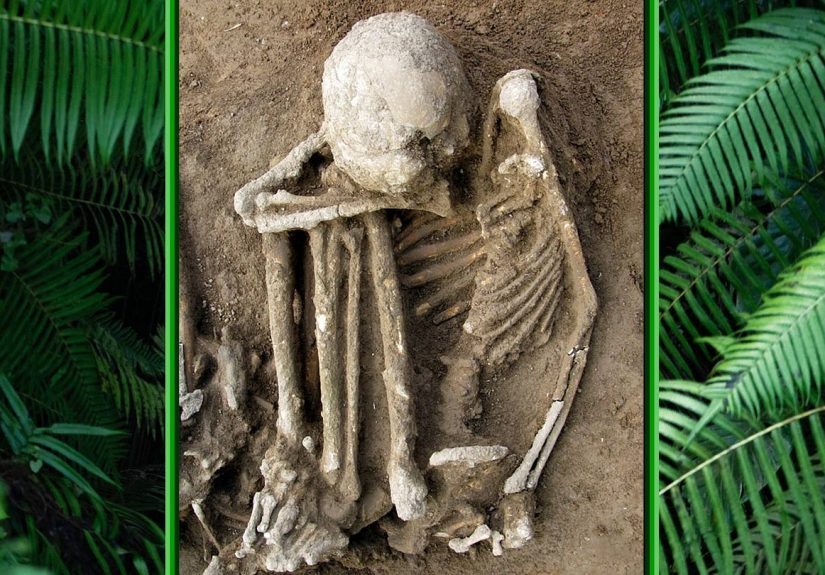
The study examined ancient burials across southern China, Vietnam, the Philippines, Laos, Thailand, Malaysia, Indonesia, and nearby island regions. Many of the remains were found in tightly crouched or squatting positions. Some skeletons showed burn marks, unusual discoloration, and signs of heat exposure, but the graves themselves did not appear to be cremation sites.
That detail matters. If bodies had been burned inside the graves, researchers would expect evidence of fire in the burial context. Instead, the pattern suggested that the bodies had been treated before burial. In other words, ancient people may have bound the dead into compact positions, placed them near smoky low-temperature fires, and slowly dried them over a long period.
This process likely removed moisture from the body, slowed decay, and helped preserve the corpse before final burial. Think of it as prehistoric preservation technologybut please do not compare it to barbecue at your next family cookout. Archaeology deserves better table manners.
Smoke-Drying: The Ancient Technique Hiding in Plain Sight
Smoke-drying is not the same as cremation. Cremation uses intense heat to reduce a body to ash and fragments. Smoke-drying appears to involve lower heat, more time, and a smoky environment that dehydrates soft tissue while leaving the skeleton largely intact.
Researchers used scientific techniques such as X-ray diffraction and infrared spectroscopy to examine changes in the bones. These tests can reveal whether bone has been exposed to heat and at what intensity. The results pointed toward prolonged low-temperature heating rather than quick burning.
In practical terms, smoke-drying would have been a smart adaptation. In a humid climate, preserving a body is not easy. Smoke can repel insects, slow microbial activity, and help dry tissue. But the practice was probably not merely practical. The careful positioning of the bodies and the long-lasting tradition suggest a deeper cultural meaning.
What These Mummies Reveal About Prehistoric Beliefs
The oldest mummies in Southeast Asia may tell us that early hunter-gatherers had complex ideas about death, memory, and ancestry. Preserving the body may have allowed the living to maintain a relationship with the dead. The body was not simply disposed of; it was transformed, cared for, and possibly kept visible or nearby for a period before burial.
That idea fits with many known traditions around the world in which ancestors remain active members of the community. They are remembered, consulted, honored, and sometimes physically present in ritual life. For these ancient societies, the dead may not have vanished into a distant afterlife. They may have remained part of the social world.
This makes the discovery especially powerful. It suggests that the emotional architecture of human lifegrief, remembrance, respect, longingwas already deeply developed thousands of years before written history.
How These Mummies Compare With Egyptian Mummies
Egyptian mummification is famous for good reason. It was elaborate, symbolic, and closely tied to beliefs about the afterlife. Embalmers removed organs, dried the body with natron, treated it with oils or resins, wrapped it in linen, and placed it in a tomb with objects meant to support the deceased in the next world.
The Southeast Asian mummies appear very different. Instead of linen wrappings and tomb equipment, the key process seems to have been smoke-drying. Instead of bodies lying flat, many were folded into tight crouched positions. Instead of a state-run religious system, the practice likely emerged among smaller hunter-gatherer communities.
Yet both traditions share a central idea: the body mattered. It was not just an empty shell. It was a vessel of identity, memory, and spiritual meaning. Whether preserved with natron in Egypt, desert air in Chile, or smoke in Southeast Asia, mummification shows a common human impulse to resist the ordinary disappearance of the dead.
How These Mummies Compare With Chinchorro Mummies
Before this new research, the Chinchorro mummies were often described as the oldest known intentional mummies. The Chinchorro lived in coastal desert environments where natural preservation was common. Over time, they developed complex artificial mummification methods, sometimes removing organs, rebuilding bodies with sticks and clay, and decorating the remains.
The Chinchorro tradition remains extraordinary. It was not limited only to kings or elites. Men, women, children, infants, and unborn babies could be mummified, suggesting a broad and deeply emotional relationship with the dead.
The new Southeast Asian evidence does not make the Chinchorro any less important. Instead, it widens the map. It suggests that mummification was not invented once in one famous place. Different cultures, facing different environments and spiritual questions, found different ways to preserve the dead.
Why the “Unexpected Part of the World” Matters
Archaeology often suffers from celebrity geography. Egypt gets the blockbuster treatment. Greece and Rome get the marble columns. Mesopotamia gets the “cradle of civilization” label. Meanwhile, tropical Southeast Asia is sometimes treated as a supporting character in early human history.
This discovery pushes back against that habit. It shows that ancient communities in southern China and Southeast Asia were not passive or technologically simple. They were experimenting, observing, adapting, and developing rituals that may have lasted for thousands of years.
It also reminds us that preservation bias shapes history. Dry deserts and sealed tombs preserve more evidence, so they often dominate museum displays and textbooks. Humid regions destroy evidence faster, which can make ancient cultures seem less visible than they really were. The absence of preserved material is not the absence of culture.
The Role of Modern Science in Rewriting the Story
The discovery of the world’s oldest mummies was not made by one dramatic shovel hitting one perfect corpse. It came through careful analysis of burial patterns, bone chemistry, heat exposure, and archaeological context. Modern tools allowed researchers to look beyond what the eye could easily see.
This is one of the most exciting parts of archaeology today. Old collections and previously studied remains can produce new answers when scientists apply better methods. A skeleton that once looked like a strange crouched burial may now reveal evidence of a sophisticated preservation technique.
Science does not always rewrite history with a thunderclap. Sometimes it does it with a microscope, a spectrometer, and a researcher squinting at bone structure with the patience of a saint and the caffeine intake of a graduate student.
What Questions Still Remain?
As exciting as the discovery is, careful wording matters. Researchers say these may be the oldest known mummies, based on current evidence. Archaeology is always provisional. New finds, improved dating, and further testing could refine the timeline.
Several questions remain open. Was smoke-drying practiced everywhere these crouched burials appear, or only at certain sites? Did all community members receive this treatment, or only special individuals? Were the bodies displayed before burial? How long did the drying process take? Were the fires tended by family members, ritual specialists, or the entire group?
There is also the question of meaning. Archaeology can identify burned bone, burial posture, and chemical changes, but belief systems are harder to reconstruct. The evidence points toward ancestor care and ritual preservation, but the full emotional and spiritual world of these communities remains beyond easy translation.
Why Mummies Fascinate Us So Much
Mummies sit at the strange intersection of science, horror, history, and intimacy. They are human remains, but they are also time capsules. A mummy can preserve skin, hair, posture, clothing, tattoos, disease evidence, diet clues, and traces of ritual practice.
That is why mummies capture public imagination. They feel close. A stone tool is interesting; a preserved human body is personal. It reminds us that ancient people were not abstract “populations.” They were parents, children, elders, hunters, fishers, mourners, artists, and storytellers.
The Southeast Asian smoke-dried mummies are especially moving because they suggest a long act of care. Smoke-drying would not have been instant. It required time, attention, and intention. Someone had to tend the fire. Someone had to bind the body. Someone had to decide that this person should be preserved.
A New Chapter in the History of Death
The world’s oldest mummies may force us to rethink one of humanity’s oldest stories. Long before monumental tombs, royal burials, and written prayers, small communities may have been preserving their dead with smoke and patience. They did not need pyramids to express reverence. They had fire, memory, and ritual.
That image is powerful: a body folded carefully, smoke rising slowly, family or community gathered nearby, the boundary between life and death treated not as a clean break but as a passage that required care.
In that sense, the discovery is not just about ancient preservation. It is about ancient love. The smoke-dried mummies of Southeast Asia remind us that the human relationship with death has always been creative, symbolic, and deeply emotional.
Experience: What This Discovery Feels Like When You Really Think About It
Reading about the world’s oldest mummies is one thing. Sitting with the idea is another. At first, the headline feels like a neat fact: “Oldest mummies found in Southeast Asia.” Excellent. File it next to “octopuses have three hearts” and “your printer can smell fear.” But the longer you think about it, the more human the story becomes.
Imagine standing at the edge of a prehistoric settlement thousands of years ago. There are no temples in the Egyptian sense, no carved stone walls, no royal tomb builders with official job titles. There is only a community living close to the land, watching weather, fire, animals, rivers, forests, and one another. Someone dies. The group does not simply walk away. They prepare the body. They fold it. They expose it to smoke. They wait.
That waiting is the part that stays with me. Modern life is fast, even around death. We outsource so much of it to hospitals, funeral homes, paperwork, and calendar slots. Ancient smoke-drying, by contrast, seems slow and intimate. It required presence. It turned mourning into a process that unfolded over days, weeks, or perhaps months.
There is also something humbling about the geography. Many of us were taught to look for the “big firsts” of civilization in the same familiar places. Egypt. Mesopotamia. The Mediterranean. The Andes. Then a discovery like this taps the microphone and says, “Excuse me, the tropics have entered the chat.” It is a reminder that human ingenuity was never limited to the places that preserved the prettiest ruins.
The discovery also changes how we imagine hunter-gatherers. Too often, people picture prehistoric groups as merely surviving: find food, avoid predators, repeat. But these burials show time spent on ritual, memory, and meaning. That is not bare survival. That is culture. That is philosophy without books. That is theology without stone temples.
On a personal level, the story makes ancient people feel closer rather than farther away. Their technology was different, but their grief was recognizable. They looked at a loved one and did not want that person to disappear completely. They used what they hadfire, smoke, binding, posture, patienceto hold on. That impulse is not strange. It is painfully familiar.
Maybe that is why mummies fascinate us. They are not only preserved bodies; they are preserved relationships. Every mummy is evidence that someone mattered enough to be treated with care after death. Whether wrapped in linen, rebuilt with clay, dried by desert wind, or smoked over a low fire, the body became a message: this person was here, this person belonged to us, this person should not be forgotten.
The world’s oldest mummies being found in an unexpected part of the world is not just an archaeological twist. It is a gentle warning against lazy assumptions. The past is wider, older, and more inventive than our standard stories allow. Sometimes history is not waiting in a pyramid. Sometimes it is curled in a crouched burial, carrying the scent of ancient smoke.
Conclusion
The discovery of smoke-dried mummies in southern China and Southeast Asia may push the history of intentional mummification back to around 12,000 years ago. That is thousands of years before the best-known Egyptian mummies and earlier than the celebrated Chinchorro tradition of South America. While researchers continue to study the evidence, the finding already offers a richer view of prehistoric life.
These ancient people were not merely surviving in difficult environments. They were building rituals, honoring ancestors, and developing sophisticated ways to preserve the dead. The world’s oldest mummies, it turns out, may not come from where popular imagination expected. And that is exactly what makes the story so unforgettable.