Table of Contents >> Show >> Hide
- Quick MAV Translation: What “Autonomous Flapping” Actually Means
- Meet the Star: DelFly Explorer (and Why People Called It “First”)
- Why Flapping Wings? Because Propellers Aren’t the Only Way to Fly
- The Autonomy Stack: How a Flapping MAV Thinks Without a Pilot
- “First” in Context: How It Compared to Other Famous Flappers
- Why Stereo Vision Was a Big Deal at This Scale
- Real-World Use Cases: Why Anyone Wants a Flapping Robot That Flies Itself
- Limitations (Because Physics Always Sends the Invoice)
- What’s Next: From “Avoid Obstacles” to “Understand Spaces”
- Experiences: What It’s Like to Work With an Autonomous Flapping MAV (The Human Side)
If you’ve ever watched a hummingbird hover like it’s casually ignoring gravity, you’ve already met the
ultimate design brief for small drones: agile, quiet(ish), and unbothered by tight spaces.
Now imagine shrinking that magic into a micro air vehicle (MAV) that can fly on its ownno joystick,
no motion-capture studio, no “human in the loop” whispering, “Please don’t crash into the wall.”
That’s the promise of the world’s first autonomous flapping-wing MAV.
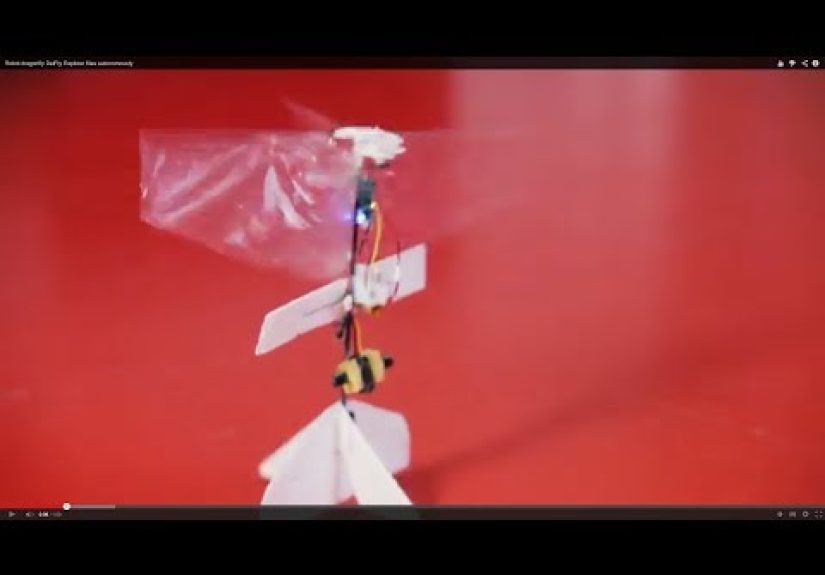
The headline-grabber here is the DelFly Explorer: a tiny flapping-wing robot that demonstrated
fully onboard sensing and processing for autonomous flight in obstacle-filled indoor environments.
In plain English: it didn’t need an external computer to do the thinking. It carried its own “brain,”
its own “eyes,” and enough battery to keep the adventure going for minutesnot seconds.
Quick MAV Translation: What “Autonomous Flapping” Actually Means
Let’s decode the jargon before it starts breeding.
A Micro Air Vehicle (MAV) is a very small aircraftoften light enough to be measured in grams
and nervous enough to be bullied by a ceiling fan. A flapping MAV replaces propellers with
wings that flap like a bird or insect. And autonomous means it can sense the environment,
make navigation decisions, and stabilize itself without relying on an offboard computer or constant remote piloting.
That last part is the villain in this story. Autonomy is hard on any drone. But on a flapping MAV?
It’s like asking a pogo stick to do ballet while reading a map.
The flapping motion shakes the body, the aerodynamics are unsteady, and the payload budget is brutally tiny.
Every extra gram you add for sensors or computing is a gram you can’t spend on battery or lift.
Meet the Star: DelFly Explorer (and Why People Called It “First”)
The DelFly Explorer earned “world’s first” status because it demonstrated autonomous flight with
onboard vision processing on a flapping-wing MAVmeaning the perception and decision-making
happened on the vehicle itself, not on a nearby laptop or lab infrastructure.
What made it special (in human terms)
- Flapping wings for flight (not a quadcopter in disguise).
- Onboard stereo vision to perceive obstacles and distance.
- Onboard processing to run the vision algorithms in real time.
- Autonomous behaviors like takeoff, altitude control, and obstacle avoidance.
- Real indoor environmentsnot just ideal conditions.
It’s worth stressing what “first” doesn’t mean. It doesn’t mean “first flapping drone ever.”
It doesn’t mean “first small drone with a camera.” And it doesn’t mean “first tiny flying robot”
(we’ll meet some of those in a minute). It means a flapping-wing MAV that combined the flapping platform with
autonomous flight enabled by onboard vision and onboard computewithout outsourcing the hard parts to the room.
Why Flapping Wings? Because Propellers Aren’t the Only Way to Fly
Propellers are greatefficient, well-understood, and widely available in the “lost sock” aisle of most bedrooms.
But at small scales, flapping wings can be attractive for a few reasons:
1) Maneuverability in tight spaces
Flapping-wing vehicles can potentially change forces quickly in ways that resemble biological flyers.
That matters indoors, where “turn radius” is basically whatever distance you have before meeting a bookshelf.
2) Stealth and soft presence
Many people associate flapping wings with natural motion. Some designs also aim for reduced acoustic signatures
(though “quiet” is relativetiny mechanisms can still buzz, rattle, and vibe like they’re late for a meeting).
Still, the visual stealth of a birdlike profile can be a design goal in certain applications.
3) Low-Reynolds-number weirdness
At very small scales, air doesn’t behave quite like the clean textbook world of big aircraft.
The aerodynamic regime can punish small propeller systems, and researchers explore flapping as one route to
maintaining lift and control where conventional assumptions get shaky.
The catch? Control is harder. Flapping-wing MAVs have periodic dynamicsforces and moments that change every flap cycle.
So autonomy isn’t just about “seeing” obstacles; it’s about staying stable while your own wings are
physically shaking your sensors like a maraca.
The Autonomy Stack: How a Flapping MAV Thinks Without a Pilot
Autonomous flight usually boils down to four jobs:
sense → estimate state → decide → control.
Flapping MAVs have the same pipeline, just with more chaos per gram.
Sensing: “Eyes” that fit on a diet
Cameras are popular on MAVs because they’re information-dense and can be lightweight.
Stereo visiontwo cameras with a known spacinghelps estimate depth by comparing disparities between images.
That’s particularly useful for obstacle avoidance because it gives a direct cue about distance.
State estimation: Where am I, and what am I doing right now?
A MAV needs to estimate its attitude (roll, pitch, yaw), altitude, and motion. Typical ingredients include
inertial measurement units (IMUs) plus sensors like barometers for altitude, sometimes fused with visual cues.
The goal is a stable estimate robust enough to keep the vehicle flying even when the world (and the wings)
are actively trying to ruin your math.
Decision-making: Avoid the wall, preferably before meeting it
Obstacle avoidance can be reactive (turn away from nearby obstacles) or deliberative (build a map and plan a path).
At micro scales, reactive methods are often favored because they demand less compute and memory.
Stereo depth can feed simple strategies like “steer toward open space” while maintaining altitude.
Control: Turning decisions into wing/actuator commands
Flapping MAV control can use aerodynamic surfaces (like small control surfaces behind the wings) or subtle changes
in flapping parameters, depending on the design. The big challenge is creating smooth, reliable maneuvers while the
vehicle’s body is oscillating due to flapping.
“First” in Context: How It Compared to Other Famous Flappers
The DelFly Explorer wasn’t born in a vacuummore like it was born in a wind tunnel’s extended family reunion.
Here are a few notable relatives, and why they’re different kinds of impressive:
AeroVironment’s Nano Hummingbird: flapping flight with a very human brain (the pilot)
One of the most famous flapping-wing drones in pop culture is the Nano Hummingbird, developed under DARPA’s
Nano Air Vehicle efforts. It demonstrated controlled hovering and directional flight using flapping wingsplus a camera
and it captured mainstream attention for looking like something that could politely steal your secrets.
But it was designed for remote control, not full autonomy. That distinction matters: the craft could fly brilliantly,
but a human pilot still did the navigation thinking.
Harvard/Wyss RoboBee: smaller-than-small, but often tethered to the room
The RoboBee project pushed insect-scale flapping robots into the spotlight. The engineering is wildtiny structures,
fast control loops, and relentless miniaturization. But many RoboBee flight demonstrations historically leaned on
external sensing (like motion capture) or lab constraints that reduce the onboard autonomy burden.
In other words: astonishing robotics, different autonomy story.
Autonomous ornithopters in research: the “behavior-based” family tree
Academic work on autonomous ornithopters explored sensor-based behaviors and navigation strategies, helping shape what
“autonomy” could look like on flapping platforms. These efforts matter because they show that autonomy isn’t one feature
it’s a stack of tradeoffs. The DelFly Explorer’s claim to fame was delivering that stack with onboard vision processing
on a flapping MAV that could fly freely in indoor spaces.
Why Stereo Vision Was a Big Deal at This Scale
Stereo vision is a practical compromise: richer than monocular cues alone, often lighter than lidar, and capable of
producing usable depth estimates in textured environments. For micro air vehicles, camera-based perception has a huge advantage:
it can scale down in size and power more gracefully than many other sensors.
Monocular obstacle avoidance strategies can work, especially when you leverage optical flow and “time to collision”
style cues. But monocular methods have known weak pointslike flying directly toward a flat, texture-poor surface
where optical flow provides limited sideways information. Stereo helps because it can estimate depth more directly,
making “don’t hit the wall” less of a philosophical suggestion.
Real-World Use Cases: Why Anyone Wants a Flapping Robot That Flies Itself
Indoor search and exploration
Autonomy shines when GPS is unavailable and human piloting is risky or difficultthink indoor inspection, navigating
through tight corridors, or exploring spaces that are unsafe for people.
Close-up inspection without the prop-wash drama
Tiny rotors can create noticeable airflow and get unpredictable near walls (the “wall-proximity” problem).
Flapping MAVs offer an alternative flight style that researchers continue to explore for close-quarters operation.
Bio-inspired robotics and education
Flapping MAVs are catnip for learning: they blend aerodynamics, mechanical design, control systems, and computer vision.
They’re also a reminder that nature didn’t pick propellers, and we’re still catching up to that design space.
Limitations (Because Physics Always Sends the Invoice)
- Flight time is short: micro batteries don’t do miracles, and flapping mechanisms cost energy.
- Compute is constrained: onboard processing must be efficient, not fancy for fancy’s sake.
- Vibration affects sensing: flapping motion shakes cameras and IMUs, making perception harder.
- Lighting and texture matter: vision systems love good contrast and hate blank white walls.
- Payload is tiny: every gram fights for survivalcamera, processor, battery, structure, everything.
The trajectory of the field is clear, though: better lightweight processors, more efficient vision algorithms,
improved control methods, and smarter autonomy behaviors continue to push flapping MAVs from “lab marvel”
toward “useful tool.”
What’s Next: From “Avoid Obstacles” to “Understand Spaces”
The first era of autonomy on micro flyers is often reactive: avoid obstacles, stay airborne, don’t panic.
The next era layers in richer behaviorscorridor traversal, doorway finding, multi-room exploration, and eventually
mapping and semantic understanding (knowing what the obstacle is, not just that it’s in the way).
At the same time, other research threads keep advancing: insect-scale platforms are getting faster and more agile,
and flapping-wing designs keep experimenting with how to generate lift, reduce vibration, and improve control authority.
The long game is a tiny autonomous flyer that can operate reliably in cluttered environments without needing
a lab’s worth of support equipment.
Experiences: What It’s Like to Work With an Autonomous Flapping MAV (The Human Side)
Let’s talk about the part that doesn’t always show up in headlines: the lived reality of building, tuning,
and flying a tiny autonomous flapper. Not “lived” as in “I did this yesterday” (I’m software, not a lab mate),
but the kinds of experiences engineers, researchers, and hobbyists consistently describe when they work with these systems.
First, everything feels lighter than your expectationsand heavier than your budget.
A flapping MAV looks delicate, and it is, but the moment you start adding “just one more thing” (a better camera,
a sturdier mount, a slightly larger battery), you learn the ancient truth of micro aviation:
grams are not units of mass; they’re units of heartbreak. Teams end up doing this constant trade:
“Do we want a few more minutes of flight, or do we want the processor to run at a higher frame rate?”
You can’t pick “both” unless you also pick “new battery chemistry,” which is not usually available at checkout.
Second, test flights are a mix of science and comedy.
If you’ve only flown stable quadcopters, flapping MAVs can feel like they have personality. That’s not magic
it’s periodic dynamics, vibration, and sensitivity to airflow. A door opening across the room can change the air currents
enough to make the vehicle behave differently. Researchers often start in controlled spaces, then gradually “mess up”
the environment on purpose: add obstacles, change lighting, create narrow passages, and see what breaks.
The funniest (and most painful) moment is when the system works perfectly until someone says,
“Okay, now do it again for the camera.” That’s when physics remembers it has a reputation.
Third, autonomy debugging feels like detective work with tiny suspects.
When an autonomous flapping MAV veers left, you don’t just ask, “Was the controller wrong?”
You ask: Did the stereo depth fail because the wall was texture-poor? Did the camera blur at the worst moment
because a wingbeat coincided with a frame exposure? Did the altitude estimate drift because the barometer
got noisy or the airflow around the body changed? Did the algorithm interpret a shadow as a “hole” and try
to fly into it like an overly confident moth?
That’s why many teams love visualization toolsplotting sensor streams, logging decisions, replaying runs.
It’s also why “simple” algorithms get so much respect in micro robotics. Fancy models are great until they
don’t run in real time on a tiny processor. Lightweight, robust perception that survives vibration and variable lighting
often wins over elegance.
Fourth, the sound and motion are surprisingly emotional.
People describe flapping MAVs as feeling more “alive” than prop drones. Part of that is the wing motion,
part is the animal inspiration, and part is human brains being human brains. When a tiny flapper successfully
takes off, holds altitude, and dodges an obstacle without help, it triggers a very specific reaction in the room:
a mix of pride, disbelief, and immediate fear that someone will jinx it by clapping.
And yes, people absolutely name these things. Robotics labs are not immune to cute.
Finally, the best experience is watching autonomy become boring.
That sounds like an insult, but it’s the dream. The day your autonomous flapping MAV does the same indoor course
ten times in a row without drama is the day you know you’re moving from “demo” to “capability.”
In robotics, boring is a compliment. Boring means reliable. Boring means you can start asking bigger questions:
Can it traverse corridors? Can it find doorways? Can it explore multiple rooms? Can it recover from mistakes?
Can it operate with different lighting, textures, and layouts without a custom tune every time?
That’s the deeper story behind “the world’s first autonomous flapping MAV.” It’s not just a single flight.
It’s the moment a bio-inspired flyer stopped being a remote-controlled marvel and started behaving like a robot:
sensing, deciding, and actingagain and againunder its own power and its own onboard intelligence.