Table of Contents >> Show >> Hide
- What Really Goes Into a Professional Car Paint Job?
- How Much Does a Professional Car Paint Job Cost?
- What Does a DIY Car Paint Job Actually Cost?
- Key Factors That Affect Paint Job Cost (Pro or DIY)
- Professional vs. DIY: Cost Comparison at a Glance
- When a Professional Car Paint Job Is Worth the Money
- When a DIY Car Paint Job Makes Sense
- Real-World Experiences and Practical Tips
- Final Verdict: Professional vs. DIY Car Paint Jobs
At some point every car owner has the same thought while staring at faded paint and mystery scratches:
“Should I pay a pro to repaint this thing… or just watch a few YouTube videos and do it myself?”
One option involves expertise, warranties, and your car looking like it rolled out of a showroom.
The other involves overspray in your hair, paint dust in your nostrils, and the possibility that your
hood ends up with the texture of an orange peel. Fun!
In this guide, we’ll break down the real cost of a professional car paint job vs. DIY in dollars,
time, sweat, and risk. We’ll look at typical price ranges, what affects the cost, where DIY
actually saves money, and when hiring a pro is the smarter long-term move.
What Really Goes Into a Professional Car Paint Job?
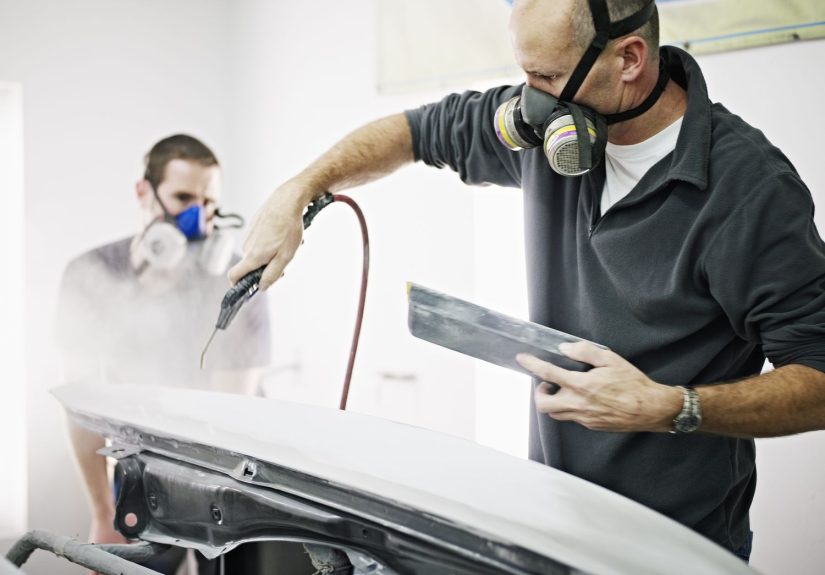
A professional car paint job is way more than “spray and pray.” You’re paying for a controlled
environment, specialized equipment, and someone who knows how to fix that weird dent your
bumper has been hiding for years.
Prep Work: Where a Huge Chunk of the Cost Hides
The unglamorous truth: most of the work (and cost) of a pro paint job is in preparation.
That includes:
- Thorough washing and degreasing
- Sanding off the old clear coat and rough spots
- Repairing dents, dings, and minor rust
- Filling imperfections and priming panels
- Masking windows, trim, lights, wheels, and badges
Collision and refinish shops consistently point out that skipping prep is the #1 reason
cheap jobs look bad fast: paint peels, flakes, or shows sanding marks under the surface.
Paint, Clear Coat, and Materials
Then comes the paint system itself. Common automotive systems include:
- Acrylic or synthetic enamel: Affordable but not as durable.
- Urethane: More expensive but very durable, with good gloss retention.
- Metallic, pearl, or matte finishes: Premium looks, premium price, trickier to repair.
Shops often use high-end urethane paint and clear coats that are formulated to resist UV fading,
chemicals, and road wear. Better materials cost more, but they also tend to last longer and
keep the car looking new years down the road.
Labor, Facility, and Warranty
You’re not just paying for paint and a guy with a spray gun. A professional shop offers:
- Skilled technicians who spray paint all day, not just on weekends
- Spray booths with proper ventilation and dust control
- Curing systems to harden paint correctly
- Color-matching technology for partial resprays
- Written warranties on workmanship and finish
All of that overhead shows up on the invoice but so does the peace of mind.
How Much Does a Professional Car Paint Job Cost?
Prices vary by region, vehicle size, paint type, and how picky you are about the final result.
But recent U.S. estimates give us some solid ballpark ranges.
Basic “Budget” Paint Jobs
A basic professional paint job usually falls somewhere around $500 to $1,000 for
a full car. These typically use single-stage synthetic paint with minimal prep and a short, limited
warranty.
Chain shops and “special” deals often land in this tier. The car will look better than it did,
but don’t expect show-car depth or flawless bodywork. Think of it as a decent haircut from a
quick-cut salon, not a luxury spa treatment.
Mid-Range Daily Driver Resprays
For a more thorough job with proper prep, multiple coats of quality base and clear, and a stronger
warranty, expect roughly $1,000 to $5,000.
This range often covers:
- Good shops repainting a typical sedan or crossover
- Minor dent/rust repair included
- Factory-like gloss and finish for a daily driver
Many collision centers report an average full repaint landing around
$2,000 to $4,000, depending on condition and color choice.
High-End and Custom Paint Jobs
This is where costs start sounding like used-car prices. High-end or custom paint jobs with extensive
prep, bodywork, color changes, and exotic finishes often run from $5,000 to $10,000 or more.
Enthusiasts on professional forums regularly quote:
- A “good” repaint with minimal bodywork: around $10,000
- Fully stripped, body-worked, and repainted projects: $15,000+ for show or collector cars
If your car is a future classic, this is the tier that adds real value. If it’s a 15-year-old
commuter with 200,000 miles, this may be more love than the market will ever pay you back for.
What Does a DIY Car Paint Job Actually Cost?
DIY is where things get interesting. On paper, it looks dramatically cheaper. In reality, it’s cheaper
in dollars but more expensive in time, effort, and trial-and-error.
DIY Material Costs
If you’re using proper automotive paint (not just hardware-store spray cans), you’ll likely spend:
- $250–$500 on quality automotive paint, primer, and clear coat for a typical car
- $100–$200 on tools you may not have: spray gun, respirator, mixing cups, strainers, masking materials, sandpaper, tack cloths, etc.
- Possibly $200–$600 in total materials for a small car, depending on system and brand.
There are ultra-low-budget stories out there like people who spent around $70 on rollers and Rust-Oleum
and turned a chalky car into something presentable, instead of paying over $2,000 at a local shop.
Just don’t expect that to look like a factory finish up close.
Hidden DIY Costs: Your Time and Space
Money isn’t the only resource on the table. DIY painting also costs:
- Time: A full DIY job can easily eat up several weekends of sanding, masking, spraying, and re-sanding.
- Space: You need a clean, dust-minimized area ideally a garage where you can safely spray paint without turning everything you own slightly blue.
- Safety gear: Proper respirators and eye protection are non-negotiable. Automotive paints and solvents aren’t kind to lungs.
- Do-overs: Runs, orange peel, or sanding scratches may force you to redo panels, adding more materials and time.
If you’re new to spraying, assume your first attempt will be good “from 10 feet away.” That’s not a failure
that’s a learning curve.
Key Factors That Affect Paint Job Cost (Pro or DIY)
Whether you’re hiring a shop or painting in your garage, the same core factors affect total cost:
- Vehicle size: Bigger vehicles need more paint and more prep time.
- Current condition: Rust, dents, and peeling clear coat add hours (and dollars).
- Paint quality: Higher-end, UV-resistant systems cost more but last longer.
- Color choice: Certain colors and special finishes cost more and require more skill to spray.
- Location: Labor rates vary widely between regions and even between shops in the same city.
Professional vs. DIY: Cost Comparison at a Glance
| Aspect | Professional Paint Job | DIY Paint Job |
|---|---|---|
| Typical Cost Range | $500–$10,000+ depending on quality and scope | $200–$800 in materials and supplies (plus your time) |
| Finish Quality | Consistent, factory-like (mid to high tier); warranty | Highly variable; “good from a distance” for beginners |
| Time Investment | You drop off the car and wait | Multiple days or weekends of prep, spraying, and rework |
| Tools & Equipment | Professional spray booths and gear | You must buy or borrow tools and set up a safe space |
| Risk | Low; issues usually covered by shop warranty | All risk is on you; mistakes = more cost or a pro “rescue job” |
| Best For | Daily drivers you want to look “like new,” resale value, high-end or classic cars | Budget builds, beaters, project cars, or when you want to learn and don’t mind imperfections |
When a Professional Car Paint Job Is Worth the Money
A professional respray makes the most sense when:
- Your car has meaningful resale value or is still fairly new.
- You plan to keep it for years and want the finish to last.
- There’s rust, body damage, or peeling clear coat that needs real repair.
- You’re changing color and want the job done thoroughly (door jambs, trunk, engine bay).
- You simply don’t have the time, tools, or appetite for a big messy project.
In those cases, spending $2,000–$4,000 at a reputable shop can actually be more cost-effective than
spending $800 in DIY supplies plus your weekends and then still not being thrilled with the result.
When a DIY Car Paint Job Makes Sense
DIY shines (sometimes literally) when:
- You’re working on a budget project, old commuter, or off-road toy.
- You’re okay with “good enough” instead of “perfect.”
- You’re excited to learn auto-body skills and don’t mind some mistakes.
- You already own some of the tools or can borrow them.
- You have a decent workspace that won’t turn your entire driveway into a paint booth.
If you view the project as part hobby, part money-saver, DIY can be very satisfying. Just don’t
compare your first-time garage job to a $7,000 show-car finish on Instagram. Compare it to what
your car looked like last month sitting dull and oxidized at the curb.
Real-World Experiences and Practical Tips
Let’s zoom in on what this decision actually feels like in the real world. Numbers are helpful,
but most people make the “pro vs. DIY” call based on a mix of budget, pride, and how much chaos
they’re willing to invite into their weekends.
The Daily Driver Dilemma
Imagine you’ve got a 10-year-old sedan with 150,000 miles. Mechanically, it’s solid. The clear coat
on the roof and hood? Not so solid. The car is probably worth $6,000–$8,000 in good cosmetic shape,
but it looks more like a “pre-apocalypse movie prop” than a gently used ride.
A local shop quotes you $2,500 for a mid-range repaint: sand, repair minor dings, spray a quality
base and clear, and bake it in their booth. You could also DIY for around $400 in materials if you
go with a decent kit, plus maybe another $200 on gear you don’t own yet.
On paper, the DIY option saves over $1,800. But add up:
- Two or three weekends of prep
- Risk of sanding through an edge or creating waves in the panels
- The possibility you have to redo a panel or live with a few runs
If your time is tight and you rely on the car daily for work, the professional option often wins.
You drop it off, pick it up, and boom your “old” car suddenly looks like it skipped a few birthdays.
The Project Car Adventure
Now picture a different scenario: you’ve got a cheap project car in the driveway, maybe a faded
hatchback or an old pickup you snagged for fun. It’s not a collector’s item, and the value is mostly
in how much you enjoy tinkering with it.
In that world, DIY is almost part of the point. You learn how to use a spray gun, practice bodywork,
and gain the kind of hands-on knowledge that makes future repairs less intimidating. You might try a
bold color you’d never pay a pro to spray, just to see how it looks. If you get a run or some orange
peel, you can wet-sand and polish, or shrug and call it “race car texture.”
Many hobbyists eventually develop enough skill that their DIY jobs look surprisingly professional.
It doesn’t happen overnight, but the first step is always that “okay, let’s see what happens” paint job.
Tips If You Go the Professional Route
- Get multiple quotes: Prices can differ widely for similar quality.
- Look at finished work: Ask to see cars that just came out of their booth.
- Ask about prep: What exactly is included? Rust repair? Dent removal?
- Clarify the warranty: How long is it, and what does it cover (peeling, fading, defects)?
- Be realistic: A budget job won’t look like a custom show finish, and that’s okay.
Tips If You Go DIY
- Practice first: Spray a junk panel or old hood before you touch your actual car.
- Over-prep rather than under-prep: Paint hides color, not texture. Deep scratches and chips will show if you don’t level them.
- Clean is king: Dust, oils, and fingerprints are the enemy of smooth paint.
- Follow the system: Use compatible primer, base, and clear from the same manufacturer when possible.
- Don’t skip safety: Wear a proper respirator rated for paint fumes, gloves, and eye protection.
Most importantly, set your expectations. A DIY job can absolutely transform a tired car for a fraction
of the cost of a professional repaint. Just recognize that you’re trading money for time, effort, and
a bit of “let’s see how this turns out.”
Final Verdict: Professional vs. DIY Car Paint Jobs
So what’s the bottom line on the cost of a professional car paint job vs. DIY?
If you want a reliable, long-lasting finish, you’re protecting a car with real value, or you simply don’t
have the bandwidth for a big project, a professional paint job is usually worth the price. Expect to pay
somewhere between $1,000 and $5,000 for most quality full-car resprays, more for
high-end or custom work, and less if you accept a basic budget job.
If you’ve got a lower-value car, a flexible schedule, and a willingness to learn, DIY can save thousands
in direct costs often bringing full-car materials in under the $800 mark, and sometimes far less if you
keep things simple. Just remember: you’re the painter, the prep tech, the quality inspector, and the warranty
department, all rolled into one.
In the end, the “right” choice is the one that fits your car, your wallet, and your tolerance for paint
dust in your eyebrows. Whether you hand your keys to a pro or suit up with a spray gun yourself, understanding
the real costs makes sure the only surprise is how good your car looks when it’s finally done.