Table of Contents >> Show >> Hide
- Which episode was it?
- The scene everyone rewinds
- How it happened (according to Barry Williams)
- “It was only one scene” and that’s the point
- Why producers weren’t laughing
- What makes the moment so fascinating (besides the bicycle pump’s supporting performance)
- A rewatch checklist for the “Greg Brady stoned scene”
- Behind the scenes: teen stardom, identity, and the “Brady kid” machine
- Why the title “Law and Disorder” feels like the universe doing stand-up comedy
- Final thoughts
- The relatable part: the “not my finest take” experience
- SEO tags (JSON)
Every long-running sitcom has its “wait… did that really happen?” moment. For The Brady Bunch, one of the most replayed bits of trivia
isn’t a cursed tiki idol or a DIY project gone sidewaysit’s a brief driveway scene where Greg Brady seems… unusually cosmic.
And yes: actor Barry Williams later acknowledged he filmed one scene while high, turning a squeaky-clean family comedy into
a tiny, accidental time capsule of teenage decision-making.
This isn’t a “let’s glamorize it” story. It’s a “how on earth did this end up on network television?” storycomplete with an unexpected call back to set,
a bicycle pump that becomes an improvised obstacle course, and a line delivery that lives forever in the Museum of Mildly Suspicious TV Moments.
Which episode was it?
The moment comes from “Law and Disorder” (Season 4, Episode 14). The episode’s main plot follows Bobby as he’s named a school safety monitor
and promptly discovers the ancient truth that power can make you annoying very quickly. Meanwhile, the family gets excited about fixing up an old boat
a subplot that sets up the now-legendary driveway scene.
The quick, SEO-friendly answer
- Episode: “Law and Disorder” (Season 4, Episode 14)
- The “stoned” moment: The opening driveway scene
- What’s happening: Greg is pumping up a bike tire when Mike arrives with a boat
- Key takeaway: Williams has said it was one scene, not the entire episode
The scene everyone rewinds
Sitcom scenes are usually engineered to be forgettablein a comforting way. The Bradys solve a problem, learn a lesson, hug it out, and your brain files it under
“safe, pleasant television.” But this scene has an extra spark because it feels just a little… off.
What you see on screen
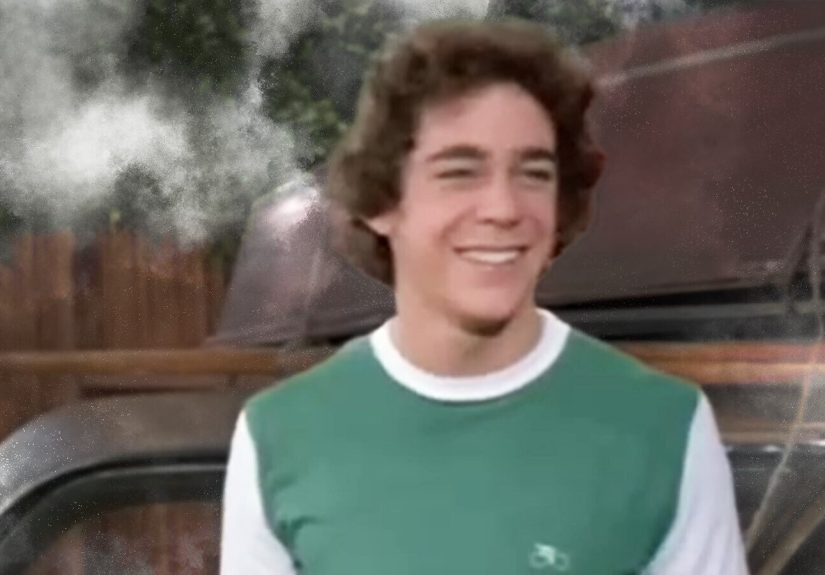
Mike pulls into the driveway with a boat on top of the station wagon (because in 1970s sitcom land, this is a normal Tuesday). Greg is outside with his bike,
working a tire pump. He looks at the boat with wide-eyed enthusiasm. He moves with a slightly loose-limbed, delayed rhythm. At one point, he fumbles and/or trips
around the pump like it’s a booby trap designed by a very patient cartoon villain.
What you hear
Greg delivers the kind of “teen amazed by dad’s random purchase” reaction the show lovedexcept the cadence has a peculiar, stop-start sincerity, as if Greg’s
inner monologue is buffering. The moment famously includes a very “of the era” exclamationan offhand bit of dialogue that helps fuel the scene’s legend.
On its own, it could pass as sitcom weirdness. But once you know the backstory, the scene becomes one of those “how did Standards & Practices not catch this?”
curiosities. (Or maybe they did and just sighed, because it was 1973 and everyone needed a nap.)
How it happened (according to Barry Williams)
The core of the story is simple: he didn’t expect to work that day, he used his free time like a typical teen who thinks he’s invincible, and then production called.
That’s the nightmare scenario for anyone who has ever said, “I’m off today, so I can totally” and then the universe hits you with an email that starts,
“Quick question…”
The unexpected call-in
The account that’s circulated for years is that Williams was unexpectedly called to set for a driveway reshoot on what he believed was a day off.
The scene required him to pump air into his bicycle tire and react to the boat, including a line essentially equivalent to,
“You didn’t say anything about buying a boat, Dad!” (Yes, the boat is the innocent victim here.)
Why that matters in a multi-camera(ish) sitcom world
On many TV productions, you can’t always reschedule easily. Sets are standing. Actors are already in the machine. Crew is paid and ready. When something needs a pickup
shotespecially a quick exterior or driveway momentit’s often treated like a fast errand: show up, do it, go home. That makes the surprise call-in believable as a
“we just need a few minutes” request… right up until you remember that “a few minutes” in TV time includes wardrobe, blocking, lighting, and the emotional whiplash
of being told to act normal while your brain is doing interpretive dance.
The story also fits the broader context Williams has described about growing up on a hit show: being a teenager in public, trying to balance “real me” with “TV me,”
and living inside a production schedule that doesn’t care if you were planning to be a human being that afternoon.
“It was only one scene” and that’s the point
It’s important to keep the claim accurate: the widely repeated version is not that Williams was high for an entire episode. It’s that he was high during
one driveway scenethe one with the boat and the bicycle pump. That distinction matters because it turns the anecdote from a sweeping accusation into
a contained, specific production mishap: a single moment that slipped through because it was short, functional, and probably seemed “good enough” in the edit bay.
Why a short scene can become a long legend
Because short scenes are easy to isolate. In the era of reruns, VHS, and later the internet, a compact “blink and you’ll miss it” oddity becomes the perfect clip:
a one-minute mystery that invites conspiracy theories, fan debates, and the modern ritual of shouting “FAR OUT!” at your screen like you’re participating in a very
niche sporting event.
Why producers weren’t laughing
Even on a lighthearted series, production is a workplace. You’re on a schedule, you’re responsible to the network, and you’re trying to keep the set running smoothly.
A performer showing up impaired is a problem on three levels: professionalism, safety (even if you’re “just” walking around a bicycle pump), and liability.
Then there’s the 1970s image problem
The Brady Bunch wasn’t selling gritty realism. It was selling “America’s blended family learns a lesson in 22 minutes and somehow has time for dessert.”
The show’s tone was basically a warm glass of milk (Alice probably poured it). Anything that threatened that vibeespecially something that could read as drug-related
would be treated like a hairline crack in the brand.
That’s why this anecdote tends to be framed as a cautionary tale in hindsight: not “look how cool this was,” but “look how quickly a small choice can create a
permanent on-camera artifact.”
What makes the moment so fascinating (besides the bicycle pump’s supporting performance)
There are two layers to the fascination: the cultural layer and the acting layer.
1) The cultural layer: America loves a “clean show” with a messy footnote
The Brady family is TV comfort food. So viewers get a weird thrill when something human and chaotic pokes through the frosting. It’s the same reason people love
live-TV flubs: it reminds you there are real people under the hair spray.
2) The acting layer: you can watch a performer “overthink normal”
Whether you believe the scene is “obvious” or “subtle,” it’s a neat little case study in how impairment (or even just anxiety) can show up on camera:
slowed reactions, slightly mismatched energy, and a delivery that feels like it’s arriving from a different time zone.
Ironically, sitcom acting depends on precisiontiming, rhythm, consistent facial reactions that match the joke. If your internal metronome is off by even a beat,
the whole thing reads strange. The bicycle pump doesn’t help.
A rewatch checklist for the “Greg Brady stoned scene”
If you’re watching the episode specifically for the infamous moment (you’re not alone), here’s what fans typically point outwithout turning it into a forensic report:
Look for these cues
- Body language: slightly floaty movement, a delayed shift from bike to boat
- Prop interaction: the tire pump becomes a minor slapstick hazard
- Facial expression: wide, delighted, almost “first time seeing a boat” wonder
- Line delivery: a cadence that feels half-awed, half-processing
Of course, any one of these could also be explained by a rushed reshoot day, awkward blocking, or a director saying, “Bigger! Bigger!”
That’s part of the fun: it’s TV ambiguity with a behind-the-scenes explanation attached.
Behind the scenes: teen stardom, identity, and the “Brady kid” machine
One reason this story keeps circulating is that it sits inside a bigger conversation about being a teenager on a famous show. Williams has talked in later years about
how hard it was to separate his identity from Greg’sso he essentially merged them for survival. That detail matters here because it explains why the “stoned scene”
didn’t just become trivia; it became part of the mythology of growing up as a very public teenager.
Why that pressure connects to the incident
When your “job” is to be a wholesome symbol, your private adolescence doesn’t get to be private. Normal teen experimentation becomes riskiernot only because of health
and safety, but because it can accidentally leak into the product. In this case, the “product” is an episode that would rerun for decades.
And that’s the wild part: plenty of people have made a youthful mistake. Not everyone has that mistake preserved in a driveway scene with a boat, a pump, and an eternal
audience going, “Waitwas Greg… okay?”
Why the title “Law and Disorder” feels like the universe doing stand-up comedy
The episode’s name is about Bobby learning responsibility, authority, and the consequences of being a self-appointed rule enforcer.
Meanwhile, the behind-the-scenes legend is basically: “Teen actor learns consequences the fast way.” It’s almost too on-the-nose.
In other words, while Bobby is discovering that being “the rules guy” can backfire, Greg is giving viewers a very different lesson:
don’t assume you’re off work until the credits roll.
Final thoughts
The “Barry Williams stoned Brady Bunch episode” story endures because it’s equal parts harmless and revealing. It’s harmless because it’s a single sceneone small,
slightly odd performance beat in a show built on gentle lessons. It’s revealing because it shows you how thin the line is between “professional TV product” and “real
human teenager behind the curtain.”
Watch it as a curiosity, not a celebration. Laugh at the awkwardness, appreciate the bizarre perfection of the title, and let the bicycle pump take a well-deserved bow
for Best Supporting Trip Hazard in a Family Sitcom.
: experiences related to the topic
The relatable part: the “not my finest take” experience
Even if you’ve never been a teen idol in a plaid shirt, you probably recognize the emotional shape of this story: you think you’re off the clock, you relax, and then
life calls you back in. Maybe it’s work, maybe it’s family, maybe it’s your friend texting, “Can you hop on a quick call?”a phrase that has never been followed by
anything under ten minutes in the entire history of communication.
The reason the Greg Brady driveway moment feels weirdly familiar is that it captures something universal: the scramble to look “normal” when you are absolutely not
operating at 100%. Replace “stoned” with “sleep-deprived,” “over-caffeinated,” “emotionally distracted,” or “just got terrible news and now have to smile in a meeting,”
and the vibe still lands. Your body is present; your timing is not. You laugh a fraction too late. You nod like you understand, even though your brain is starring in its
own silent film.
There’s also the classic overcorrection. When people feel off-balance, they often try to compensate by being extra enthusiastic. That’s why the moment reads as both
charming and suspicious: Greg’s energy isn’t angry or sloppy; it’s earnest. The problem is that sitcom earnestness has a specific rhythm, and when your rhythm
changes, the camera notices. Cameras are rude like that. They don’t care how hard you’re trying. They just capture the truth in 24 frames per second.
Another relatable piece: the “this will be fine” lie we tell ourselves on the way in. People convince themselves they can power through anything with enough willpower:
“I’ll just focus.” “I’ll drink water.” “I’ll smile more.” “I’ll act natural.” Then you arrive, and the room has bright lights, multiple people watching you, and a
task that requires precisionlike speaking lines, presenting slides, or answering a question you weren’t prepared for. Suddenly your confidence starts evaporating like
a puddle in July.
The Brady Bunch version is funny because the stakes are low: it’s a driveway, a prop, and a dad with a boat. But the underlying human moment is real. Many of us have
had a day where we showed up and thought, “Please don’t make me talk first.” Or we listened to ourselves speak and realized we sounded like we were reading our own
thoughts off cue cards. Or we walked into something (a chair, a doorway, a metaphorical bicycle pump) because our attention was lagging behind our feet.
If there’s a modern lesson to extract, it’s not “wow, classic TV was wild.” It’s simpler: leave yourself a margin. Assume the world may call you back in. And if you
ever have to performwhether it’s acting, presenting, parenting, or just being a functional adultdo it in a state where you can trust your timing and your safety.
Because if you don’t, the moment might not just be embarrassing. In the Brady Bunch universe, it becomes immortal. And somewhere, decades later, strangers will still be
discussing your relationship with a bicycle pump.