Table of Contents >> Show >> Hide
If you grow roses, the first frost can feel a little dramatic. One night your bushes are still trying to look glamorous, and by morning they seem to have realized summer is over, the party is done, and everyone should probably go inside. The good news is that your roses are not helpless. In fact, with the right timing and a little strategy, they can come through winter in great shape and reward you with stronger growth when spring returns.
The best way to protect your roses after the first frost is not to smother them at the first sign of chilly weather. It is to let them ease into dormancy, clean up the area around them, water deeply before the soil freezes, and then apply the right winter protection for the type of rose you grow. For tender grafted roses, that usually means mounding soil around the base and adding loose mulch after the weather turns consistently cold. For hardy shrub roses, lighter protection is often enough. For climbers and container roses, the game changes a bit.
In other words, winter rose care is less about panic and more about timing. Think of it as tucking your roses in with a proper blanket instead of throwing the whole linen closet on them in October.
Why the First Frost Matters
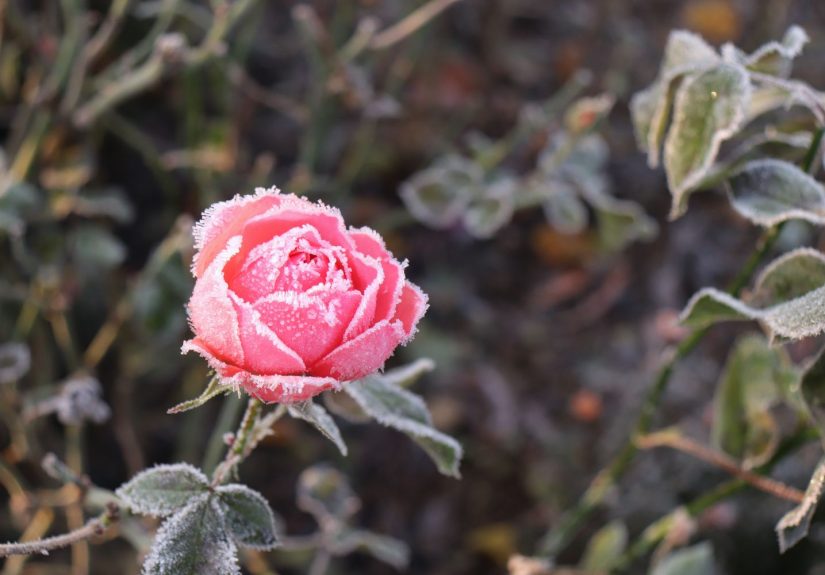
The first frost is important because it tells you your roses are shifting seasons. But it is not always the exact moment to apply full winter protection. A light frost may nip leaves and flowers, yet the soil can still be warm and the plant may not be fully dormant. If you cover roses too early, you risk trapping heat and moisture, encouraging rot, or pushing the plant to stay active when it should be winding down.
That is why experienced gardeners usually treat the first frost as a signal, not a siren. It is the cue to stop fussing over blooms, stop encouraging new growth, and begin preparing the plant for its winter rest.
One of the smartest things you can do in early fall is ease off the “grow, grow, grow” routine. Late-season fertilizing can stimulate tender new growth that is likely to be damaged by freezing temperatures. Deadheading can have a similar effect by encouraging the plant to keep producing. Instead, let flowers fade naturally and allow hips to form. This helps signal to the rose that it is time to slow down.
The Best Way to Protect Roses After the First Frost
For most gardeners, the most reliable winter protection routine follows a simple sequence. The details depend on your USDA zone, your rose type, and how exposed your site is to wind, but the framework stays the same.
1. Let the rose harden off naturally
After the first frost, resist the urge to do a full makeover. Do not heavily prune, do not fertilize, and do not keep cutting flowers for bouquets as though your rose is auditioning for one last summer encore. Let the plant gradually enter dormancy. This process helps the canes toughen up before winter weather becomes more severe.
2. Clean up fallen leaves and diseased debris
Before winter protection goes on, remove fallen rose leaves, black spot-infected foliage, and other diseased debris from around the plant. This is one of those unglamorous chores that pays off later. Fungal problems can overwinter in infected leaves and canes, so a cleaner bed now means fewer headaches next spring.
3. Water deeply before the ground freezes
This step is easy to skip and surprisingly important. Roses heading into winter should not be drought-stressed. After the first frost, but before the ground freezes solid, give the plants a thorough soaking if rainfall has been limited. Moist soil holds heat better than bone-dry soil, and well-hydrated plants are less likely to suffer winter desiccation. Dry winter winds can be brutal, especially for exposed roses and for plants growing in colder inland climates.
4. Tie canes loosely if wind is a problem
If you grow hybrid teas, floribundas, grandifloras, or tall shrub roses in a windy location, loosely tying the canes together can reduce whipping and breakage. The goal is not to truss the plant like a holiday roast. You just want to prevent long canes from cracking, rubbing, or snapping during repeated freeze-thaw cycles and strong winter gusts.
5. Mound the base of tender roses
For grafted roses and less-hardy modern types, the most effective protection usually starts at the base. Once the weather is consistently cold and the plant is heading fully dormant, mound loose, well-drained soil around the lower canes and graft union. A mound roughly 8 to 12 inches high is common in colder climates. The purpose is to protect the most vulnerable part of the plant, especially the bud union on grafted roses.
A key detail here: use extra soil brought in from elsewhere rather than scraping soil away from the base of the plant. Robbing the root zone to build the mound is a little like stealing your own umbrella in a rainstorm. It creates a problem while trying to solve one.
6. Add loose mulch after the soil is cold or frozen
After the mound is in place and the weather has turned properly cold, add loose insulating material such as shredded leaves, straw, or bark over and around the protected base. In many gardens, this outer layer is what helps stabilize soil temperatures and reduce damaging freeze-thaw swings. It also helps prevent frost heaving, which can literally push roots upward out of the soil.
If you use a rose collar, wire cylinder, or similar enclosure, fill it loosely with mulch rather than packing it tightly. Air pockets help insulation. Wet, compacted material is far less helpful and can create rot problems.
How Protection Changes by Rose Type
Hybrid Tea, Grandiflora, and Floribunda Roses
These are often the divas of the rose world. Beautiful? Absolutely. Tough in winter? Not always. In colder regions, these roses usually benefit the most from full winter protection. If your winters are severe, mounding soil over the crown and covering it with straw or shredded leaves is often the best approach. In especially harsh sites, gardeners may also use a wire cage or breathable wrap around the plant.
Shrub Roses and Landscape Roses
Many modern shrub roses are much hardier and often do not need elaborate winter treatment, especially if they are own-root varieties suited to your zone. A moderate mulch layer over the root zone may be enough. That said, newly planted shrub roses still deserve extra attention their first winter because they have not had time to establish a deep root system.
Climbing Roses
Climbing roses are where rose care starts to feel like engineering. In protected areas, you may get by with tying the canes in place, wrapping them with burlap or evergreen boughs, and mounding soil around the base. In colder or more exposed gardens, some climbers are detached from supports, bent carefully toward the ground, and covered more fully. This is not a casual project, and it should be done gently to avoid cracking canes. If your climber is well-established and large, start with the simplest effective protection: secure the canes, protect the crown, and shield them from wind.
Tree Roses
Tree roses are extra vulnerable because the grafted top sits up above ground instead of being protected near the soil line. In cold climates, they often need significant protection, including being bent down and buried or otherwise heavily insulated. If you grow a tree rose where winters are serious, treat it like a treasured antique. Beautiful, yes. Easy, no.
Container Roses
Potted roses need special attention because roots in containers get colder much faster than roots in the ground. After the plant has gone dormant, move the pot to an unheated garage, shed, or other cold but protected space if your climate is harsh. Another option is to group pots together in a sheltered spot and insulate them heavily. In milder climates, wrapping the pot and mulching the top may be enough. The main goal is to keep roots cold enough to remain dormant but not so exposed that they freeze hard and repeatedly.
Common Mistakes That Hurt Roses in Winter
The biggest winter rose mistakes are usually timing mistakes. Gardeners often mean well and still end up making life harder for their plants.
Covering too early
If you pile on mulch while the soil is still warm, you may trap heat and moisture. Roses need cold weather to settle into dormancy before serious winter covering begins.
Pruning too hard in fall
Heavy fall pruning can stimulate growth at exactly the wrong time. Save major pruning for spring. In fall, only shorten excessively tall canes enough to prevent wind damage.
Skipping sanitation
Leaving diseased leaves on the ground is like sending an engraved invitation to next year’s fungal problems. Clean up matters.
Using the wrong mulch the wrong way
Mulch should insulate, not suffocate. Do not use soggy, compacted material, and do not create a permanently wet mess around the crown.
Forgetting winter water
In dry climates or during open, snowless winters, roses can still dry out. If the ground is not frozen and conditions are unusually dry, occasional winter watering may help, especially for roses in exposed locations.
When to Remove Winter Protection in Spring
Winter protection is not meant to stay forever. Once late winter begins to soften into spring and new growth starts waking up, gradually remove the protective layers. Do not yank everything off during one random warm afternoon in February just because the birds seem optimistic. Roses can break dormancy early during warm spells, and sudden refreezes can still do damage.
Instead, peel back mulch in stages as conditions moderate. Remove heavy coverings as consistent spring weather arrives, then prune out winter-killed wood once you can see what survived. Many gardeners like to wait until nearby spring indicators, such as forsythia bloom, suggest pruning season has truly arrived.
Real-World Rose Experiences and Lessons from First-Frost Season
Gardeners who grow roses for more than a season usually develop strong opinions about winter care, often because they learned the hard way. One of the most common experiences is discovering that the first frost is not the event that kills roses. The real damage often happens later, during repeated freeze-thaw swings, dry winter winds, or sudden temperature drops after a warm spell. Many rose growers say their plants looked fine in December, only to show blackened canes and crown damage in March. That is why the best winter strategy is usually about steady insulation and moisture management rather than dramatic emergency measures.
Another familiar story comes from gardeners who covered their roses too early because the forecast sounded scary. At first, this feels responsible. Then a stretch of mild weather arrives, the mulch stays warm and damp, and the plant never gets the memo that it is supposed to rest. By spring, the rose may be weaker, not stronger. The lesson many people come away with is simple: cold protection works best when the plant is actually ready for it.
There is also the classic tale of the gardener who pruned hard in fall because the bush looked messy. It seemed sensible at the time. Why let long canes flap around all winter? But when spring arrived, the plant had lost even more wood than expected. Experienced growers often find that light tidying is enough in fall, while serious pruning is better saved for spring when winter injury is easier to judge. Roses are not impressed by our desire for a neat November garden.
Many people also discover that location matters almost as much as the rose variety itself. A rose planted near a wall, fence, or sheltered courtyard often comes through winter far better than the same rose planted in an open, windy spot. Gardeners talk about this difference all the time. One rose survives with minimal damage while another, only twenty feet away, struggles because it catches every gust of cold wind. These experiences remind us that microclimates are real, and sometimes the best winter protection starts with smart placement long before frost ever arrives.
Container gardeners have their own version of winter heartbreak. A potted rose can look healthy going into winter and still fail because the roots are far more exposed above ground. Many rose lovers eventually learn that what works for an in-ground shrub may not work for a pot on a patio. Moving containers to an unheated but protected area, insulating pots, and keeping them from drying out too much are lessons often learned after at least one rough winter. Roses can be forgiving, but containers definitely raise the difficulty level.
Perhaps the most encouraging shared experience is that rose care gets easier once you stop treating every rose the same. Hardy shrub roses often need only modest mulch. Tender hybrid teas need more protection. Climbers need wind control and crown protection. New plants need more help than established ones. Gardeners who figure this out usually spend less time worrying and more time enjoying better spring growth. And that, really, is the point. Winter protection is not about wrapping your roses like delicate museum pieces. It is about giving each plant the kind of help it actually needs, so when spring returns, your garden does not look like a floral crime scene.
Conclusion
The best way to protect your roses after the first frost is to think in stages. Let them slow down naturally, clean up the bed, water before the ground freezes, and then match your winter protection to the kind of rose you grow and the kind of winter you actually get. For tender roses, protect the crown with mounded soil and loose mulch. For hardy shrubs, use lighter insulation. For climbers and container roses, focus on wind and root protection.
Done right, winter rose care is not complicated. It is thoughtful, timed, and surprisingly practical. Your roses do not need a spa retreat, a motivational speech, or six blankets tucked in at once. They just need a smart plan. Give them that, and they will be far more likely to return in spring ready to prove they remember exactly how to steal the show.