Table of Contents >> Show >> Hide
- Quick refresher: What does “THC-free” actually mean?
- How we picked the best THC-free CBD oils for 2025
- The best THC-free CBD oils to consider in 2025
- Best overall: Medterra Daily Relief CBD Isolate Oil
- Best high-potency: Extract Labs Organic CBD Isolate Oil
- Best value-leaning classic: CBDistillery THC-Free Pure CBD Oil Tincture
- Best for flavor-sensitive users: Bluebird Botanicals THC-Free CBD Oil
- Best minimalist option: Lazarus Naturals CBD Isolate Tincture
- Best for mixing into food and drinks: Social CBD Isolate Drops
- Best broad-spectrum option (THC removed): cbdMD Broad Spectrum CBD Oil Drops
- How to choose a THC-free CBD oil (without getting tricked by the label)
- Safety notes you shouldn’t skip
- 2025 reality check: CBD rules are changing fast
- FAQ
- Real-world experiences with THC-free CBD oils in 2025
- 1) The first experience is usually… confusion
- 2) Taste matters more than people admit
- 3) People often notice effects subtlyor not at all at first
- 4) THC-free is often about peace of mind, not just chemistry
- 5) The “COA habit” becomes a superpower
- 6) The best experience is when CBD fits your routine effortlessly
- 7) The most common regret: buying a product without checking testing first
- Conclusion
CBD is everywhere in 2025on the internet, on store shelves, and probably in at least one group chat where someone swears it “changed their whole vibe.”
But if you’re shopping specifically for THC-free CBD oil, you’re playing a slightly different game: you want CBD without the risk of feeling “high,” without the telltale hemp funk (sometimes), andlet’s be realoften without the anxiety of a surprise drug test situation.
This guide breaks down what “THC-free” really means, how to spot quality products, and which THC-free CBD oils stand out in 2025 based on transparency,
testing practices, and formulationwithout turning your wallet into a casualty.
Quick refresher: What does “THC-free” actually mean?
In CBD-land, words matter. A lot. Here’s the plain-English breakdown:
-
CBD isolate oil (most “THC-free” oils): Contains only cannabidiol (CBD) plus a carrier oil. No other cannabinoids, and typically
non-detectable THC on a lab report. -
Broad-spectrum CBD oil (often “THC removed”): Contains multiple cannabinoids/terpenes, but the brand claims THC has been removed.
This can be a great option, but it’s not always as “clean-slate” as isolate. -
Full-spectrum CBD oil (not THC-free): Contains CBD plus other cannabinoids, including legally limited THC. Full-spectrum is not what
you’re looking for if your goal is THC-free.
Important reality check: “THC-free” should mean a brand can show a recent, batch-specific Certificate of Analysis (COA) from a
third-party lab with THC listed as ND (non-detectable) or 0.00%. If the brand can’t show that, “THC-free” is just a vibe.
How we picked the best THC-free CBD oils for 2025
CBD is a “trust but verify” category. These are the signals that matter most when choosing THC-free CBD oil:
1) A real COA (and not from 2019)
Look for a COA that matches the product’s batch number, includes cannabinoid potency, and screens for
contaminants like heavy metals, pesticides, microbes, and residual solvents. Bonus points if it’s easy to find via QR code.
2) ISO-accredited lab testing
Labs accredited to standards like ISO/IEC 17025 are generally held to stronger quality requirements. It doesn’t guarantee perfection, but it’s a strong
“grown-up table” signal.
3) Clear ingredient list and sensible formulation
The best THC-free oils usually keep it simple: CBD isolate + a carrier oil like MCT (coconut) or hemp seed oil. Flavoring is fine, but mystery blends
that read like a perfume aisle can be a red flag.
4) Honest labeling (no miracle claims)
CBD brands shouldn’t claim to treat or cure diseases unless they want to have a very exciting conversation with regulators. We prioritized brands that
stick to wellness language and transparency instead of “this fixes everything” energy.
The best THC-free CBD oils to consider in 2025
Below are standout options that fit common THC-free shopper needsworkplace drug testing concerns, sensitive THC avoidance, minimal ingredients, and
high potency options.
| Pick | Type | Why it stands out | Best for |
|---|---|---|---|
| Medterra Daily Relief CBD Isolate Oil | CBD isolate (THC-free) | Strong emphasis on third-party testing and transparency; often highlighted as a top THC-free choice | Most people starting THC-free CBD |
| Extract Labs Organic CBD Isolate Oil | CBD isolate (THC-free) | High-potency options; positioned as 100% THC-free; strong quality positioning (including certifications) | High-potency shoppers |
| CBDistillery THC-Free Pure CBD Oil Tincture | CBD isolate (0% THC) | Classic isolate tincture format; widely available; straightforward formulation | Value + simple formulation |
| Bluebird Botanicals THC-Free CBD Oil | CBD isolate (THC non-detectable) | Taste-neutral positioning; strong “no THC” focus for sensitive users | Flavor-sensitive users |
| Lazarus Naturals CBD Isolate Tincture | CBD isolate | High-potency isolate option; minimal extras | Minimalist shoppers |
| Social CBD Isolate Drops | CBD isolate (0.0% THC) | Designed for easy daily use; often marketed as mixable (coffee/smoothies) and simple | People who want “drop-and-go” CBD |
| cbdMD Broad Spectrum CBD Oil Drops | Broad-spectrum (THC-free claim) | Broad-spectrum approach for those who want more hemp compounds without THC | Broad-spectrum fans avoiding THC |
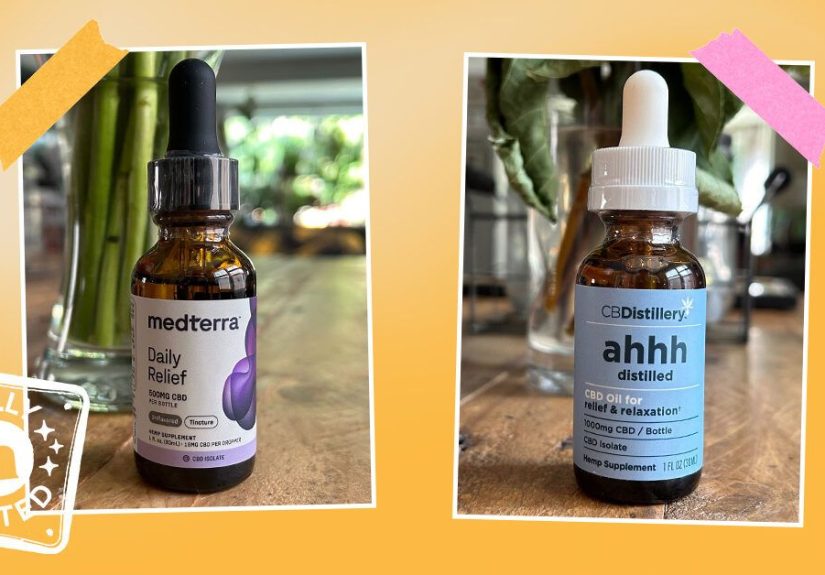
Best overall: Medterra Daily Relief CBD Isolate Oil
If you’re trying to do THC-free CBD in a “least complicated, most practical” way, an isolate tincture from a brand that emphasizes testing and
transparency is a solid start. Medterra’s isolate drops are positioned as THC-free, built around a simple isolate + carrier-oil format, and frequently
show up in THC-free CBD roundups as a top editor pick.
Who it fits: someone who wants THC-free, wants to see third-party testing, and doesn’t want a product that requires a
chemistry degree to understand.
Best high-potency: Extract Labs Organic CBD Isolate Oil
High-potency tinctures can make dosing simpler for people who prefer fewer drops. Extract Labs positions its CBD isolate oil as 100% THC-free
and offers higher-strength options, which is useful if you’re trying to avoid “I took twelve droppers and now I’m basically a salad dressing.”
Who it fits: experienced CBD users, higher-potency shoppers, and people who want a strong, streamlined isolate option.
Best value-leaning classic: CBDistillery THC-Free Pure CBD Oil Tincture
CBDistillery’s isolate tinctures are a well-known “vanilla ice cream” option: not boring, just reliable. If you want a recognizable brand, a clear
isolate tincture format, and you’re focused on THC-free basics, it’s a strong contender.
Who it fits: people who want a straightforward isolate tincture without extras, and shoppers comparing cost-per-milligram.
Best for flavor-sensitive users: Bluebird Botanicals THC-Free CBD Oil
Not everyone enjoys the natural taste of hemp. (Some people call it “earthy.” Others call it “I just licked a hiking trail.”) Bluebird Botanicals markets
a THC-free isolate oil as taste-neutral, which can be a big deal if you plan to take CBD regularly and want your routine to feel like self-care, not a dare.
Who it fits: taste-sensitive users and people who want an isolate oil that’s positioned as non-detectable THC.
Best minimalist option: Lazarus Naturals CBD Isolate Tincture
Lazarus Naturals offers an isolate tincture geared toward people who want CBD without additional cannabinoids, terpenes, or flavor additions. If you’re
someone who reads ingredient labels like it’s your hobby (respect), this is the kind of product style you’ll appreciate.
Who it fits: minimal-ingredient shoppers, high-potency fans, and anyone who wants “CBD, and only CBD.”
Best for mixing into food and drinks: Social CBD Isolate Drops
Some people love the classic “under-the-tongue” routine. Others want a product that disappears into a morning smoothie, coffee, or tea.
Social CBD’s isolate drops lean into that everyday usability, while still keeping the THC-free isolate approach.
Who it fits: routine-builders who want a THC-free oil that plays well with daily habits.
Best broad-spectrum option (THC removed): cbdMD Broad Spectrum CBD Oil Drops
If you like the idea of broad-spectrum CBDmore hemp compounds than isolatebut still want to avoid THC, broad-spectrum oils marketed as THC-free can be
appealing. cbdMD positions its broad-spectrum tinctures as THC-free, which may suit users who don’t want isolate-only products.
Who it fits: people who prefer broad-spectrum CBD and still want to avoid THC.
Note: Because broad-spectrum involves more plant compounds, it’s extra important to double-check the COA for THC results and batch info.
How to choose a THC-free CBD oil (without getting tricked by the label)
Start with the COAthen match it to your bottle
A real COA should list cannabinoids (CBD, THC, sometimes minor cannabinoids) and show THC as non-detectable or 0.00% for THC-free oils.
It should also show the lab name, test date, and ideally a batch or lot number that matches your product.
Know your carrier oil
Carrier oils aren’t fillerthey affect taste, absorption, and allergies.
- MCT (coconut) oil: common, neutral, easy to dose; not ideal for people avoiding coconut.
- Hemp seed oil: slightly more “hemp-y,” sometimes preferred by people who want a plant-forward profile.
- Olive oil: less common but familiar; can have a stronger flavor.
Decide isolate vs broad-spectrum based on your risk tolerance
If “THC-free” is non-negotiable (job testing, personal sensitivity, or preference), CBD isolate is usually the cleanest approach. Broad-spectrum
can still be THC-free on paper, but it’s a more complex extractso the COA matters even more.
Safety notes you shouldn’t skip
CBD isn’t automatically harmless just because it’s sold over the counter. People can and do experience side effects, and CBD can interact with certain medications.
If you’re pregnant, breastfeeding, have liver disease, or take prescription medications, talk with a clinician before using CBD.
Commonly reported side effects
- Drowsiness or decreased alertness
- GI upset (like diarrhea)
- Changes in appetite or mood
- Fatigue
Medication interactions (the “grapefruit rule” cousin)
CBD may interact with medications metabolized by liver enzymes (often discussed alongside the “grapefruit warning” concept). If your medicine has a grapefruit warning,
treat CBD like it might be invited to that same conversation.
Drug test anxiety: can THC-free CBD still be risky?
CBD itself isn’t typically what drug tests look forbut THC is. Risk can come from mislabeled products, contamination, or products that aren’t truly THC-free.
If a drug test could affect your job or licensing, consider avoiding CBD entirely or choose only products with extremely clear, recent COAs showing THC as non-detectable.
2025 reality check: CBD rules are changing fast
The U.S. hemp-derived cannabinoid market has been under increasing scrutiny, and proposed or evolving federal and state actions may affect product availability,
labeling, or acceptable THC thresholds. In other words: what’s easy to buy today may be reformulated (or harder to find) tomorrow.
For shoppers, the best protection is still the same: prioritize transparent brands, insist on batch-level lab testing, and avoid products that promise the moon.
(The moon is not FDA-evaluated.)
FAQ
What’s the difference between “THC-free” and “0.3% THC” CBD oil?
“0.3% THC” usually refers to full-spectrum hemp products that stay under the legal THC limit by dry weight. “THC-free” typically means isolate (or THC-removed broad-spectrum)
with THC reported as non-detectable (or 0.00%) on a COA.
Is CBD FDA-approved?
There is an FDA-approved prescription CBD product (cannabidiol) used for specific seizure disorders. Most over-the-counter CBD oils are not FDA-approved to diagnose,
treat, cure, or prevent disease.
How do I start dosing THC-free CBD oil?
Many people use a “start low and go slow” approach: begin with a small amount, monitor how you feel, and increase gradually if needed. If you take medications or have
health conditions, talk with a clinician first.
Real-world experiences with THC-free CBD oils in 2025
Let’s talk about the part most guides skip: what it actually feels like to live with a THC-free CBD oil on your counter. Not “miracle before-and-after” stories
just the kinds of experiences people commonly describe when they try to make THC-free CBD part of real life (work, family, stress, and that one friend who always
texts “u up?” at 11:47 p.m.).
1) The first experience is usually… confusion
Most people start with a basic question: “How much am I supposed to take?” CBD oils come in different potencies, and the label can feel like a math quiz you didn’t study for.
The most common learning curve is figuring out milligrams per serving versus milligrams per bottle. People who end up happiest long-term often
choose a product with a clear dropper (marked measurements) and keep their dose consistent instead of “random dropper art.”
2) Taste matters more than people admit
In reviews and everyday conversations, taste is a surprisingly big deal. Many THC-free isolate oils are more neutral than full-spectrum oils, but carriers still have flavor
(MCT is mild, hemp seed oil is more… botanical). Some users say a taste-neutral oil is the difference between “I’ll actually use this” and “this bottle will live in my cabinet
until I move houses.”
3) People often notice effects subtlyor not at all at first
A lot of users expect CBD to feel like a switch flipping. More often, they describe something gentler: fewer spikes of stress, slightly easier wind-down at night, or a sense of
“I’m not as keyed up.” Others report no noticeable effect and stopboth experiences are common. What seems to help people evaluate fairly is using a steady routine for a couple of weeks,
tracking sleep or stress with notes, and resisting the urge to change three variables at once (new CBD + new magnesium + new bedtime + new personality).
4) THC-free is often about peace of mind, not just chemistry
In 2025, many people choose THC-free CBD oils because of workplace policies, athletic testing, professional licensing, or personal preference. The emotional experience is often:
“I want CBD, but I don’t want risk.” For these users, the COA becomes part of the routinealmost like checking nutrition labels. People commonly describe feeling more comfortable when
a brand provides easy-to-access batch testing, because it turns anxiety into information.
5) The “COA habit” becomes a superpower
Once someone learns how to read a COA, they tend to stick with brands that make it easy. Over time, they start spotting patterns: Is the CBD amount close to the label claim?
Is THC actually non-detectable? Is there contaminant screening? That learning curve often transforms CBD shopping from “hope and pray” into “verify and buy.”
And honestly, that confidence is a benefit all by itself.
6) The best experience is when CBD fits your routine effortlessly
People who report the most satisfaction usually describe the same thing: the product is simple, consistent, and easy to take. That might mean an unflavored isolate tincture
they add to a drink, or a dropper they keep by their toothbrush as a daily cue. The less dramatic the ritual, the more likely it becomes a sustainable habit.
7) The most common regret: buying a product without checking testing first
A very typical “lesson learned” story is someone buying a bargain bottle that claims THC-free, then realizing there’s no accessible batch COA, or the report is outdated,
or it doesn’t include contaminant testing. In 2025, with regulations and formulations shifting quickly, people who shop well tend to follow one golden rule:
if you can’t verify it, don’t ingest it.
Bottom line: THC-free CBD oils can be a smart option for people who want CBD without THC, but the best experiences almost always come from choosing a transparent product,
keeping expectations realistic, and treating lab testing as non-negotiablenot optional “bonus content.”