Table of Contents >> Show >> Hide
- What “Antipodean” Actually Means (No, You Don’t Need a Globe)
- Why Thames & Hudson Is a Sneaky-Good Guide to Design Down Under
- The Antipodean Design DNA: 6 Traits You’ll Keep Seeing
- The Anchor Pick: Interiors: Australia and New Zealand (Thames & Hudson)
- Thames & Hudson Picks That Capture Antipodean Design at Different Angles
- Sean Godsell: Houses Minimalism that’s actually about the landscape
- Dreaming the Land: Aboriginal Art from Remote Australia Visual culture as knowledge
- Art in Australia: From Colonization to Postmodernism Context for the “Australian sensibility” myth
- Design: Building on Country (First Knowledges) A different definition of “good design”
- What Antipodean Architecture Teaches the Rest of Us (Even If We Don’t Live by the Beach)
- How to Steal the Look (Ethically) in 9 Practical Moves
- The Best Way to Read These Books (So They Actually Change Your Space)
- Experience: of Antipodean Design, Practiced at Home
- Conclusion: Antipodean Design, Explained Like a Human
“Antipodean design” sounds like something you’d need a lab coat to studyor at least a passport and a very forgiving luggage allowance for books.
But it’s really just a handy umbrella for the sharp, sunlit, landscape-first design language coming out of Australia and New Zealand.
And if you want to understand it (or steal… politely borrow… the vibe for your own home), one of the easiest entry points is
Thames & Hudson, the illustrated-book publisher that reliably turns big ideas into the kind of pages you’ll dog-ear without shame.
This article is your curated, coffee-table-friendly guide to the best of Antipodean design through the Thames & Hudson lens:
interiors that feel relaxed but not sloppy, architecture that treats climate like a co-designer, and a deeper respect for place
including Indigenous knowledge that reframes what “good design” is supposed to do.
What “Antipodean” Actually Means (No, You Don’t Need a Globe)
“Antipodean” is commonly used to refer to things relating to Australia and New Zealandthe “Antipodes” from a Northern Hemisphere point of view.
In design terms, it’s shorthand for a region shaped by intense light, dramatic coastlines, big weather, and a culture that mixes pragmatic building
with a surprisingly fearless visual streak.
That combo shows up everywhere: breezy rooms that still feel intentional, materials that look better with a little wear, and buildings that don’t fight the landscape
they negotiate with it. The result is often minimal-ish (clean lines, calm spaces) but rarely sterile. It’s warm minimalism with sand on its ankles.
Why Thames & Hudson Is a Sneaky-Good Guide to Design Down Under
Thames & Hudson has been in the business of making visual culture legible since the mid-20th centurybasically, a “museum without walls” model,
where the exhibits are hardcover and the admission price is whatever you can justify to your partner as “research.”
The publisher’s DNA matters here because Antipodean design is incredibly visual: it’s about how light hits plaster at 4 p.m.,
how timber grain calms a room, how a roofline solves heat, rain, and drama at the same time.
In practice, Thames & Hudson excels at connecting the dotsbetween architecture and interior styling, between art and the built environment,
between the “pretty” and the “why.” That’s why their Australia-and-New-Zealand–adjacent titles work so well as a set:
you’re not just collecting books; you’re building a worldview (with really good photography).
The Antipodean Design DNA: 6 Traits You’ll Keep Seeing
1) Light-first thinking
Australian and New Zealand design often starts with sunlightnot as a “nice-to-have,” but as a structural fact.
Rooms are planned around glare, heat gain, soft morning brightness, and how shadows move across a day.
That’s why you’ll see deep overhangs, screens, layered glazing, and interiors that can look simple until you notice how carefully they’re tuned.
2) Indoor-outdoor living that isn’t just a Pinterest slogan
The region’s climate (varied, yes, but often outdoor-friendly) pushes a real blur between inside and out:
big sliders, courtyards, decks, outdoor showers, garden “rooms,” and breezeways that make air movement feel like a feature, not an HVAC workaround.
When done well, the home feels like it’s exhaling into the landscape.
3) Materials with honest texture
Antipodean interiors frequently lean into natural materialstimber, stone, brick, linen, woolpaired with crisp plaster or concrete.
The vibe isn’t “precious.” It’s tactile and livable: surfaces that patina, floors that can take a muddy dog, and joinery that reads as craftsmanship,
not décor.
4) A relaxed approach to luxury
The best examples feel elevated without being uptight. You’ll spot the “high/low” confidence:
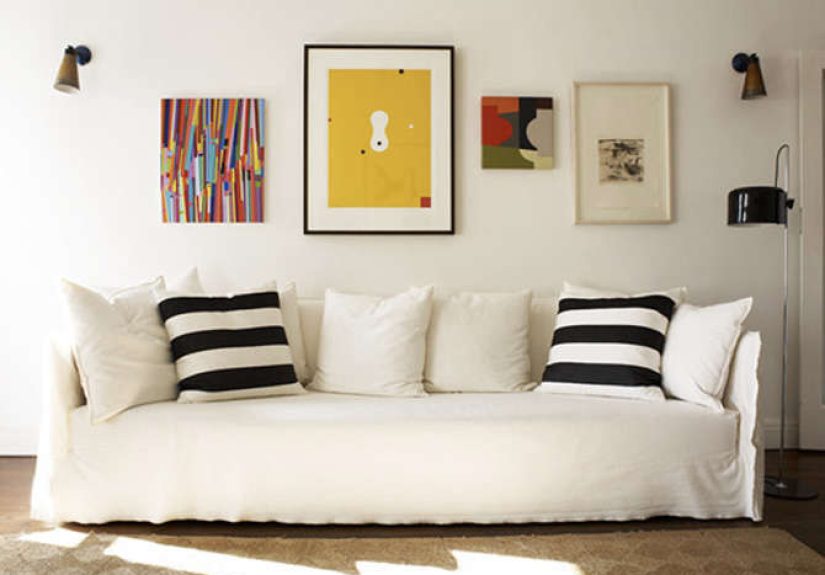
artisanal lighting above a plain timber table, gallery-worthy art next to a sofa that begs you to nap,
custom cabinetry alongside vintage finds.
5) Color that behaves like nature
People often assume the palette is all white walls and beige. Not quite.
Plenty of Antipodean spaces use neutrals as a base, then pull color from the landscapeeucalyptus greens, ocean blues,
ochres, rusts, charcoal, sun-bleached pastels. When bold color shows up, it’s usually purposeful: one confident gesture,
not confetti.
6) A stronger conversation about placeand Country
A meaningful thread across contemporary Australian design discourse is responsiveness to Country:
design as relationship to land, ecology, history, and community. This is not an “aesthetic.”
It’s a framework that asks what a building doeshow it supports wellbeing, climate sense, and cultural continuity.
If you’ve only ever heard “sustainability” described as a checklist, this perspective is a reset.
The Anchor Pick: Interiors: Australia and New Zealand (Thames & Hudson)
If you only start with one book, make it this one. Interiors: Australia and New Zealand (by Mitchell Oakley Smith) is the kind of compilation
that doesn’t just show pretty rooms; it shows range. Think coastal retreats, sustainable farmhouses, renovated Victorian terraces,
and city penthousesproof that “Antipodean design” isn’t one look so much as one attitude.
The real value is how clearly it demonstrates adaptation: designers responding to geography, climate, and client needs while still preserving
a distinct character in each home. In other words: it’s inspiration with receipts.
Want names to watch? The book spotlights a cross-sectionfrom established studios to newer voicesso you can trace
the through-line of texture, proportion, and laid-back sophistication.
Thames & Hudson Picks That Capture Antipodean Design at Different Angles
Antipodean design isn’t just interiors. It’s architecture, art, and cultural context. Here’s a mini “stack” (mix-and-match based on what you’re into),
with a quick note on what each book teaches you to notice.
Sean Godsell: Houses Minimalism that’s actually about the landscape
This is for anyone who loves clean lines but wants the why behind them. The book surveys residential projects by Australian architect Sean Godsell
and frames minimalism as a response to site, culture, and climatenot as a blank-box personality test.
Expect full-color photography plus plans and sketches that make the design logic visible.
Dreaming the Land: Aboriginal Art from Remote Australia Visual culture as knowledge
This is an art book, yesbut it belongs in a design conversation because it treats visual practice as a repository of knowledge and connection to Country.
It traces contemporary Aboriginal art in remote Australia across multiple art centers and profiles many artists,
offering context that helps you understand “place-based thinking” beyond architecture and interiors.
Art in Australia: From Colonization to Postmodernism Context for the “Australian sensibility” myth
Design doesn’t happen in a vacuum. This compact art history looks at how Australian art formed in the conditions of a transplanted society in a new environment,
shaped by “objective conditions” rather than some magic, innate national essence. It’s useful background for anyone trying to understand how landscape,
distance, and cultural exchange echo through visual decisions.
Design: Building on Country (First Knowledges) A different definition of “good design”
If you want the bigger conversation, this title is the one. It argues for an Australian design ethos that genuinely responds to Country and its people,
and it sits inside the broader First Knowledges project: collaborative work between Indigenous and non-Indigenous writers and editors.
It’s a strong antidote to design content that treats sustainability as branding instead of responsibility.
What Antipodean Architecture Teaches the Rest of Us (Even If We Don’t Live by the Beach)
Here’s the cheat code: the most exportable part of Antipodean design isn’t a specific chair or color palette.
It’s the process. Start with the site (or your closest version of it), then let climate and daily life dictate choices.
Consider what happens when architecture treats nature as the primary influence: you get buildings that feel rooted, not dropped-in.
In interviews about sustainability and inspiration, leading Australian architects often point back to nature and the conditions of each site as the driver.
That’s why the work varies dramatically from desert to rainforest to coastand why copy-paste “styles” don’t make much sense in this context.
Translate that thinking to an apartment in Chicago or a house in Atlanta and the lesson still holds:
follow light, control heat, manage airflow, create thresholds, make outdoor space (even a small balcony) feel intentional,
and choose materials that behave well over time.
How to Steal the Look (Ethically) in 9 Practical Moves
- Keep the base calm: Warm whites, soft grays, pale timber, or muted stone set up the “light-first” feel.
- Add one confident material moment: A timber slat wall, a stone backsplash, a limewash finish, or a wool rug with real texture.
- Use contrast sparingly: Charcoal hardware, blackened steel, or deep green cabinetryone anchor is enough.
- Think in thresholds: Curtains, screens, and sliding panels create that indoor/outdoor logiceven indoors.
- Make your “outside” count: A balcony can be a room if you treat it like one (lighting, seating, a hardy plant, a tray).
- Choose furniture with a low visual profile: Let space and light do the talking; keep silhouettes simple but not boring.
- Mix old and new: Pair a modern sofa with a vintage side chair, or contemporary lighting with a weathered table.
- Let art be the color: One strong piece can replace five decorative objects and still feel warmer.
- Prioritize comfort: If it looks great but no one wants to sit there, it’s a showroom, not a home.
The Best Way to Read These Books (So They Actually Change Your Space)
Here’s a surprisingly effective method: read them like a designer, not a collector.
Don’t just admire. Interrogate.
- Photograph what you love: Not to postjust to isolate patterns (materials, proportions, lighting).
- Write down the “why”: Is it the calm? The texture? The indoor/outdoor flow? The restraint?
- Create a three-word brief: Example: “sun-washed, tactile, grounded” or “clean, coastal, clever.”
- Pick one upgrade: Hardware, paint, lighting, textiles, or a single built-in. Antipodean style is cumulative, not chaotic.
Experience: of Antipodean Design, Practiced at Home
Let’s do the most realistic kind of design travel: the kind where you don’t leave your house, you just move your coffee.
You stack a few Thames & Hudson titles on the tableInteriors: Australia and New Zealand on top, because it’s basically a dopamine button
disguised as a book. You open to a spread with a sunlit living room: pale timber, linen, a rug that looks like it could survive a small stampede,
and a view that makes you question every window treatment you’ve ever owned.
The first “experience” is physical. These books are heavy enough to flatten a stubborn croissant. The paper has that soft friction that makes
flipping pages feel deliberate, like you’re not scrollingyou’re committing. And then you notice the pattern:
even the most minimal rooms aren’t empty. They’re edited. There’s warmth in the texture, not clutter in the objects.
A room can be calm and still have personalitywhat a concept.
Next comes the uncomfortable part: you look up from the page and your own space looks… loud. Not messy, necessarilyjust visually noisy.
Too many small items fighting for attention, too many “almost neutrals” arguing with each other. So you try a tiny experiment:
you clear one surface completely. One. A sideboard, a coffee table, a shelf. You leave only two things:
something functional (a lamp, a tray) and something with soul (a piece of art, a vessel, a plant that’s still aliveflex).
Instantly, the room feels calmer. Not because you bought anything, but because you gave the light somewhere to land.
Then you start “reading” the photos like blueprints for living. Where are the soft layers? Where’s the hard edge?
That’s when you realize Antipodean design is often built on contrasts that behave: crisp architecture plus relaxed textiles,
minimal shapes plus rich grain, a clean palette plus one brave note. So you stop trying to redesign your entire home in a weekend
(a hobby that mainly produces cardboard boxes and regret) and choose one move that has leverage:
a new set of curtains in a natural fabric, a warmer bulb temperature, or swapping a shiny side table for something timber or stone.
The best part is the “after.” You don’t end up living in a showroom. You end up with a home that feels more breathable.
You walk through it and the space feels like it’s cooperating with youless visual static, more intention.
And the books go back on the table, not as decoration, but as a reminder that the goal isn’t to copy a look from Sydney or Auckland.
It’s to borrow the mindset: respect the light, choose materials that age well, and design like you actually live there.
Conclusion: Antipodean Design, Explained Like a Human
The best of Antipodean design isn’t a single aestheticit’s a disciplined friendliness.
It’s architecture that listens to climate, interiors that balance restraint with texture, and a growing insistence that design should be accountable to place.
Thames & Hudson happens to publish a set of books that make this feel accessible, whether you’re remodeling a beach house or just trying to make
your living room less stressful to look at after a long day.
Start with Interiors: Australia and New Zealand for the broad visual sweep, add Sean Godsell: Houses for architectural thinking,
and make room for titles that expand the definition of design through Country and cultural knowledge.
Then do the most Antipodean thing possible: keep it practical, keep it beautiful, and let the light do some of the work.