Table of Contents >> Show >> Hide
- Basement Flooring 101: What Makes Below-Grade Floors Different
- Bob Vila’s Picks: The Headliners (and Why They Make Sense)
- Best Overall: Waterproof Laminate (Pergo Outlast+)
- Best Bang for the Buck: Vinyl Sheet (TrafficMaster)
- Upgrade Pick: Luxury Vinyl Plank (Lifeproof Click-Lock LVP)
- Best Tile: Porcelain Tile (Marazzi Montagna)
- Best Carpet: Synthetic Carpet (Home Decorators Collection Trendy Threads II)
- Also on the list: Epoxy, Rubber, Peel-and-Stick, Engineered Wood, and Paint
- Choosing the Right Basement Flooring by How You Actually Use the Space
- Before You Buy Anything: Moisture Prep That Saves Floors (and Money)
- Basement Subfloor Options: The “Warm Feet” Upgrade
- Quick Matchmaker: Basement Flooring Cheat Sheet
- Common Basement Flooring Mistakes (and How to Avoid Them)
- Final Take: “Best Basement Flooring” Is Really “Best for Your Basement”
- Real-World Experiences: Lessons Homeowners Learn the Hard Way (and You Don’t Have To)
Basements are the Switzerland of your house: neutral territory where laundry happens, kids build LEGO empires, and exercise equipment goes to “rest.”
The only problem? Basements also have a complicated relationship with moisture. That’s why picking the best flooring for basements isn’t
about what looks cutest in a staged photoit’s about what survives real life: damp air, cold concrete, occasional drips, and the kind of humidity that makes
a bag of chips go stale just by existing.
In this guide, we’ll start with Bob Vila’s basement flooring picks (the brand-specific “best of” list), then zoom out into a practical
decision system you can use for your basementfinished family room, home gym, workshop, guest suite, or “I swear we’ll finish it someday” storage zone.
Basement Flooring 101: What Makes Below-Grade Floors Different
Most basements sit on a concrete slab, and concrete is porous. Even when it feels dry, it can release moisture vapor. Add temperature swings and occasional
water events (a leaky water heater, a surprise sump pump failure, or heavy rain), and you have the reason basements are famous for ruining “perfectly good” floors.
The three basement realities your flooring must handle
- Moisture: water vapor, humidity, and the occasional spill or seepage.
- Cold: slabs can feel chilly, especially in winter climates.
- Movement & imperfections: hairline cracks, minor slab unevenness, and settling over time.
Translation: in basements, the “best” flooring is usually waterproof or moisture-resistant, and it performs better when you prep for moisture first.
Bob Vila’s Picks: The Headliners (and Why They Make Sense)
Bob Vila’s list is useful because it doesn’t pretend basements are just “regular rooms but underground.” It includes waterproof surfaces, soft surfaces for comfort,
and coatings/paints for utility spaces. Here are the standoutsplus what they’re best for.
Best Overall: Waterproof Laminate (Pergo Outlast+)
Bob Vila’s “best overall” pick is a waterproof laminate that aims to deliver a wood look with better spill resistance than traditional laminate.
It’s a strong option when you want a finished look at a midrange costbut only if your basement is truly dry most of the time.
The smart way to think about laminate in basements: it can work in a well-managed, low-risk basement (good drainage, no history of flooding, controlled humidity).
If you’ve ever had standing water down there, laminate is the friend who says “I’m fine” and then dramatically faints.
Best Bang for the Buck: Vinyl Sheet (TrafficMaster)
Sheet vinyl is one of the most basement-friendly options because it can be nearly seamlessfewer joints for water to sneak into.
It’s also budget-friendly and easy to clean, which is why it’s popular for basements that need “practical first, pretty second.”
Ideal for: playrooms, laundry areas, finished storage spaces, and any basement where you want maximum moisture resistance without paying premium prices.
Upgrade Pick: Luxury Vinyl Plank (Lifeproof Click-Lock LVP)
Luxury vinyl plank (LVP) is the crowd-pleaser: it looks like wood, handles water well, and is comfortable underfoot compared with tile.
Click-lock versions are also DIY-friendly for many homeowners.
Ideal for: finished basements, TV rooms, guest spaces, and anywhere you want a “real room” vibe without the anxiety of real hardwood.
Best Tile: Porcelain Tile (Marazzi Montagna)
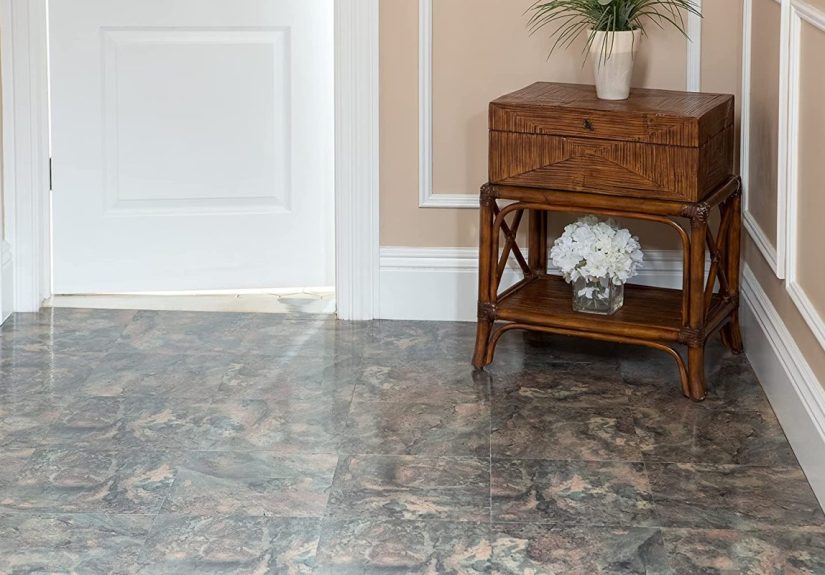
Porcelain tile is a basement classic: water-resistant, durable, and basically unbothered by moisture.
The trade-off is comfort (tile can feel cold) and installation effort (tile likes a flat, properly prepped surface).
Ideal for: laundry rooms, basement bathrooms, mudroom-style entries, utility areas, and spill-prone zones.
Best Carpet: Synthetic Carpet (Home Decorators Collection Trendy Threads II)
Carpet in a basement can be cozyuntil it isn’t. Bob Vila’s guidance favors carpet for comfort but emphasizes the importance of moisture awareness.
If you choose carpet, think synthetic fibers and a basement with reliable humidity control.
Ideal for: a dry, climate-controlled basement family room where warmth and softness matter more than flood resistance.
Also on the list: Epoxy, Rubber, Peel-and-Stick, Engineered Wood, and Paint
- Epoxy floor coating: great for workshops and utility spacestough, easy to clean, and moisture-resistant when installed correctly.
- Interlocking rubber tiles: a home gym heroshock-absorbing, grippy, and DIY-friendly.
- Peel-and-stick vinyl tiles: a quick cosmetic upgrade for low-traffic spaces (best when the slab is smooth and clean).
- Engineered hardwood: for those who want real wood visuals with better stability than solid hardwood.
- Concrete floor paint: a practical move for “wet basements” or utility rooms where function beats fancy.
Choosing the Right Basement Flooring by How You Actually Use the Space
If your basement is a family room or hangout space
Comfort and style matter here, but you still need moisture tolerance. The usual winners:
- LVP: the best blend of looks + water resistance + comfort.
- Engineered wood: great look, but be strict about moisture control and follow manufacturer rules.
- Carpet tiles: softer than hard floors, and if something goes wrong, you can replace a section instead of the whole floor.
If your basement is a laundry room, bar area, or spill zone
- Porcelain/ceramic tile: water-resistant and easy to sanitize.
- Sheet vinyl: fewer seams, fast cleanup, budget-friendly.
- Epoxy: excellent for utility-heavy zones and easy maintenance.
If your basement is a home gym or workshop
- Rubber flooring: absorbs impact and sound; friendly to dropped dumbbells and energetic burpees.
- Epoxy coating: resists stains and cleans up well after projects.
- Painted/stained concrete: a good “simple and tough” option.
Before You Buy Anything: Moisture Prep That Saves Floors (and Money)
The best basement flooring install is the one that doesn’t turn into a science experiment later. Moisture control is the foundation of mold control,
and basement floors are directly in that splash zone.
Step 1: Do a basement reality audit
- Do you run a dehumidifier seasonallyor all the time?
- Any history of water on the slab (flooding, seepage, plumbing leaks)?
- Musty smell after rain? That’s your basement filing a complaint.
Step 2: Run a simple slab moisture check
A common first-pass test is the plastic sheet method: tape down a square of polyethylene to the concrete and leave it in place long enough to
check for condensation or darkening. If you see moisture, treat it as a warning signnot a minor detail you can “floor over.”
Important note: this is a surface-level check. If you’re installing a wood-based floor, glued-down flooring, or anything expensive,
follow up with manufacturer-recommended moisture tests (many reference ASTM methods and specific limits).
Step 3: Respect vapor retarders and underlayments (they are not the same thing)
Newer building codes commonly require a vapor retarder beneath concrete slabs to limit moisture migration. Older homes may not have that protection,
which is why modern basement flooring systems often include moisture barriers or subfloor panels.
Some underlayments act as vapor retarders, but not all. If your floor depends on a barrier, choose the right product and install it the way the manufacturer demands
(seams taped, edges sealed, proper overlap).
Step 4: Control humidity like it’s your basement’s job (because it is)
- Use a dehumidifier during humid months.
- Fix leaks fast; dry water-damaged areas quickly.
- Make sure gutters, downspouts, and grading push water away from the foundation.
Basement Subfloor Options: The “Warm Feet” Upgrade
If your basement is finished living space and you hate cold floors, consider a raised subfloor or subfloor panels. This can:
- add insulation and comfort underfoot,
- help manage minor slab imperfections,
- create space for certain underlayments or systems.
It does add cost and height, so check ceiling clearance and doors/stairs. But if your basement is where you relax, “not freezing” is a legitimate design goal.
Quick Matchmaker: Basement Flooring Cheat Sheet
| Basement Use | Top Flooring Choices | Why It Works |
|---|---|---|
| Family room / TV room | LVP, engineered wood, carpet tiles | Comfort + looks with moisture awareness |
| Laundry / bar / bathroom area | Porcelain tile, sheet vinyl, epoxy | Easy cleanup and strong water resistance |
| Home gym | Rubber tiles/rolls, LVP | Shock absorption, durability, DIY installation |
| Workshop / utility | Epoxy, concrete paint, stained concrete | Tough finishes that don’t baby-sit you |
| Basement with periodic water issues | Tile, epoxy, some vinyl systems | Inorganic surfaces handle water best |
Common Basement Flooring Mistakes (and How to Avoid Them)
Mistake 1: Installing “regular” hardwood because you love hardwood
Solid hardwood and basements rarely get along long-term. If you want wood style, look at LVP or engineered woodthen follow moisture rules like your warranty depends on it
(because it usually does).
Mistake 2: Ignoring slab prep
Uneven concrete can telegraph through flexible floors, cause click-lock joints to stress, and turn your install into a squeak symphony.
Leveling and cleaning aren’t glamorous, but neither is ripping out a floor you just paid for.
Mistake 3: Choosing comfort-only solutions without a backup plan
Plush carpet feels amazinguntil a slow leak turns it into an expensive sponge. If you want softness, consider carpet tiles or area rugs over a resilient base floor.
Final Take: “Best Basement Flooring” Is Really “Best for Your Basement”
Bob Vila’s picks are a solid starting point because they cover the full basement spectrum: finished-room style (LVP, engineered wood),
practical waterproofing (sheet vinyl, tile), and utility toughness (epoxy, paint, rubber).
If you’re only going to remember one rule, make it this: match the floor to your moisture risk. In basements, moisture isn’t a “maybe.”
It’s a personality trait.
Real-World Experiences: Lessons Homeowners Learn the Hard Way (and You Don’t Have To)
The stories below are composite experiences based on common basement flooring outcomespatterns that show up again and again when people
remodel below grade. Think of these as the “group chat” of basement floors: honest, sometimes dramatic, and usually educational.
1) The “Beautiful Laminate” Basement That Met One Bad Storm
One of the most common heartbreaks goes like this: someone installs a gorgeous wood-look floor, the basement looks like a boutique hotel,
and then a heavy rain finds the one weak spot in foundation drainage. Even a small amount of water can move surprisingly far under a floating floor.
The lesson isn’t “never use laminate”it’s “only use wood-based products if your basement is consistently dry and your water management is proven.”
In real life, that often means: dehumidifier, good gutters, downspouts that actually send water away, and no history of puddles on the slab.
2) The Sheet Vinyl Surprise: “Wait… This Is Actually Nice”
Sheet vinyl has a reputation for being “the landlord special,” but modern patterns can look shockingly goodespecially in basements where practicality matters.
Homeowners who pick it for laundry rooms and kid zones usually end up appreciating two things: fewer seams (less worry) and easier cleaning (less regret).
The real “aha” moment is often when a minor spill or damp day happens and… nothing dramatic follows. No swelling, no panic, no frantic fan setup.
It’s not always the most luxurious feel, but it’s quietly one of the smartest moisture plays.
3) The Home Gym That Went From Echo Chamber to Comfortable
Rubber flooring stories are almost always positive, with one funny footnote: people don’t realize how loud a basement can be until they start working out.
Interlocking rubber tiles help with impact and sound, and they’re forgiving on imperfect slabs. The most common “I wish I knew” detail is odor:
some rubber products smell strongly at first, especially right out of the box. The fix is usually simpleventilation and timebut it’s worth planning for.
After that, rubber becomes the low-maintenance friend who never complains when you drop a kettlebell.
4) The Tile Win… With One Comfort Upgrade
Tile in basements is the durability champion, but “cold feet” is a real complaint. People who love their tiled basements tend to do one of two things:
(1) add area rugs where they stand or sit most, or (2) plan ahead with a system that improves comfort (like an insulating layer or radiant heat in specific cases).
The result is a floor that’s nearly bombproof in wet-prone areaslaundry, basement bathrooms, bar sinkswithout turning the space into an ice rink.
5) The Epoxy Floor That Became the Basement’s MVP
Epoxy success stories usually start with a workshop, storage area, or “unfinished for now” basement. Once people experience how easy it is to sweep,
wipe up spills, and keep the space looking clean, epoxy often expands into more of the basement than originally planned.
The consistent warning is prep: epoxy doesn’t forgive sloppy surface preparation. When it fails, it’s usually because the slab wasn’t properly cleaned,
repaired, or tested for moisture. When it’s installed correctly, it becomes the basement floor that looks better over time simply because it’s easy to maintain.
The big takeaway from all these experiences: your basement flooring choice isn’t just a design decisionit’s a risk decision.
Pick the floor that matches your basement’s personality, and you’ll spend your weekends enjoying the space instead of searching “why is my basement floor bubbling?”