Table of Contents >> Show >> Hide
- What Was Reportedly Seen Near Area 51?
- Why Area 51 Is Always the Suspect (Even When It’s Innocent)
- Yes, the Air Force Really Is Building a “Next” Fighter
- So… Was the “Dorito” the Secret New Fighter?
- Why Triangles Keep Showing Up in Stealth Aviation
- Clues the Public Can See (And Why They’re Usually Incomplete)
- What We Can Responsibly Conclude
- Experiences: What It’s Like When “Something Interesting” Flies Near Area 51 (Approx. )
- Conclusion
Somewhere in the Nevada desert, at an hour when even coyotes hit snooze, a tiny group of night-owl observers pointed thermal cameras at the sky and went,
“Uh… that is not a B-2.”
That’s the setup behind the latest “did you see that?” moment in the long-running saga of Area 51: a reported, sharply triangular aircraftaffectionately
dubbed “Dorito-shaped” by the internetcaptured in thermal imagery near Groom Lake. And because this is Area 51, the question arrives immediately:
was it the Air Force’s next secret fighter… or just the world’s most misunderstood triangle doing triangle things?
Let’s break down what’s been reported, what’s plausible, and what’s pure late-night desert energywhile keeping our feet on the ground and our guesses
labeled as guesses.
What Was Reportedly Seen Near Area 51?
The headline version: an off-grid videographer and aviation enthusiast reportedly captured thermal imagery of a sharply triangular aircraft operating at night
in the restricted airspace around Groom Lake (often called Area 51). The same night reportedly included activity involving a known stealth aircraftthe B-2 Spirit
which makes the “triangle” sighting feel less like a random glitch in the Matrix and more like something happening in a very specific test-and-training ecosystem.
In the reporting, the “Dorito” nickname isn’t code for aliensit’s shorthand for a crisp, triangular planform: think three clean edges, a flatter-looking trailing
edge than a B-2, and no obvious tail surfaces. The observer and commentators also acknowledged the big limitation: thermal imagery at long distance can distort shapes,
and a known aircraft can look “new” under the right conditions (angle, altitude, temperature differences, haze, and sensor resolution).
Why This Particular Sighting Got Traction
- Timing and context: the reported flight activity occurred around a famously restricted area tied to advanced testing.
- Comparisons on the same night: observers say a B-2 was seen earlier, providing a baseline to compare silhouettes and signatures.
- Resemblance to past “triangle aircraft” photos: some analysts argue the shape is reminiscent of images that circulated years earlier from other U.S. locations.
None of this equals confirmation. But it does explain why the story didn’t die after one scroll. In the world of aerospace rumors, context is everythingand
Groom Lake is basically the Super Bowl of context.
Why Area 51 Is Always the Suspect (Even When It’s Innocent)
Area 51 isn’t “famous” because it’s weird; it’s famous because it’s useful. The Groom Lake area sits inside the Nevada Test and Training Range (NTTR), a vast
complex that supports advanced training, tactics development, and testing for the Department of Defense and partners. That kind of work needs roomlots of it
plus instrumentation, controlled airspace, and the ability to keep sensitive programs quiet while they grow up.
Historically, Groom Lake became linked to major leaps in U.S. aviation: high-altitude reconnaissance aircraft and other “you weren’t supposed to see that”
platforms. Declassified material about Cold War-era programs helped cement the site’s reputation as a place where secrecy and engineering share a bunk bed.
Over time, that secrecy also attracted a parallel universe of speculationsome serious, some… less serious.
A Quick Reality Check: It’s Usually Aircraft, Not Aliens
Modern headlines love to flirt with the extraterrestrial angle because it’s fun and clickable. But official acknowledgments and declassified histories point to
a far more human explanation: classified aerospace development and testing. The base’s mystique is real; the most dramatic explanation isn’t required.
Yes, the Air Force Really Is Building a “Next” Fighter
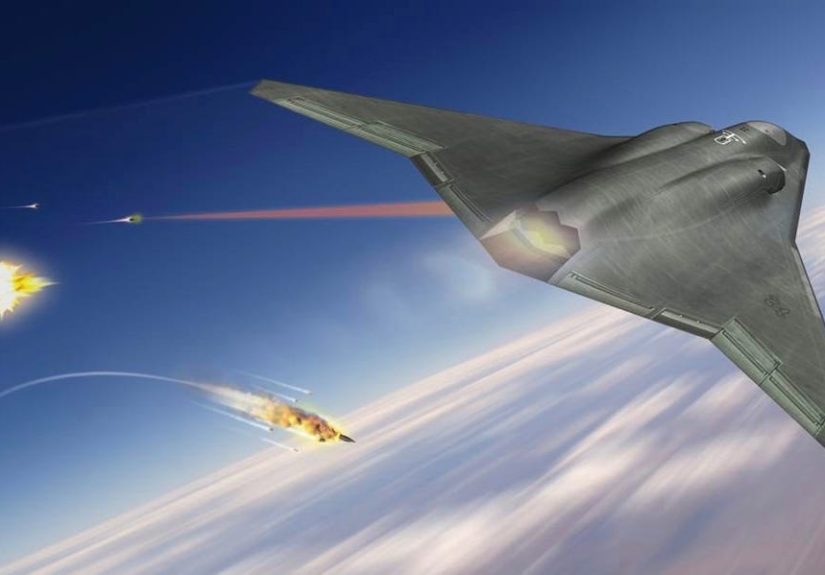
Here’s where things get interesting: the U.S. Air Force has publicly confirmed that it has been working on a Next Generation Air Dominance (NGAD) effortoften
described as a “family of systems,” not just a single airplane. The Air Force has also said that a full-scale NGAD demonstrator flew years ago, even though the
service has kept details tightly locked down.
More recently, the Air Force announced a major contract award for the Engineering and Manufacturing Development phase of its NGAD platform, designated the
F-47, positioning it as a centerpiece of future air superiority alongside uncrewed teammates.
What NGAD Suggests About “Weird Shapes”
Public reporting and congressional analysis have been consistent on one key idea: NGAD may not look like the classic fighter silhouette. The program emphasizes
range, survivability, sensors, and networkingcapabilities that can push designers toward tailless layouts, blended bodies, and planforms optimized for stealth
rather than airshow aesthetics.
Translation: if you’re expecting “F-22, but with racing stripes,” you might be waiting a while. The future may look more like a flying geometry lesson than a
Top Gun poster.
So… Was the “Dorito” the Secret New Fighter?
Let’s keep the headline honest: we don’t know. But we can outline the most plausible explanations without sprinting into fantasy.
Think of this as a menu of hypotheses, not a verdict.
Hypothesis 1: A Classified NGAD-Related Demonstrator
This is the theory that fuels the excitement. If NGAD demonstrators have flown before, and if Groom Lake and the broader NTTR ecosystem support advanced testing,
it’s reasonable to wonder whether an exotic-looking triangle could be part of that development pipelineeither a technology demonstrator, a surrogate air vehicle,
or a test article supporting the broader “family of systems.”
The strongest argument here is simply the logic of the environment: restricted airspace, known history of black programs, and public confirmation that next-gen
development has been underway for years.
Hypothesis 2: A Known Stealth Aircraft Looking Strange in Thermal
This is the “boring but powerful” explanation. Thermal imaging compresses reality into temperature contrast. Edges blur. Angles lie. A familiar platform can look
unfamiliar when it’s far away, partially obscured, or viewed from an unusual aspect. Even the observer reports often include this caveatbecause experienced
spotters know how quickly the sky can prank you.
Hypothesis 3: A Radar Test Profile or “Compare-and-Measure” Flight
One particularly grounded possibility: the night’s activity could have involved radar cross-section workwhere a known low-observable aircraft acts as a reference
while another platform, configuration, or material set is evaluated. This kind of testing aligns with how stealth programs are often matured: incremental,
measured, and supported by specialized assets.
Public reporting has highlighted aircraft like the heavily modified NT-43A “RAT55,” which has long been associated (in open-source analysis) with collecting
radar data on stealthy aircraft. If aircraft like that are part of the ecosystem, it adds another practical reason for unusual sorties around secretive ranges.
Hypothesis 4: A Different “Unknown” From a Different Program
Even if the triangle wasn’t NGAD, it could still be real and still be U.S. militaryjust tied to something else: an uncrewed platform, an electronic warfare
testbed, a decoy demonstrator, or a technology program that never becomes a named “fighter” at all.
The Air Force has openly discussed the concept of uncrewed Collaborative Combat Aircraft (CCA) that operate alongside crewed fighters. Those platforms could
vary widely in shape and size depending on mission, cost, and survivability goals.
Why Triangles Keep Showing Up in Stealth Aviation
The internet loves a triangle because it’s simple. Aerospace engineers like certain triangles because they can be usefulespecially in stealth design, where
shaping and edge alignment help manage how radar energy reflects.
Stealth Shaping 101 (No Math, No Pain)
- Planform alignment: if edges and surfaces are aligned, reflections can be directed away from radar receivers.
- Fewer vertical surfaces: tails and fins are helpful for stability, but they can also be loud on radar. Tailless designs can reduce that.
- Blended bodies: merging wing and fuselage can help reduce discontinuities and manage signatures across angles.
None of this means every triangle is a stealth fighter. But it does mean “triangular” is not automatically “alien.” Sometimes it’s just the shape you get when
physics, survivability, and mission requirements are all invited to the same design meeting.
Clues the Public Can See (And Why They’re Usually Incomplete)
Most of the time, the public learns about classified aviation in fragments: a satellite image here, a fleeting silhouette there, a press statement that confirms
a milestone without offering details. That’s not an accidentclassification is designed to protect capabilities, timelines, and weaknesses.
Open-source analysts often combine:
- Commercial satellite imagery (low resolution or delayed, but occasionally revealing)
- Public statements about programs and budgets
- Patterns of activity at known test ranges
A perfect example: commercial satellite imagery once appeared to show a never-before-seen, fighter-sized tailless delta-shaped aircraft parked at a mysterious
hangar area at Groom Lake. That doesn’t confirm what it wasbut it demonstrates that unusual platforms can appear in the open record, briefly, before vanishing
back into the classified world.
What We Can Responsibly Conclude
If you came for a definitive answer“Yes, that was the Air Force’s secret new fighter”I have bad news and good news.
The bad news: public evidence is not enough to confirm what the aircraft was.
The good news: the most plausible explanations are still fascinating. The U.S. Air Force has acknowledged next-generation development, demonstrated that
prototypes have flown, and committed to advancing a future air-superiority platform. And the NTTR/Area 51 ecosystem remains exactly the kind of place where
unusual shapes would be tested, compared, measured, and refinedsometimes right above the heads of people who happened to be looking up at 3 a.m.
In other words: you don’t need science fiction to make this story compelling. The real-world version is already wild enough.
Experiences: What It’s Like When “Something Interesting” Flies Near Area 51 (Approx. )
Talk to people who’ve spent time around the edges of the Nevada desert aviation scenephotographers, plane-watchers, road-trippers, even locals who’ve gotten
used to the occasional midnight roarand you’ll hear a common theme: the experience is less “X-Files” and more “quiet, patient, and weirdly wholesome.”
It often starts with a long drive on open roads where your phone loses signal and your playlist becomes your closest companion. You pass signs that look like
props from a movie, except they’re very real and very serious. You find small towns with big personalities, diners that lean into the mystique, and gift shops
that sell alien magnets with the same confidence they sell water bottles. Everyone knows why you’re there, and nobody needs to say it out loud.
The actual “watching” part is mostly waiting. People set up in legal, public areasfar away, because that’s the point of restricted space. They bring layers,
because desert nights don’t care about your expectations. The sky is enormous and, on clear nights, crowded with stars. It’s the kind of dark you don’t get in
cities: the kind that makes you realize how bright “normal” life really is.
When something finally happens, it’s usually subtle at first. A low rumble that doesn’t match highway traffic. A brief, clean contrail when the air is just
right. A shape that looks ordinary until it doesn’t. For a moment, everyone’s brain tries to match it to a mental library of aircraft silhouettes. That’s the
funny part: people aren’t always chasing “mystery.” They’re chasing identification. They want to say, “That was a B-2,” or “That was a tanker,” or “That was
a routine sortie.” It’s only when the shape refuses to cooperate that excitement kicks in.
And excitement doesn’t always mean chaos. Sometimes it’s just a quiet string of reactions: someone lowering binoculars, someone checking a camera screen,
someone letting out a laugh that sounds like disbelief. You’ll hear sentences like, “Okay, that’s new,” said in the calm tone usually reserved for spotting a
rare bird. People compare notes. They replay clips. They argue politely about angles and distances. Someone inevitably makes a snack jokebecause if the internet
has labeled the thing “Dorito-shaped,” you might as well commit to the bit.
The most memorable part is what happens afterward: the shared understanding that you witnessed something that might never be explained publicly. It’s not
frustrating so much as strangely satisfying, like catching a trailer for a movie that won’t release for ten years. Whether the “triangle” turns out to be a new
fighter, a test article, or a known aircraft playing tricks in thermal, the experience leaves people with the same feeling: American aerospace development is
still very much aliveand the desert, on the right night, reminds you of that in a single passing shape.