Table of Contents >> Show >> Hide
- 1) Johnny Cage Gets Taken Out Immediately (Like, Immediately)
- 2) Shao Kahn Invades Earth Like Rules Are a Suggestion
- 3) The Raiden Swap (and the New Vibe Nobody Asked For)
- 4) “Mother! You’re alive!” / “Too bad you… will DIE!”
- 5) Character Roll Call Energy: Everybody’s Here (for 45 Seconds)
- 6) Cyrax Turns Up Like a Surprise Boss Fight in a Military Base
- 7) Jax’s Metal Arms: Big Upgrade, Bigger “Huh?”
- 8) Sheeva Gets an All-Time Anticlimactic Exit
- 9) Motaro Looks Like the Budget and the Camera Are Negotiating Mid-Scene
- 10) The Final CGI “Animality” Showdown
- Why These Moments Make Annihilation Enjoyably Bad (Instead of Just Bad)
- Extra: The Viewing Experience That Turns Chaos Into Comedy (About )
- Conclusion
Some movies are “bad” in the normal wayboring, forgettable, and gone from your brain before the credits finish rolling.
Mortal Kombat: Annihilation (1997) is a special kind of bad: loud, frantic, weirdly confident, and stuffed with choices that feel like they were made
five minutes before the cameras started rolling. It’s the sequel that tries to give fans “more of everything”more fights, more characters, more monsters,
more magic… and then accidentally invents a whole new genre: the blockbuster that plays like a speed-run of a video game Wikipedia page.
If you’ve ever heard someone call it “so bad it’s good,” this is the exact flavor they mean. The plot sprints. The dialogue swings for epic and lands on meme.
The effects aim for “otherworldly” and end up closer to “after-school CG demo reel.” And somehow, that chaotic mix becomes watchablesometimes even fun
because the movie never stops moving long enough for you to ask, “Wait… why did they do that?”
Below are ten of the most absurd moments that turned Annihilation into an enjoyably bad cult classic for movie-night masochists and nostalgic gamers alike.
Consider this your guided tour through the cinematic realm where logic is optional, hair is aggressive, and every character entrance feels like the film is shouting,
“Remember this person from the games?!”
1) Johnny Cage Gets Taken Out Immediately (Like, Immediately)
The movie opens andbefore it even has time to build a vibeJohnny Cage charges at Shao Kahn and is killed right away. It’s not a slow tragedy or a heroic
sacrifice. It’s more like the film is clearing space in its closet for thirty new action figures.
Why it’s absurd (and strangely effective)
Killing a fan-favorite character can be bold storytelling… but here it plays like a panic button. It’s tonal whiplash: the film basically says,
“Welcome back! Also, never get attached.” As a “so-bad-it’s-good” moment, it’s hilarious because it’s so blunt. It’s the cinematic equivalent of
starting a party by flipping the snack tableeveryone is shocked, but now everyone’s paying attention.
2) Shao Kahn Invades Earth Like Rules Are a Suggestion
The premise leaps straight into invasion mode: portals open, Outworld is marching, and the “tournament rules” that gave the original movie a structure
are tossed aside so the sequel can sprint from fight to fight.
Why it’s absurd (and why fans still talk about it)
It’s a franchise built on rulesrealms, tournaments, championsand Annihilation basically shrugs and says, “Nah, we’re doing this now.”
The result is a story that feels like it’s always mid-finale. That constant “end of the world” energy is chaotic, but it also gives the movie its
notorious momentum: there’s no time to get bored, because the film is always urgently rushing to the next set piece.
3) The Raiden Swap (and the New Vibe Nobody Asked For)
Raiden returns, but the performance and overall vibe are noticeably different. The character’s tone shiftsless mystical guide, more stern supervisor
who looks like he just got called into work on his day off.
Why it’s absurd
In a fantasy series, consistency is your anchor. When that anchor changes shape, your brain goes, “Wait… is this the same guy?” That disorientation
becomes part of the movie’s accidental comedy. The film treats it like nothing happened, which makes it funnierlike the movie is gaslighting you into
accepting the new Raiden as if he’s always been here, with this haircut, making these choices.
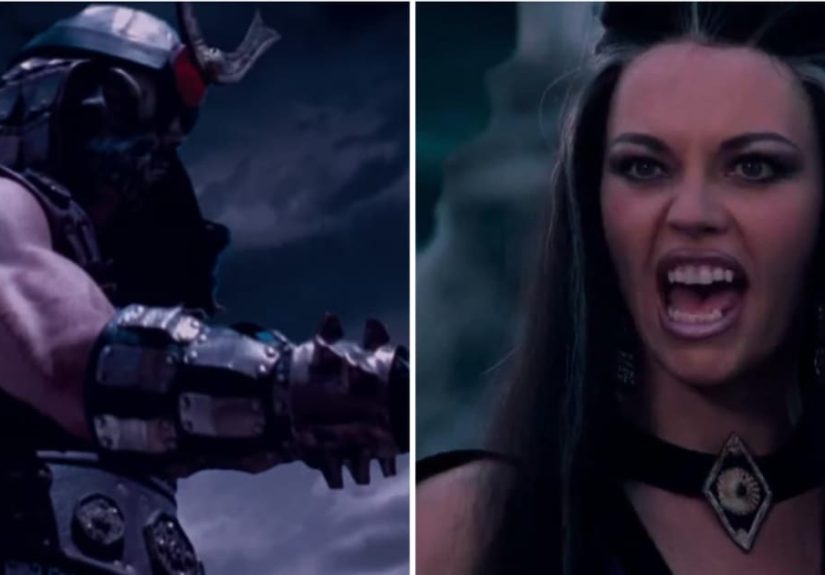
4) “Mother! You’re alive!” / “Too bad you… will DIE!”
If Annihilation had a crown jewel of unintentionally funny dialogue, this exchange would be sitting on it like it pays rent.
Kitana finds Sindel alive. She reacts. Sindel responds with a line delivery that feels like it’s being read off cue cards… from another dimension.
Why it’s absurd (and immortal)
The words themselves are simple. It’s the timing, the emphasis, and the melodrama dialed up to “Saturday morning villain” that turns it into a meme.
This moment encapsulates the whole movie: big feelings, blunt phrasing, and a complete lack of subtlety. It’s not “bad” in a quiet wayit’s
confidently theatrical, which makes it endlessly re-quotable.
5) Character Roll Call Energy: Everybody’s Here (for 45 Seconds)
Annihilation treats the Mortal Kombat roster like a checklist. Characters appear rapidlyheroes, villains, monsters, ninjas, generalssometimes with
minimal introduction, sometimes with no explanation beyond “Look, it’s that one.”
Why it’s absurd
In a video game, quick character swaps are the point. In a movie, it can feel like you’re channel-surfing through action scenes.
The film’s solution to “more characters” is “less time per character,” which creates a strange rhythm: someone shows up, does a signature move,
and vanishes before the audience can fully process it.
As an enjoyably bad experience, though? It becomes a guessing game. Viewers start watching the way you watch a parade: not for plot cohesion,
but for the next costume and the next “Oh wow, they really put that in here.”
6) Cyrax Turns Up Like a Surprise Boss Fight in a Military Base
One of the movie’s funniest tonal jumps is how it pivots from mythic realms to “special forces facility under attack” energy, complete with a cyber-ninja
showing up as if this is the most normal Tuesday imaginable.
Why it’s absurd
The mix of grounded military setting and flamboyant sci-fi assassin is classic 90s “we can do anything” genre blending. The execution is… wobbly.
But it’s also charming in a disaster-movie way, because the film commits. It doesn’t wink at you. It insists this belongs in the same story as Elder Gods.
That sincerity is what makes it fun: the movie is not embarrassed, so you’re free to enjoy the chaos without feeling like you’re “supposed” to take it seriously.
7) Jax’s Metal Arms: Big Upgrade, Bigger “Huh?”
Jax is iconic in the games, but the movie’s handling of his metal arms has a “we’re doing this now, don’t ask questions” vibe.
The film treats a massive cybernetic transformation like it’s a standard equipment swap.
Why it’s absurd (and kind of delightful)
In a grounded action movie, new metal arms would be a big dealtrauma, recovery, consequences. In Annihilation, it’s closer to assembling furniture:
step one, attach arms; step two, go fight monsters. That bluntness becomes funny because it’s so out of proportion with what’s happening.
And yet, it’s also part of the movie’s weird appeal. It’s a sequel that says, “You want game stuff? Here. Immediately.”
8) Sheeva Gets an All-Time Anticlimactic Exit
Sheeva should be a terrifying presencefour-armed, powerful, and built for an unforgettable showdown. Instead, her big moment turns into one of the most
famously anticlimactic exits in the movie.
Why it’s absurd
It’s not just that it’s quickit’s the mismatch between the character’s reputation and the way the scene plays out. The movie sets up a “here we go”
confrontation… and then it’s over in a way that feels more like slapstick than spectacle.
In “enjoyably bad” terms, this is pure gold: the film accidentally creates the feeling of a video game glitch where a mini-boss gets defeated by falling scenery.
9) Motaro Looks Like the Budget and the Camera Are Negotiating Mid-Scene
Motaro is one of those characters that screams “this will be expensive,” and Annihilation approaches him with the careful strategy of
“show just enough that people recognize him, then cut away fast.”
Why it’s absurd
The camera angles and staging often feel like they’re trying to protect the illusion. That can work when it’s intentional suspense; here it reads like
practical filmmaking triage. The end result is a creature presentation that feels inconsistentpart intimidation, part “please don’t look too closely.”
But it’s also fascinating. You can practically see the movie solving problems in real time, which is catnip for viewers who love behind-the-scenes mess.
10) The Final CGI “Animality” Showdown
The climax swings for the fences with a big creature-versus-creature finish that tries to turn the game’s over-the-top transformations into a cinematic
centerpiece. The intention is epic. The result is… memorable for other reasons.
Why it’s absurd (and why it’s the perfect ending)
Bad CG in the 90s can be charming when it’s brief. Here, it becomes the main event. That’s why it sticks in people’s minds: the movie ends by doubling down
on exactly what critics and fans complain aboutthen accidentally turns it into a comedy finale.
As a “so-bad-it’s-good” conclusion, it’s almost perfect. The film has spent the whole runtime escalating, and the last act is the ultimate expression of its
philosophy: bigger, louder, weirder… even if it looks like a cutscene from a haunted PlayStation.
Why These Moments Make Annihilation Enjoyably Bad (Instead of Just Bad)
Here’s the secret: Mortal Kombat: Annihilation rarely pauses. The movie’s flawsawkward dialogue, rushed storytelling, uneven effectsare real,
but the pacing keeps you from sitting in one problem for too long. It’s cinematic pinball: you bounce from a portal to a fight to a new character to a new realm.
Also, the movie is sincere. It doesn’t feel like it’s trying to parody itself, which is important. “So-bad-it’s-good” usually requires confidence.
If a film is embarrassed, the audience feels awkward. If a film commits with its whole chest, the audience relaxes and starts having fun.
Finally, it’s a time capsule. The 90s blockbuster DNA is all over itbig swings, practical effects trying to coexist with early CG, and a “more is more”
approach to franchise storytelling. Even when it fails, it fails in a way that feels distinctly of its era, which makes it oddly comforting to revisit.
Extra: The Viewing Experience That Turns Chaos Into Comedy (About )
The best way to understand why Mortal Kombat: Annihilation is “enjoyably bad” is to watch it the way people watch cult classics: not as a serious
cinematic event, but as a shared experience. This is not a movie that demands silent reverence. It’s a movie that rewards laughter, commentary, and the kind
of friendly disbelief you usually reserve for stories that start with, “You are not going to believe what I just saw.”
Watching it with friends (or even just texting someone while it plays) turns every abrupt scene change into a punchline. When the film introduces yet another
character with minimal setup, it becomes a game: “Okay, how long do you think this one lasts?” When someone delivers a line like it’s a prophecy carved into
a mountain, you don’t cringeyou grin, because you know the movie is about to top itself in the next two minutes.
The experience also changes depending on your relationship with the franchise. If you grew up with the games, the movie feels like a messy fan service buffet:
you recognize names, costumes, and moves, even if the storytelling is sprinting past them. If you didn’t grow up with the games, it can feel like you walked
into someone else’s dream halfway throughand that confusion becomes part of the fun. Either way, the film invites a particular kind of attention: less
“What does this mean?” and more “What are they going to try next?”
Rewatching it is a different kind of entertainment than watching it the first time. The first viewing is shock and noveltyhow fast it moves, how abruptly
it pivots, how often it chooses the most dramatic option. The second viewing is pattern recognition. You start noticing the movie’s habits: the way it uses
portals to skip explanations, the way it treats big character moments like quick pit stops, the way it tries to turn video game ideas into movie logic by
sheer force of will. You may even catch yourself admiring the audacity. Not because it’s good, but because it’s fearless.
There’s also a strange satisfaction in watching a movie that’s so openly imperfect. In a world where modern blockbusters are polished to a mirror shine,
Annihilation has rough edges you can actually feel. The seams show. The ambition is obvious. And that makes it oddly human: you can sense dozens of
people working hard to deliver something huge with the tools they had at the time.
If you go in expecting a masterpiece, you’ll have a bad time. If you go in expecting a chaotic 90s fantasy action artifact that occasionally turns into
accidental comedy, you might discover why it has staying power. It’s not just “bad.” It’s spectacularly bad in a way that turns into entertainment
and that’s a rare kind of movie magic all its own.
Conclusion
Mortal Kombat: Annihilation isn’t beloved because it’s secretly greatit’s beloved because it’s openly ridiculous. From sudden character exits to
meme-grade dialogue and a finale that bets the farm on early CGI, the movie creates an unintentional comedy track that still plays today.
If you’re in the mood for a “so-bad-it’s-good” night, these absurd moments aren’t bugs. They’re features.