Table of Contents >> Show >> Hide
- Bart the Bear Was Not a Gimmick. He Was a Star.
- So, Did a Bear Literally Almost Get an Oscar Nomination?
- Why People Took the Idea Seriously
- The Academy Problem: Great Performance, Wrong Species
- Why The Bear Worked So Well in the First Place
- Bart Eventually Made It to the Oscars Anyway
- Bart’s Legacy Was Bigger Than Awards-Season Weirdness
- Why This Story Still Hooks People Today
- Experience Section: What It Feels Like to Watch a Bear Steal the Whole Movie
- SEO Tags
Hollywood has always loved a scene-stealer. Sometimes it is a method actor with cheekbones sharp enough to cut glass. Sometimes it is a veteran character actor who shows up for eight minutes and somehow hijacks the whole movie. And once, in one of the strangest and most delightful corners of awards-season history, it was a Kodiak bear named Bart.
Yes, an actual bear. Fur, claws, 1,500-ish pounds of screen presence, and the kind of face that could communicate menace, tenderness, grief, and “please do not stand too close to me” all at once. Bart the Bear became such a sensation after The Bear that people seriously floated the idea that he deserved Oscar recognition. Not in the fake internet way where everyone says “give the dog an award” and moves on with their day. In Bart’s case, there was real awards chatter, serious admiration, and even talk tied to a special Academy honor.
So what happened? How did a giant animal actor wind up in the same general conversation as human Oscar contenders? And why does the story still feel so irresistible decades later? Let’s dig into the wonderfully weird truth behind the bear who came remarkably close to Academy Awards folklore.
Bart the Bear Was Not a Gimmick. He Was a Star.
Before he became the kind of Hollywood legend people bring up at parties to test whether anyone else knows the story, Bart the Bear was already an extraordinary animal performer. He was raised and trained by Doug and Lynne Seus, whose work with large animals made Bart one of the most recognizable animal actors of his era. This was not a novelty act with a cute trick or two. Bart had a real film career, appearing in major productions and working alongside top actors who did not exactly hand out compliments for free.
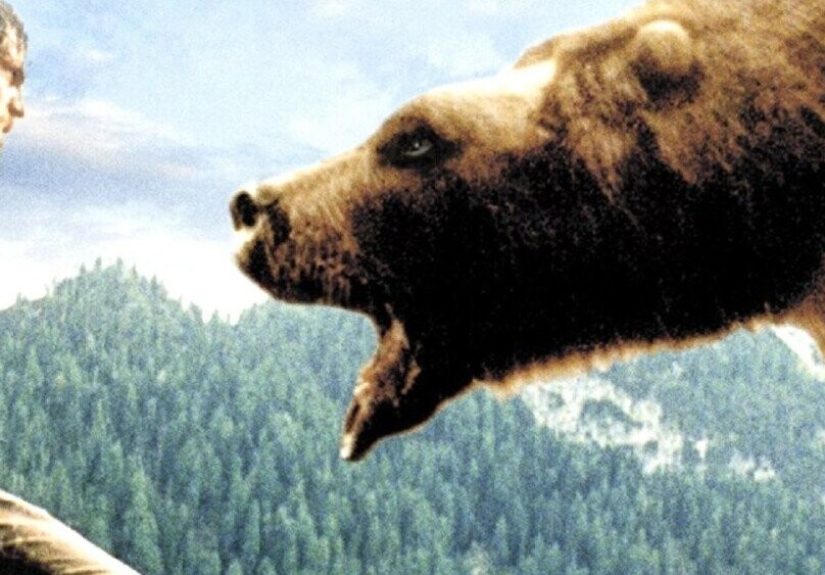
His big breakthrough came with The Bear, Jean-Jacques Annaud’s 1988 film that reached U.S. theaters in 1989. The movie follows an orphaned cub and an adult grizzly as they navigate danger in the wilderness while human hunters close in. It is based on a James Oliver Curwood story, but the film version feels less like a traditional family movie and more like an immersive survival poem with paws. That may sound dramatic, but the film earns it.
What made The Bear stand out was how seriously it treated animal life on screen. This was not a cartoonish “animals doing people stuff” movie. Roger Ebert praised the film for creating the illusion that viewers were watching real wild behavior, even though the movie depended on training, editing, and cinematic craft to pull off that effect. The Los Angeles Times admired the film for avoiding easy sentimentality and for presenting the bears as animals first, not fuzzy little comedians in nature costumes.
That difference matters. Bart did not become famous because audiences thought, “Aw, look at the big fluffy guy.” He became famous because viewers felt they were watching a performance. Not a speech, obviously. Bears are not known for monologues unless you count growling with conviction. But a performance all the same: reactive, expressive, physical, controlled, and emotionally persuasive.
So, Did a Bear Literally Almost Get an Oscar Nomination?
Here is the important truth bomb, placed gently on the table like a picnic basket you hope a grizzly will ignore: Bart did not literally become an official Best Actor or Best Supporting Actor nominee. If you search Academy records, you will not find “Bart the Bear” listed in the acting categories. The film itself did receive an official Oscar nomination for Film Editing, which is very real and very important, but Bart himself never appeared among the Academy’s acting nominees.
So why does the legend refuse to die? Because the underlying story is true enough to survive retelling. Bart’s work in The Bear generated genuine awards buzz. His official archive notes that Academy board member Ernest Gold recommended a Special Achievement Oscar connected to The Bear. Later reporting repeated that an internal push existed, even if it never became a formal competitive nomination. That means this was not just one critic being cute in a review. Bart’s performance inspired a real conversation about whether the Academy had any meaningful way to recognize something so unusual.
In other words, the headline version is a little cheeky, but the spirit of it is absolutely real: for a brief, glorious moment, Hollywood looked at a giant bear and thought, “Honestly? He kind of deserves something.”
Why People Took the Idea Seriously
The easiest answer is that Bart was fantastic in The Bear. But that only scratches the surface. What people responded to was the strange intensity of the film itself. Because the movie is built around animal point of view, every reaction matters. A pause matters. A glance matters. A shift in posture matters. A snort matters. The film does not hide behind a wall of dialogue or flashy exposition. It asks the audience to read behavior and emotion through movement, rhythm, editing, and physical presence.
That turns Bart into more than a trained animal hitting marks. It turns him into the center of the movie’s emotional logic. Audiences believed him. Critics remembered him. And in awards season, being unforgettable is at least half the battle.
Entertainment Weekly even ran a memorable “Overlooked by Oscar” feature that singled out animal performances from that year, with Bart taking top honors. That matters because it shows the idea was not buried in one obscure fan club newsletter written by three overly excited wilderness enthusiasts. It had escaped into broader film culture.
And Bart’s reputation did not stop with The Bear. Years later, he was still being praised as a formidable screen presence in films like The Edge. The Los Angeles Times described the battle between Anthony Hopkins and Bart as the most compelling confrontation in that movie, which is a pretty staggering compliment when your competition is, well, Anthony Hopkins. Around the same time, Newsweek called Bart’s work in The Edge “Oscar-worthy,” proving that Bart’s “please give this bear a trophy” energy was not a one-film fluke.
The Academy Problem: Great Performance, Wrong Species
This is where the story gets both technical and hilarious. The Academy’s acting awards are structured around eligible actors and actresses, with reminder lists circulated to members of the Actors Branch. In practical terms, the Oscars are built to honor individual people in motion pictures. A later Academy statement, reported by Pacific Standard, made the institution’s position clear: animals are not included in the reminder list for acting consideration, even if the written rules do not spell out “humans only” in the bluntest possible language.
That is why Bart’s near-Oscar story lives in the realm of “almost,” “what if,” and “this should have happened, actually.” The Academy had room to admire him, joke about him, even showcase him. But it did not have a natural place to competitively nominate him in the acting categories.
And honestly, you can see both sides. On one hand, Bart’s performance in The Bear was unforgettable enough that normal rules seemed annoyingly small. On the other hand, a filmed animal performance is also the result of a huge chain of human labor: training, timing, editing, cinematography, sound design, and directing. Awarding the animal alone might feel incomplete. Awarding only the humans might feel like it misses the magic. Bart’s case exposed that tension beautifully.
Why The Bear Worked So Well in the First Place
One reason the Oscar story remains sticky is that The Bear itself is not just a trivia answer. It is a genuinely admired film. Its emotional power comes from the way it mixes realism and illusion. The movie persuades you that you are peering into the private life of wild creatures, even though what you are really seeing is a meticulously assembled piece of filmmaking. That blend of authenticity and craft is exactly what awards bodies are supposed to celebrate.
The irony, of course, is delicious. The movie was officially recognized by the Academy for editing, which makes perfect sense, because editing is one of the major tools that transformed trained-animal footage into something emotionally coherent and dramatically gripping. So the Oscars did honor a big part of what made Bart so impressive. They just did it sideways.
That makes Bart’s almost-nomination story feel less like a goofy footnote and more like a little crack in the awards system. The film industry clearly knew something special had happened. It just could not quite decide where to hang the medal.
Bart Eventually Made It to the Oscars Anyway
Because Hollywood loves a good sequel, Bart did eventually make it onto the Academy Awards stage. At the 70th Oscars in 1998, he appeared with Mike Myers to present the award for Sound Effects Editing. It was part tribute, part spectacle, part “dear heavens, that is an enormous bear standing under stage lights.” The moment has lived on because it was equal parts charming and nerve-rattling, which is a very powerful entertainment cocktail.
There is something poetically perfect about that appearance. Bart never got the competitive acting nomination that people daydreamed about, but he still reached the Oscars stage as one of the ceremony’s most memorable guests. Not bad for a performer who never gave a standard acceptance speech. Though, to be fair, if Bart had walked up to the microphone and simply stared into the crowd for ten seconds, that might have been the greatest acceptance speech in Academy history.
Bart’s Legacy Was Bigger Than Awards-Season Weirdness
It would be easy to leave Bart’s story as a fun little “Can you believe this almost happened?” nugget. But his legacy is broader than that. His fame helped turn him into an ambassador for conservation, and the Seus family’s work became connected to the Vital Ground effort to protect habitat for wild grizzlies and other wildlife. That shifts Bart’s story from Hollywood novelty to something richer: a case where celebrity, animal performance, and environmental advocacy briefly intersected.
It also helps explain why Bart still feels different from a thousand random “famous animal” anecdotes. He was not just known. He was respected. He became part of how film lovers talked about animal actors at their best, not as punchlines, but as performers whose work depended on trust, skill, and the strange collaborative magic of movies.
Why This Story Still Hooks People Today
The Bart story survives because it combines three things people cannot resist. First, it is funny on its face. “A bear almost got an Oscar nomination” sounds like the setup to a joke your uncle tells at Thanksgiving before dramatically carving a turkey. Second, it is true enough to be irresistible. There really was awards chatter, a real Academy-adjacent push, a real official nomination for the film, and a real later Oscar-stage appearance. Third, it gets at a bigger question: what do we actually mean when we call something a great performance?
That is the sneaky brilliance of the whole saga. Bart’s near-Oscar moment was amusing, but it also exposed how much acting is perception. We respond to presence, behavior, timing, charisma, emotional effect, and the feeling that a screen being watched has somehow become alive. Bart had that. Maybe not in the same way Daniel Day-Lewis had it, but definitely in the way a giant movie bear had any right to have it.
So no, Bart the Bear was not a literal acting nominee. But he did something many official nominees never do: he became unforgettable, changed the conversation, and left behind a story that still makes people smile, argue, and say, “Wait, hold on, that really happened?”
And that, in its own shaggy, magnificent way, is extremely Oscar behavior.
Experience Section: What It Feels Like to Watch a Bear Steal the Whole Movie
There is a very specific kind of movie-watching experience that happens when an animal performance truly lands, and Bart the Bear is one of the clearest examples of it. At first, you watch with a little distance. You know you are looking at a trained animal. Part of your brain is doing practical math. How did they shoot this? How many trainers were just off camera? How much of this is editing? How much of this is illusion? Your skeptical side is alive and well.
Then, somewhere along the way, the skepticism gets mugged by emotion.
You stop analyzing every technical choice and start reacting to the animal as a screen presence. A turn of the head suddenly feels thoughtful. A still moment feels protective. A burst of movement feels angry or afraid or territorial or tired. You begin reading intention into behavior, which is exactly what cinema trains us to do with human actors all the time. The experience is oddly intimate. It is not that you forget Bart is a bear. It is that the movie convinces you bear-ness is not a barrier to storytelling. It becomes the storytelling.
That is why Bart’s near-Oscar legend has lasted so long. People do not remember him the way they remember a clever trick in a commercial. They remember the feeling of being pulled into a performance they did not expect to take seriously. There is delight in that, but also a little humility. A lot of us like to think we are sophisticated viewers who know exactly what “great acting” looks like. Then a giant Kodiak bear wanders into frame and suddenly your whole theory starts sweating.
There is also a strange tension that makes the experience more electric. Watching Bart is thrilling because he is beautiful and expressive, but there is always an undercurrent of danger. You never forget you are looking at an enormously powerful animal. That edge creates an intensity that many human performances would kill for, metaphorically speaking and, ideally, only metaphorically. Every close-up feels more alive because it carries the real-world weight of what this creature is. The screen does not just have emotion; it has stakes.
And after the movie ends, the experience lingers in a different way than most performances do. With a human actor, you might admire technique. With Bart, you admire the entire improbable collaboration that made the experience possible. The trainers, the director, the editor, the cinematographer, and Bart himself all seem braided together in your memory. That does not make the performance weaker. If anything, it makes it feel even more cinematic. It reminds you that film has always been an art of assembling miracles from many moving parts.
Maybe that is the deepest reason the Oscar story still resonates. It captures the rare moment when a performance does not just entertain you. It rearranges your categories. It makes you laugh at the absurdity of the premise, then nod at the legitimacy of the achievement, then wonder whether the awards system is sometimes too neat for the messy magic of movies. Watching Bart the Bear in his prime feels a little like watching cinema dare you to widen your definition of who, or what, can own the screen.
That is not just a fun story about a bear. That is a reminder that the best movie experiences sneak up on you, paws first.