Table of Contents >> Show >> Hide
- What Is a Thanksgiving Tablescape (and Why It Matters)?
- Step 1: Start with a Guest-Ready Home
- Step 2: Choose a Thanksgiving Tablescape Style
- Step 3: Build Your Table from the Ground Up
- Step 4: Centerpieces That Don’t Block Conversation
- Step 5: Lighting, Scent, and Sound
- Step 6: Seating, Traffic, and the Kids’ Table
- Step 7: Make It Truly Guest-Ready
- Real-Life Thanksgiving Tablescape Lessons (From Hosts Who’ve Been There)
- Bringing It All Together: A Thanksgiving Tablescape in a Guest-Ready Home
The turkey is in the oven, the pies are cooling on the counter, and then it hits you:
everyone is about to see your dining table… and your living room… and probably that chair
hiding a week’s worth of laundry. A beautiful Thanksgiving tablescape and a truly guest-ready home
don’t happen by accidentbut they also don’t require a TV crew and a renovation budget.
Think of this guide as your friendly This Old House–inspired playbook: practical, timeless, and just
a little obsessed with details. We’ll walk through how to design a Thanksgiving tablescape that feels
warm and personal, while also making sure the rest of your home is welcoming, functional, and ready
for guests to settle in and stay awhile.
What Is a Thanksgiving Tablescape (and Why It Matters)?
A Thanksgiving tablescape is more than a pretty centerpiece. It’s the whole visual story
your table tellslinens, dishes, glassware, candles, greenery, even the way the food shows up. Done
well, it:
- Sets the mood before the first bite is served.
- Helps your home feel intentional and pulled-together.
- Makes guests feel honored, not just fed.
- Keeps things functional so people can actually eat without wrestling a giant pumpkin tower.
Home and decor experts from Better Homes & Gardens, Southern Living, Real Simple, HGTV, and The Spruce
all agree on one big point: a successful holiday table balances style and practicality. That’s our
North Star hereespecially if your home is cozy, older, or full of charming “quirks” straight out of
a This Old House episode.
Step 1: Start with a Guest-Ready Home
Before you fuss over napkin rings, get the backdrop right. A beautifully set table won’t disguise
sticky floors or a cluttered entry. Good news: you don’t need a deep-clean marathon. Focus on the
high-impact areas guests will notice and use.
Give the Entryway the 10-Minute Treatment
- Clear the landing zone. Remove shoes, mail piles, and random bags.
- Designate a coat spot. A coat rack, set of sturdy hooks, or a cleared-out closet works.
- Add something welcoming. A candle (unscented or lightly scented), a small vase of greenery, or a simple wreath instantly says, “You’re expected.”
Cleaning checklists from professional home services consistently suggest prioritizing these visible
zones first: the entry, living room, kitchen, guest bath, and dining area. If no one sees your
laundry room, it can wait.
Spot-Clean the Spaces Guests Actually Use
Instead of trying to scrub the entire house, think like a pro:
- Living room: Clear surfaces, fluff pillows, fold throws, and corral remotes and chargers in a basket.
- Kitchen: Clear counters, unload or load the dishwasher, and wipe visible splatters. Guests will forgive a full sinkbut not sticky countertops.
- Guest bathroom: Wipe the sink and toilet, put out fresh towels, and make sure there’s extra toilet paper in plain sight.
- Lighting: Dust visible fixtures and lampshades; clean, warm light makes everything feel more polished.
Plan the Flow: Where Guests Move and Linger
Your home becomes a mini traffic system on Thanksgiving. To avoid congestion:
- Set up a drink station away from the stove so people can refill without bumping into the cook.
- Use a buffet on a sideboard, kitchen island, or folding table instead of crowding serving dishes onto the main table.
- Pre-plan seating so everyone knows where to land, especially if you’re squeezing in extra chairs or benches.
Think of it as “open concept hosting”: clear paths, obvious stations, and no one blocking the oven
timer.
Step 2: Choose a Thanksgiving Tablescape Style
Before you pull out every pumpkin you own, decide on a general style. Designers and editors across
major home magazines suggest choosing one cohesive direction rather than mixing everything you’ve ever
liked at once.
Classic Harvest
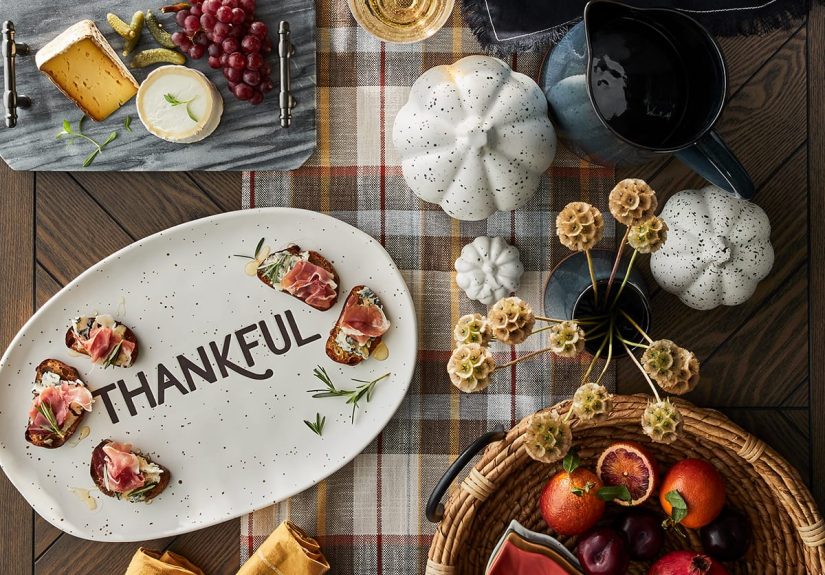
This look leans into warm oranges, golds, and browns, with pumpkins, gourds, and fall leaves. Think:
linen runner, simple white dishes, amber glassware, and a centerpiece of seasonal produce and
eucalyptus. It’s timeless and works in both modern and older homes.
Jewel-Tone Drama
Inspired by recent trends, jewel-tone tablescapes use deep teal, emerald, plum, and berry tones. Layer
a dark runner over a wood table, add colored glass or napkins, and mix in metallic accents (brass or
gold) for a rich, cozy vibe that feels fresh but still very fall.
Organic Modern
Popular in celebrity homes and modern dining spaces, this style focuses on texture over pattern:
natural wood, stoneware plates, linen napkins, and simple greenery. Stick to a subdued palettecreams,
tans, soft greensand let handmade or rustic pieces shine.
Kid-Friendly and Playful
If you’re hosting little ones, consider a more relaxed tablescape with:
- Brown kraft paper as a table runner (plus crayons for doodling).
- DIY turkey gourds or paper turkeys as place markers.
- Small bowls of snacks or candy corn as part of the decor.
It may not be magazine-perfect, but it’s memory-perfectand often more relaxing.
Step 3: Build Your Table from the Ground Up
Start with Linens and Layers
Think of your Thanksgiving table decor like a room makeover: you start with the “floor.”
- Tablecloth vs. runner: A full cloth feels formal and hides a beat-up table. A runner shows off great wood grain and feels more casual.
- Texture matters: Mix smooth cotton with chunky woven runners, or pair a crisp white cloth with a burlap or linen runner for contrast.
- Color strategy: If your dishes are busy, keep linens neutral. If your plates are simple, linens are where you can play with color or pattern.
Layering linens (cloth, runner, placemats) adds depth and instantly makes even a basic table feel
intentional and styled.
Plates, Flatware, and Glassware that Actually Work
You don’t need a matching “holiday” set to pull off a great tablescape. Many stylists intentionally
mix dinnerware:
- Stack it up: Start with a charger or large plate, add the dinner plate, then top with a salad or soup bowl. This gives height and makes the place setting feel special.
- Mix old and new: Pair heirloom plates with modern flatware, or vintage crystal with simple white dishes.
- Use real napkins: Cloth napkins instantly elevate the look and are worth the extra laundry load.
Put water glasses at every seat and wine or specialty glasses at the top right of the plate. If you’re
short on matching glassware, alternate styles in a pattern so it looks intentional.
Napkins, Place Cards, and Personal Touches
The little details are where your Thanksgiving tablescape becomes personal:
- Napkin styling: Tuck napkins under the salad plate, wrap them around the flatware, or tie them with twine and a tiny sprig of greenery.
- Place cards: Handwritten tags, mini frames with photos, or leaf-shaped cards help avoid awkward “Where should I sit?” moments.
- Meaningful objects: A small ceramic turkey inherited from family, vintage candlesticks, or a handmade pottery bowl can anchor your look and add sentiment.
These touches don’t have to be perfect; they just need to feel thoughtfullike you set the table with
specific people in mind.
Step 4: Centerpieces That Don’t Block Conversation
Beautiful centerpieces are greatuntil no one can see each other over them. Designers agree: keep
centerpieces low and long so guests can talk and pass dishes comfortably.
Use Seasonal Produce and Greenery
Many home and garden experts recommend starting with what you already have:
- Scatter mini pumpkins, pears, or apples down the center of the table.
- Layer in fresh or faux eucalyptus, magnolia leaves, pine, or other greenery.
- Add a few flowersmums, roses, or seasonal bloomsin small bud vases or jars.
A long, slightly asymmetrical garland of greenery with tucked-in produce feels lush but still relaxed.
This style echoes the “collected, not contrived” look you see in classic, older homes.
Get Creative with Candles and Gourds
Recent holiday decor trends highlight easy DIY ideas like:
- Turning flat-sided gourds into candlesticks (carefully drilling a small hole to hold taper candles).
- Grouping brass or glass candlesticks of different heights along the center of the table.
- Using flameless candles if you have kids, pets, or a table packed with linens.
The key is to avoid one giant object. Several smaller arrangements spaced along the table look more
modern and make it easier to pass the mashed potatoes without taking out a pumpkin tower.
Invite the Kids into the Decor
If children are part of your Thanksgiving, let them help with the centerpiece:
- DIY turkey gourds with feathers and googly eyes.
- Paper turkeys or leaf garlands they can color.
- Mini “thankful” cards they decorate and place at each setting.
Kid-made decor adds charm and builds excitementthey’ll beam every time someone compliments their
creations.
Step 5: Lighting, Scent, and Sound
A well-designed guest-ready home isn’t just about what you see. It’s also how the space feels,
smells, and sounds.
Layer Warm, Flattering Light
- Dim overhead lights: If you have dimmers, use them. If not, use fewer overhead lights and rely more on lamps.
- Add candles: Real or flameless candles instantly create warmth and intimacy.
- Highlight the table: A pendant or chandelier above the table should be bright enough for eating but soft enough for lingering.
Avoid scented candles on the table itself; they compete with the smell of food. Use lightly scented
candles or diffusers in the entry or living room instead.
Set the Soundtrack
Background music smooths out awkward silences and makes your home feel lively. Choose something
low-keyacoustic, jazz, or mellow holiday playlistsand keep the volume low enough that people don’t
have to shout across the table.
Step 6: Seating, Traffic, and the Kids’ Table
Even the prettiest Thanksgiving tablescape can crumble if people don’t have enough elbow room or can’t
figure out where to sit.
Fit Everyone Comfortably (Even in a Small Space)
- Extend the table: Use a folding table at the end of your main one and hide the seam with a tablecloth.
- Mix and match seating: Combine dining chairs, benches, and stools. Benches fit more people along one side.
- Use a buffet: Serve food from the kitchen island or a side table so the dining table can focus on plates, glasses, and smaller decor.
Home experts often recommend “editing” your decor if space is tightbetter to have fewer pumpkins than
guests feeling like they’re dining inside a centerpiece.
Create a Kids’ Zone That Still Feels Special
A kids’ table doesn’t have to be an afterthought. Give it:
- Kraft paper covering for easy cleanup and doodling.
- Coloring sheets or a “What are you thankful for?” prompt.
- Fun cups and unbreakable plates.
- Simple centerpieces they helped makelike turkey crafts or small pumpkins with stickers.
When kids feel included, they’re more likely to stay occupied and happy (and less likely to see your
tablescape as an obstacle course).
Step 7: Make It Truly Guest-Ready
Now that the table is styled, do a quick “guest experience” walkthroughsomething hosting pros and
even royalty-level entertainers recommend.
Anticipate What Guests Will Need
- Comfort: Have a few throws handy in case someone gets cold.
- Allergies and preferences: Label dishes that are vegetarian, gluten-free, or nut-free.
- Convenience: Place a small trash can where it’s easy to find but not obvious in photos.
- Charging zone: Set up one surface with a power strip where people can plug in phones.
These tiny touches make your home feel like a well-run innthoughtful, organized, and relaxed.
Prep Ahead and Say Yes to Help
Almost every entertaining expert agrees: you don’t have to be a one-person Thanksgiving hero.
Chop vegetables, set the table, and lay out serving pieces the day before. Let guests bring side
dishes or desserts. Ask someone to be in charge of drinks, another to light candles, and another to
help clear plates between courses.
A guest-ready home isn’t a perfect home; it’s a home where everyone feels welcome to participate.
Real-Life Thanksgiving Tablescape Lessons (From Hosts Who’ve Been There)
Beautiful photos of styled tables are inspiring, but real homes come with real kids, real pets, and
real “Oops, I forgot the rolls” moments. Here are some lived-in lessons that can help you avoid common
Thanksgiving hosting regrets.
Lesson 1: Keep the Centerpiece Snack-Proof
One host spent hours building a gorgeous centerpiece made of cranberries, greenery, and delicate
candles. Ten minutes after guests arrived, a curious toddler pulled out the cranberries, a dog ate
three, and an uncle nearly set his sleeve on fire reaching over the arrangement. The centerpiece was
dismantled before the first course.
The takeaway? If you have kids or pets in the mix, design your centerpiece with them in mind. Skip
small items that look like food, avoid anything super fragile along the edges, and keep candles either
flameless or safely out of reach. A low garland of greenery and a few sturdy pillar candles can look
just as elegant, with far fewer emergency cleanups.
Lesson 2: Don’t Overcrowd the Table
Another family went all-in on decorchargers, three plates per person, multiple glasses, napkin rings,
a full runner, pumpkins, gourds, and a long floral arrangement. The table looked fantastic… right up
until the food arrived. Suddenly there was nowhere to set the turkey, and everyone was playing
“decor Jenga” just to cut their meat.
Next year, they edited ruthlessly: no chargers, one shared bread basket per four people, and a shorter
centerpiece. The table still felt festive, but there was space for platters, elbows, and real-life
movement. When you’re styling your own Thanksgiving tablescape, always ask, “Where will the food go?”
If the answer is “Nowhere,” it’s time to remove a few decorative stars from the show.
Lesson 3: Start the Guest-Ready Work Earlier Than You Think
Many first-time hosts underestimate how long it takes to go from “lived-in home” to “guest-ready
home.” One host assumed they could clean the house, prep side dishes, roast the turkey, decorate, and
get themselves dressed all in one day. Around mid-morning, they realized the guest bathroom still
needed attention, the table wasn’t set, and the fridge was so full they had nowhere to store pies.
The solution they discovered laterand that pros recommendis to break the work into small,
manageable tasks:
- Two to three days before: deep-clean the guest bath, declutter visible rooms, and wash linens.
- The day before: set the table, prep ingredients, label serving dishes with sticky notes indicating what goes where.
- Thanksgiving morning: focus on cooking and last-minute touches like lighting candles and turning on music.
When you divide the work, the actual day feels much calmerand you’re more likely to enjoy your own
handiwork instead of just surviving it.
Lesson 4: Let Your Home’s Personality Show
Maybe you live in a century-old house with creaky floors and original trim, or a compact apartment
with just enough room for a fold-out table. Either way, trying to copy a huge magazine-worthy dining
room exactly can feel frustrating. The hosts who end up happiest lean into what their home already
does best.
In an older, This Old House–style home, you might emphasize wood tones, vintage pieces, and
candlelight that highlights architectural details. In a small modern condo, you might keep decor
minimal but invest in soft linens, a few standout serving pieces, and a cozy lighting scheme that
makes the space feel intimate rather than cramped.
Your Thanksgiving tablescape doesn’t have to look like anyone else’s. When it reflects your
family, your traditions, and your home’s character, guests will remember how it felt far more than
whether your napkins were folded into perfect little turkeys.
Bringing It All Together: A Thanksgiving Tablescape in a Guest-Ready Home
At the end of the day, the most successful Thanksgiving setups combine three things:
- A thoughtful but practical tablescape that leaves room for food and conversation.
- A guest-ready home that’s clean where it counts and easy to navigate.
- A relaxed host who’s not afraid to accept help, embrace imperfections, and laugh when the gravy inevitably drips somewhere it shouldn’t.
You don’t need designer dishes or a giant dining room to pull this off. Start with a clear style,
layer your linens and decor, keep centerpieces low, and plan the flow of people and food. Add warm
lighting, small personal touches, and a few smart cleaning and organizing moves, and you’ll have a
Thanksgiving celebration that feels both beautiful and deeply welcoming.
The turkey will be eaten, the candles will burn down, and the pumpkins will eventually head to the
compost binbut the memory of a warm, inviting, guest-ready home will stick around long after the
leftovers are gone.