Table of Contents >> Show >> Hide
- Why Superhero Powers Keep Changing
- Superman: From Leaping Tall Buildings to Rewriting Physics
- Spider-Man: Mechanical Web-Shooters, Organic Webbing, and Back Again
- Scarlet Witch: From “Bad Luck Hexes” to Reality-Warping Goddess
- Wonder Woman: Amazon Warrior, Ambassador… and God of War
- The Flash: From “Really Fast Guy” to Avatar of the Speed Force
- Jubilee: From Fireworks Mutant to Full-Fledged Vampire
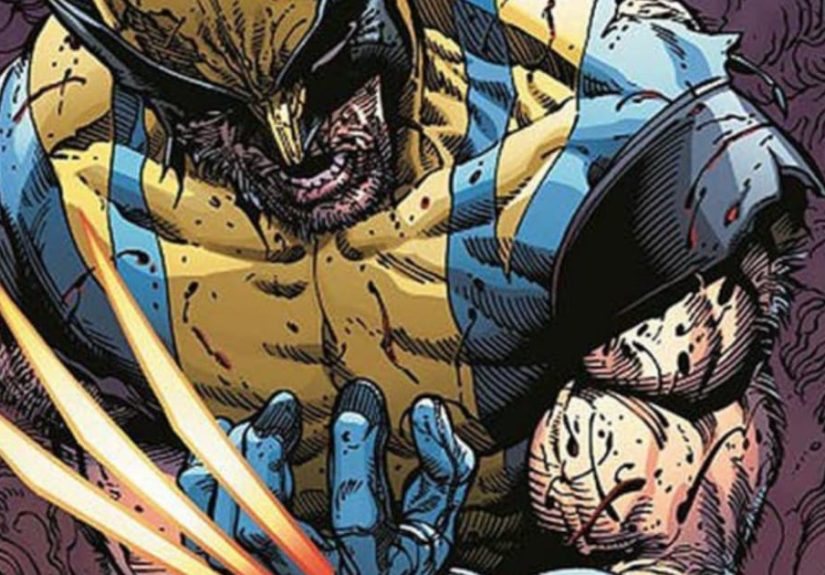
- Wolverine: Healing Factor on Overdrive and Flaming Claws
- When Power Changes Reflect Changing Times
- How to Keep Up with Ever-Changing Superpowers
- What It Feels Like When Your Childhood Superheroes Change (Experience & Reflections)
- Conclusion: Same Heroes, New Rules
If you’ve ever picked up a new comic or watched a modern superhero movie and thought, “Wait… that’s not how their powers worked when I was a kid,” you’re not imagining things. Superhero powers are constantly being upgraded, nerfed, retconned, and completely rewritten. What started as simple “leap tall buildings” abilities have turned into reality-warping, universe-rebooting, multiverse-breaking powers that would make your childhood self’s head spin.
From Superman’s strength levels yo-yoing over the decades to Spider-Man periodically sprouting organic webbing, superheroes today don’t quite match the trading cards and Saturday morning cartoons you remember. Writers evolve characters to keep stories fresh, adapt them to movies and TV, and sometimes just fix past continuity decisions that aged badly.
Let’s dive into some of the biggest heroes whose superpowers have changed so drastically since you were a kid that you might need a continuity guide just to keep up.
Why Superhero Powers Keep Changing
Before we call out specific heroes, it helps to understand why superpowers change at all:
- Power creep and power downs: Over time, characters tend to get stronger to top the last big threat. Eventually they become so powerful that stories lose tension, so writers dial them back again.
- Retcons (retroactive continuity): Creators rewrite old explanations to better fit modern storytelling. Origins, power sources, and limits get updated for new generations.
- Cross-media synergy: When a movie or TV version catches on, comics sometimes tweak powers to match what the broader audience now expects.
- Changing genres and tones: A campy silver-age power might be replaced with something darker, more mystical, or more “sciencey” to fit today’s storytelling style.
Now, let’s look at the individual heroes who’ve been through some of the wildest power makeovers.
Superman: From Leaping Tall Buildings to Rewriting Physics
Superman is the poster child for power fluctuation. Early on, he could “leap an eighth of a mile” and was super-strong and tough, but nowhere near the planet-juggling demigod he later became. Over the decades, his powers escalated to the point where he could move planets, survive supernovas, and casually time travel, especially around the 1960s peak “anything goes” era.
Then DC realized that a hero who can sneeze away galaxies is… hard to write. So they started depowering him in stages:
- “Kryptonite No More” and the 1970s: Early attempts to ground his power levels and make him less godlike.
- Post–Crisis on Infinite Earths (mid-1980s): Writer John Byrne rebooted Superman with more defined limitsstill incredibly strong but not casually juggling planets. His abilities were re-explained, especially how solar energy fuels him.
- Modern eras and beyond: Various reboots (like the New 52 and later runs) nudged his power dial up and down, sometimes making him almost mythic again, sometimes stressing vulnerability and emotional stakes.
If you remember a Superman who could “pretty much do anything,” today’s versions are usually a compromise: still a walking sun-powered tank, but with clearer limits so stories don’t end with “Superman just punches the problem into the sun” every time.
Spider-Man: Mechanical Web-Shooters, Organic Webbing, and Back Again
Spider-Man’s basic power setwall-crawling, superhuman agility, strength, and spider-sensehas stayed fairly consistent. But if your childhood Spider-Man had mechanical web-shooters, then suddenly grew organic webbing and new abilities, you lived through one of the strangest power glow-ups in superhero history.
The Classic Setup: Brains Plus Web-Shooters
In the original comics, Peter Parker invented his own wrist-mounted web-shooters. His webs weren’t biological; they were a genius-level chemistry project powered by cartridges he had to refill. That limitation was crucial for tension: run out of web fluid at the wrong time and you’re in trouble.
The Movie Effect: Organic Webbing
Sam Raimi’s early-2000s Spider-Man films changed that by giving Peter organic webbing that shoots directly from his wrists. It made his powers feel more “spidery” and cut down on exposition about inventing web fluid. The movies became so iconic that fans still argue whether organic or mechanical webbing makes more sense.
The “Other” Storyline: Full Spider Metamorphosis
In the 12-part comic arc The Other (mid-2000s), Peter undergoes a mystical transformation. His powers evolve and he briefly gains:
- Organic webbing from his body
- Venomous stingers
- Enhanced night vision and more intense spider instincts
It leaned into a mystical “Spider-Totem” explanation instead of purely science-based powers. Later stories quietly walked some of that back, and continuity reboots downplayed the extra creepy-crawly features, bringing him closer to the familiar tech-based web-shooters again.
So if you remember a friendly neighborhood Spider-Man who had to budget his web fluid, then turned into a venom-stinger spider avatar, then reset back againno, you didn’t hallucinate that era.
Scarlet Witch: From “Bad Luck Hexes” to Reality-Warping Goddess
If any hero illustrates how wild power retcons can get, it’s Wanda Maximoff, the Scarlet Witch. Originally, she was described as having “hex” powersessentially causing improbable bad luck and probability shifts around her targets. Useful, but not universe-destroying.
Over time, those hexes evolved into full-scale reality manipulation. Major storylines like Avengers Disassembled and House of M showed Wanda rewriting reality itself, reshaping the world into a mutant-dominated timeline and then depowering most of Earth’s mutants with three words: “No more mutants.”
Later stories retconned this again, explaining that Wanda had temporarily tapped into a massive external source of mystical energythe “Life Force”which supercharged her abilities and warped her mind. That allowed Marvel to walk back the idea that she’s casually a universe-breaking threat 24/7, while still keeping her as a nexus-level magic user.
The Marvel Cinematic Universe added another layer, showing Wanda with more straightforward telekinesis, energy blasts, and mental manipulationcloser to an omega-level psychic-mage hybrid. Comics have since leaned into that “scarlet sorceress” vibe even more, blending chaos magic, reality warping, and classic spellcasting.
If the Scarlet Witch you remember just jinxed robots and messed with odds, the modern version is basically “what if your unlucky aunt could rewrite the timeline by accident.”
Wonder Woman: Amazon Warrior, Ambassador… and God of War
Wonder Woman has always been strong, fast, and nearly invulnerable, with her Lasso of Truth and indestructible bracelets as signature gear. But in more recent years, her power set has leaned deeper into full-on divinity.
Various modern runs have emphasized her as a demigoddess, the daughter of Zeus, rather than “just” a magically empowered Amazon. At one point, she even inherited the mantle of the God of War, which dramatically reframed her powers and role among the Olympian pantheon.
If your childhood memories are of a heroine who blocked bullets with bracelets and flew an invisible jet, the current Wonder Woman is often portrayed as a mythic-level warrior whose strength and durability rival Superman’s, backed by divine status and mystical weaponry.
The Flash: From “Really Fast Guy” to Avatar of the Speed Force
Kids who grew up with classic Barry Allen or Wally West cartoons saw the Flash as “the guy who runs really fast.” Fair enough. Early comics treated his powers as a mix of chemistry accident plus vague super-speed.
Then came one of the most influential retcons in superhero history: the Speed Force. Eventually, DC re-explained the powers of almost every major speedster as drawing from a cosmic extradimensional energy field.
The Speed Force brought with it new, more exotic applications:
- Running faster than light
- Vibrating through solid matter
- Time travel and dimension-hopping
- “Lending” or “stealing” speed from others
So if you remember the Flash as “fast guy who outruns cars,” today he’s often written as a kind of speed god whose power comes from an entire metaphysical ecosystem of motion.
Jubilee: From Fireworks Mutant to Full-Fledged Vampire
In the ’90s, Jubilee was the mall rat with the flashy but not exactly terrifying power to shoot colorful explosive “fireworks” from her hands. Fun, but not at the top of anyone’s “most powerful X-Men” list.
Modern comics shook that up by turning Jubilee into an actual vampirewhile letting her keep her mutant abilities. That means the bubbly sidekick from your childhood now has:
- Vampiric strength and durability
- Immortality (with all the angst that brings)
- Plus her original pyrotechnic energy bursts
It’s a dramatic tonal shift from “skateboard kid with sparklers” to “undead single mom superhero,” and it’s one of the biggest 180-degree power-and-identity changes in the X-Men corner of Marvel.
Wolverine: Healing Factor on Overdrive and Flaming Claws
Wolverine’s core gimmick has always been simple and brutal: unbreakable adamantium claws, a powerful healing factor, and animal-like senses and instincts. But if you grew up before the 1990s and 2000s retcons, his powers look different now than they did in your childhood books.
- Bone claws revealed: It was eventually retconned that Logan always had bone claws as part of his mutation. The Weapon X program simply coated them with adamantium, rather than giving him claws from scratch.
- Healing factor escalation: Over time, writers boosted his healing from “recovers from serious wounds” to “regenerates from near-skeleton or worse,” making him effectively unkillable in many stories.
- Flaming or heated claws: At points, his claws have been depicted as heating up or taking on new energy properties, giving him an even more terrifying edge in battle.
To the kid version of you, Wolverine was “that guy with claws and attitude.” To today’s readers, he’s a walking horror movie who shrugs off dismemberment and occasionally sets his metal knives on fire.
When Power Changes Reflect Changing Times
These evolving powers aren’t random. Superheroes are a mirror for the era they’re written in:
- More cosmic and mystical powers (Scarlet Witch, Speed Force) match modern audiences’ appetite for big, high-concept storytelling, multiverses, and magical systems.
- Rebalanced power levels (Superman, Wonder Woman) reflect the needs of long-running franchises that must create real stakes in a world where fans know the hero will survive.
- Darker or weirder twists (Jubilee becoming a vampire, Spider-Man’s metamorphosis in The Other) line up with a broader trend toward horror elements and complex hybrid genres in comics.
So if you feel like the heroes you grew up with have been “upgraded” or “broken” depending on your mood, you’re not alone. Their changing powers are part of an ongoing conversation between creators and generations of readers.
How to Keep Up with Ever-Changing Superpowers
Short of installing a multiverse wiki directly into your brain, there are a few ways to keep track of who can do what this decade:
- Follow specific runs and creators: Instead of trying to track every continuity reboot, stick with a writer or artist whose take you like and treat that as your “main” version.
- Use summary-friendly formats: Collected editions, recap pages, and official character wikis do a lot of the heavy lifting for you.
- Accept multiple canons: The Superman from your favorite cartoon, the one from the latest movie, and the one from a current comic may all operate with slightly different rulesand that’s okay.
In a way, part of the fun of being a superhero fan is watching your childhood icons evolve. Their powers change, but so do youand sometimes that makes revisiting them feel even more special.
What It Feels Like When Your Childhood Superheroes Change (Experience & Reflections)
Ask any longtime fan and they’ll tell you: the first time you realize your childhood superhero has totally different powers now is weirdly emotional.
Maybe you dusted off a box of old comics from your parents’ attic. In those yellowing pages, Superman strains to lift a battleship, sweating under the effort. Years later, you pick up a modern issue or watch a new movie and he’s flying straight through a black hole like it’s Tuesday. You can almost feel your younger self protesting: “He wasn’t that strong when I was a kid!”
The same thing happens with Spider-Man. You might clearly remember arguing on the playground about whether he could ever run out of web fluid. Some kids had seen cartoons where his webbing seemed endless; others swore they’d read an issue where his shooters clicked empty at the worst possible moment. Fast forward a decade and suddenly he’s growing organic webbing and poison stingers, and you’re left thinking, “Okay, now they’re just making stuff up.”
There’s also a strange, almost nostalgic whiplash when you revisit someone like Scarlet Witch. As a kid, she might have just been “the lady who makes bad luck happen.” When you dip back into comics or binge the latest MCU series as an adult, you discover that she’s now one of the most powerful beings in the universe, rewriting reality and bending magic to her will. It can feel like checking in on an old classmate and learning they secretly became a world leader while you were busy adulting.
One of the most relatable experiences for many fans is trying to introduce these heroes to younger relatives. You sit down with a niece, nephew, or your own kid to share the characters you loved growing up. You put on a modern cartoon or movie, and about twenty minutes in you realize you’re the one who’s lost. The kid is thrilled that Wonder Woman can go toe-to-toe with gods, while you’re quietly trying to reconcile that with the version you remember flying an invisible jet and lassoing the occasional bank robber.
At conventions and comic shops, these power shifts fuel endless debates that are half-serious and half-joking. Someone inevitably starts a conversation with, “Well, technically, that’s not how his powers worked pre-Crisis…” and suddenly you’re knee-deep in a multigenerational conversation that spans different canons, movie universes, and reboots. It’s chaotic, nerdy, and honestly pretty wonderful.
Over time, many fans go through the same emotional arc. First comes confusion (“When did this change?”). Then, sometimes, comes annoyance (“They ruined my favorite character.”). But if you stick around long enough, that often softens into acceptanceand even appreciation. You realize that the power changes you roll your eyes at today are the ones a new generation of fans will defend passionately 10 or 20 years from now.
There’s also something strangely comforting about the fact that superheroes don’t stay the same forever. Their powers shift, their limits move, their origins get rewritten. In a way, it mirrors your own life: the way your job, responsibilities, and “powers” as an adult are very different from the kid who first fell in love with these stories. The heroes grow with youeven when they grow in directions you don’t always love.
So the next time you see a headline about a hero gaining a wild new ability or losing a signature power, it might help to see it not as “the end of an era,” but as one more chapter in a never-ending story. Your childhood version of the character isn’t gone; it’s just one timeline among many. And you can always revisit that version whenever you wantwhile still enjoying (or arguing about) the new ones alongside the next generation of fans.
Conclusion: Same Heroes, New Rules
From Superman’s fluctuating strength to Spider-Man’s shifting webbing and Scarlet Witch’s evolution from quirky hexes to cosmic-level sorcery, superheroes whose powers have changed drastically since you were a kid are the rule, not the exception. These changes keep characters fresh, align them with new mediums, and reflect the tastes and anxieties of each generation.
You don’t have to love every retcon or power upgrade. But there’s something undeniably fun about checking back in on an old favorite and discovering what wild new tricks they’ve learned while you were busy growing up. In the end, that’s part of the magic of superhero stories: the characters can change without ever really going away.