Table of Contents >> Show >> Hide
- What “Tabletop: Terence Conran at Bed, Bath & Beyond” Actually Refers To
- Terence Conran in Plain English: Why People Care
- The Dinnerware Star: Albion by Royal Doulton (Conran-Linked)
- Why White Dinnerware Is a Power Move (Not a Boring One)
- Why Bed, Bath & Beyond Was the Perfect (Unexpected) Stage
- Is the Conran-at-BBB Moment Still Possible Today?
- How to Shop the Look Now (Even If You Never Find the Exact Pieces)
- Three Tabletop Setups That Feel Very “Conran,” Even in a Small Apartment
- Care Tips for White Stoneware So It Stays “Crisp,” Not “Cafeteria”
- What This Tabletop Story Really Means
- Experiences: Living With the “Terence Conran at BBB” Tabletop Vibe
- Conclusion
There are two kinds of shopping trips to Bed, Bath & Beyond: the ones where you go in for a shower-curtain liner and leave with a waffle maker shaped like a seashell… and the ones where you accidentally stumble into design history next to the aisle of dorm-room organizers.
Back in the late 2000s, a delightful little retail plot twist made the rounds in the home-and-design world: you could buy tabletop pieces linked to Sir Terence Conranthe tastemaker who helped modernize everyday livingat Bed, Bath & Beyond. Not in a velvet-rope showroom. Not behind glass with a docent. Right there under bright lights, near the coupon chaos, at prices that didn’t require a second mortgage.
This article unpacks what that moment meant, why it still matters, and how to capture the same clean, modern, “food-is-the-star” vibe todaywhether you’re hunting for discontinued pieces or simply chasing the Conran spirit on a weeknight budget.
What “Tabletop: Terence Conran at Bed, Bath & Beyond” Actually Refers To
The headline that stuck“Tabletop: Terence Conran at Bed, Bath & Beyond”points to a very specific kind of thrill: finding high-design simplicity in an unexpectedly mainstream place. The most talked-about example was a minimalist dinnerware range known as Albion, associated with Royal Doulton and credited to Terence Conran.
The appeal wasn’t flashy pattern or “look at me” decoration. It was the opposite. White. Strong shapes. Quiet confidence. The kind of tableware that makes a grilled-cheese sandwich look like it has a publicist.
Terence Conran in Plain English: Why People Care
If you’ve ever bought something simple and well-made because it looked “calm,” “smart,” or “like an upgraded version of my life,” you’re already living in Conran’s orbit.
His big idea: good design should be normal
Terence Conran is widely credited with pushing stylish, modern home goods into the everyday mainstreamespecially beginning in the 1960s, when a lot of home retail still treated design as either expensive or intimidating. Conran helped change that by making modern living feel achievable, practical, and even fun.
He’s best known for building a design universe that blended function + beauty + accessibilitya mix that later became the blueprint for many major home retailers. And yes, he brought his retail sensibility to America too, helping shape what “aspirational-but-attainable” home shopping could look like.
The Conran style in one sentence
Make it useful, make it handsome, and make it possible for regular people to bring it home.
The Dinnerware Star: Albion by Royal Doulton (Conran-Linked)
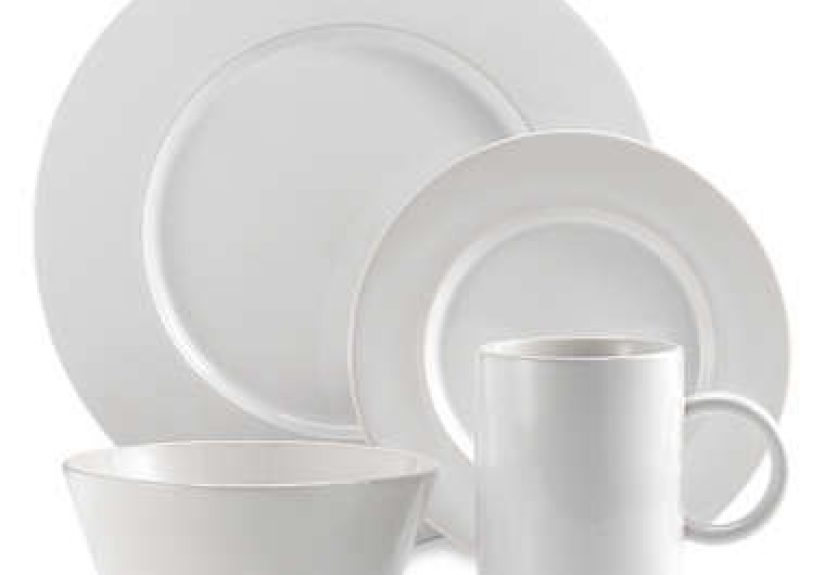
When people talk about Conran at Bed, Bath & Beyond in tabletop terms, Albion is the name that comes up most often. Albion is described as a white stoneware line with strong shapes and a modern profilebuilt for daily use, not museum worship.
What it looks like (and why it works)
- All-white finish: no pattern to lock you into a theme.
- Clean rims and smooth surfaces: visually quiet, easy to mix with other pieces.
- Modern proportions: the kind of shapes that feel “designed” without shouting about it.
What it’s made for: real life
Stoneware is popular for a reason: it’s typically sturdy, daily-friendly, and not precious. Albion was positioned as dishwasher safe and designed for the kind of repeat use that happens in actual kitchensweeknight pasta, Sunday pancakes, “I forgot I invited people over” snacks.
Why the name “Albion” fits the vibe
“Albion” is an ancient name for Great Britain, but the design itself leans modern. It’s a subtle nod: traditional roots, contemporary life. That’s very Conranclassic ideas, refreshed for the present.
Why White Dinnerware Is a Power Move (Not a Boring One)
White plates have a secret superpower: they make food look better. Not in a fake, filter-y waymore like a gallery wall makes art pop. A lot of food pros and hosts love white dishes because they’re a neutral stage for color, texture, and plating.
If you’re building a tabletop “capsule wardrobe,” white stoneware is the equivalent of a great pair of jeans: it goes with everything, it works year-round, and it never feels like a mistake.
Three ways a Conran-style white set helps you
- It makes mixing easy: you can pair it with vintage glassware, patterned napkins, or bold serving bowls without clashing.
- It’s season-proof: citrus in summer, stews in winter, everything looks intentional.
- It keeps the table from looking “busy”: especially helpful in smaller spaces where visual calm matters.
Why Bed, Bath & Beyond Was the Perfect (Unexpected) Stage
Bed, Bath & Beyond built its reputation on being the place where you could solve a lot of household problems in one triplinens, kitchen tools, storage, small appliancesplus that famous “surely this coupon will work on everything” energy.
So when tabletop pieces linked to Terence Conran showed up there, it made sense in a deeper way: Conran’s whole legacy is about bringing better design into everyday life. A big-box housewares retailer is basically the retail equivalent of that philosophy.
Translation: a Conran-linked stoneware plate at Bed, Bath & Beyond wasn’t a random glitch in the matrix. It was the matrix.
Is the Conran-at-BBB Moment Still Possible Today?
Here’s the practical reality: the original Bed, Bath & Beyond store era ended in 2023, when the company went through bankruptcy and liquidated its remaining stores. The brand name and certain intellectual property were acquired by Overstock (now operating under the Beyond umbrella), and the deal did not include the old store leases, inventory, or logistics network.
That matters for two reasons:
- If you’re hoping to walk into a classic Bed, Bath & Beyond and find that exact Albion display, that specific moment is largely a time capsule.
- If you’re hunting the items today, you’re more likely to find them via secondary markets, pattern-resale specialists, estate sales, and vintage sourcesnot a current in-store aisle.
Was Albion discontinued?
YesAlbion is widely listed as discontinued, with pattern timelines placing it in the late 2000s. That lines up with when the tabletop “find” became a talking point.
How to Shop the Look Now (Even If You Never Find the Exact Pieces)
You have two smart strategies: hunt the exact Conran-linked pieces or build a Conran-inspired tabletop using the same design rules.
Option A: Hunt for Albion (or Conran-linked Royal Doulton pieces)
- Use pattern and piece names: searching “Terence Conran Albion” is more effective than “white plate.”
- Look for consistent shape language: clean rims, modern silhouettes, uniform white glaze.
- Buy in small clusters: start with four dinner plates + four bowls, then expand as pieces appear.
- Prioritize condition: check for chips, hairline cracks, and heavy utensil marks (common on glossy whites).
Option B: Build a Conran-inspired “everyday modern” set
If you can’t find Albion (or you don’t want to spend your free time refreshing search results like you’re tracking concert tickets), you can still capture the same mood:
- Choose a white or off-white stoneware base with strong, simple shapes.
- Stick to 1–2 silhouettes (all round, or mostly round with one geometric accent).
- Add one texture layer: linen napkins, a woven runner, or natural wood serving boards.
- Keep the “loud” items optional: one patterned salad plate, a colorful serving bowl, or a bold glass.
Three Tabletop Setups That Feel Very “Conran,” Even in a Small Apartment
1) The Weeknight Minimalist (a.k.a. “I have my life together”)
- White stoneware dinner plate + simple bowl
- Clear drinking glass
- Stainless flatware
- One neutral linen napkin
Why it works: clean lines, no clutter, and dinner looks instantly more composedeven if it’s rotisserie chicken doing all the work.
2) The Casual Brunch Table (a.k.a. “Yes, I own a citrus juicer”)
- White plates
- One accent color in textiles (blue, sage, terracotta)
- Serving platter in wood or matte ceramic
- Fruit in a simple bowl (bonus points for oranges, because they’re basically tabletop decor)
Why it works: the white base keeps the color from feeling chaotic. The table reads fresh, not fussy.
3) The Holiday “Quiet Luxe” (a.k.a. “I didn’t buy themed plates and I’m proud”)
- White dinnerware base
- Vintage or brushed-metal flatware
- One dramatic centerpiece (greens, branches, or candles)
- Optional chargers in a darker tone
Why it works: you get impact from contrast and texture, not novelty graphics. The food stays center stage.
Care Tips for White Stoneware So It Stays “Crisp,” Not “Cafeteria”
- Avoid thermal shock: don’t move a hot dish straight into cold water.
- Stack thoughtfully: if your plates are glossy, a soft liner between stacks can reduce scuffs.
- Tackle utensil marks early: gentle cleaners or baking-soda paste can help on many white glazes.
- Don’t fear the dishwasheruse it wisely: space pieces so they don’t knock during the cycle.
What This Tabletop Story Really Means
“Terence Conran at Bed, Bath & Beyond” is more than a fun retail trivia fact. It’s a reminder that design trickles down when someone insists it should. Conran’s legacy isn’t just about a chair or a store or a museum. It’s about the idea that the objects you use every dayplates includedshape how you live.
And that’s why a simple white stoneware line at a mainstream retailer became such a memorable moment. It wasn’t about status. It was about better everyday life, sold one mug and one dinner plate at a time.
Experiences: Living With the “Terence Conran at BBB” Tabletop Vibe
There’s a specific kind of joy in discovering something quietly excellent in a place that usually sells 12-packs of microfiber cloths. If you were the type to wander Bed, Bath & Beyond “just to browse,” you know the rhythm: fluorescent lights, endless aisles, the faint hope that your coupon will magically apply to the one brand it definitely excludes. And thensuddenlyyou spot a shelf of white stoneware that looks like it belongs in a styled magazine spread, not next to the salad spinner display.
The first experience is always tactile. You pick up a plate and notice it has that satisfying weightsubstantial enough to feel intentional, not so heavy it turns dinner into a forearm workout. The rim is clean. The glaze looks calm. You can already picture a pile of pasta looking restaurant-level on it, even if your “sauce” is technically jar-based and your “garnish” is whatever herb hasn’t died yet.
Then comes the cabinet test: the moment you bring the pieces home and realize your existing dinnerware has been living a completely different lifestyle. The new plates don’t scream for attention, but they also don’t disappear. They organize the shelf visually. You start stacking them neatly. You begin to believe you might be the kind of person who owns matching bowls. (A dangerous thought. Proceed with caution.)
The best part, though, happens when you actually use the set with people around. White dinnerware has a way of making even casual meals feel more “hosted.” A takeout spread becomes a buffet. A homemade salad looks more vibrant. Guests compliment the food, and you accept the praise like a professionalwhile privately thanking the plate for doing half the work.
And because the look is simple, it doesn’t lock you into a single vibe. One week it’s minimalist with a plain linen napkin and water glasses. Another week it’s mixed with a thrifted floral dessert plate and suddenly your table feels collected, not coordinated. You begin to notice how the pieces behave in different lighting: crisp in daylight, cozy under warm lamps, almost gallery-like under candles.
That’s the lasting experience of this whole Conran-at-BBB moment: it nudges you toward the idea that everyday objects can be quietly elevating. Not fancy. Not fragile. Just well-consideredready for Tuesday-night leftovers, and also ready for the friend who drops by and makes you glad you didn’t serve everything on mismatched promotional mugs.
Conclusion
“Tabletop: Terence Conran at Bed, Bath & Beyond” is a small story with a big takeaway: great design doesn’t have to live behind glassor behind a luxury price tag. Whether you’re tracking down the Albion line, collecting similar white stoneware, or simply borrowing the Conran mindset (useful, modern, unfussy), the goal is the same: build a table that makes everyday life feel a little more intentional.
Because sometimes the most stylish thing you can do is serve dinner on something simple, durable, and quietly brilliantand then act like you planned it that way all along.