Table of Contents >> Show >> Hide
- What Working Memory Really Does in School
- Why Students Struggle With Working Memory
- Classroom Strategies That Actually Help
- Working Memory Support in Reading, Writing, and Math
- Support the Conditions Around Learning
- What About Brain-Training Apps and Working-Memory Programs?
- When to Consider Accommodations or Evaluation
- Real-World Experiences With Supporting Working Memory
- Conclusion
Some students walk into class with a backpack, a pencil case, and a fully charged water bottle. Others walk in carrying an invisible armload of directions, deadlines, half-finished thoughts, yesterday’s spelling rule, and the desperate hope that they will remember what page everyone is on. That invisible armload is often working memory at work.
Working memory is the brain’s temporary holding space. It is the mental whiteboard students use to keep information in mind long enough to do something with it. It helps a child remember the first part of a sentence while reading the second part, hold a math procedure while solving a problem, follow a three-step direction without turning step two into modern art, and connect ideas during writing, discussion, and problem-solving. When working memory is stretched too thin, learning does not stop because students are lazy, careless, or “not trying.” It stops because the brain’s desk is already covered in papers.
That is why supporting students’ working memory matters so much. It is not a niche concern for specialists alone. It is a classroom design issue, an instructional issue, and, frankly, a mercy issue. When teachers reduce unnecessary memory load and teach students how to manage information more effectively, students can use their mental energy for understanding rather than simply hanging on for dear life.
What Working Memory Really Does in School
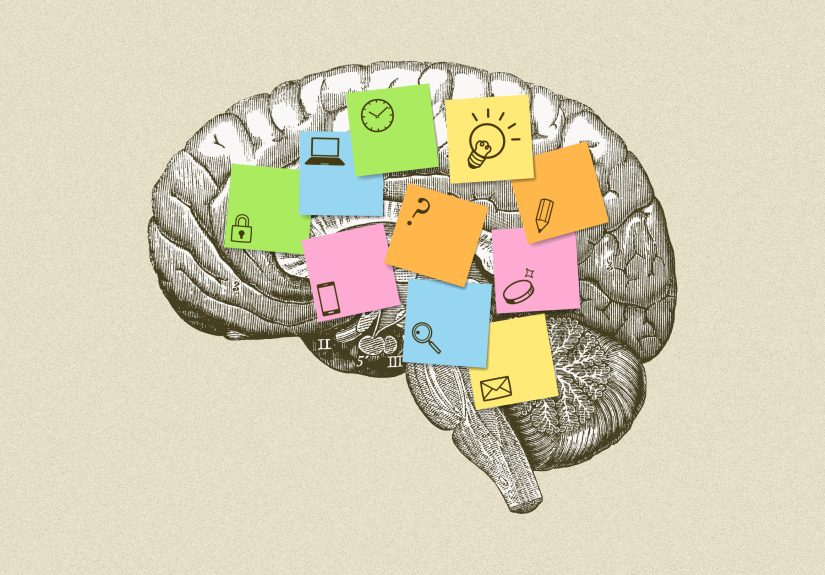
The classroom version of a mental sticky note
Working memory is often described as a short-term mental workspace. That description sounds tidy, but in real classrooms it is gloriously messy. A student may need to listen to directions, locate materials, remember a question, ignore hallway noise, copy an equation, and stay seated while their brain quietly screams, “Please repeat literally everything.” That is not a character flaw. That is cognitive load.
In school, working memory supports reading comprehension, note-taking, mental math, writing organization, discussion, test-taking, and task completion. It also works hand in hand with attention and other executive function skills. If attention is the spotlight, working memory is the stage crew trying to keep the props from falling over. When the crew is overwhelmed, the whole show gets weird.
What overload looks like
Students with overloaded working memory often seem to lose track of directions, forget what they were doing midway through a task, skip steps in a process, or struggle to transfer information from teacher talk to independent work. They may begin an assignment correctly and then drift, not because they do not care, but because they cannot hold enough pieces in mind at once. In reading, they may decode individual words yet lose the meaning of the sentence. In math, they may know the operation but forget the sequence. In writing, they may have ideas but not enough mental room to organize them.
Teachers sometimes see this and think, “This student never listens.” The more accurate translation is often, “This student cannot keep all of that information active long enough to use it well.” That difference matters. One interpretation leads to punishment. The other leads to support.
Why Students Struggle With Working Memory
Some students naturally have stronger working memory than others, and developmental differences are normal. But difficulty can become more noticeable when classroom demands rise. Long verbal directions, multi-step tasks, rapid note-taking, dense reading, timed work, and crowded visual materials all increase the load. So do stress, anxiety, fatigue, hunger, and distraction. Working memory is not just about memory. It is memory under pressure.
Students with ADHD, learning disabilities, language-based difficulties, processing-speed challenges, and some anxiety profiles may experience working-memory problems more often. That does not mean every forgetful child has a disorder, or that every child with ADHD has the same needs. It does mean educators should stop treating “remember all of this instantly” as the default entry ticket to learning.
One of the most overlooked causes of breakdown is instructional clutter. A beautiful worksheet can still be a cognitive traffic jam. A lively lecture can still be too fast. A clever activity can still ask students to juggle directions, materials, discussion norms, and content all at once. Sometimes students are not failing the lesson. The lesson is asking them to carry a piano up the stairs in flip-flops.
Classroom Strategies That Actually Help
1. Reduce the load before students ever feel it
Predictable routines are a gift to working memory. When students already know how to enter the room, where to find materials, how to respond to partner tasks, and what the daily structure looks like, they do not have to spend precious mental energy decoding the choreography. Familiar routines free up attention for actual learning.
Directions also need a makeover. Shorter is usually kinder. Breaking instructions into steps, presenting one chunk at a time, and pairing speech with visual cues can dramatically improve follow-through. Teachers should say the direction, show the direction, and leave the direction visible. If a student must rely on memory alone, the odds are not great. The human brain loves a reminder almost as much as it loves recess.
2. Externalize memory whenever possible
One of the smartest ways to support working memory is to stop demanding that it do every job by itself. Anchor charts, checklists, worked examples, assignment planners, color-coded steps, graphic organizers, and posted routines act like an external hard drive for the classroom. They do not lower standards. They lower unnecessary friction.
Students should not have to remember every piece of a process while learning the content of that process. In writing, give them a paragraph frame or planning organizer. In math, keep operation steps visible. In reading, offer margin notes, sticky-note prompts, or a simple organizer for main idea and evidence. In science, use a lab checklist. In social studies, provide a timeline or cause-and-effect chart. When memory supports are visible, students can spend less time fishing for forgotten steps and more time thinking.
3. Teach strategy use on purpose
Students need more than reminders to “focus.” They need explicit strategies for handling information. Chunking is one of the best examples. Instead of asking students to hold six unrelated details in mind, group them into smaller meaningful units. That is true for vocabulary, procedures, note-taking, and even essay planning.
Rehearsal helps too. Encourage students to quietly repeat directions, paraphrase what they heard, or turn a teacher explanation into their own words before beginning work. Verbal rehearsal can make fragile information stay active a little longer. So can retrieval practice, where students pause and recall key ideas without looking. Tiny memory moves often beat grand motivational speeches.
Teachers can also model self-talk. A student solving a math problem might whisper, “First underline the question, then choose the operation, then show my steps.” That kind of language turns invisible thinking into a usable routine. Metacognitive prompts such as “What do I need to remember right now?” or “What is my next step?” help students manage cognitive demands in real time.
4. Use multisensory learning and movement
Students remember and process information better when they interact with it in more than one way. Seeing, hearing, saying, writing, drawing, and physically manipulating information can all support memory. Multisensory teaching is not educational glitter. It is a practical way to strengthen encoding and reduce overload.
Movement can help as well. Brief classroom activity, purposeful transitions, and chances to learn through physical engagement can support attention and self-regulation, both of which matter for working memory. Not every lesson needs students hopping like caffeinated kangaroos, but brains often work better when bodies are not treated like decorative furniture.
Working Memory Support in Reading, Writing, and Math
Reading
Reading places heavy demands on working memory because students must hold words, sentence meaning, and background knowledge together while continuing forward. A child may decode accurately and still not understand because meaning drops out before the paragraph is complete. To help, teachers can preteach vocabulary, stop for brief comprehension checks, use annotation prompts, and keep visual supports simple and consistent. Highlighting key words, jotting short notes in margins, and using graphic organizers can reduce the burden.
Writing
Writing is a working-memory obstacle course. Students must generate ideas, organize them, remember the prompt, apply spelling and grammar rules, and keep track of sentence structure while physically writing or typing. No wonder some students stare at a blank page like it has personally offended them. Helpful supports include sentence starters, planning templates, exemplars, word banks, and step-by-step writing routines. Separating planning, drafting, and revising into distinct stages also makes the task more manageable.
Math
Math often exposes working-memory weakness because procedures are sequential. A student may understand regrouping, fractions, or multi-step problem solving, yet still lose track halfway through. Teachers can reduce overload by modeling one step at a time, keeping worked examples visible, encouraging students to write intermediate steps instead of doing everything mentally, and limiting unnecessary visual clutter on the page. Manipulatives and diagrams can help students offload some of the mental juggling.
Support the Conditions Around Learning
Working memory does not operate in a vacuum. It is affected by basic conditions that schools and families sometimes treat as side issues. Sleep matters. Students who are exhausted are not bringing their best thinking to first period, no matter how inspiring the classroom quote of the day may be. Nutrition matters too. A child trying to learn on an empty stomach is not being dramatic; the brain needs fuel.
Stress and anxiety also deserve attention. High anxiety can disrupt working memory by pulling mental resources away from the task at hand. That is why calm, structured classrooms help more than just behavior. Clear expectations, consistent routines, reduced time pressure when appropriate, and emotionally safe correction all support thinking. Students do better when they are not spending half their brainpower wondering whether they are about to get something wrong in public.
Home-school communication can strengthen these supports. A planner, visual homework routine, posted checklist, or shared digital reminder system can prevent students from losing track of assignments before they ever begin them. The goal is not to micromanage every minute of a child’s life. The goal is to make memory demands visible and manageable.
What About Brain-Training Apps and Working-Memory Programs?
This is where things get interesting. Research on working-memory training is not a simple yes-or-no story. Some studies show that students can improve on the tasks they practice, and a few school-based studies have found short-term gains in working memory and some math-related outcomes, especially when training is paired with metacognitive strategy support. That sounds promising, and in some cases it is.
But the bigger picture is more cautious. Reviews of the evidence suggest that stand-alone computerized working-memory training often shows stronger improvement on trained or closely related memory tasks than on broader academic outcomes such as reading and long-term achievement. In plain English: students may get better at the game without automatically becoming better at everything school asks them to do.
That does not mean all interventions are useless. It means schools should be careful about miracle claims. The strongest supports are still good instruction, cognitive scaffolds, explicit strategy teaching, appropriate accommodations, and classroom design that reduces unnecessary load. Fancy software may have a role, but it should not replace the boringly effective things like checklists, routines, visual cues, and teachers who know how to slow down the right part of the lesson.
When to Consider Accommodations or Evaluation
If a student regularly forgets directions, loses track of multi-step work, struggles to retain newly taught material, or shows a pattern of breakdown across subjects, it may be worth looking more closely. Teachers can document what happens, when it happens, and which supports help. Families can share whether similar difficulties appear at home. When working-memory problems are persistent and interfere with learning, a school-based evaluation or outside assessment may help clarify what is going on.
Support may include accommodations such as written directions, reduced load per page, extended time, guided notes, visual reminders, chunked assignments, access to organizers, or assistive technology. The right support is not a shortcut. It is a bridge. Students still do the thinking; they just are not asked to carry every instruction in their heads while crossing the bridge in the wind.
Real-World Experiences With Supporting Working Memory
In many classrooms, the turning point does not come from a giant intervention package. It comes from one teacher noticing a pattern. A fourth-grade teacher realizes that a student who seems “off task” can actually explain the concept perfectly when the steps are written down. A middle school math teacher sees homework completion rise after posting a three-step launch routine on the board every day. A reading specialist discovers that a child who keeps forgetting discussion prompts can suddenly participate with confidence when given a simple bookmark showing two sentence stems and a reminder to stop after each paragraph.
Parents often describe similar moments at home. A child who melts down during homework is not always fighting the content. Sometimes the child is trying to remember the directions, find the materials, recall what happened in class, and begin the first step all at once. When the routine changes from “Go do your homework” to “Check the planner, get one folder, read the first direction out loud, and use the checklist,” the drama level drops. Not magically. Not permanently. But enough that everyone stops looking at each other like contestants on a survival show.
Teachers also talk about the surprising power of repetition. Students who forget routines in September may lean on them successfully by November if those routines are taught, practiced, and reused consistently. One teacher may use the same note-taking frame in science and social studies. Another may start every writing block with the same visible sequence: plan, draft, reread, revise. Students begin to internalize the structure. Their working memory is no longer spending itself on the question, “What are we doing?” It can move to the more important question, “What am I learning?”
There are also stories of what does not help. Rapid-fire verbal instructions. Overdecorated worksheets. Last-minute task changes with no warning. Public corrections delivered while a student is already overwhelmed. Adults sometimes assume more pressure will produce more effort, when in reality it often produces less usable thinking. Students with weak working memory can look capable one minute and lost the next. That inconsistency frustrates adults, but it is actually one of the clearest signs that cognitive demands are outrunning available mental space.
The most encouraging experiences usually share one theme: support becomes effective when it is practical, consistent, and specific. A student may not need a revolutionary new program. They may need a teacher who writes down the steps, a family that uses a planner routine, a quieter test space, a visual schedule, or permission to jot intermediate steps instead of doing everything in their head. These are not flashy solutions, and that is exactly why they work. Good support often looks ordinary from the outside.
Over time, students can also learn to advocate for themselves. They begin saying things like, “Can you repeat that one step?” or “I need the directions in writing,” or “I know how to do this, but I need a checklist.” That kind of self-awareness is a major win. It means the student is no longer interpreting memory breakdown as a personal failure. They are recognizing a learning need and using a tool to meet it. That is not dependence. That is strategy. And strategy is one of the most powerful school skills a student can build.
Conclusion
Supporting students’ working memory is not about lowering expectations or turning every classroom into a soft-pillow think tank. It is about making learning more accessible, more accurate, and more humane. Students do better when teachers reduce needless cognitive load, teach routines explicitly, provide visible supports, and create conditions where attention and memory can actually function.
The best part is that many working-memory supports are simply strong teaching. Clear directions help everyone. Graphic organizers help everyone. Checklists, examples, predictable routines, brief movement, reduced clutter, and strategy instruction help everyone. The difference is that for students with working-memory challenges, these supports are not just nice extras. They are often the difference between confusion and competence.
When schools understand that reality, students stop being labeled forgetful, careless, or inconsistent. They start being seen accurately: as learners who can thrive when the path is made visible.