Table of Contents >> Show >> Hide
Stonehenge has a talent for making people say wildly ambitious things. Ancient aliens? Nope. Wizards with a landscaping hobby? Also no. But one modern theory is far more interesting than the usual supernatural detours: the famous monument in southern England may trace part of its intellectual ancestry to prehistoric seafarers from what is now Brittany, France.
That idea does not mean Stonehenge was copied brick-for-brick, or rather boulder-for-boulder, from a French blueprint stuffed in a waterproof goat-skin tube. What it means is subtler and arguably cooler. Archaeologists have suggested that the broader megalith-building tradition of western Europe may have begun in northwest France and then spread along the coasts by people who were already skilled at moving over water. In that reading, Stonehenge was not a French import. It was a British masterpiece created in a pan-European conversation that may have started at sea.
For SEO readers and history lovers alike, this matters because the phrase “Stonehenge ancient sailors from France” captures one of the most fascinating shifts in modern archaeology: we are no longer asking only where the stones came from. We are also asking where the idea came from, who carried it, and how connected Neolithic communities really were.
The Theory in Plain English
The core argument is simple. A major archaeological study comparing thousands of radiocarbon dates across Europe proposed that the earliest megalithic monuments appeared in northwest France, especially the Brittany region, during the fifth millennium BCE. From there, the practice of building with giant stones seems to have spread in stages along Atlantic and Mediterranean coastlines.
That coastal pattern is what gave rise to the “ancient sailors” angle. If similar megalithic traditions appeared in far-flung places along shorelines, then seafaring communities may have helped carry ideas, rituals, and monument-building know-how from one region to another. In other words, before Europe had highways, it had sea lanes. The ocean was less a barrier and more a prehistoric group chat.
This makes Brittany especially important. The area around Carnac is packed with standing stones, burial monuments, and monumental alignments that long predate Stonehenge. Newer research has only strengthened the region’s importance by pushing some of those French sites even deeper into prehistory. So when people say Stonehenge may have roots with ancient sailors from France, they are talking about cultural ancestry, not literal French construction crews showing up in Wiltshire with hard hats and lunch baskets.
Why Brittany Keeps Stealing the Archaeological Spotlight
Carnac and the Bay of Morbihan
If Stonehenge is the celebrity, Carnac is the deeply influential indie act that serious fans insist you need to know. The megalithic landscape of Brittany includes dense concentrations of standing stones, passage graves, cairns, and alignments spread across the Bay of Morbihan and nearby areas. Archaeologists have long suspected that the region was one of Europe’s earliest centers of monument building.
Recent work has made that suspicion look stronger, not weaker. Studies tied to the Carnac area suggest that some alignments there may date to around 4600 BCE or earlier, placing them among the oldest known megalithic constructions in Europe. That matters because Stonehenge’s best-known stone phases came much later, around the third millennium BCE. So Brittany was already doing “dramatic stone architecture” long before Stonehenge became a postcard legend.
There is also symbolic evidence that makes the maritime theory feel less like fantasy and more like a serious line of inquiry. Some early monuments in northwest France feature imagery linked to marine life, including whale carvings and other seafaring associations. That does not prove a Stone Age navy in the modern sense, but it strongly suggests that coastal communities in the region were not terrified of the sea. They knew it, used it, and likely treated it as part of their social world.
Old Stones, New Implications
The French connection becomes more compelling when you stop thinking of megaliths as isolated local oddities. Across western Europe, archaeologists see recurring patterns: burial monuments, stone settings, alignments, ritual landscapes, and communities willing to spend absurd amounts of labor on places that were clearly about more than simple shelter. The question is whether those similarities emerged independently over and over, or whether ideas traveled.
The maritime diffusion model argues that the ideas traveled. Not necessarily because one culture conquered another, but because people exchanged practices over generations. That could include migration, trade, intermarriage, seasonal travel, shared rituals, or all of the above. Ancient sailors may not have ferried a finished Stonehenge plan across the Channel, but they may have carried the habit of thinking big in stone.
So, Was Stonehenge Basically French?
No. And this is where headlines sometimes get a little too caffeinated.
Stonehenge is firmly rooted in Britain. Its monumental architecture developed over multiple construction phases, and its stones came from several different places in the British Isles. Research has shown that the sarsen stones, the giant uprights and lintels that most people picture when they hear “Stonehenge,” likely came from West Woods in Wiltshire, not from France. The famous bluestones have been traced to west Wales, particularly the Preseli Hills. And the monument’s mysterious Altar Stone now appears to have come from northeast Scotland, which somehow makes Stonehenge even more extra than we already thought.
What this means is that Stonehenge was a deeply British construction in material terms. But archaeology is not only about raw materials. It is also about concepts, customs, and long-distance connections. A Gothic cathedral can use local stone and still belong to a wider European tradition. In much the same way, Stonehenge can be British in execution while still participating in a monument-building tradition whose earliest spark may have come from France.
What Ancient Sailors Would Actually Have Contributed
Not Just Boats, but Networks
When people imagine prehistoric sailors, they often picture something halfway between a survival show and a very damp disaster. But Neolithic coastal travel could have been more organized and more meaningful than that stereotype suggests. Boats open routes for exchange. Exchange creates networks. Networks move goods, beliefs, symbols, and techniques.
That is the real power of the sailor theory. It suggests that early monument builders along Europe’s coasts were not cut off village by village. They may have been linked through maritime pathways that allowed stories and sacred ideas to move surprisingly far. A coastline full of communities can function like a chain of connected minds.
Under that model, the spread of megalithic architecture was not random. It followed people who were capable of navigating shorelines, carrying knowledge, and adapting the basic monument idea to local needs. By the time monument traditions reached Britain, communities there were not passively copying a foreign style. They were transforming a larger tradition into something distinctive, ambitious, and regionally meaningful.
The Sea as a Cultural Highway
Today we think of land travel as normal and sea travel as specialized. Prehistory may have flipped that logic in some regions. Moving along coasts by boat could be faster than hacking through forests, marshes, and rough inland terrain. So when archaeologists see early megaliths clustering near coastlines, they do not shrug and call it a coincidence. They see a map of movement.
That movement helps explain why monument traditions appear across Iberia, Brittany, the British Isles, and Scandinavia in ways that feel connected. The sea did not separate these worlds. It stitched them together.
What Skeptics Get Right
Good archaeology is allergic to overconfidence, and for good reason. There are still real limits to the French-sailor theory.
First, similarity is not automatic proof of direct transmission. Different societies can arrive at similar solutions on their own. Big stone monuments are dramatic, durable, and socially useful for ritual life, burial, and political symbolism. Humans do not need a memo to realize that giant rocks make a statement.
Second, dating early sites is difficult. Radiocarbon evidence can be rich, but it is not magic. Archaeologists are often dating charcoal, deposits, use phases, or nearby materials rather than the stones themselves. That means chronologies improve over time, and interpretations can shift as fresh evidence appears.
Third, even if Brittany was an early center, that does not prove a simple one-way story. Cultural change rarely moves in a perfectly neat line from Point A to Point B. It is much more likely that western Europe saw a messy, fascinating mix of local innovation and long-distance contact. Ancient people were creative, not photocopiers.
So the smartest version of the claim is this: Stonehenge may belong to a megalithic tradition whose earliest well-documented roots lie in northwest France and whose spread was likely helped by maritime networks. That is a strong, exciting hypothesis. It is also not the same as saying, “Stonehenge was built by French sailors.” Archaeology hates clickbait almost as much as editors love it.
Why the Theory Still Matters Today
This debate changes how we imagine prehistoric Europe. Instead of tiny isolated communities grunting suspiciously at strangers from the next valley over, we get a picture of people who moved, traded, observed the sea, remembered places, and shared ideas across long distances. That is a much more dynamic world.
It also reframes Stonehenge itself. The monument stops being a lonely marvel and becomes part of a broader Atlantic story. Its builders were not merely hauling stones for the sake of spectacle. They may have been participating in a tradition of monumentality that connected burial, ceremony, astronomy, ancestry, and collective identity across a wide coastal world.
And then there is the psychological appeal. We love the idea that ancient people were more sophisticated than we once assumed. Every new discovery at Stonehenge seems to push that point further. Welsh quarries, Wiltshire sarsens, a Scottish Altar Stone, and a possible French intellectual ancestry? Stonehenge is less a static pile of rocks than a Neolithic networking event with exceptional stone procurement.
Experiences That Bring This Theory to Life
To really feel the power of the “Stonehenge might have its roots with ancient sailors from France” theory, it helps to imagine the places and experiences tied to it rather than treating it as a dry academic puzzle. This topic is not only about dates and diagrams. It is about landscape, weather, movement, ritual, and the strange human urge to drag gigantic stones into meaningful shapes.
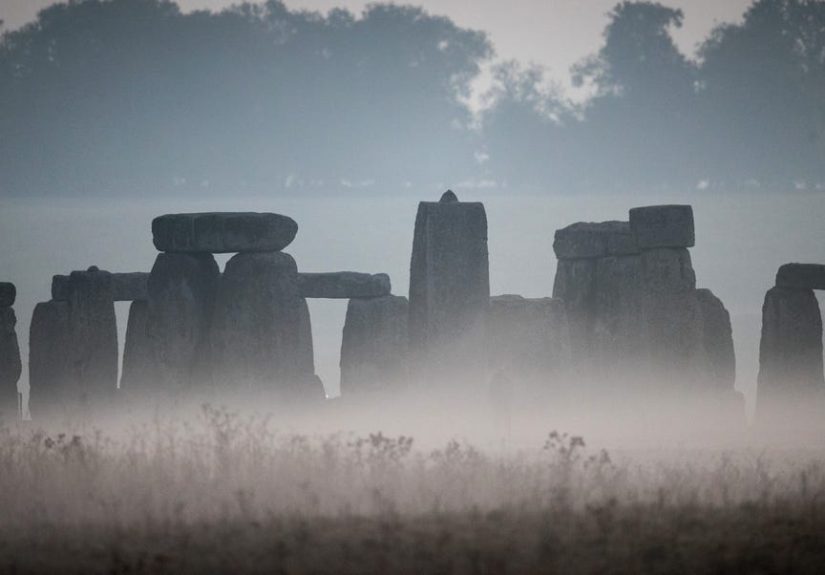
Start with the experience of standing at Stonehenge itself, especially at dawn or near the solstice season. Even if you arrive with a practical mindset and a fully charged phone ready for photos, the site has a way of shrinking modern sarcasm. The stones are not just large. They are deliberate. Their spacing, posture, and relationship to the sky feel intentional in a way that immediately raises a bigger question: who imagines something like this before cranes, trucks, and metal tools? That emotional jolt is the gateway into the French-sailor theory, because it forces you to think beyond one local construction event and toward a much older tradition of monument building.
Then imagine Brittany. The coast is windy, dramatic, and rich with megalithic sites that feel less like a single monument and more like an entire stone vocabulary. At Carnac, rows of standing stones stretch across the landscape with a kind of stubborn poetry. The experience is different from Stonehenge. Stonehenge feels like a grand statement. Carnac can feel like a conversation spread across the earth. If you are trying to understand why archaeologists keep pointing to northwest France, this is why. The place makes the theory emotionally plausible. You do not need to believe every detail to sense that this region had a very long and very serious relationship with stone, ceremony, and public memory.
The third experience is more imaginative but just as important: picture a prehistoric journey by sea. No engines. No GPS. No weather app cheerfully informing you that your weekend plans are doomed. Just water, coastline, skill, and nerve. If Neolithic communities really were moving ideas along Atlantic routes, then the sea was not empty space between monuments. It was the thing connecting them. That changes the mental map completely. Suddenly France, Britain, Iberia, and other coastal regions do not look isolated. They look like stops in a linked ritual world.
There is also an intellectual experience tied to this subject: the pleasure of watching archaeology get humbler and smarter at the same time. Older stories often treated prehistoric communities as primitive, static, or geographically boxed in. New research keeps breaking that stereotype. Every time scientists trace one of Stonehenge’s stones to a distant source, or refine the dates of Brittany’s megaliths, the past becomes more mobile and more interesting. The experience for the modern reader is almost cinematic. You start with “mysterious stone circle,” and before long you are in a plot involving Welsh quarries, French monument traditions, Scottish sandstone, and maritime networks. It is basically a prestige historical drama, only with fewer velvet costumes and more geology.
Finally, there is the emotional experience of realizing that monuments like Stonehenge were probably about belonging as much as engineering. These places gathered memory, death, ceremony, and identity into physical form. If ideas about megaliths really traveled from ancient sailors in France to communities across Europe, then Stonehenge becomes part of a much older human pattern: people crossing distances, sharing symbols, and building things that outlast them on purpose. That is a powerful thought. It reminds us that long before modern nations existed, long before borders became official and passports became annoying, human beings were already linked by curiosity, ritual, and movement. The stones still stand because that impulse was strong enough to leave marks on the land.
Conclusion
Stonehenge may not be French, but the idea behind part of its monument tradition may have arrived through a world shaped by seafaring communities from northwest France. That is the most balanced way to read the evidence. Brittany looks increasingly important in the early history of Europe’s megaliths. Maritime routes make sense as channels for cultural transmission. And Stonehenge, with its Welsh, Wiltshire, and Scottish materials, now looks less like an isolated wonder and more like a grand British expression of a connected prehistoric world.
In short, the theory matters because it replaces an old image of prehistoric isolation with one of movement, exchange, and daring imagination. Ancient sailors from France may not have designed Stonehenge with clipboards and project timelines, but they may have helped launch the monument-building tradition that made Stonehenge possible. Not bad for people who did all this without concrete mixers, satellite maps, or the comforting existence of coffee.