Table of Contents >> Show >> Hide
- The popular myth: “Low rates = stocks can’t really lose”
- Why stocks can still drop when rates are low
- A quick refresher: how interest rates actually touch stock prices
- History lesson (no pop quiz): low rates and losses have coexisted before
- What low rates change for investors (and what they don’t)
- The portfolio moves that matter more than guessing rates
- A simple “low-rate reality check” table
- Practical examples: how different investors can think about low rates
- How to talk about low rates without fooling yourself
- Experiences from a low-rate world (the part nobody puts in the spreadsheet)
- Conclusion: Low rates don’t cancel riskthey just change the conversation
Low interest rates have a way of making investors feel like the stock market has been fitted with training wheels.
Money is cheap! Cash pays basically nothing! Bonds look like a snooze button! Surely stocks can’t fall much if rates are low… right?
Not exactly. Low rates can influence markets, but they don’t immunize them. Stocks can fall in a low-rate world for the same reason
umbrellas don’t stop stormsthey just change how wet you get.
This article breaks down why stock market losses can happen even when interest rates are low, what history says about the “there is no alternative” (TINA)
mindset, and how to build a plan that doesn’t depend on the Federal Reserve behaving like a personal financial assistant.
The popular myth: “Low rates = stocks can’t really lose”
The myth usually sounds like one of these:
- “Rates are low, so valuations have to stay high.”
- “Cash pays nothing, so everyone will buy stocks forever.”
- “The Fed won’t allow a big drawdown.”
The problem is that stocks aren’t priced by one variable. They’re priced by a messy mix of earnings expectations, investor psychology, inflation,
recession risk, geopolitics, credit conditions, and yesinterest rates. But “rates are low” is not a force field.
Why stocks can still drop when rates are low
1) Sometimes low rates are a warning label, not a gift tag
Interest rates often fall because something is breaking: growth is slowing, inflation is cooling fast, unemployment is rising, or financial conditions
are tightening. When the economic outlook deteriorates, companies can face falling revenues, shrinking margins, and higher default risknone of which
is solved by cheaper borrowing overnight.
Translation: low rates can show up at the same time as rising fear. And fear is extremely good at turning “paper gains” into “paper losses.”
2) Low rates can inflate prices… which can make future losses easier
Lower rates can boost asset prices mathematically by increasing the present value of future cash flows (that’s the discount-rate effect).
But that same boost can pull future returns forwardmeaning the market may “borrow” performance from tomorrow.
If you pay a high price for future growth and that growth arrives late, smaller, or not at all, the market doesn’t politely refund you.
It repricesoften quickly, and occasionally rudely.
3) Rates don’t move alonethe risk premium moves too
Investors don’t require returns just because rates exist; they require returns because stocks are risky.
When uncertainty rises, investors may demand a higher equity risk premium (extra return above safer assets).
That can pressure stock prices even if government bond yields are low or falling.
Think of it like this: a cheaper “risk-free” baseline doesn’t guarantee a cheap “risky” price. If the market decides risk got scarier,
the risk premium can rise and stock prices can fall.
4) “There is no alternative” is not the same as “there is no risk”
TINA is a clever slogan because it’s partly true: when cash yields are low and bonds are expensive, stocks look more attractive.
But “more attractive than a low-paying alternative” doesn’t mean “safe.”
Stocks still come with drawdowns, bear markets, and the occasional moment where your portfolio feels like it’s doing parkour down the stairs.
Low rates change relative appeal. They don’t delete volatility.
A quick refresher: how interest rates actually touch stock prices
Rates can matter through several channels:
- Valuation math: lower discount rates can increase the present value of future earnings.
- Economic impact: lower borrowing costs can support spending, investment, and housingif confidence holds.
- Competition for capital: when bonds and cash yield more, stocks may face tougher competition (and vice versa).
- Sentiment: rate cuts can be read as “supportive” or as “uh-oh,” depending on what’s happening in the economy.
That last bullet is the key: markets react to what rate changes mean, not just what they are.
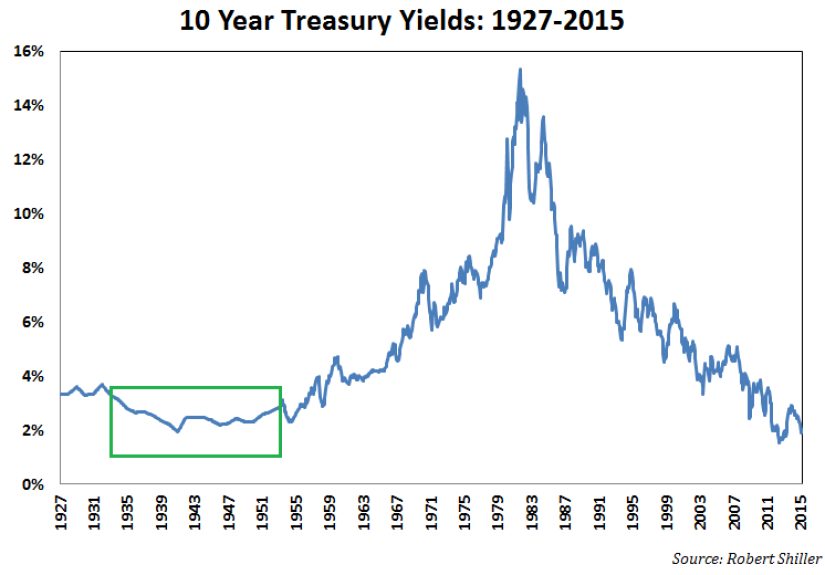
History lesson (no pop quiz): low rates and losses have coexisted before
Case study: The early 2000srate cuts, then a long equity hangover
Around the dot-com peak, the market had already priced in a lot of future perfection. When reality showed up in regular clothesslower growth,
profit disappointments, and a recessionstocks fell hard. Rate cuts didn’t prevent losses because the issue wasn’t “money is too expensive.”
The issue was “expectations were too high.”
This is a recurring theme: if valuations are stretched, even friendly interest rates can’t stop gravity forever.
Case study: 2008rates fell fast, stocks fell faster (at first)
In the Global Financial Crisis, policy rates dropped dramatically and stayed low for years. The stock market still suffered a brutal decline on the way
down because the banking system and credit markets were under severe stress.
Eventually, lower rates (along with other policy moves and a stabilizing economy) supported recovery. But the timeline matters:
low rates did not prevent the initial losses; they were part of what helped the system heal afterward.
Case study: Japan as a cautionary tale about “low rates = guaranteed equity prosperity”
Japan has experienced long stretches of very low rates, including periods near zero. Yet equities can still stagnate for years when growth is weak,
demographics are challenging, and deflation pressures linger.
The lesson isn’t “Japan equals America.” The lesson is simpler: low rates alone do not guarantee strong stock returns.
What low rates change for investors (and what they don’t)
Low rates change expected returns… especially for bonds
When yields are low, bond investors face a tougher math problem: income is smaller, and the cushion against price swings can be thin.
That doesn’t make bonds uselessit makes them different. They may still stabilize portfolios, but the “easy return” era becomes harder to repeat.
Low rates don’t eliminate stock drawdowns
Stocks can lose money in any rate environment because stocks are claims on uncertain future profits. Uncertainty never fully leaves the building.
It just changes seats.
Low rates can create sneaky behavioral traps
Two common ones:
- Overconfidence: believing policy will always rescue prices encourages taking more risk than you can emotionally handle.
- Performance-chasing: buying what just went up because “rates will keep it going” is how people pay top dollar for yesterday’s story.
The portfolio moves that matter more than guessing rates
1) Build an asset allocation you can live with
A strong plan starts with deciding how much volatility you can tolerate and how long your money needs to work.
Stocks for long-term growth, bonds for stability and income, and cash for near-term needs and peace of mind.
2) Diversify like you mean it
Diversification isn’t about owning “a lot of stuff.” It’s about owning assets that don’t all panic at the same time.
That can mean mixing U.S. and international stocks, large and small companies, value and growth styles, and multiple bond types with appropriate duration.
3) Rebalance on purpose, not on vibes
Rebalancing is the boring hero move: trimming what grew too large and adding to what shrankso your portfolio doesn’t quietly morph into a risk level
you never intended to hold.
If the market hands you a strong rally, rebalancing can prevent overconcentration. If it hands you a drop, rebalancing can force disciplined buying
when it feels uncomfortable.
4) Match your cash needs to your life, not headlines
If you’ll need money soon (rent, tuition, a near-term home purchase), that money shouldn’t be doing rollercoaster auditions in equities.
For long-term goals, volatility is the admission price. For short-term goals, it’s a liability.
A simple “low-rate reality check” table
| What people assume | What can happen instead | Why |
|---|---|---|
| Low rates keep stocks up | Stocks fall anyway | Growth slows, earnings disappoint, risk premiums rise |
| Rate cuts are bullish | Markets sell off after cuts | Cuts can signal economic trouble |
| Bonds always protect | Bonds protect less (sometimes) | Low starting yields reduce the cushion |
| TINA means “no risk” | TINA means “choose your risk” | Stocks still draw down; cash still loses to inflation |
Practical examples: how different investors can think about low rates
If you’re still accumulating (adding money regularly)
Low rates can make future returns feel uncertain, but the biggest advantage an accumulator has is time and consistency.
A regular investing schedule (like monthly contributions) can take advantage of volatility instead of fearing it.
When prices drop, the same contribution buys more shares. That’s not fun emotionally, but it can be powerful mathematically.
If you’re near retirement or already retired
The problem is less “what will stocks do next?” and more “can my plan survive a bad sequence of returns?”
In low-rate environments, retirees sometimes reach for yield by taking stock-like risk while pretending it’s bond-like safety.
The better solution is usually structural: a spending plan, a cash buffer for near-term withdrawals, and a diversified mix that doesn’t require perfect timing.
If you’re tempted to time the market based on rates
Timing based on interest rates often fails because markets anticipate policy changes. By the time something is obvious,
prices have already reacted. Plus, rates are only one variable. Even if you guess rates correctly, you can still guess the market incorrectly.
How to talk about low rates without fooling yourself
- Replace “rates are low” with “what is the market already pricing in?”
- Ask: are earnings expectations realistic?
- Ask: what happens if inflation or growth surprises the other way?
- Check concentration risk: are a handful of stocks carrying your entire plan?
- Make your plan resilient: assume drawdowns will happen, because they will.
Experiences from a low-rate world (the part nobody puts in the spreadsheet)
Investors don’t experience “interest rates” in the abstractthey experience them as a set of awkward trade-offs. One common story goes like this:
a saver spends years doing the responsible thing, keeping money in a savings account, only to watch the interest earned barely cover the cost of a streaming
subscription. That frustration turns into action: they jump into stocks because “cash is pointless,” and they do it all at onceright after a long rally.
Then the market drops 15% to 25% and the lesson arrives, loudly: low rates don’t remove risk; they just push people toward it.
Another experience shows up in retirement planning. In a low-yield environment, some retirees feel forced to “manufacture income” by chasing dividends,
high-yield funds, or complex products that promise stability. The emotional logic makes sensemonthly income feels comforting. But the market doesn’t grade
on vibes. When a downturn hits, the high-yield holdings can fall like stocks because, surprise, they often are stocks (or credit risk dressed up
as income). Many retirees who lived through this came away with a clearer framework: separate “money needed soon” from “money needed later,” hold a buffer
for near-term spending, and let the long-term portfolio breathe through volatility.
Low rates also create a unique kind of investor impatience. When bonds yield very little, people start treating bonds like a betrayal: “Why hold something
that barely pays me?” But then a risk-off episode happens, and even modestly defensive assets feel valuablenot because they’re exciting, but because they
reduce the chance that you’ll panic-sell your stocks at the worst possible time. Plenty of investors have discovered that the best role of bonds (and cash)
isn’t to win the return contest; it’s to keep the whole plan from falling apart during stressful stretches.
There’s also the “Fed-watching phase,” when investors start interpreting every rate decision like it’s a plot twist in a prestige TV series.
Some learn the hard way that the market can fall after a cut, rise after a hike, or do absolutely nothing just to humble everyone involved.
The investors who eventually find peace usually adopt a different mindset: rates are part of the weather, not the steering wheel. They focus on what they
can controlcosts, diversification, rebalancing discipline, and staying investedrather than trying to front-run the next headline.
Finally, one of the healthiest experiences investors report in low-rate eras is learning to respect valuation without obsessing over it.
They stop looking for a single “signal” that guarantees safety. Instead, they accept that stocks can fall even when policy is supportive,
and they design a portfolio that can survive that truth. That’s not pessimism. That’s adulthoodfinancially speaking.
Conclusion: Low rates don’t cancel riskthey just change the conversation
Low interest rates can support asset prices, influence valuations, and reshape the appeal of stocks versus bonds and cash. But they don’t prevent losses.
Stocks can fall in a low-rate environment because markets are driven by expectations, earnings, risk premiums, and the economic cyclenot one single dial.
The most “wealth of common sense” approach is to stop looking for a rate-based safety net and build a plan that assumes volatility is normal:
diversify, rebalance, keep cash for near-term needs, and stay invested for long-term goals. That way, if the market drops while rates are low,
you won’t be shockedyou’ll be prepared.