Table of Contents >> Show >> Hide
- Why This Bathroom Works: Stealth Glamour in a Small Footprint
- The Signature Elements to Steal
- 1) A soft-gray palette that doesn’t go “sad office carpet”
- 2) Doorless glass shower: the small-bath optical illusion that actually works
- 3) Skylight: boutique-hotel brightness with built-in privacy
- 4) Chrome, stainless, and polished nickel: the glam that doesn’t shout
- 5) One statement pendant (yes, in a bathroom)
- Get the Look: A Practical Checklist (With Real-World Alternatives)
- Design Math for a Small NYC-Style Bathroom
- Materials and Finishes That Keep It Glam (Not Slippery, Not Precious)
- Lighting Plan: How to Avoid “Operating-Room Bright”
- Maintenance: Keep It Looking Sharp Without Becoming a Bathroom Monk
- Budget-Friendly Ways to Get the Same Vibe
- Common Mistakes When Copying This Look (And How to Avoid Them)
- FAQ: Quick Answers Before You Start Demo Day
- Conclusion: Your Own Stealth-Glam Bath, Minus the Manhattan Price Tag
- Bonus: Real-Life Experiences When You Try to “Steal This Look” ( of Honest Truth)
- SEO Tags
Some bathrooms try so hard to be “luxury” that they end up looking like a spa brochure taped to a hardware store receipt.
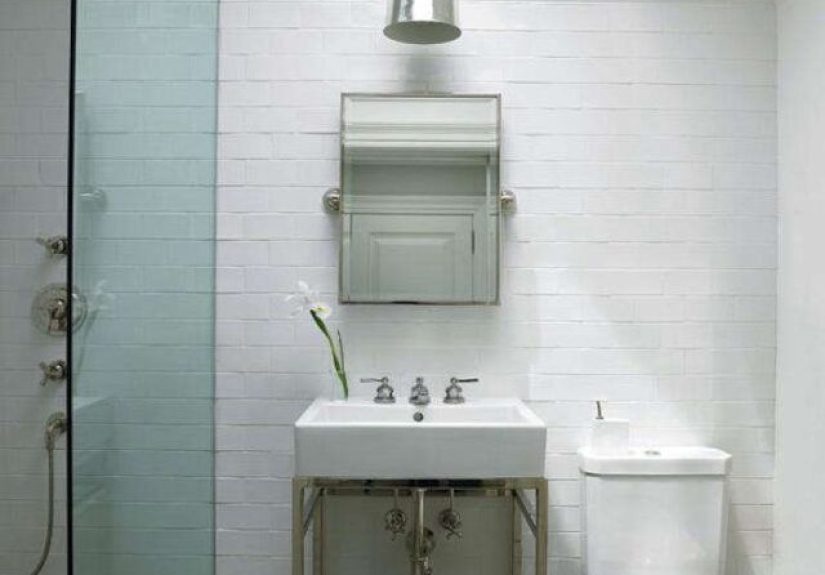
Eric Pike’s glamorous NYC bath takes the opposite approach: it whispers. Soft grays. Crisp metal. Clean lines.
And thenbamnatural light pours in from above, and suddenly your Tuesday morning skincare routine feels like it has a publicist.
Featured by Remodelista as a master class in “stealth glamour,” this small New York City bathroom nails the tricky balance:
minimal but not cold, industrial but still polished, and practical without sacrificing that boutique-hotel vibe.
Let’s break down what makes it work, what to copy, and how to translate the look into real lifewhether you live in a Manhattan walk-up
or a perfectly respectable home with more than one closet (we’re happy for you, truly).
Why This Bathroom Works: Stealth Glamour in a Small Footprint
Industrial bones, polished manners
The vibe is “industrial-accented,” but not in the “I live in a converted factory and my shower is a repurposed grain silo” way.
It’s the refined version: chrome and stainless steel details, crisp geometry, and a palette that stays calm so the materials can do the talking.
This is one of those rooms where the metal finishes act like jewelrysubtle, shiny, and doing a lot of heavy lifting.
Light is the real flex
If you want a bathroom to feel bigger, brighter, and more expensive without adding square footage (the most impossible kind),
you don’t start with a gold faucetyou start with light. Pike’s bath uses a large skylight to bring daylight into a compact space,
so the grays read fresh instead of gloomy and the reflective finishes look intentional instead of accidental.
The Signature Elements to Steal
1) A soft-gray palette that doesn’t go “sad office carpet”
Gray is famously easy to get wrong. Too blue and it looks chilly; too beige and it turns into “builder greige.”
The trick here is restraint: keep the field surfaces (tile and walls) in a gentle gray family, then add contrast through finish and texture:
glossy versus matte, smooth versus slightly tactile, reflective chrome against quieter stoneware or porcelain.
If you’re building this look, pick one “main gray” for the big surfaces and one “supporting gray” for the secondary plane
(like a paint color that’s a half-step lighter or darker). The goal is depth, not drama.
2) Doorless glass shower: the small-bath optical illusion that actually works
The Remodelista feature calls out a glass shower without a doorone of the smartest moves for a tight bathroom.
A doorless (or open/curbless-style) shower reduces visual clutter. You’re not chopping up the room with frames and hinges,
and the eye reads the space as one continuous volume. In tiny bathrooms, that’s basically magic.
Translation for normal humans: it can feel airier, but it needs planning. Drain placement, floor slope, splash control,
and ventilation matter. Think “open” not “unfinished.”
3) Skylight: boutique-hotel brightness with built-in privacy
A skylight is like the cheat code for bathroom lighting. You get daylight (which makes colors behave),
privacy (since your neighbors are not floating above you with binocularshopefully),
and a feeling of height even in a modest room. If you opt for a venting skylight, it can also help with humidity management.
4) Chrome, stainless, and polished nickel: the glam that doesn’t shout
This look leans into cool-toned metalschrome and stainlesswith a clean, tailored feel.
Want to soften it without changing the style? Polished nickel is often the sweet spot: still “silver,” but warmer and richer.
It reads classic instead of clinical, which is why it keeps showing up in high-end bathrooms.
5) One statement pendant (yes, in a bathroom)
The featured space uses a striking silver suspension lamp. That’s not just a style move; it’s a mood move.
Overhead lighting in bathrooms often defaults to the “interrogation room” setting.
A pendant brings personality and a little dramawithout requiring you to paint anything black.
Get the Look: A Practical Checklist (With Real-World Alternatives)
Start with the “anchor” choices
- Tile: A neutral ceramic field tile in a simple proportion (the featured look includes a classic rectangular format in a calm gray/neutral family).
- Shower enclosure: Clear glass, minimal hardware, and (if your layout allows) a doorless/open entry.
- Vanity approach: A console-style sink stand and a crisp basin for that tailored, almost European hotel look.
- Mirror: A generous mirrorbonus points if it tilts for function and visual interest.
- Toilet: Simple silhouette, clean lines. (It’s not the star; it’s the understudy who knows all the lines.)
Then layer in the “quiet luxuries”
- Metal consistency: Pick your main metal (chrome/stainless/polished nickel) and repeat it 3–5 times: faucet, shower, mirror detail, accessories, lighting accents.
- Textiles: Hotel-worthy towels, a bath mat that feels intentional, and zero fuzzy novelty slogans.
- Small storage: A wire bin or streamlined containers keep the industrial note without the clutter.
Design Math for a Small NYC-Style Bathroom
Keep sightlines open
The biggest “steal” in this look isn’t a lamp or tileit’s restraint. Doorless glass and minimal framing keep sightlines long.
If you’re remodeling, ask: “What can I remove without losing function?” A bulky shower door, thick-framed mirror,
and chunky vanity legs can all visually shrink a room.
Use the mirror like a window
A large mirror bounces light, doubles the sense of space, and makes the bathroom feel more “finished.”
As a sizing guideline, a mirror that sits just shy of the vanity width usually looks tailored instead of awkward.
If your vanity is console-style, the mirror becomes even more important because it provides visual weight.
Go “minimal” where it counts
If your bathroom is small, save visual complexity for one spotlike the pendant or a beautiful tile sheen
and keep the rest quiet. Too many “features” in a tiny bath is like too many earrings: technically impressive, emotionally exhausting.
Materials and Finishes That Keep It Glam (Not Slippery, Not Precious)
Tile finish: glossy vs. matte
Glossy tile reflects light and feels classic; matte tile hides water spots and can read more contemporary.
The featured look plays in the “simple field tile” lane, letting proportion and light do the work.
If you love the shine, keep glossy surfaces on walls and choose a safer, more slip-resistant floor finish.
Grout: the smallest line that can make the biggest mess
Want the tile to look seamless? Keep grout lines tidy and consistent, and pick a grout color that’s close to the tile.
Bright-white grout with gray tile can be crispbut it can also become a full-time hobby to keep it white.
If you don’t want grout to be your new personality, go slightly darker or choose a stain-resistant grout strategy.
Metal care: glamorous finishes have feelings
Chrome is typically forgiving and durable. Polished nickel can look richer and warmer, but it may require gentler cleaning
to keep it from dulling. Treat your finishes like you treat good shoes: use the right products, and don’t scrub them with chaos.
Lighting Plan: How to Avoid “Operating-Room Bright”
Layer it (even in a tiny room)
Great bathrooms don’t rely on one ceiling light and hope for the best. Aim for:
- Ambient light: skylight/daylight when possible + a soft overhead source.
- Task light: light near the mirror for shaving, makeup, contactsanything involving precision and humility.
- Mood light: a pendant or dimmable accent that makes nighttime feel calm, not fluorescent.
Dimmers: the cheapest luxury upgrade
If you copy only one “high-end” move, make it dimmers. This look is glamorous because it’s controlled.
A dimmer lets you go bright in the morning and soft at nightwithout changing a single tile.
Maintenance: Keep It Looking Sharp Without Becoming a Bathroom Monk
Weekly basics that prevent the big scrub
- Tile: a mild cleaner and warm water for regular upkeep; save harsh products for true emergencies.
- Glass: squeegee after showers if you can. If you can’t, at least pretend you meant the water spots as “patina.”
- Metal: wipe dry after heavy use, especially around faucets and shower controls.
Ventilation isn’t optional
Doorless showers and skylights can be amazing, but moisture still needs an exit plan.
Use a strong exhaust fan, consider venting skylight options if appropriate, and don’t let towels live in a damp pile.
Mold doesn’t care how expensive your pendant is.
Budget-Friendly Ways to Get the Same Vibe
Where to spend
- Glass + waterproofing: if you’re doing an open/doorless shower, this is not the place to gamble.
- Fixtures you touch daily: shower controls and faucets should feel solid and operate smoothly.
- Lighting: one great statement piece can elevate everything around it.
Where to save
- Field tile: simple ceramic tile can look luxe if the installation is clean and the grout is consistent.
- Accessories: a wire bin, towel hooks, and trays can be affordable if the shapes are streamlined and the finish matches.
- Mirror lookalikes: you can get a “tailored rectangle” with a minimal frame at many price pointsjust size it correctly.
Common Mistakes When Copying This Look (And How to Avoid Them)
Mistake #1: Going too dark without enough light
Gray can go heavy fast. If you don’t have a skylight or strong daylight, choose a lighter gray and bring depth through texture
(matte tile, polished metal, crisp linens) instead of deeper paint.
Mistake #2: Mixing metals with no “leader”
Pick one main finish (chrome, stainless, or polished nickel) and stick to it for most components.
If you add a second finish, make it deliberatelike a single brushed accent or a black detail repeated twice.
Random metal mixing reads less “eclectic designer” and more “I ran out of matching parts.”
Mistake #3: Doorless shower without splash control
A doorless shower needs strategy: a properly sloped floor, smart drain placement, and enough glass coverage.
If your showerhead points outward and the entry is wide open, you’ll be mopping like it’s your side hustle.
Mistake #4: Ignoring storage
This look depends on surfaces staying clean and minimal. Plan for hidden storage (medicine cabinet, drawers, baskets)
so the countertop doesn’t become a museum exhibit of half-used bottles.
FAQ: Quick Answers Before You Start Demo Day
Is a doorless (open) shower a bad idea in a small bathroom?
Not automatically. It can make a small bathroom feel larger because the eye reads fewer visual barriers.
But it must be designed correctly (slope, drainage, splash zone, ventilation). If those pieces aren’t right,
you’ll trade “glamorous” for “perpetually damp.”
What’s the best metal finish to match this look?
Chrome and stainless give the clean, tailored, industrial-leaning vibe. Polished nickel is a warmer, richer cousin
that still stays in the “silvery” familygreat if you want the same look with a slightly softer feel.
How do I keep gray from feeling cold?
Use warm lighting (especially at night), add plush towels, and bring in texture: a matte tile, a linen shower curtain outside the glass zone,
or a wood accent that looks intentional (not like a stray cutting board).
Conclusion: Your Own Stealth-Glam Bath, Minus the Manhattan Price Tag
Eric Pike’s glamorous NYC bathroom proves something comforting: you don’t need a giant space to create a high-end feel.
You need a calm palette, thoughtful materials, smart light, and just enough shine to make the room feel “finished.”
The doorless glass shower opens up the footprint, the skylight delivers effortless brightness, and the clean-lined fixtures
keep everything crisp without screaming for attention.
Steal the principles more than the receipts: simplify the visual noise, repeat your finishes, get the lighting right,
and choose surfaces you can actually live with. That’s how stealth glamour stays glamorousafter the photos, after the guests,
and after the novelty of saying “Yes, my bathroom has a pendant” wears off.
Bonus: Real-Life Experiences When You Try to “Steal This Look” ( of Honest Truth)
Copying a showroom-perfect bathroom is one thing; living in it is another. When people recreate a stealth-glam,
gray-and-metal NYC bath, the first surprise is usually how much the room’s “mood” depends on the time of day.
In the morning, natural light makes the gray palette look soft and cleanlike a well-edited photo that somehow exists in real life.
At night, the same gray can lean cooler if your bulbs are too harsh or too white. That’s why the lighting plan matters so much.
Homeowners who add dimmers almost always say it’s the upgrade they feel every single day: bright for getting ready,
low and flattering for winding down, and never again stuck in “airport restroom” mode.
The second real-world lesson: doorless showers are amazing right up until the first splash situation. A well-designed open shower
can be a dreameasy to walk into, visually calm, and less hardware to clean. But the key word is “designed.”
In actual homes, the problems tend to come from one of three things: the showerhead angle pointing toward the opening,
a floor that isn’t sloped correctly, or a glass panel that’s too short to catch overspray. People who succeed with this style
often mention doing a quick “spray test” during planningliterally mapping where water will gothen adjusting glass size,
drain placement, or head position. It’s not glamorous, but neither is chasing puddles in socks.
Finish choices also behave differently in daily life than they do in inspiration photos. Chrome and stainless are generally forgiving,
which is one reason they’re so popular in crisp, industrial-leaning bathrooms. Polished nickel can look warmer and richer,
but it may show wear if you clean it with aggressive products. Homeowners who keep the “new” look longer tend to adopt
a simple routine: wipe metals dry after heavy use, avoid abrasive pads, and treat the finish like it’s expensive (because it is).
On tile, the same rule applies: the easiest maintenance strategy is preventative. A quick weekly clean beats a monthly grout crisis.
Then there’s the psychology of “minimal.” At first, a clean counter feels like a lifestyle glow-up.
Later, it turns into a question: “Where does my stuff go?” Real homes have real clutterskin care, razors,
toothpaste, hair tools, medications, and the mysterious tiny bottle you swear you’ll finish someday.
The people happiest with this look usually build in hidden storage early (medicine cabinet, drawers, baskets, trays)
so the bathroom can stay calm without requiring superhero discipline.
Finally, the most surprising “experience” is how luxurious a quiet bathroom can feel. Not loud luxuryno dramatic stone slabs
screaming for attentionbut the kind that shows up in daily use: a mirror placed rememberingly, a pendant that makes you smile,
towels that feel good, and light that makes you look awake even when you are definitely not. Stealing this look successfully
isn’t about copying every single product; it’s about copying the thoughtfulness. And that, thankfully, is always in stock.