Table of Contents >> Show >> Hide
- Why soap bubbles work (and why plain water doesn’t)
- The best homemade soap bubble recipe (easy, reliable, big)
- Want the biggest bubble possible? Use a “museum-style” upgrade
- Distilled water vs. tap water: does it really matter?
- How to blow the biggest bubble (technique beats lungs)
- Make a giant bubble wand (cheap, fast, ridiculously effective)
- Bubble conditions: when and where bubbles get huge
- Troubleshooting: why your bubbles pop (and how to fix it)
- Kid-safe (and teen-safe) bubble science experiments
- Real-life bubble experiences (the kind that make you keep the bucket)
- Wrap-up: your bubble game plan
Soap bubbles are basically tiny science miracles you can hold in your hand for half a secondthen pop,
your miracle is gone and your brain immediately says, “Again. But bigger.”
The good news: the “biggest bubble” isn’t magic. It’s a recipe + technique + a little respect for humidity.
The even better news: you can make a pro-level bubble solution at home with common ingredients, then level up to
giant, floating, shimmering sky-orbs that make neighbors pause their dog walk to stare.
Why soap bubbles work (and why plain water doesn’t)
Water has strong surface tensionthink of it like a stretchy “skin” that’s too tight. That tight pull makes
plain water terrible for bubble-blowing because it won’t stretch into a thin film around air. Dish soap (a surfactant)
relaxes that surface tension just enough so the film can expand without instantly snapping back. Now you’ve got a
flexible, elastic sheet of liquid that can trap air like a tiny balloon.
But big bubbles have a second enemy: evaporation. As the water in the film evaporates, the bubble wall gets thinner,
weak spots form, and the bubble pops. That’s why “secret” ingredients like glycerin or corn syrup matterthey slow down
evaporation and help strengthen the film so it can stretch farther and last longer.
The best homemade soap bubble recipe (easy, reliable, big)
If you want a solution that’s simple, strong, and made from grocery/drugstore basics, start here. This style of
recipe is popular with science museums and education groups because it works consistently.
Everyday “Big Bubble” Solution
- 6 cups water (distilled if possible)
- 1 cup dish soap (a quality dishwashing liquidavoid “extra foamy” mixing)
- 1 tablespoon glycerin or 1/4 cup light corn syrup
Mixing method (this matters more than people think)
- Pour water into a bowl or bucket first. Soap second. (Less foam.)
- Stir gently. No whisking, no shaking, no bubble-summoning tornado. Foam steals your good film-making ingredients.
- Add glycerin or corn syrup last and stir slowly until blended.
- Let it rest. If you can, cover and let it sit at least 1 hourovernight is even better.
That resting time is the cheat code. Aged solutions often perform better because bubbles form more smoothly and the mix
becomes more uniform. If you’ve ever thought “my bubbles are weird today,” there’s a good chance your solution just
needed a nap.
Want the biggest bubble possible? Use a “museum-style” upgrade
The basic recipe above is great. But if your goal is “I want a bubble the size of a beach ball,” you can step up the
stability with a thickener that helps the film resist tearing. Some museum recipes use ingredients like guar gum or
similar polymers to create an extra-strong, stretchy film.
Giant Bubble Solution (serious bubble energy)
- 3 gallons hot water
- 20 ounces dish soap (a strong dishwashing liquid)
- 2 tablespoons baking powder
- 1 1/2 tablespoons guar gum powder
- 2–4 tablespoons rubbing alcohol (to help mix guar gum smoothly)
Safety note: rubbing alcohol is flammable and shouldn’t be handled carelessly. If you’re making this
as a teen, do it with a parent/guardian nearby and keep it away from heat/flames. (Also: your eyebrows have goals.
Let’s keep them.)
How to mix the giant version without making a foamy mess
- Dissolve baking powder into the hot water in a large bucket (no lumps).
- Make a smooth slurry of guar gum with a small amount of rubbing alcohol so it pours easily.
- Stir the bucket water to create a gentle vortex, then pour in the guar slurry while stirring for a minute.
- Add dish soap gently. Stir slowly to avoid foam.
- Let it sit about 15 minutes before use.
Distilled water vs. tap water: does it really matter?
Sometimes tap water is perfectly fine. But hard water (with lots of dissolved minerals) can interfere with bubble
performance. Distilled or deionized water removes that variable and often gives you clearer, stronger films.
If your bubbles keep popping early, switching water type is one of the fastest fixes you can trylike upgrading your
bubble solution’s Wi-Fi signal.
How to blow the biggest bubble (technique beats lungs)
“Big bubbles” aren’t made by blasting air like you’re inflating a bounce house. The biggest bubbles form when a
thick, even film stretches slowly and evenly. Think “gentle expansion,” not “leaf blower.”
Pro technique tips
- Dip fully, then pause. Let excess drip off so the film becomes even.
- Use a light breeze. Wind can destroy bubbles, but a gentle breeze can help inflate them beautifully.
- Move the wand instead of forcing air. Walking backward or sweeping the wand creates airflow without harsh pressure.
- Keep the film wet. Re-dip often. A drying film is a tragic film.
- Aim for shade and humidity. Hot sun speeds evaporation and pops bubbles faster.
Make a giant bubble wand (cheap, fast, ridiculously effective)
The wand matters because it controls how much film you can carry. For giant bubbles, you want a large loop with a
string “reservoir” that feeds extra solution into the film as it stretches.
DIY string wand (classic giant-bubble tool)
- 2 wooden dowels (or sturdy sticks)
- Cotton string (absorbent is better)
- A washer or small weight (optional)
- Tie string from the top of one dowel to the top of the other, making a big loop.
- Add a small weight at the bottom point to help the loop open evenly.
- Dip the whole loop, lift it slowly, and spread the sticks apart.
- Walk backward or let a gentle breeze inflate the film into a giant bubble.
No dowels? No problem. Pipe cleaners, wire hangers bent into a loop, or even two straws shaped into a diamond can work.
The key is a smooth shape and a film that doesn’t snag on rough edges.
Bubble conditions: when and where bubbles get huge
Bubble size is partly “weather strategy.” You don’t need perfect conditions, but you’ll notice a massive difference when:
- Humidity is higher (early morning, after rain, or in shady areas).
- Wind is mild (strong gusts shred films; still air can make bubbles harder to inflate).
- Temperatures are moderate (extreme heat speeds evaporation).
- You avoid dusty, dry surfaces that can pop bubbles on contact.
Troubleshooting: why your bubbles pop (and how to fix it)
Problem: You get tiny bubbles only
- Fix: Add a stabilizer (glycerin or corn syrup) and let the solution rest longer.
- Fix: Use a larger wand and move it through the air instead of blowing hard.
Problem: The solution is super foamy
- Fix: Stir more gently. Pour water first, then soap. Skim foam and let it settle.
- Fix: Avoid shaking the container like it owes you money.
Problem: Bubbles pop instantly
- Fix: Try distilled water, especially if your tap water is hard.
- Fix: Move to shade/higher humidity. Add glycerin/corn syrup. Let the solution age overnight.
Problem: Film won’t form on the wand
- Fix: Clean your wandoils/lotions can ruin films. Rinse with warm water.
- Fix: Increase soap slightly, but don’t overdo ittoo much surfactant can make films less stable.
Kid-safe (and teen-safe) bubble science experiments
If you’re publishing this for readers who love experiments, bubbles are an easy science-fair win: you can measure
bubble size, longevity, and even compare ingredients like a tiny backyard chemistry lab (minus the explosions).
Experiment idea: Which additive makes the biggest bubble?
- Make three cups of solution: (A) soap + water only, (B) + glycerin, (C) + corn syrup.
- Use the same wand and the same location.
- Do 10 bubbles per solution.
- Measure diameter (estimate with a ruler behind the bubble) and time to pop.
- Average your results and write down what surprised you.
This is also a sneaky way to teach scientific thinking: control variables, repeat trials, and accept that sometimes
the breeze has opinions.
Real-life bubble experiences (the kind that make you keep the bucket)
There’s a specific kind of joy that only bubbles deliver. Not “I solved a math problem” joy. More like “I just watched
a floating rainbow orb drift past a tree and I forgot my responsibilities for a second” joy. And the best part is how
bubbles turn ordinary places into temporary events.
In a backyard, bubbles become instant entertainment that scales to any crowd. Little kids chase them like they’re
trying to tag happiness itself. Teens suddenly pretend they’re “just helping,” but somehow they’re the ones getting
competitive about who can make the biggest one. Adults start out acting casualthen a beach-ball bubble forms and
everyone stops talking at the same time. It’s like bubbles have a remote control for human attention.
The first “big bubble moment” usually happens when someone switches from a tiny store-bought wand to a larger loop or
a string wand. There’s a pause as the film stretches, glossy and trembling, and you can almost feel the room (or yard)
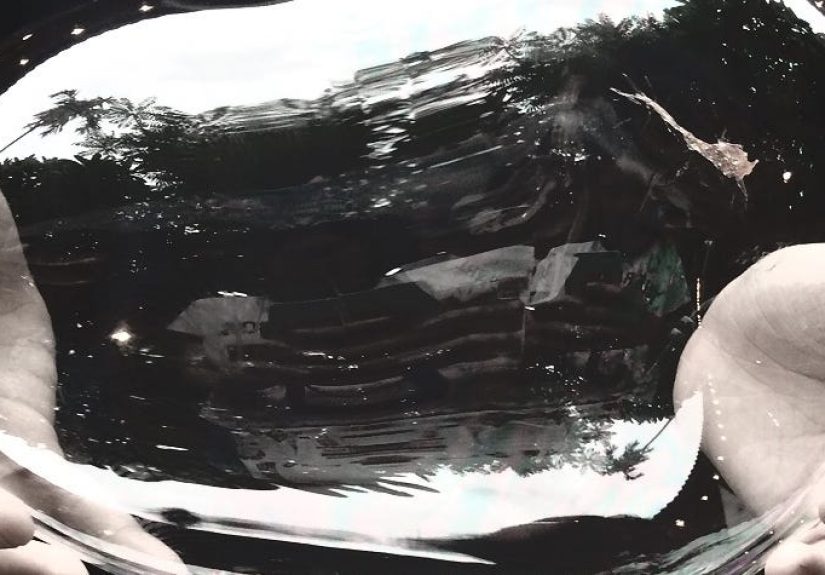
lean forward. Then the bubble slides free, huge and slow, reflecting the sky and your neighbor’s fence in one
wobbly mirror. That’s when the bucket becomes a permanent summer accessory.
Bubble-making also has a funny way of teaching patience. If you’ve ever mixed a solution and tried it immediately,
you may have noticed it works… but not great. Let it rest, and suddenly your bubbles act like they’ve been
to training camp. That “aging” step feels like a life lesson disguised as play: sometimes the best results come from
not poking the project every 30 seconds to see if it’s done.
Then there are the environmental “aha” moments. A hot, dry afternoon can make bubbles pop fast, and it’s easy to blame
your recipeuntil you try again in the shade, or early in the morning when the air feels softer. Suddenly your bubble
film stays flexible long enough to stretch into something enormous. You realize bubble success isn’t just ingredients;
it’s timing, weather, and a tiny bit of strategy. (Basically, bubbles are the least stressful way to learn how real
science works.)
Finally, bubbles are oddly social. People share recipes like secret family pasta sauceexcept the pasta sauce doesn’t
float away in a shimmering sphere. Someone swears by glycerin. Someone else uses corn syrup because it’s already in
the pantry. Another person tries a museum-style mix and starts talking about polymers like they’ve been waiting their
whole life for this moment. Whether you’re doing it for photos, a party, a science experiment, or just to make your
day feel lighter, bubbles deliver a small, beautiful payoff: proof that play and curiosity still work on everyone.
Wrap-up: your bubble game plan
If you want the biggest bubble, start with a solid solution (soap + water + glycerin/corn syrup), mix gently, let it
rest, then use a giant wand and a slow, breezy technique. If you want to go truly enormous, try a thickened
museum-style recipe and treat your bubble film like the delicate masterpiece it is.