Table of Contents >> Show >> Hide
- The Quick Answer (So You Can Breathe Again)
- Why Texting Frequency Feels Like a Big Deal Now
- What Relationship Experts (and Research) Tend to Agree On
- A Simple Framework: Purpose, Pace, Plans
- How Often Should You Text? A Stage-by-Stage Guide
- When Daily Texting Is Healthy (and Actually Kind of Great)
- When Daily Texting Becomes a Problem
- How to Bring Up Texting Preferences Without Sounding “Needy”
- If They Don’t Text Much… Are They Not Interested?
- Texting Do’s and Don’ts for Healthy Early Dating
- Real-World Experiences: of “Okay, But What Happens in Actual Life?”
- Conclusion: The Right Amount of Texting Is the Amount That Works for Both of You
Generated with GPT-5.2 Thinking
Texting is the modern dating equivalent of breathing: everyone does it, nobody agrees on the correct rhythm, and
the moment it gets weird, you suddenly become hyperaware that you have lungs.
If you’ve ever stared at your phone thinking, “If I text now, will I look eager… or normal?”welcome.
You are among friends. The truth is, there’s no universal “right” number of texts per day. But there is
a healthy range, a few reliable principles, and some clear signs you’re drifting into “thumbs are doing too much”
territory.
The Quick Answer (So You Can Breathe Again)
No, you don’t have to text every day when dating. You should text often enough that both people feel
connected, respected, and clear about interestwithout texting so much that you replace real-life bonding with
a never-ending chat thread.
In other words: aim for consistency over intensity. Daily texting can be great if it suits both of you.
It can also be exhausting, anxiety-provoking, or misleading if it becomes a substitute for dates, phone calls,
and real conversations.
Why Texting Frequency Feels Like a Big Deal Now
Texting is low-effort, high-access, and always availablewhich makes it feel like a relationship “thermometer.”
But it’s also a communication method that strips out tone, facial expression, timing cues, and context. That’s why
two people can read the same message and have totally different emotional experiences.
Add modern expectations (instant replies, read receipts, “why did they like my story but not answer?”) and you get
a perfect recipe for overthinking. Texting is useful, but it’s not a lie detector. It’s closer to a
“connection tool” that works best with simple, warm messagesand struggles with anything complicated.
What Relationship Experts (and Research) Tend to Agree On
1) “How often” matters less than “how it feels”
A few thoughtful texts can feel better than 40 “wyd” messages. People generally do best when the communication
feels reciprocal and responsivenot one-sided, not pressured, and not like someone’s running a customer support queue.
A useful lens is responsiveness: do you feel seen and considered? Not necessarily “answered within
90 seconds,” but engaged with in a way that makes sense for adult life.
2) More texting doesn’t automatically equal more intimacy
Early dating is vulnerable. Texting can create a fast sense of closenesssometimes faster than two people
actually know each other. That can be fun, but it can also build a “relationship in your head” that doesn’t match
the real-world dynamic.
If your connection is mostly texting, you may be bonding with someone’s message style, not their day-to-day character:
how they treat servers, how they handle stress, whether they keep plans, whether they ask questions and listen.
3) Texting is great for connection… and terrible for conflict
Light affection, quick check-ins, and logistics? Texting shines. Misunderstandings, hurt feelings, or “we need to talk”
conversations? Texting tends to turn those into a confusing game of emotional telephone.
If you’re upset, the best move is often: pause → name the topic → move it to a call or in-person.
It’s not old-fashioned. It’s efficient.
4) Attachment and anxiety can hijack texting
Some people feel secure with less contact. Others feel connected through frequent touchpoints. Neither preference is
automatically “healthy” or “needy.” Problems start when texting becomes a regulation strategymeaning you’re
texting to calm panic, demand reassurance, or check whether someone is “still there.”
If the gap between messages makes you spiral, it’s worth addressing the underlying need (clarity, reassurance, a plan)
rather than treating texting like an emotional IV drip.
A Simple Framework: Purpose, Pace, Plans
Purpose: Why are you texting?
- Connection: “Thinking of you,” a shared meme, a sweet observation.
- Coordination: making plans, confirming time/place, quick updates.
- Curiosity: a question that actually leads somewhere (not an interrogation).
When texting loses purpose, it turns into filler. Filler can be fine… until it becomes the main relationship activity.
Pace: Can both people keep up comfortably?
Pace includes response time, message length, and how often you initiate. A mismatch doesn’t mean you’re doomed.
It means you need a quick conversation about expectations.
Plans: Is texting moving you toward seeing each other?
A healthy early dating pattern usually includes some texting plus real dates. If you’ve been texting nonstop
for weeks with no plan, you’re not datingyou’re doing a serialized novella with push notifications.
How Often Should You Text? A Stage-by-Stage Guide
Stage 1: Before the first date (or right after matching)
Goal: establish basic vibe and move to a date.
- Good range: a short exchange daily or every other day, depending on momentum.
- Best use of texts: light banter + one clear invitation.
- Avoid: becoming pen pals, oversharing, or doing “relationship interviews” by text.
Example: “You seem fun. Want to grab coffee this weekWednesday or Saturday?”
Stage 2: Between dates 1–3 (the ‘we’re interested but still learning’ phase)
Goal: show consistent interest without smothering the connection.
- Good range: a brief check-in most days, or every other day, plus planning texts.
- What matters: follow-through. A slower texter who reliably plans dates often beats a fast texter who disappears when it’s time to commit.
If you like daily contact, it’s okay to do itjust keep it light and don’t turn texting into a performance review.
Example: “Had fun last night. Still laughing about the trivia question. Want to do that again this weekend?”
Stage 3: After 3–5 dates (the ‘what are we?’ pre-conversation zone)
Goal: build rhythm, reduce ambiguity, and make space for an actual conversation about expectations.
- Good range: often daily, but not all day. Think: a few meaningful touches rather than constant chatter.
- Upgrade option: add a phone call or voice note. Tone solves 60% of the “wait, were they annoyed?” problems.
This is the sweet spot for a simple preferences talk: you’re interested enough that it matters, but early enough that you’re not resentful.
Stage 4: Exclusive / official dating
Goal: maintain connection while still living your life like a functioning adult.
- Common pattern: daily contact in some form, but not necessarily constant texting.
- Healthy sign: texting supports the relationship; it doesn’t replace quality time.
Special case: Long-distance or travel-heavy dating
When you can’t see each other often, texting can play a more positive roleespecially when it feels responsive
and paired with calls or video. In long-distance situations, a “good morning” text plus a planned call can be more
stabilizing than random bursts of messages.
When Daily Texting Is Healthy (and Actually Kind of Great)
- It’s mutual: both people enjoy it and don’t feel obligated.
- It’s flexible: busy days don’t become “prove you like me” tests.
- It supports real connection: texting complements dates, not replaces them.
- It’s warm, not monitoring: you’re connecting, not keeping tabs.
Daily texting can be sweet. It can also be a simple relationship habitlike brushing your teeth, except with more
emojis and fewer lectures from your dentist.
When Daily Texting Becomes a Problem
Red flag #1: Texting feels controlling
If someone expects constant updates, gets angry when you don’t reply fast enough, or demands to know where you are,
who you’re with, and what you’re doingthis isn’t “good communication.” It’s pressure.
Red flag #2: You’re anxious all the time
If your day rises and falls on whether they text back, that’s a signal to zoom out. You may need clarity, a plan,
or boundariesnot more screen time.
Red flag #3: The conversation never ends, but nothing progresses
If you text for weeks without dates, you might be stuck in low-commitment limbo. Interest usually shows up in
effort: setting plans, showing up, and being consistent.
Red flag #4: You’re arguing by text
Misunderstandings multiply in text form. If you notice circular “what did you mean?” fights, move it to a call.
One ten-minute conversation can save two days of tense texting and a suspiciously emotional GIF.
How to Bring Up Texting Preferences Without Sounding “Needy”
First: wanting communication is not needy. Wanting a pattern that helps you feel secure is normal. The goal is to
say it simplywithout accusations, without pressure, and without turning it into a courtroom drama.
Low-pressure scripts that work
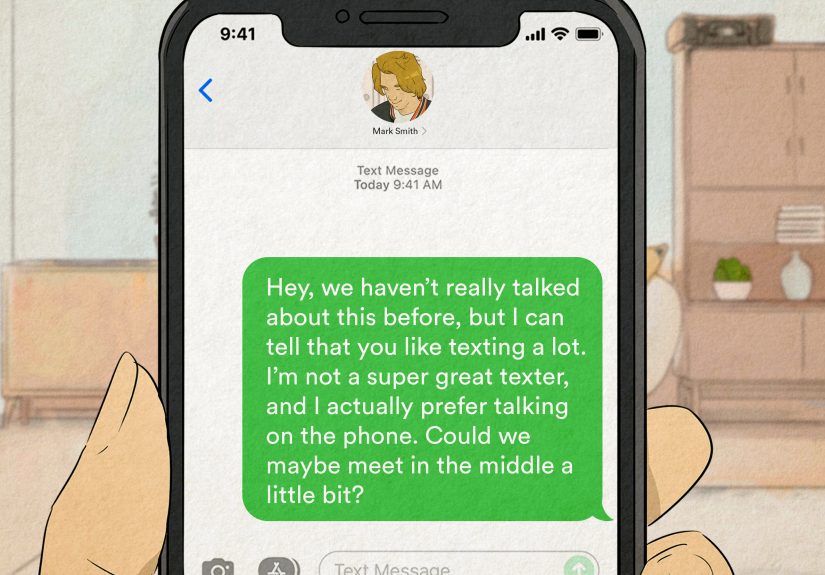
- Direct + warm: “I like a quick check-in most days. What feels good for you?”
- Busy-life realistic: “No rush on repliesjust want to find a rhythm that works for both of us.”
- Clarity-based: “If you’re not a big texter, totally fine. I just do better when I know what to expect.”
- Plan-forward: “I’m not into endless texting. Want to pick a day this week?”
Bonus tip: talk about it when you’re calm
The best time to discuss texting frequency is not while you’re staring at “Delivered” like it’s a suspense thriller.
Mention it casually after a good date, or when you’re already in a friendly, secure place.
If They Don’t Text Much… Are They Not Interested?
Not necessarily. Some people are simply light texters. Others are busy. Some prefer calls. Some communicate more
through making plans and showing up than through frequent messaging.
A more helpful question is: Do you feel considered? Look for patterns like:
- They respond within a reasonable window (even if it’s not immediate).
- They ask questions and engage when they do text.
- They initiate sometimes (not always you).
- They make real plans and follow through.
If the texting is sparse and plans are vague or nonexistent, that’s different. Consistent low effort across
multiple areas often tells you what you need to know.
Texting Do’s and Don’ts for Healthy Early Dating
Do
- Match effort, not obsessivelybut thoughtfully: mirror general energy without copying like a robot.
- Use texts for warmth and clarity: “Had a great time” beats “so… what are we?” by text.
- Ask one good question: one or two questions feel curious; ten feels like an intake form.
- Move real topics off-text: if it’s emotional, talk like humans with voices.
- Use tone helpers: emojis, humor, or a quick voice note can prevent misunderstandings.
Don’t
- Play timing games: delaying replies to look cool usually makes you look… busy with games.
- Double-text as a panic reflex: one follow-up is fine; spiraling is not a strategy.
- Turn texting into surveillance: “Where are you / who are you with / why aren’t you answering” is not romance.
- Use texting as a relationship substitute: chemistry needs real interaction to prove it’s real.
Real-World Experiences: of “Okay, But What Happens in Actual Life?”
Here’s what people often learn the hard way: texting habits aren’t just about phonesthey’re about expectations,
nervous systems, schedules, and how someone handles closeness.
Experience #1: The “All-Day Texter” Who Felt Close… Until They Met
Maya dated someone who texted from sunrise to bedtime. It felt excitinginside jokes, flirty banter, constant updates.
By week two, she felt like they were basically a couple. Then they finally had a longer, unstructured date and
something felt off: the in-person conversation didn’t flow, and the person seemed distracted and less engaged.
Maya realized she’d fallen for a texting dynamic, not necessarily a real-life match. Her takeaway was simple:
“I still like daily texting, but I don’t let it replace dates. If we can’t connect face-to-face, the texts don’t count as proof.”
Experience #2: The “Slow Texter” Who Was Actually Serious
Jordan started seeing Alex, who replied a few hours latersometimes after work, sometimes the next morning.
At first, Jordan assumed Alex wasn’t interested. But Alex always followed up thoughtfully and, more importantly,
planned dates in advance and showed up on time. After a few dates, Jordan asked directly: “I’m used to more frequent
textingwhat’s your style?” Alex explained they hate being on their phone at work but love calling at night.
They switched to short daily check-ins and two phone calls a week. Jordan’s takeaway: “Responsiveness can look like
consistency and effort, not just speed.”
Experience #3: When Texting Turned Into Anxiety Management
Sam noticed they felt calm only when a new partner was actively texting. When messages slowed, Sam’s brain filled the
silence with worst-case stories: “They’re losing interest,” “I said something wrong,” “I’m about to get ghosted.”
Sam started sending extra messages to regain certainty, which made the other person feel pressured. The fix wasn’t a
perfect texting scheduleit was a clearer foundation. Sam practiced asking for concrete plans (“Can we pick a day to
see each other?”), setting boundaries (“I’m going to be offline during work”), and self-soothing when anxiety spiked.
The big lesson: “If texting is the only thing keeping me regulated, I’m not building securityI’m borrowing it.”
Experience #4: The “One Fight by Text” Rule
Priya and Chris were fine until they tried to resolve a misunderstanding over text. It lasted two days, included
multiple paragraphs, and ended with both feeling exhausted and misunderstood. After they finally talked on the phone,
the issue resolved in ten minutes. They made a rule: if a topic needs more than two texts, it becomes a call.
Their takeaway: “Texting is for connection and coordination. Real feelings get real voices.”
These experiences point to the same truth: the healthiest texting pattern is the one that supports your relationship,
respects your boundaries, and matches your real livesnot the one that wins the imaginary “coolest dater” award.
Conclusion: The Right Amount of Texting Is the Amount That Works for Both of You
If you want a simple rule you can actually live by, try this: text often enough to feel connected, not so
much that you feel controlled, anxious, or stuck in your phone.
Daily texting isn’t a requirement. It’s a preference. And preferences are totally negotiableespecially when you
talk about them early, kindly, and without turning your iMessage into a relationship scoreboard.
The best sign you’re doing it right? You feel steady. You’re still living your life. And your phone stops feeling
like a tiny judge in your pocket.