Table of Contents >> Show >> Hide
- What the Bored Panda feature actually shows (and why it works)
- Why shoes are the ultimate “canvas” (and also the most dramatic one)
- Materials matter: canvas vs. leather vs. faux leather
- The workflow: how hand-painted shoes go from idea to “I can’t believe you did that”
- Step 1: Choose the right shoe for your design
- Step 2: Clean, prep, and protect the areas you’re not painting
- Step 3: Sketch the design (yes, even if you’re “just winging it”)
- Step 4: Paint in thin layers (this is the entire secret)
- Step 5: Let it dry like you mean it
- Step 6: Seal and protect the design
- Durability and care: how to keep painted shoes looking fresh
- Design strategy: what makes a painted shoe look professional
- The business side: turning shoe art into income (without burning out)
- Common mistakes that sabotage great shoe art
- Conclusion: the real “result” is bigger than the shoes
- Extra: Real-world “experience” lessons from painting shoes
There are two kinds of people in the world: the ones who treat shoes like sacred, spotless artifacts, and the ones who look at a clean pair of sneakers and think,
“This needs an octopus.”
The Bored Panda post “Shoes Meet My Hand-Painted Art, Here’s The Result” captures that second energy perfectlyan artist shifting from traditional canvas work to
something that actually leaves the house: hand-painted shoes. It’s not just a quirky craft moment; it’s a smart creative pivot. Wearable art takes the one thing most
of us use daily (our feet) and turns it into a moving gallery that does errands, attends concerts, and occasionally steps in something suspicious in the parking lot.
In this article, we’ll break down what makes painted shoes so compelling, what the Bored Panda feature shows, and how the process works in the real worldmaterials,
methods, durability, and the little design decisions that separate “hand-painted masterpiece” from “why is my shoe cracking like a desert lakebed?”
What the Bored Panda feature actually shows (and why it works)
The heart of the Bored Panda post is simple: an artist realized it’s tough to make a living selling paintings alone, so they changed the mediummoving from canvas to
shoes. That switch turns art into something personal and portable: the buyer doesn’t just hang it; they wear it.
The portfolio in the post leans into bold, recognizable themes and high-impact imagerydesigns that read quickly, even from a few feet away. Think:
ocean life, stylized animals, pop-culture references, and famous artworks reinterpreted for sneakers.
Examples of designs featured in the post
- Octopus designs painted on Victoria shoes and on Vans
- Alice in Wonderland themed Vans
- The Nightmare Before Christmas themed Vans
- Shark artwork on Vans leather sneakers
- Peacock and feather imagery on Victoria shoes
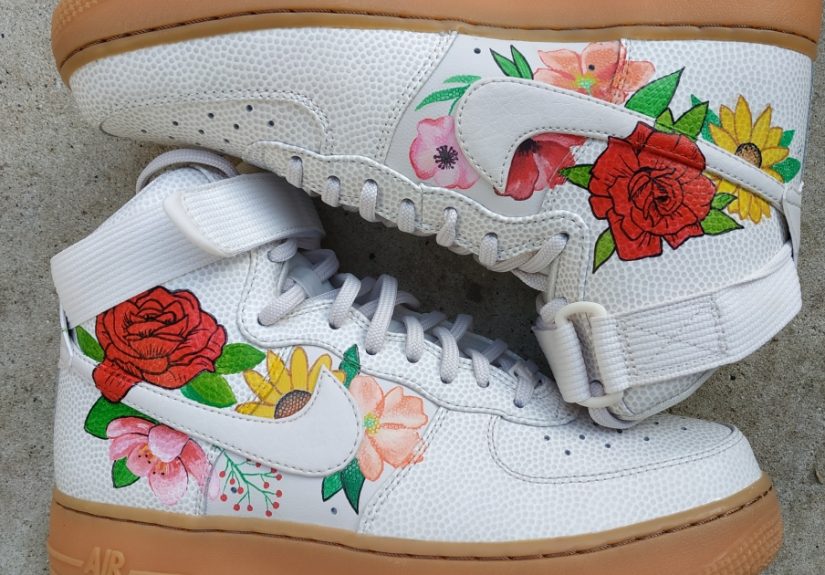
- Floral artwork on leather Nike sneakers
- Totoro artwork on Vans
- Geometric patterns on Converse
- The Great Wave on Converse (a classic art remix that always lands)
- Rick & Morty on Vans Sk8 (bright, graphic, instantly recognizable)
Notice the pattern: these aren’t timid little doodles. They’re big, confident visuals that make the shoe look like it has a personalityand maybe a backstory.
That’s why custom sneaker art works so well on social platforms: it’s eye-catching, emotional, and easy to “get” in one glance.
Why shoes are the ultimate “canvas” (and also the most dramatic one)
A canvas sits politely on a wall. Shoes, meanwhile, go to war. They bend, crease, scrape curbs, survive surprise rain, and occasionally get kicked under a chair like
they’re hiding from responsibility. So why choose shoes at all?
1) Wearable art is inherently personal
When someone buys a painting, they’re decorating a space. When they buy custom painted shoes, they’re decorating themselves. That’s a stronger emotional purchase,
and it’s why “custom painted sneakers” has become a full-on creative niche.
2) The shape of a shoe forces better design choices
Shoes are not flat rectangles. They curve, taper, and interrupt your art with seams, eyelets, and rubber edges that basically scream, “Good luck, Picasso.”
That limitation pushes artists to simplify shapes, sharpen contrast, and pick compositions that work in motion.
3) Shoes give art a new job: storytelling
A shoe design can signal fandom, humor, identity, or mood. A Great Wave reinterpretation says “I like classic art” (and possibly “I own a tote bag”).
A bright octopus says “I am fun” (and possibly “I know exactly which aquarium gift shop I’d lose my mind in”).
Materials matter: canvas vs. leather vs. faux leather
Before paint ever hits the shoe, you need to know what you’re painting on. The material dictates your prep, your paint, and how you protect the final design.
The biggest mistake beginners make is treating every shoe like it’s the same surface. It isn’t.
Canvas shoes
Canvas is beginner-friendly because acrylic paint can grip it well, especially if you work in thin layers. Canvas also welcomes sketching and stenciling because
it behaves more like fabric than plastic.
- Best for: bright illustrations, patterns, cartoon designs, graphic shapes
- Watch out for: paint soaking in unevenly; stiffening the fabric if you apply thick coats
- Helpful add-on: fabric medium (to keep paint flexible and reduce cracking)
Leather (and many “leather” sneaker panels)
Leather is popular in sneaker customization because it can produce clean, vivid resultsbut it requires preparation. Most leather shoes come with a factory finish
that resists paint. If you paint directly on that finish, the shoe may look great for a week… and then shed paint like a sunburn.
- Best for: crisp lines, bold color blocks, detailed character art, clean gradients
- Watch out for: creases and flex points (toe box areas love to crack thick paint)
- Key concept: prep + thin layers + protective finish
Faux leather / synthetic uppers
Faux leather can be trickier because surface coatings vary wildly. Some synthetics accept paint nicely; others act like a nonstick pan that’s personally offended you
even tried. The safest approach is careful cleaning, light abrasion where appropriate, and flexible paints/finishes designed for shoes.
The workflow: how hand-painted shoes go from idea to “I can’t believe you did that”
Most pros follow a similar sequence, even if their art styles are totally different. The goal is always the same: create a surface the paint can bond to,
build color without cracking, and protect the artwork so it survives real life.
Step 1: Choose the right shoe for your design
If your artwork has lots of detailoctopus tentacles, character faces, intricate featherspick shoes with large, uninterrupted panels. A clean canvas sneaker or a
leather low-top with broad side panels is easier than a shoe covered in mesh, overlays, and tiny stitched segments.
Step 2: Clean, prep, and protect the areas you’re not painting
- Remove laces and insoles if possible.
- Clean the surface (dust and skin oils are paint’s invisible enemies).
- Use painter’s tape to mask rubber edges, soles, and any sections you want crisp and clean.
Canvas often needs only cleaning and a light sketch. Leather typically needs more serious prep, including removing factory finish and oils so paint can adhere.
Step 3: Sketch the design (yes, even if you’re “just winging it”)
Sketching prevents the classic custom-shoe tragedy: getting halfway through a great design and realizing the second shoe looks like the first shoe’s distant cousin
who moved away and stopped replying to texts. Light pencil sketching on canvas works well; on leather, many artists map shapes lightly or use removable marking tools.
Step 4: Paint in thin layers (this is the entire secret)
If there’s one rule that shows up across professional guidance, it’s this: thin coats win. Thin layers dry more evenly, flex better, and reduce cracking. Thick
paint might look satisfying in the moment, but shoes bendconstantlyand thick paint punishes you for forgetting that.
Step 5: Let it dry like you mean it
Rushing drying time is how you end up with fingerprints embedded in your masterpiece foreverlike a crime scene, but for art. Allow layers to dry fully before
adding more detail, especially when switching from base colors to fine linework.
Step 6: Seal and protect the design
Sealers and finishers do two big things: they protect paint from scuffs and moisture, and they unify the final look (matte, satin, gloss). Brush-on finishers
are common for leather paints; protective sprays are often used on canvas.
Durability and care: how to keep painted shoes looking fresh
Painted shoes can be surprisingly durable when they’re prepped correctly, painted in thin layers, and sealed. But they’re still art you’re wearing, so a little
care goes a long way.
Practical care tips
- Wait before wearing: Give the paint and finisher time to cure fully.
- Spot clean gently: Use mild cleaning methods; avoid harsh scrubbing over painted sections.
- Avoid soaking: Even sealed shoes don’t love being drenched.
- Store smart: Keep them out of extreme heat, and don’t crush them under a pile of “maybe I’ll wear these again” footwear.
Think of it like a tattoo for your shoes: it looks amazing, but it does require you to make at least some responsible choices.
Not all of them. Just a cute, manageable number.
Design strategy: what makes a painted shoe look professional
The Bored Panda examples succeed because they combine strong subject matter with smart placement. A shoe isn’t one canvasit’s multiple zones. When a design respects
that, it looks intentional instead of accidental.
Three design moves that consistently work
- High-contrast focal points: A bold octopus head, a character face, a dramatic wavesomething that reads instantly.
- Wraparound logic: If the design crosses panels, it should “flow” naturally (tentacles curve around; waves roll toward the heel).
- Clean negative space: Leaving some areas unpainted makes the artwork look sharper and helps the shoe remain wearable, not costume-only.
The business side: turning shoe art into income (without burning out)
One reason the Bored Panda story resonates is because it’s honest: making a living from art can be tough, and changing medium can change the market.
Shoes introduce a practical value: they’re functional, giftable, and easier to justify as a purchase than “another painting for the wall,” especially for people who
already have… walls.
What customers tend to pay for
- Customization: names, pets, favorite characters, inside jokes
- Time-intensive detail: realistic animals, layered shading, intricate scenes
- Wearability: designs that look great and still match outfits
- Consistency: both shoes feeling like a set, not two unrelated masterpieces
A quick note on copyrighted characters
Painting pop-culture designs for personal use is one thing; selling character-based work can raise intellectual property concerns. Many artists handle this by focusing
on original designs, taking inspiration from themes rather than copying exact imagery, or offering commissions that emphasize custom, transformative artwork.
(Translation: you can be inspired by Wonderland vibes without directly recreating Disney frames.)
Common mistakes that sabotage great shoe art
- Skipping prep: especially on leather or coated surfaces.
- Using thick coats: cracking loves thick paint. It feeds on it.
- Sealing too early: trapping moisture can mess with the finish and longevity.
- Ignoring flex points: toe boxes bend; plan designs and paint layers accordingly.
- Over-detailing everything: a shoe needs readable focal points, not a microscopic mural everywhere.
Conclusion: the real “result” is bigger than the shoes
“Shoes Meet My Hand-Painted Art” isn’t just a fun gallery of custom sneakersit’s a snapshot of modern creative survival. When artists put their work on something
people can wear, the art becomes more visible, more shareable, and often more financially viable. Plus, it makes the world slightly more interesting to look at,
which is honestly a public service.
Whether you love the octopus, the Great Wave reinterpretation, or the pop-culture Vans, the takeaway is the same: shoes are a powerful medium when you respect the
materials, plan the design, build paint in thin layers, and protect the finish. Do that, and your art doesn’t just hang aroundit goes places.
Extra: Real-world “experience” lessons from painting shoes
If you’ve never painted shoes before, here’s what the experience usually feels like in real lifebased on the common rhythms artists describe and the
practical realities of the process.
First comes the confidence phase: you open a fresh pair of shoes and feel like a creative superhero. The shoes are clean, symmetrical, and full of possibility.
You start imagining the finished productmaybe a bright animal portrait, maybe a wave scene, maybe a geometric pattern that makes you feel like a walking museum gift
shop in the best way. This is the “I am unstoppable” moment.
Then comes the humility phase: prep work. You realize that painting shoes is less like painting a canvas and more like preparing a surface for a tiny, fashionable
construction project. Cleaning takes longer than expected. Taping the edges feels strangely satisfying… until you notice the tape is slightly crooked and
your brain begins a dramatic monologue about whether crooked tape will ruin your legacy. (It won’t. Breathe.)
Next is the “why is this not covering” phase, especially on canvas. The first coat can look patchy, like your paint is negotiating a lease with the fabric rather
than moving in. The best response is patience: thin layers, let it dry, add another. Somewhere around coat two or three, the color finally starts behaving, and you
feel like you’ve restored order to the universe.
On leather, the emotional rollercoaster is different. The paint often looks crisp faster, which is thrillinguntil you hit a crease-prone area and remember shoes
bend like they’re training for the Olympics. That’s when experienced artists slow down and keep layers whisper-thin. You might even redesign on the fly: instead of
placing the most delicate detail right on the toe box, you shift it to a side panel and let the crease area carry a simpler color transition. The shoe quietly thanks
you later by not cracking.
The detail phase is where time disappears. What you thought would take “an hour, max” becomes three hours because you start caring about tiny things: the catchlight
in an animal’s eye, the curve of a tentacle, the edge highlight that makes a wave look alive. This is also the phase where you learn the value of stepping back every
so often. Up close, you’re obsessed with millimeters. From a normal viewing distance, what matters is contrast, balance, and whether the design reads instantly.
Painted shoes are meant to be seen in motion, not studied under a microscope like a Renaissance fresco.
Finally, you reach the “don’t touch it” phasedrying and sealing. This is where the experience becomes a test of character. You want to wear them immediately.
You want to show everyone. You want to pace around the room holding them like a proud parent at graduation. But curing time is the boring hero of durability.
Rushing now can undo hours of work. Artists who paint shoes regularly treat curing like a ritual: they set the shoes somewhere safe, away from curious hands, pets,
and the chaotic energy of daily life, and they let chemistry do its thing.
And then comes the best part: the first real wear. Painted shoes change how you walknot physically, but emotionally. You notice people looking. Someone compliments
them. You feel a little spark because you’re not just wearing shoes anymore; you’re wearing a story. That’s the real result: art that leaves the studio and becomes
part of someone’s everyday world.