Table of Contents >> Show >> Hide
- What Does “Shockwaves in the Cosmic Web” Actually Mean?
- Meet the Cosmic Web: The Universe’s Invisible Scaffold
- Why Detecting These Shockwaves Was So Hard
- The Breakthrough Strategy: Stacking + Polarization
- What They Found: A Shock Signature in the Cosmic Web
- Why Polarization Is a Big Deal for Cosmic-Web Science
- Simulations: Does the “Computer Universe” Agree?
- Why This Discovery Matters (Beyond “Wow, Space Has Shockwaves”)
- What Comes Next: From First Evidence to Cosmic-Web Cartography
- Final Thoughts
- Experiences: What It’s Like to Chase a Shockwave Across the Universe
- SEO Tags
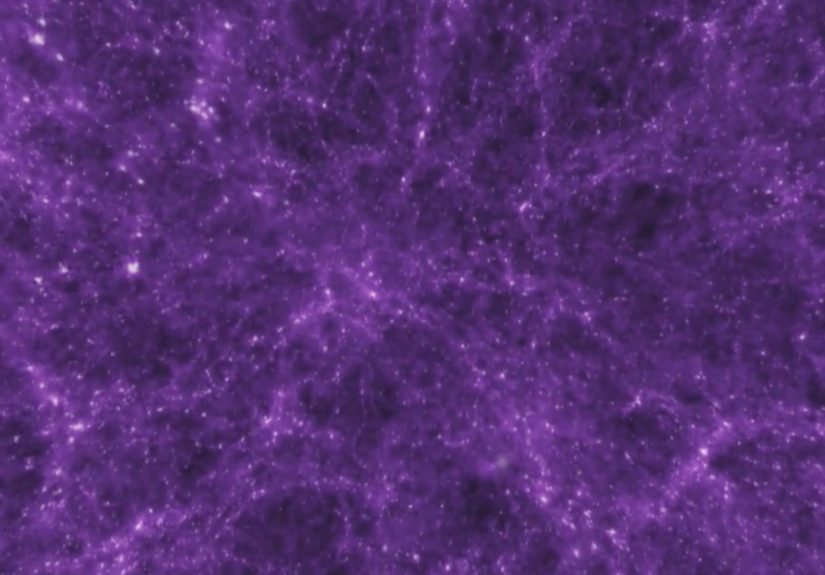
The universe has a nervous system. Not the “feelings and group chats” kindmore like a vast, threadlike network that connects galaxy clusters across
hundreds of millions of light-years. Astronomers call it the cosmic web, and it’s where a lot of the universe’s growth happens:
matter flows along filaments, piles into clusters, and heats up as gravity does what gravity does bestpulls everything together like it owns the place.
For decades, scientists have predicted that as gas falls into these filaments and clusters, it should generate powerful shockwaves.
Those shocks should accelerate electrons and light up faintly in radio wavelengths, creating a whisper of glow across intergalactic space.
The problem? That glow is unbelievably faintlike trying to spot a candle on the Moon while someone is shining stadium lights in your face.
Now, researchers have finally pulled off something close to cosmic eavesdropping:
they’ve found strong observational evidence of shock-driven emission tied to the cosmic webusing clever statistics, polarization, and massive sky maps.
In other words: the universe’s biggest structures are still “ringing” with shockwaves, and we’ve got the receipts.
What Does “Shockwaves in the Cosmic Web” Actually Mean?
A shockwave in space isn’t the Hollywood “kaboom” that knocks over alien furniture. It’s more like a supersonic traffic jam:
gas plunges inward under gravity, hits a region of denser material, and gets abruptly compressed and heated.
That sudden changedensity up, temperature up, speed downis the signature of a shock.
In the cosmic web, shocks are expected to form in two main places:
- Cluster outskirts (accretion shocks): where intergalactic gas slams into a growing galaxy cluster’s outer boundary.
- Filaments between clusters: where gas flows along cosmic “highways” and can produce shocks as structures merge and feed one another.
These shocks matter because they don’t just heat gasthey can also accelerate particles.
And when relativistic electrons spiral through magnetic fields, they emit synchrotron radiation, a telltale kind of radio glow.
Meet the Cosmic Web: The Universe’s Invisible Scaffold
On the largest scales, the universe isn’t evenly sprinkled with galaxies like sugar on a donut. It’s lumpyorganized into clusters, filaments, and vast
low-density voids. Most galaxies sit on this large-scale structure, tracing an underlying backbone that’s heavily influenced by dark matter.
The cosmic web is that backbone’s visible(ish) outline: clusters at the intersections, filaments as connective tissue, and voids as the “space between
the space between.”
If you’ve ever seen a time-lapse of raindrops running down a window and joining into thicker streams, you already have the right vibe.
Gravity funnels matter into filaments, filaments feed clusters, and clusters keep growing.
The cosmic web is basically the universe’s long-term growth planexecuted with no project manager, no meetings, and zero regard for deadlines.
Why Detecting These Shockwaves Was So Hard
Astronomers didn’t miss these shockwaves because they forgot to look. They missed them because they’re faint, diffuse,
and buried under a pile of louder signals. A few big reasons:
- Radio foreground clutter: Our own Milky Way emits radio waves, and it can dominate the sky at certain frequencies.
- Confusion from galaxies: The sky is packed with radio sourcesgalaxies, jets, supernova remnantsmany brighter than any filament glow.
- Weak signals spread over huge areas: Filaments are enormous, but their emission is smeared out, lowering surface brightness.
- Magnetic fields are sneaky: The cosmic web’s magnetic fields are expected to be weak and hard to measure directly.
So instead of trying to “photograph” a filament shockwave directly, researchers leaned into a different strategy:
statistical detectionstacking many, many examples until the signal rises above the noise.
The Breakthrough Strategy: Stacking + Polarization
Stacking: Making a Whisper Loud by Repeating It 612,025 Times
The key idea is beautifully simple: if a signal is too faint to detect in a single filament, combine lots of filament candidates and look for an
average pattern. Noise is random; real structure is not. With enough samples, the random stuff cancels out and the consistent glow remains.
In the study that anchors this “first-time” claim, researchers used luminous red galaxies (LRGs) as tracers for galaxy groups and clusters.
They selected 612,025 pairs of these tracers that are close in three-dimensional spaceseparated by about 1 to 15 megaparsecsbecause
such pairs are likely linked by a filament. Then they cut out patches of sky around each pair, rotated and scaled them so the pairs line up, and stacked
the results.
They also created a control sample: “unconnected” pairs that appear near each other on the sky but are far apart in real spaceso any filament signal
should vanish there. That control step is crucial. It’s how you avoid fooling yourself with cosmic pareidolia.
Why Polarization Is the Power Move
Total radio intensity alone can be ambiguous. A faint bridge could be filament emission… or it could be the blended contribution of ordinary galaxies.
Polarization changes the game.
Synchrotron emission can be polarized, and strong shocks can organize magnetic fields by compressing them and aligning field lines along the shock plane.
That alignment can produce a higher polarization fractionespecially in peripheral shock regionsthan you’d typically expect from a random mix of faint galaxies.
In other words: polarization helps separate “cosmic web physics” from “the sky is full of stuff.”
The Data: Two Frequencies, Two Views of the Same Story
The team stacked on all-sky maps that include both total and polarized intensity:
- 1.4 GHz radio maps from a Global Magneto-Ionic Medium Survey high-band dataset (useful for detecting synchrotron emission and polarization).
- 30 GHz maps from the Planck mission (providing a different frequency window and polarization behavior).
Using two frequencies helps test whether the same underlying structure appears consistentlywhile also providing clues about the emission mechanism and how
polarization survives (or gets scrambled) along the line of sight.
What They Found: A Shock Signature in the Cosmic Web
A Faint Radio Glow Between Cluster Pairs
After stacking and subtracting modeled contributions from the clusters themselves, the researchers found a residual excess consistent with emission in the
intercluster regionright where a filament would be expected. Importantly, this excess shows up for “connected” pairs and not for the “unconnected” control
sample. That difference is the statistical fingerprint of a real filament-linked signal.
High Polarization Fractions That Point to Shocks
The standout result is the polarization: the detected synchrotron emission shows polarization fractions on the order of 20% or higher,
which is difficult to explain as a pile-up of typical galaxies. In fact, typical polarized source populations have much lower average polarization fractions,
and only a small subset reach the “highly polarized” regime.
Even more telling, when the team stacked on single clusters (rather than pairs), the polarization structure looked like what shock models predict:
less polarization in the turbulent center and more polarization in a peripheral ring.
In the 1.4 GHz analysis, polarization fractions rose to roughly the 20–25% range in that outer ring-like region.
A Spectrum That Fits Shock-Accelerated Electrons
Shock-accelerated synchrotron emission has a characteristic radio spectrum. In the analysis, the intercluster excess was consistent with a spectral index in
the neighborhood of what’s often seen for cluster “relic” shocksanother hint that what’s being detected is shock-related, not just ordinary star-forming
galaxies.
Put these pieces togetherlocation between likely-connected pairs, strong polarization, and shock-like spectral behaviorand the case becomes compelling:
this looks like diffusive shock acceleration operating in filaments and the outskirts of lower-mass clusters, exactly where theory has long predicted it.
Why Polarization Is a Big Deal for Cosmic-Web Science
Think of polarization as a cosmic lie detector. Not a perfect oneastronomy rarely gets perfectbut a powerful filter.
Here’s why it matters so much:
- It traces magnetic field geometry: Highly polarized synchrotron emission implies a relatively ordered magnetic field.
- Shocks naturally create order: Compression at a shock front can align magnetic fields, boosting polarization.
- It helps rule out galaxy contamination: Many galaxies emit radio waves, but strong polarization at large scales is harder to fake statistically.
- It links directly to structure formation physics: If you see polarized emission where filaments should be, you’re probing how the web grows.
There’s also a practical perk: polarization behaves differently at different frequencies because of Faraday rotation.
At higher frequencies, polarization angles are less scrambled by magnetized plasma along the line of sight, which can make certain signatures easier to interpret.
Simulations: Does the “Computer Universe” Agree?
Observations are strongest when they meet theory in the middle. To compare the detection with predictions, the researchers analyzed state-of-the-art cosmological
magnetohydrodynamic simulations of large-scale structure. They generated simulated radio emission (including polarized components), applied beam effects, added noise,
and repeated a stacking procedure similar to the real-data analysis.
The simulated stacks reproduced key qualitative featureslike polarized emission patterns consistent with shock regions and reduced polarization in central cluster
zones. Quantitatively, the comparison suggested that stronger magnetic fields (or differences in acceleration efficiency and modeling assumptions) could help bring
simulation amplitudes closer to the observed stacked signal. That’s not a “simulation failed” momentit’s exactly the kind of feedback loop that turns a first
detection into a calibrated understanding.
Why This Discovery Matters (Beyond “Wow, Space Has Shockwaves”)
1) It Strengthens Our Picture of How the Universe Builds Structure
Shocks are not a side effectthey’re part of the machinery. They convert gravitational infall energy into heat and non-thermal particle populations.
Detecting shock signatures in filaments supports the idea that the cosmic web is actively processed by shock heating as it grows.
2) It Helps Pin Down Intergalactic Magnetic Fields
Magnetic fields are everywhere, but their origins and evolutionespecially on intergalactic scalesare still major questions.
Polarized synchrotron emission is one of the few ways to probe large-scale magnetism outside galaxies and clusters.
If filaments can produce detectable polarized emission, then cosmic magnetism is not just localit’s woven into the web itself.
3) It Opens a Path Toward Finding More of the Universe’s Ordinary Matter
A long-standing cosmic accounting puzzle is the “missing baryons” problem: some fraction of the universe’s normal matter is difficult to detect because it’s
diffuse and hot. Filaments are a leading hiding place. Shocks heat filament gas to temperatures where it’s faint in many bands, but it may leave signatures
in radio and microwave observations when coupled with magnetic fields and accelerated particles.
What Comes Next: From First Evidence to Cosmic-Web Cartography
A first detection is like hearing a melody through a wallyou know the band is real, but you still want the full concert.
The next phase is to move from statistical detection to richer mapping and physical constraints.
Here are a few directions the field is likely to push:
- Better polarization surveys: Wider, deeper polarization maps can improve filament detection and reduce contamination.
- Cross-checks with other filament tracers: Comparing radio polarization with Sunyaev–Zel’dovich, weak lensing, and X-ray stacking strengthens interpretation.
- Sharper simulations: Improved modeling of shock acceleration, magnetic seeding, and astrophysical foregrounds will tighten theory-to-data comparisons.
- Targeted filament regions: Once statistical signals identify “good filament neighborhoods,” telescopes can focus deeper observations there.
Final Thoughts
“Shockwaves recorded in the cosmic web” isn’t just a flashy headlineit’s a meaningful step toward measuring the physics of the largest structures in existence.
By combining polarization with stacking across enormous datasets, astronomers have found strong evidence for shock-accelerated synchrotron emission in cosmic filaments
and the outskirts of lower-mass clustersregions where theory has insisted for years that shocks should be shaping the universe’s growth.
The cosmic web is no longer just an elegant map of where galaxies live. It’s a dynamic environmentmagnetized, shock-heated, and still actively evolving.
And now we’ve started to “hear” it.
Experiences: What It’s Like to Chase a Shockwave Across the Universe
If you want to understand why this result is a big deal, picture the day-to-day reality behind it. Cosmic-web shockwaves aren’t a bright object you can point
a telescope at and instantly admire. They’re a faint statistical imprint hiding in data that, at first glance, looks like a messy collage of everything else
the sky can throw at you.
One “experience” researchers often share in this kind of work is the slow shift from excitement to humility the first time they open the maps. You’re staring at
gorgeous all-sky dataradio intensity, polarized intensity, microwave polarizationand the cosmic web is nowhere obvious. The Milky Way’s own emission is loud.
Point sources are everywhere. Instrumental quirks and scanning patterns can leave subtle stripes. If you’re hoping for a dramatic filament outline, the universe
politely declines and hands you a spreadsheet instead.
That’s where stacking becomes less like a technique and more like a mindset. You stop asking, “Can I see it?” and start asking, “Can I prove it’s there,
statistically, even when I can’t see it directly?” That shift changes everything. Suddenly, you’re not chasing a single filamentyou’re chasing hundreds of
thousands of them at once. You rotate sky cutouts so candidate filaments align. You scale distances so pairs can be compared fairly. You build a “connected”
sample where filaments are likely, and a control sample where they shouldn’t exist. You run the analysis again and again, because the universe will absolutely
exploit any corner you cut.
Then comes the psychological roller coaster of residuals. Subtracting cluster contributions is necessary, but it also feels like trying to remove the smell of
garlic from a kitchen without taking the kitchen apart. Did you subtract too much? Too little? Did you accidentally remove the signal you wanted? Did a population
of ordinary galaxies masquerade as a bridge? Polarization helps, but it’s not magicyou still have to test against random sky positions, different samples,
and plausible contaminants. It’s careful work, and the reward is usually not fireworks; it’s a set of plots where the “connected” case behaves differently from
the control. That difference is the victory.
When polarization finally lines up with the shock storyhigh polarization fractions in the right regions, ring-like behavior around clusters, a signal between
likely-connected pairsit’s a special kind of relief. Not the “we’re done!” relief, but the “okay, the universe is making sense” relief. And that’s the moment
where this discovery lives: not in a single glamorous image, but in the hard-earned confidence that a faint glow is real, physically meaningful, and consistent
with the way structure formation shocks are supposed to work.
The next experiences will be even better: using sharper surveys, isolating specific filament environments, and turning a first detection into a measurable map
of cosmic magnetism and shock energetics. But this first step required a particular kind of patiencethe kind that’s willing to listen for a whisper, not once,
but 612,025 times, until the universe finally speaks clearly.