Table of Contents >> Show >> Hide
- What This “USB Adaptor” Really Means
- Why Proprietary Lenses Feel So Locked Down
- Why USB Changes the Whole Conversation
- Real-World Proof That Smart Lens Adaptation Works
- What Makes a DIY USB Lens Adaptor So Impressive
- There Are Limits, and Yes, They Matter
- Who Benefits Most from This Kind of Adapter?
- The Bigger Industry Lesson
- Experience in the Real World: What Using a USB Lens Adaptor Actually Feels Like
- Conclusion
- SEO Tags
Note: This article is based on real reporting, product documentation, and photography-industry coverage. Source links are intentionally omitted so the draft is clean and ready for web publication.
For years, proprietary camera lenses had one job: stay loyal to the brand that made them. A Canon lens belonged on a Canon body. A Nikon lens belonged on a Nikon body. And if you dared ask an expensive chunk of glass to cooperate with another camera, a computer, or some weird little DIY streaming rig on your desk, the answer was usually a smug mechanical shrug.
But camera gear is no longer just glass and metal. Modern lenses are computers wearing optical disguises. They talk to camera bodies, pass metadata, adjust aperture electronically, drive autofocus motors, and sometimes even accept firmware updates like tiny glass-covered smartphones. That sounds like bad news for anyone trapped inside a proprietary ecosystem. Oddly enough, it is also the reason a clever USB adaptor can be such a big deal.
The short version is this: once a lens becomes an electronic device, it can be understood, translated, and controlled. That is where the modern USB lens adaptor enters the story like a slightly nerdy superhero with a soldering iron in one hand and a coffee-stained notebook in the other.
What This “USB Adaptor” Really Means
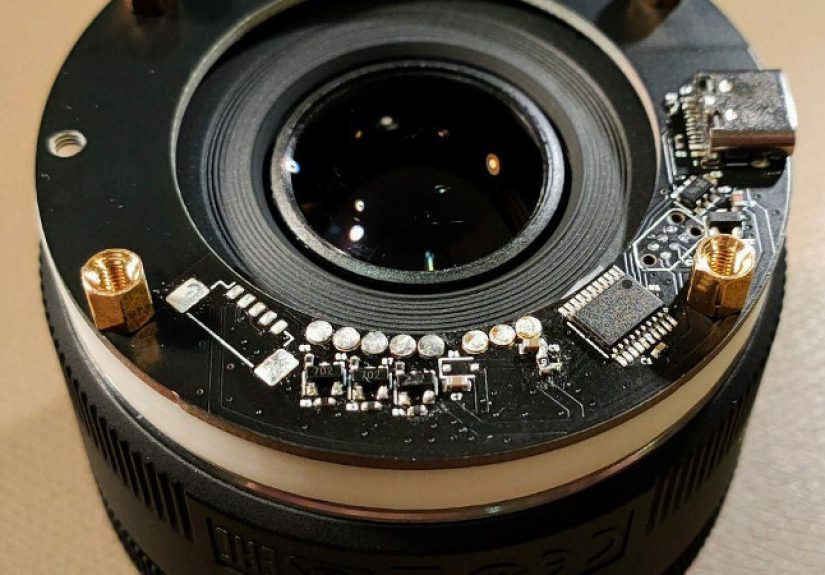
The title may sound like clickbait from the future, but the underlying idea is very real. The concept became especially interesting when an open-source hardware project showed that Canon EF and EF-S lenses could be controlled outside their original camera environment using a custom USB-connected adaptor. Instead of relying on the camera body to manage the lens, the adaptor acts like a translator between the lens and the outside world.
That matters because many modern proprietary lenses are not manually controlled in the old-school sense. You cannot simply twist a ring and expect every function to behave. Aperture, autofocus, image stabilization, and other features often depend on electronic communication. If that communication can be recreated or translated, the lens stops being a locked door and starts becoming a reusable tool.
In practical terms, a USB adaptor can do several jobs at once:
- Provide electrical contact to the lens
- Send and receive commands
- Bridge the lens to a computer, phone, or non-native camera setup
- Enable focus, aperture, metadata, or customization functions
- Open the door to firmware updates or specialized control workflows
That is not magic. It is protocol handling, thoughtful hardware design, and a lot of patient problem-solving. Slightly less glamorous than magic, sure, but much more useful when your favorite lens costs more than your laptop.
Why Proprietary Lenses Feel So Locked Down
To understand why a USB adaptor is exciting, it helps to understand why proprietary lenses are so annoying in the first place. Camera makers do not create closed systems just to make photographers sigh dramatically in forums, though that does seem to happen as a side effect. They build them because modern lens systems depend on tight communication between lens and body.
That communication handles the basics most people take for granted. When you half-press the shutter and the subject snaps into focus, electronics are at work. When the camera knows the focal length for stabilization, displays the f-stop, writes lens information into image metadata, or performs optical corrections, that is data moving back and forth. A passive metal ring cannot do that. A smart, electronically aware adaptor can.
Mount design also matters. Flange distance, mount diameter, electronic pin layout, and firmware behavior all determine whether a lens can be adapted cleanly. This is one reason mirrorless systems changed the game. Their shorter flange distances made room for more adapters, more experimentation, and more compatibility between old lenses and newer bodies.
So yes, proprietary systems are real. They are not imaginary walls. But they are often walls made of engineering, not wizardry. Engineering walls can sometimes be climbed.
Why USB Changes the Whole Conversation
USB is not exciting in the way a fast prime lens is exciting. Nobody has ever whispered, “Look at that gorgeous connector.” But USB has one enormous advantage: it is familiar, flexible, and everywhere. It turns specialty hardware into something your computer or mobile device can actually talk to without requiring a mythical cable found only in the bottom drawer of a retired camera technician.
That convenience changes the workflow. Once a lens can connect through USB, it no longer has to be treated only as an attachment for a camera body. It can become part of a broader digital setup. You can potentially calibrate it, configure it, test it, control it, or pair it with custom imaging hardware. For creators, that means more flexibility. For tinkerers, it means more fun. For people who already spent a small fortune on brand-specific glass, it means fewer regrets.
USB also makes accessories more future-friendly. A lens that can be updated or customized through a standard connection is easier to keep useful over time. That matters in a market where camera bodies change fast, mounts evolve, and “future-proof” often turns out to mean “good luck, buddy.”
Real-World Proof That Smart Lens Adaptation Works
If this all sounds like a DIY fever dream, the broader camera market says otherwise. Smart lens adapters have been proving for years that proprietary lenses do not have to stay trapped in their original ecosystems. Unlike passive adapters, electronic or “smart” models can preserve features like autofocus, aperture control, image stabilization, and EXIF metadata when the lens and camera are compatible.
Canon itself has leaned into this reality. Its official EF-to-EOS R adapters were built specifically to help photographers keep using EF and EF-S lenses on EOS R bodies. That move was basically the industry equivalent of saying, “Relax, your old glass still has a job.” Some Canon adapters even add extra functionality, like a control ring or optical conversion features for certain cinema workflows.
Third-party brands have pushed the idea further. Smart adapters from companies like Metabones, FotodioX, Vello, Fringer, and others have helped bridge lens mounts that once seemed awkward or impractical. The selling point is not just physical compatibility. The real value is electronic continuity. In other words, the lens does not just fit; it communicates.
That communication is the secret sauce. It is what lets a camera body read focal length, adjust the aperture, support stabilization, or pull autofocus information from a lens designed for another system. Performance can vary, of course. Some combinations are smooth and dependable, while others behave like two coworkers forced onto the same group project five minutes before the deadline. Still, the progress has been remarkable.
USB Accessories Have Already Trained Users to Expect More from Lenses
The market has also gotten photographers comfortable with the idea that lenses are tweakable electronic devices. Sigma helped popularize this with its USB Dock, which lets compatible lenses receive firmware updates and fine-tuned settings. Tamron followed with accessories and software that allow users to customize lens behavior, and more recently expanded mobile control options through USB-C-connected and wireless tools.
That is a huge cultural shift in camera gear. A lens used to be something you bought, mounted, and used as-is. Now it can be configured, updated, and adapted. Once that shift happens, a USB adaptor no longer feels strange. It feels like the logical next chapter.
What Makes a DIY USB Lens Adaptor So Impressive
The brilliance of a DIY USB lens adaptor is not that it “breaks” a proprietary system. It is that it proves the system can be understood well enough to work outside its original home. That requires solving both physical and digital problems.
First, the adaptor needs to make reliable contact with the lens. Then it has to power the lens correctly. After that comes the hard part: sending commands in the right language and timing. With Canon EF-style lenses, the protocol history is layered and messy because different generations added features over time. Supporting one lens is hard enough. Supporting several is a much bigger challenge.
This is why reverse-engineering work deserves respect. It is not just about making a gadget that technically functions. It is about understanding how to safely interact with expensive gear that was never designed to play outside the manufacturer’s sandbox. When it works, it turns closed hardware into something more open, more useful, and more creative.
For streamers, machine-vision builders, experimental filmmakers, and hardware hackers, that is gold. It means a quality proprietary lens can live a second life in a custom camera, a lab rig, or a weirdly excellent desktop imaging project instead of sitting on a shelf waiting for its original body to come back from the dead.
There Are Limits, and Yes, They Matter
Before anyone starts rummaging through a gear closet like a pirate hunting treasure, a reality check is in order. Not every proprietary lens will behave perfectly through every adaptor. Some setups preserve nearly all electronic functions. Others only give you partial control. Some autofocus systems remain fast. Others slow down, hunt, or become temperamental under video use.
Firmware is another moving target. A lens, body, or adaptor update can improve compatibility, but it can also introduce quirks. Older lenses may not support every newer feature. Focus-by-wire behavior can be inconsistent. Stabilization may be limited. And while the phrase “plug and play” sounds lovely, some lens ecosystems are more “plug and negotiate a peace treaty.”
There is also the mechanical side. Adapters add another connection point, which means another opportunity for flex, wear, or tolerance issues. Heavy lenses may need extra support. Optical adapters can change field of view or light transmission. And DIY hardware, while exciting, carries real risk if assembled or used carelessly.
Still, none of those caveats erase the bigger takeaway: proprietary does not automatically mean impossible.
Who Benefits Most from This Kind of Adapter?
The obvious winners are photographers and filmmakers with a closet full of legacy glass. If you already own excellent lenses, being able to keep them useful across new systems saves money and preserves creative consistency. That is a big deal when your favorite lens has become part of your visual style.
But the bigger story may be outside traditional photography. USB-controlled lens setups are especially attractive for:
- Custom streaming cameras
- Machine-vision and robotics projects
- Microscopy and macro imaging rigs
- Low-budget filmmaking setups
- Educational hardware projects
- Experimental open-source camera development
In those spaces, the ability to reuse proprietary optics is more than a nice bonus. It can dramatically improve image quality without forcing developers to design an entire lens ecosystem from scratch. That is where the humble USB adaptor starts punching far above its weight.
The Bigger Industry Lesson
The success of smart adapters, USB docks, mobile lens utilities, and open-source control projects points to a larger truth: users want their tools to be portable across systems, not imprisoned inside them. Camera companies still build proprietary ecosystems, but they also know customers hate losing lens investments. That is why official adapters exist, why third-party smart adapters keep improving, and why USB-based lens utilities are becoming normal rather than niche.
In other words, the market has already voted. People want flexibility. They want legacy compatibility. They want the freedom to keep using great glass even when the body changes, the workflow changes, or the project gets gloriously weird.
And honestly, that is hard to argue with. Good lenses age better than camera bodies. Sometimes much better. A smart adaptor respects that reality.
Experience in the Real World: What Using a USB Lens Adaptor Actually Feels Like
Here is the part that matters most to real users: the experience of using a USB lens adaptor is usually less dramatic than the idea of it. That is a compliment. The best adapter experiences are delightfully boring. You connect the lens, the system recognizes it, the aperture responds, focus behaves, and you get back to shooting. No fireworks. No choir of angels. Just competence. In camera gear, competence is romance.
Still, the first encounter often feels a little strange. Photographers are used to thinking of a lens as something that twists onto a body and more or less disappears from your mental checklist. A USB-based lens workflow changes that. Suddenly the lens feels like an active device. You may be plugging it into a computer, checking compatibility notes, updating firmware, or exploring settings that were invisible before. It can feel less like using a lens and more like onboarding a new team member.
For creators with proprietary glass, that shift is often surprisingly empowering. Imagine you have a lens you love for its look but hate for how locked-in it feels. Maybe it is tied to a mount you no longer use every day. Maybe your current mirrorless body needs an electronic bridge. Maybe you want to repurpose that lens for a streaming camera, a video rig, or a strange little bench-top imaging project. The adaptor gives that lens a second introduction. Same optics, new job description.
The practical benefits show up quickly. First, there is the money factor. Reusing a good lens is much cheaper than replacing it with a native equivalent, especially if you already own several. Second, there is the learning curve you do not have to repeat. You already know how your favorite lens renders faces, handles contrast, and falls off toward the corners. Keeping that look while changing systems is a real advantage. Third, there is the convenience of standard connectivity. USB, especially USB-C, reduces the feeling that you need a sacred cable carved from moonlight and sold separately.
Of course, the experience is not always perfect. Some users discover that autofocus is good rather than magical. Others find that video performance differs from still photography. A few learn the ancient camera-tradition lesson that firmware can solve yesterday’s problem and invent tomorrow’s. But even then, many users decide the trade-off is worth it because the lens becomes usable in situations where it would otherwise be a paperweight with excellent bokeh.
The emotional side is underrated too. There is a special satisfaction in rescuing expensive gear from obsolescence. Photographers and tinkerers tend to form attachments to lenses in a way they do not with cables, batteries, or camera straps. A beloved 50mm or a trusty telephoto starts to feel less like an accessory and more like a colleague. When an adaptor lets that lens keep working across new bodies or custom hardware, it feels less like a workaround and more like a small act of rebellion against waste.
That may be the best way to understand the appeal. A USB lens adaptor is not just about compatibility. It is about leverage. It lets you squeeze more life, more value, and more creative mileage out of gear you already trust. And in an industry that constantly whispers, “Buy the new thing,” there is something wonderfully satisfying about replying, “No thanks, I taught the old thing a new trick.”
Conclusion
Proprietary lenses are not becoming less electronic, less brand-specific, or less complicated. If anything, they are becoming smarter and more deeply tied to software. But that does not mean users are powerless. The rise of smart adapters, official compatibility bridges, USB tuning tools, and open-source hardware projects shows that lens lock-in is not the end of the story.
Sometimes all it takes is a clever adaptor, a standard connector, and enough engineering stubbornness to remind the industry that great glass deserves a longer life. Proprietary lenses may still speak their own language, but with the right USB adaptor, they no longer have to stay silent.