Table of Contents >> Show >> Hide
- Why This Little Bedside Table Gets So Much Attention
- The Design DNA: Scrapwood, Imperfection, and Control
- What the Bedside Table Actually Looks Like
- Why Designers and Collectors Keep Coming Back to Piet Hein Eek
- How to Style Piet Hein Eek’s Bedside Table
- What This Table Says About Sustainable Design
- Is Piet Hein Eek’s Bedside Table Worth the Attention?
- The Bigger Legacy Behind a Small Piece
- Experience: What It Feels Like to Live With Piet Hein Eek’s Bedside Table
- Conclusion
Some furniture whispers. Some furniture shouts. Piet Hein Eek’s bedside table does something much harder: it tells a great story without sounding like it practiced in front of a mirror. At first glance, it is a compact nightstand made from scrapwood, arranged in a patchwork of color, grain, and history. Look a little longer, though, and the piece starts to explain why Eek has become one of the most recognizable names in Dutch design. This is not just a place to drop your glasses, stack two books you swear you are reading, and park your phone charger like a tiny plastic snake. It is a lesson in craftsmanship, sustainability, restraint, and the art of making “leftover” look luxurious.
That balancing act is exactly what makes Piet Hein Eek’s bedside table so fascinating. It feels rough and refined, humble and collectible, compact and strangely commanding all at once. In a world packed with mass-produced nightstands that look like they were designed by a committee of beige filing cabinets, Eek’s version has a pulse. It brings warmth into a room without trying too hard, and it proves that reclaimed wood furniture does not have to look rustic in the predictable, faux-cabin way. This piece is smarter than that. Frankly, it is also more fun.
Why This Little Bedside Table Gets So Much Attention
The appeal starts with scale. Piet Hein Eek’s bedside table is small enough to fit beside a bed in a city apartment, a guest room, or a boutique-style bedroom, yet visually strong enough to function like a sculpture. Its proportions are tidy and practical, which makes the piece easy to place, but the surface treatment keeps it from fading into the wallpaper. Actually, if your wallpaper happens to be one of Eek’s own scrapwood designs, the irony would be delicious.
What draws people in is the tension between order and irregularity. The table is built with a clear geometric structure, yet the wood pieces feel spontaneous. The grid is disciplined; the material is playful. That contrast is the magic trick. Eek takes scraps, variations, and imperfections and arranges them with the confidence of someone who knows that beauty does not need to be polished into boredom.
The Design DNA: Scrapwood, Imperfection, and Control
Scrapwood is not a gimmick here
Piet Hein Eek’s name is almost inseparable from scrapwood furniture, and for good reason. His work helped turn reclaimed timber from an afterthought into a design language. But his bedside table does not rely on sustainability as a marketing costume. The recycled material is not there so the piece can wear a green halo and wait for applause. It is there because Eek has built an entire philosophy around the idea that discarded material still has visual, structural, and emotional value.
That philosophy matters. Plenty of brands now use the word “reclaimed” the way people use the phrase “farm-to-table” on menus that still somehow serve sadness. Eek’s work feels different because the material is not hidden or homogenized. The scraps remain visible. Their changes in tone, grain, and age are part of the composition. Instead of pretending the wood had a neat, consistent past, the table turns variety into character.
Imperfection is edited, not accidental
Here is the important point: the table is not chaotic. Eek is not tossing random boards into a pile and calling it design. The bedside table works because the irregular wood is carefully organized into a composed object. Every shift in color and texture is balanced by form. That is why the piece feels intentional rather than messy. It has the visual rhythm of patchwork, but with the control of architecture.
That distinction separates collectible design from craft fair confusion. The best Piet Hein Eek pieces always seem to understand proportion. Even when they look improvised, they are not sloppy. His bedside table is a perfect example. It feels personal and handmade, yet still disciplined enough to live in refined interiors, minimalist rooms, art-filled spaces, and even luxury hospitality settings.
What the Bedside Table Actually Looks Like
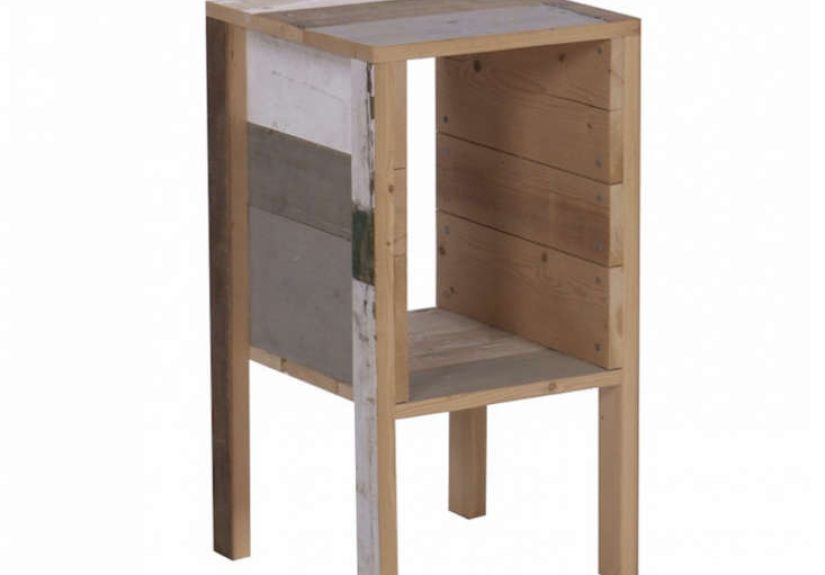
In practical terms, Piet Hein Eek’s bedside table is compact, boxy, and versatile. Its footprint is roughly a foot by a foot, with a height a little over twenty-one inches, which puts it in that sweet spot between “small enough to fit anywhere” and “large enough to do its job without looking like a decorative footnote.” It is the kind of piece that makes a lamp, a water glass, and one very optimistic novel look instantly more intentional.
The structure is simple, and that simplicity is part of the charm. Eek does not overcomplicate the form because the material is already doing the talking. The table’s clean lines let the wood pattern carry the visual interest. That makes it easy to read from across the room. Even in a layered interior, it stands out.
Finish options make a real difference
One of the most interesting things about this bedside table is that it appears in several finish options. The untreated version leans honest and earthy. The fixated, matte-lacquered version feels more settled and user-friendly, especially for everyday living. The high-gloss lacquered version is where things get especially interesting, because gloss transforms scrapwood from rugged to unexpectedly glamorous. Suddenly the same reclaimed material starts flirting with polish, almost as if a workshop and a gallery had a very successful blind date.
There is also a white-painted variant, which softens the patchwork effect and gives the piece a quieter presence. That option is useful for buyers who love Eek’s construction logic but want something less visually assertive. In other words, the bedside table can behave like a statement piece or a subtle design insider move, depending on finish and styling.
No two tables are exactly alike
Because the table is made from found timber, variation is not a defect. It is the point. The mix of woods, tones, and surface nuances means every piece has its own identity. That makes the bedside table feel less like inventory and more like an object with a biography. If mass production says, “Here are ten thousand identical units,” Eek’s scrapwood approach says, “Here is one table, and it has opinions.”
Why Designers and Collectors Keep Coming Back to Piet Hein Eek
Part of Eek’s lasting appeal is that he works across categories without losing his voice. He has designed furniture, interiors, lighting, ceramics, wallpaper, and larger environments, yet the through-line remains clear: material first, craftsmanship always, and character over sterile perfection. His work feels grounded in making, not just sketching. That matters in contemporary design, where some objects look better in press photos than in actual rooms.
His bedside table benefits from that larger reputation. Buyers are not only responding to a practical nightstand; they are buying into a recognizable design worldview. That worldview values reuse without looking cheap, handwork without looking homespun, and individuality without becoming eccentric for the sake of it. It is a difficult balance, and Eek hits it more consistently than most.
There is also the issue of credibility. Eek’s work has circulated through respected design retailers, editorial features, museums, and collectible design platforms for years. That broad visibility helps explain why even a small bedside table can carry the weight of a signature piece. It is functional furniture, yes, but it is also part of a larger design conversation about waste, material honesty, and modern craft.
How to Style Piet Hein Eek’s Bedside Table
In a minimalist bedroom
This is arguably where the piece shines brightest. In a pared-back room with plain bedding, warm neutrals, and simple lighting, the bedside table becomes the visual spark. Because the form is restrained, it does not wreck a calm interior. Because the wood is lively, it keeps the room from feeling too polished or too precious. It adds soul without adding clutter.
In an eclectic or collected space
Eek’s bedside table is also excellent in rooms that already contain art, vintage finds, layered textiles, or unusual lighting. The patchwork surface can hold its own among stronger personalities. It does not disappear, but it also does not hijack the room. Think of it as the guest at the dinner party who is actually interesting and somehow still knows when to stop talking.
In hospitality-inspired interiors
The piece works beautifully in boutique hotel-style bedrooms because it feels memorable. Editorial interiors have used Piet Hein Eek furniture precisely this way: to make a room feel considered, artistic, and slightly off-script. A bedside table like this instantly gives a bedroom more texture and narrative than a generic matching set ever could.
What This Table Says About Sustainable Design
Piet Hein Eek’s bedside table is a useful reminder that sustainability in furniture design is not just about sourcing responsibly. It is also about changing taste. As long as consumers believe beauty requires sameness, perfectly matched grain, and factory-like consistency, reclaimed materials will always be treated as second-tier. Eek’s genius is that he makes inconsistency desirable. He turns waste into a luxury aesthetic without sanding away its origins.
That shift in taste has had real influence. The popularity of his scrapwood pieces, and the wider visibility of his material experiments across retail and editorial channels, helped normalize the idea that reused materials can belong in sophisticated interiors. Not as compromise pieces. Not as “eco options.” As genuinely desirable design objects.
And that may be the bedside table’s biggest achievement. It is small, but it quietly teaches a bigger lesson: design can be responsible and emotionally resonant at the same time. It can honor labor. It can reveal material history. It can resist sameness. And it can still look fantastic next to a bed.
Is Piet Hein Eek’s Bedside Table Worth the Attention?
Yes, but not because it is trendy. It is worth the attention because it represents a rare combination of usefulness, authorship, and material intelligence. This is not a disposable nightstand, and it is not trying to be. It is a piece for people who want furniture with texture, thought, and a little attitude.
It will not suit everyone. If you need perfect uniformity, whisper-quiet surfaces, and wood grain that behaves like it was raised by strict parents, this is probably not your table. But if you want a handcrafted bedside table that looks better the longer you study it, Eek’s design is deeply compelling. It offers the warmth of reclaimed wood, the clarity of modern form, and the individuality that mass-market furniture usually promises and almost never delivers.
The Bigger Legacy Behind a Small Piece
Piet Hein Eek’s bedside table works so well because it distills his larger legacy into one compact object. You can see the designer’s interest in humble materials, in visible craft, in making process part of the final aesthetic, and in refusing the idea that refinement must erase evidence of labor. This is why the piece resonates with both design professionals and ordinary homeowners who simply know when something feels alive.
In that sense, the table is not just a nightstand. It is a portable manifesto. It says that sustainability can be beautiful, that imperfection can be organized, and that a practical object can still have imagination. It also says, politely but firmly, that your sad flat-pack nightstand deserves a long think about its life choices.
Experience: What It Feels Like to Live With Piet Hein Eek’s Bedside Table
Living with a piece like Piet Hein Eek’s bedside table is less about owning a trendy object and more about changing the atmosphere of a room in a quiet, persistent way. On day one, you notice the color. The mix of woods catches light differently throughout the day, so the table never looks static. In the morning, it can feel warm and gently textured. At night, under a reading lamp, the surface becomes moodier and more dramatic, almost like a little cityscape made from timber. That shifting presence is part of what makes the piece satisfying over time. It does not flatten into the background.
There is also a tactile pleasure to it. A lot of bedside tables are functionally invisible. They hold a lamp, collect a water ring, and spend their lives pretending not to exist. Eek’s table resists that fate. It invites attention. You notice the edges, the blocks of grain, the tiny visual interruptions that remind you this furniture began with materials that already had a previous life. That sense of reuse changes the emotional tone of the bedroom. The room feels less staged and more inhabited, less catalog-perfect and more human.
In daily use, the scale is part of the charm. The table does not dominate the room, but it always earns a second glance. A ceramic lamp looks better on it. A stack of books looks more deliberate on it. Even the random objects of bedtime life, a hand cream tube, reading glasses, a watch, that one receipt you forgot to throw away, somehow look less depressing when they sit on a surface with this much personality. It is not magic, exactly, but it is suspiciously close.
The bedside table also changes how the room handles contrast. In a calm bedroom with white walls and soft linens, it becomes the visual anchor. In a more layered room with art, vintage textiles, and collected objects, it feels like a natural participant rather than an outsider. That adaptability is easy to underestimate until you live with it. Some statement furniture demands constant supporting actors. Eek’s piece can play lead or supporting role, depending on what the room needs.
Perhaps the most lasting experience, though, is psychological. You do not get the feeling that you bought something generic. You get the feeling that you chose an object with a point of view. Because every scrapwood table is slightly different, it feels more personal than standardized furniture ever can. It becomes part of your routine in a way that is oddly intimate. It is there for the last thing you set down before sleep and the first thing you reach for in the morning. Over time, that matters.
And that is probably the best argument for Piet Hein Eek’s bedside table. It brings design theory down to human scale. It is sustainable without being preachy, artistic without being impractical, and expressive without becoming exhausting. It proves that even a small piece of furniture can hold memory, mood, and meaning. Not bad for a nightstand. Honestly, most of them are lucky if they can manage “flat surface.”
Conclusion
Piet Hein Eek’s bedside table is a compact masterclass in modern craftsmanship. It takes reclaimed wood, disciplined composition, and finish variation and turns them into something that feels both personal and polished. More than a bedside accessory, it is an object that reflects a larger design philosophy: start with material, respect labor, embrace variation, and let usefulness coexist with beauty. That is why the piece continues to matter. It does not just fill a corner beside the bed. It upgrades the entire conversation around what furniture can be.