Table of Contents >> Show >> Hide
- What Actually Happened Above the Creek Fire
- Why This Owl Helicopter Story Went Viral
- The Bigger Wildfire Context: California in a Brutal Fire Era
- Why Would an Owl Fly Into a Helicopter?
- The Aviation Safety Angle Nobody Should Ignore
- What the Story Reveals About Human Reactions to Wildfire News
- The Lasting Meaning of the Owl Co-Pilot Moment
- Experiences Related to the Story: Why This Moment Feels So Real
- Conclusion
There are strange days at work, and then there are California wildfire helicopter days, where the smoke is thick, the stakes are high, and an owl somehow decides your aircraft looks like the perfect place to sit for a while. That, in essence, is why the story behind the headline “Owl Casually Flies Into Helicopter That’s In Flight Over Californian Wildfires” has stuck in people’s minds. It was weird, funny, slightly unbelievable, and somehow deeply human all at once. Or maybe deeply avian. Either way, it was memorable.
The incident became one of those rare internet stories that did not need extra drama, a fake plot twist, or a suspiciously overedited video clip. The premise did all the work: a pilot battling a dangerous wildfire over California suddenly found himself sharing the cockpit with an owl that appeared to have no schedule, no panic, and absolutely no respect for standard boarding procedures.
But beyond the viral charm, this story says something bigger about wildfire life in California, the realities of aerial firefighting, and the odd, sometimes touching ways wildlife and humans collide when extreme events reshape the landscape. The image of an owl riding shotgun in a firefighting helicopter may sound like a punchline written by the universe after too much coffee, but it also reflects a real emergency environment where animals, smoke, noise, and people all get pushed into unusual contact.
What Actually Happened Above the Creek Fire
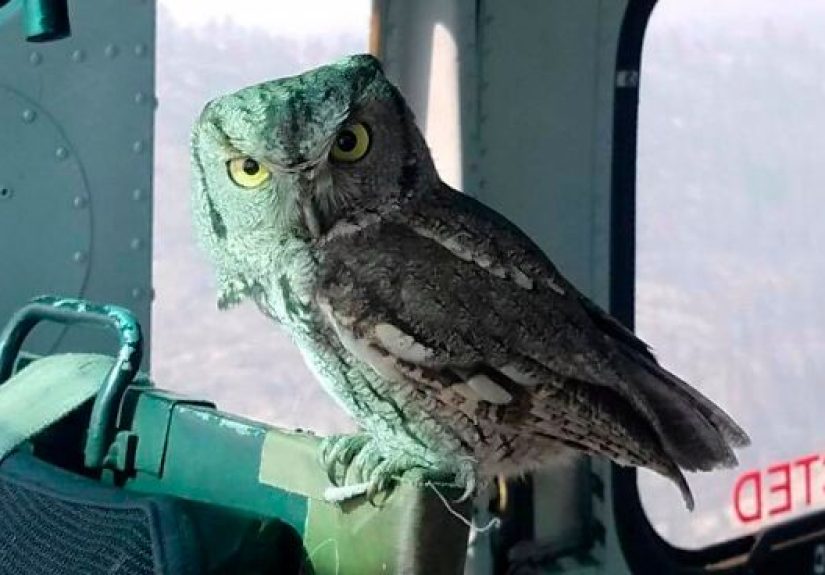
The event traces back to the massive Creek Fire in California in 2020, one of the most consequential fires of that brutal season. During firefighting operations, pilot Dan Alpiner was flying water-drop missions in a UH-1 Huey helicopter for Sky Aviation over the fire area in Fresno and Madera counties. According to reports at the time, an owl entered the helicopter mid-flight through an opening and settled into the aircraft rather than panicking and thrashing around the cockpit like a feathered tornado.
That detail is what made the story instantly irresistible. The owl did not come in like a movie villain. It did not launch into chaos. It simply arrived, looked around, and appeared to decide that this loud, vibrating machine in the middle of a wildfire was acceptable temporary housing.
Even more remarkably, the bird stayed put while Alpiner continued making water drops. Instead of becoming a safety nightmare, the owl behaved more like a calm passenger. It remained long enough to turn a dangerous firefighting mission into one of the oddest “co-pilot” stories in recent California wildfire news. Then, just as casually as it had appeared, it left safely.
That combination of tension and calm is what gave the moment its staying power. A helicopter over an active wildfire is not a place built for whimsy. It is a workplace defined by heat, smoke, timing, visibility, and risk. So when an owl enters that space and sits there like it was invited, the contrast is almost too perfect. Nature, apparently, still believes in dramatic entrances.
Why This Owl Helicopter Story Went Viral
The headline worked because it offered something readers rarely get from wildfire coverage: surprise without cynicism. Most wildfire stories are grim for good reason. Fires destroy homes, force evacuations, reshape ecosystems, and place enormous pressure on firefighters, pilots, dispatchers, and local communities. So when a story emerges that is real, unusual, and oddly charming, people latch onto it.
In this case, the owl became a symbol of several things at once. It represented the wildlife caught in the path of Western fire seasons. It represented the unpredictability of aerial firefighting. And it represented the kind of absurd calm that people secretly admire. If the world is on fire and an owl can still enter a helicopter, sit down, and behave like it has an appointment, maybe the universe has not entirely given up on irony.
There was also a strong visual element. Stories travel farther when they come with an image people can instantly understand. A pilot and an owl in the same cockpit during wildfire operations is the kind of scene that barely needs explanation. It feels cinematic, but it was rooted in real work carried out during a very real emergency.
The Bigger Wildfire Context: California in a Brutal Fire Era
To understand why this story resonated, it helps to remember the moment in which it happened. California’s 2020 fire season was staggering. Massive fires burned across the state, and the Creek Fire became one of the defining disasters of that year. The fire tore through an enormous area, threatened mountain communities, forced evacuations, and became part of a season that changed the way many Americans thought about wildfire scale.
Against that backdrop, helicopters were not scenic accessories. They were essential tools. In wildfire suppression, helicopters can move crews, scout terrain, support search and rescue, and deliver water or retardant to hot spots and active fire edges. They are especially valuable in steep, rugged, or rapidly changing conditions where timing matters and ground access is limited. When people imagine aerial firefighting, they often think only of large fixed-wing aircraft making dramatic passes. In reality, rotorcraft do a huge amount of crucial work in the wildland fire system.
That is why the owl’s appearance mattered beyond novelty. It happened in a genuinely demanding operational setting. Helicopter crews working over fires deal with smoke, changing winds, narrow visibility windows, fatigue, terrain hazards, and nonstop communication demands. It is difficult work on an easy day, and wildfires rarely offer easy days.
Why Helicopters Are So Important Over Wildfires
Helicopters are uniquely useful because they can operate with flexibility. They can dip water from lakes, reservoirs, and portable tanks. They can reach tighter areas than many larger aircraft. They can perform repeated drops in rapid succession when the water source is nearby. They can also support crews on the ground who need targeted suppression rather than broad coverage.
In other words, they are workhorses. Loud, nimble, smoky workhorses.
So when an owl flew into one of these aircraft during an active mission, it was not just a strange wildlife encounter. It was an encounter inside one of the most demanding tools used in modern wildfire response. That makes the calmness of the bird all the more astonishing.
Why Would an Owl Fly Into a Helicopter?
No one can say with certainty what the owl was thinking, and frankly, interviewing an owl remains a difficult reporting assignment. Still, there are a few sensible possibilities. Owls are often active during low-light periods such as dusk, dawn, and nighttime. If wildfire smoke, flames, rotor wash, and noise were already disrupting normal movement, the bird may simply have reacted in the moment and entered the open space it saw.
Wildfires create chaos for animals. Habitat changes fast. Smoke affects visibility and breathing. Noise levels spike. Familiar flight paths may become less reliable. The bird may have been startled, disoriented, seeking a temporary refuge, or simply making a split-second decision in a rapidly changing environment. Not every animal behavior during an emergency comes with a tidy explanation.
There is also a broader ecological point here. Birds are not separate from wildfire stories. They are inside them. Smoke and fire can disrupt migration, feeding patterns, nesting success, and movement across landscapes. Some species flee quickly. Others endure poor air conditions. Some may be pushed into riskier routes or unusual choices. A helicopter cockpit was a bizarre stop, but it was still part of a larger wildfire-disrupted environment.
Owls, Smoke, and Nocturnal Confusion
Owls are famously adapted to low-light hunting, stealth flight, and quick decision-making. But even highly specialized birds operate within environmental limits. Thick smoke can alter how animals navigate space. Bright flames can create strange visual conditions. Fire operations bring aircraft, sirens, machinery, and human movement into places that may normally be quieter. That does not automatically explain the owl’s decision, but it helps explain why wildfire zones produce behavior that looks unusual to people watching from outside.
In that sense, the story is not only about a random bird doing a random thing. It is about what happens when extreme wildfire conditions compress the worlds of humans and wildlife into the same dangerous airspace.
The Aviation Safety Angle Nobody Should Ignore
For all its charm, this was also a reminder that bird-aircraft interactions are a real aviation safety issue. The FAA treats bird and wildlife strikes seriously, and for good reason. Low-altitude operations can increase exposure to wildlife, especially in areas where birds are active and where aircraft are maneuvering close to terrain. Helicopters, which often work low and slow compared with many airplanes, can face their own unique exposure patterns.
That does not mean every bird encounter becomes a disaster. Clearly, this one did not. But professionals in aviation do not shrug off wildlife interactions as cute side notes. Unexpected movement in a cockpit can distract a pilot at exactly the wrong time. That is part of what makes Alpiner’s experience so extraordinary: he had reason to worry, yet the owl remained calm enough for the flight to continue safely.
This balance is important in how we tell the story. Yes, it is delightful. Yes, it sounds like something a screenwriter would pitch and get told to “make it less obvious.” But it also happened in an environment where calm, training, and professionalism mattered. The pilot did not have the luxury of turning the moment into a comedy sketch while airborne over a wildfire. He had to manage risk first.
What the Story Reveals About Human Reactions to Wildfire News
People often gravitate toward stories like this because they offer emotional contrast. Wildfire coverage is usually filled with hard truths: destroyed structures, exhausted firefighters, evacuation trauma, smoke exposure, and economic loss. A story about an owl acting like an accidental ride-share passenger gives readers a different entry point into the same crisis.
It allows empathy to sneak in sideways.
Readers are drawn in by the oddity, then reminded that wildlife is also living through the fire. They laugh at the image, then recognize the pressure on aerial crews. They share the headline because it is funny, but they stay for the reminder that wildfire is not abstract. It affects everything in its path, including birds that may have no better option than improvisation in the air.
This is why the article title works so well for SEO and for readers. It contains strong curiosity language, clear visual action, and a high-interest setting. “Owl,” “helicopter,” “in flight,” and “California wildfires” all do heavy lifting. The title promises a bizarre true story, and the story actually delivers. That is rarer on the internet than it should be.
The Lasting Meaning of the Owl Co-Pilot Moment
At first glance, this looks like a viral animal-news oddity. At second glance, it becomes a small parable about living in an age of megafires. Wildlife is displaced. Emergency responders work in unstable conditions. Human systems and natural systems overlap in ways that are sometimes tragic, sometimes dangerous, and occasionally so strange that the only possible response is, “Well, that happened.”
The owl in the helicopter did not solve wildfire policy. It did not reduce fuel loads, improve insurance markets, or rewrite air operations procedures. What it did do was create one of those rare moments that helped people look at a huge crisis through a smaller, unforgettable image. In that image, there was stress, beauty, absurdity, and survival all at once.
That is probably why the story still works years later. It is not just cute. It is revealing. It shows how wildfire emergencies scramble expectations. It shows how calm can appear in unlikely forms. And it shows that even in a season defined by smoke and destruction, one very unbothered owl managed to become a legend of the fire line.
Honestly, if that owl ever writes a memoir, it is already guaranteed a strong opening chapter.
Experiences Related to the Story: Why This Moment Feels So Real
Stories like this resonate because they match the kind of strange experiences people report during wildfire season, even when their own stories are less headline-friendly. Pilots, firefighters, residents, hikers, and wildlife watchers often describe wildfire environments as places where normal rules feel temporarily suspended. The air looks wrong. Light behaves strangely. Sound carries in odd ways. Animals show up where you do not expect them. Human routines become fragile, and everyone starts improvising.
For aerial crews, one recurring experience is sensory overload. Wildfire flying is not just about steering an aircraft from point A to point B. It can involve smoke layers, shifting visibility, radio traffic, terrain awareness, and constant attention to timing. Even without an owl entering the cockpit, crews often describe these missions as highly demanding and intensely focused. That is part of why the owl story fascinates pilots and non-pilots alike. People understand instinctively that a helicopter over a fire is not a casual setting. So the bird’s calm behavior feels almost surreal.
Ground crews and residents often describe a different but related experience: wildlife appearing in unusual places. During major fires, deer may move into neighborhoods, birds may cluster in unfamiliar trees, and small animals may turn up in garages, sheds, or under vehicles. These encounters are not magical in a fairy-tale sense. They are signs of disruption. Still, people remember them vividly because they make the emergency feel immediate. Fire is no longer “out there.” It has entered the shared space between people and wildlife.
There is also the emotional experience of finding one strange, gentle moment inside a larger disaster. Anyone who has lived through a smoky week, an evacuation warning, or a tense night watching fire maps refresh every few minutes knows that the mind clings to small details. A neighbor sharing masks. A firefighter waving from a roadblock. A pet doing something ridiculous at the exact wrong time. These moments do not erase the seriousness of the event, but they help people process it. The owl in the helicopter fits that pattern perfectly. It was an absurd detail that made a frightening reality briefly feel graspable.
Birders and wildlife lovers respond to the story for another reason: it captures how wild animals can seem both vulnerable and self-possessed at the same time. An owl entering a helicopter during wildfire operations sounds like total confusion, yet the bird’s behavior also seemed calm, measured, and oddly confident. That tension feels familiar to anyone who spends time watching wildlife. Animals often look composed even when conditions are clearly challenging. Humans read that calm as wisdom, even if it may simply be instinct at work.
And then there is the broader California wildfire experience, which has become sadly familiar to many people: orange skies, drifting ash, emergency alerts, and the feeling that ordinary life is happening next door to something enormous and unstable. In that kind of atmosphere, an owl riding inside a firefighting helicopter does not feel impossible. It feels like the sort of thing this era would produce. Strange, yes. Unreal, almost. But also believable in the way only wildfire-season stories can be believable.
That is why this headline lasted. It was not only about an owl. It was about the lived texture of wildfire reality: danger mixed with surprise, disruption mixed with resilience, and one unforgettable image that made a giant crisis feel personal for a moment.
Conclusion
The story behind “Owl Casually Flies Into Helicopter That’s In Flight Over Californian Wildfires” is more than a viral curiosity. It is a snapshot of modern wildfire life in the American West, where aerial firefighting is essential, wildlife is under pressure, and the line between the human emergency response world and the natural world grows thinner during every severe fire season. The owl’s visit was funny, yes, but it also underscored something serious: wildfire reshapes behavior, movement, and risk for everyone in the landscape, whether they are wearing a flight helmet or feathers.
That mix of humor, danger, and genuine wonder is what gives the story its staying power. It is rare to find a headline that sounds exaggerated, turns out to be real, and still manages to say something meaningful about the larger world. This one does exactly that. The owl may have only stayed for a short ride, but the image of that accidental co-pilot has earned a very long afterlife.