Table of Contents >> Show >> Hide
- Why 400,000 Valuations Is a Bigger Deal Than It Looks
- The Venture Market Has Become More Selective and More AI-Obsessed
- What the Best Fundability Models Are Really Measuring
- Why Founders Are Hooked on Instant Feedback
- What the Data Says About Who Actually Gets Funded
- Why This Matters for SaaS Founders, Not Just AI Founders
- The Smart Way to Use a Funding Odds Score
- Bottom Line
- Founder Experience: What This Feels Like in the Real World
- Conclusion
Every founder says they want truth. What they usually want is a truth that arrives gently, with a warm latte and a term sheet attached. That is exactly why the latest milestone from SaaStr’s AI Startup Valuation Calculator is so fascinating. Crossing 400,000 valuations is not just a nice round number with extra zeros for dramatic effect. It is a signal that founders are desperate for something the venture market has not been handing out lately: fast, data-backed reality checks.
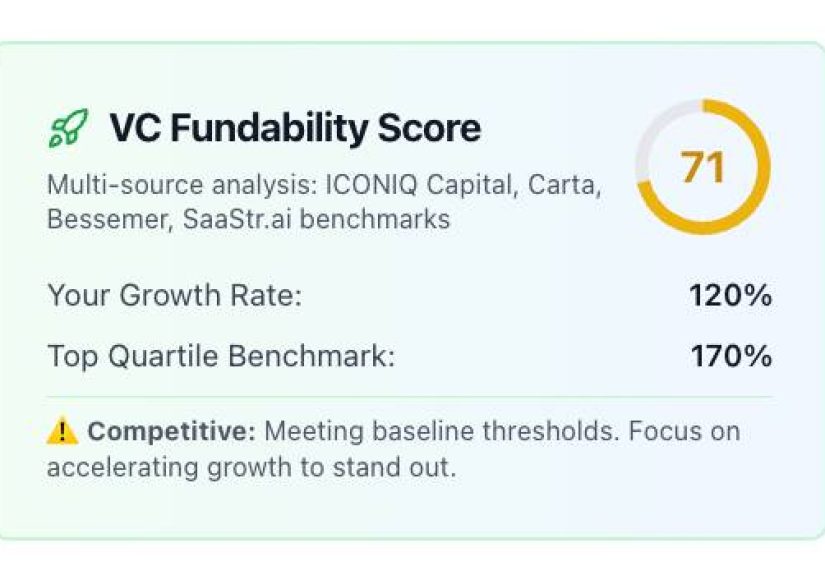
And now the tool does something even more addictive than estimating valuation. It gives founders a quick read on their odds of getting funded. In other words, it takes one of startup life’s most emotionally chaotic questions, “Will investors actually write the check?” and runs it through benchmarks, comparable rounds, and the strange logic of the 2025 to 2026 fundraising environment.
That matters because this is no longer a market where vibes alone can carry a deck. AI has changed the rules, but not in the comforting, “everyone wins” kind of way. Capital is flowing back into venture, valuations are rising again, and AI startups are commanding real premiums. At the same time, money is concentrating in fewer hands, more founders are getting filtered out faster, and the distance between “interesting” and “fundable” has become a canyon.
Why 400,000 Valuations Is a Bigger Deal Than It Looks
When a startup tool gets used a few thousand times, that is curiosity. When it gets used hundreds of thousands of times, that is market demand. Founders are not just browsing for entertainment here. They are trying to answer three very practical questions: What am I worth right now? What do investors think I am worth? And how far apart are those two numbers before the meeting gets awkward?
SaaStr’s calculator is especially interesting because it is not pretending to be a magic crystal ball. Its appeal is that it pulls from real market benchmarks and recent venture patterns rather than founder wishful thinking. That makes it more useful than the classic spreadsheet approach, which often begins with heroic assumptions and ends with the founder explaining why a pre-product startup deserves a category-defining valuation because the TAM slide had gradients.
The new “odds you’ll get funded” feature pushes this one step further. Valuation alone is incomplete. A startup can look expensive and still get financed if growth is exceptional, the category is hot, or the team is unusually credible. A startup can also look modestly priced and still struggle if the market is crowded, growth is sluggish, retention is weak, or the story is fuzzy. Fundability sits at the intersection of metrics, momentum, market narrative, and investor appetite. That is exactly why founders want the answer in seconds.
The Venture Market Has Become More Selective and More AI-Obsessed
Here is the weird part of the current market: venture is active again, but it is not equally active for everyone. AI has become the center of gravity. In practice, that means the best AI startups are often raising at premium valuations while everyone else is being asked to show more traction, better efficiency, cleaner retention, and a clearer path to relevance.
That split explains why a funding-odds calculator feels so timely. In a balanced market, founders can get away with a broader range of narratives. In a concentrated market, the funnel gets much narrower. Investors are not just asking whether a business is good. They are asking whether it is good enough, fast enough, efficient enough, and strategic enough to deserve scarce attention in a market where AI is pulling in an outsized share of dollars.
Put differently, founders are no longer competing against a vague “market.” They are competing against the best version of what investors saw this week. If a partner just heard about an AI-native startup growing from zero to meaningful annual recurring revenue at warp speed with strong retention and a tight burn multiple, the bar for everyone else moves immediately.
What the Best Fundability Models Are Really Measuring
A good startup funding odds calculator is not measuring luck. It is measuring pattern fit. That usually means some combination of stage, revenue, growth rate, retention, capital efficiency, market category, and team signals. In the AI era, it also means whether the company looks AI-native, AI-forward, or simply AI-decorated.
1. Valuation is now tied more tightly to performance signals
For years, founders could argue valuation from vision alone, especially very early. Vision still matters, but the market has become far more benchmarked. Investors are comparing companies against recent rounds, stage medians, growth cohorts, and efficiency bands. The software world now has enough data to make lazy storytelling less effective. Not impossible, just less effective.
2. AI startups are getting a real premium, but only when the numbers support the story
There is clearly an AI premium in the market. But not every startup with an API call and an ambitious font gets one. The premium tends to go to companies that can show unusually fast adoption, strong monetization, credible enterprise demand, or infrastructure leverage. Investors are rewarding businesses that look like they can become platforms, not just wrappers with caffeine.
3. Growth without efficiency no longer feels heroic
One of the biggest shifts in recent years is that efficiency has moved from “nice bonus” to “core signal.” Burn multiple, payback periods, expansion revenue, and retention quality all matter more. Founders who still think the market will excuse sloppy execution because the deck says “generative AI” may want to sit down before the calculator finishes loading.
4. Market timing matters almost as much as company quality
A startup can be strong and still be out of sync with investor appetite. Some sectors are in favor because they align with current enterprise spending, infrastructure demand, or defensible data loops. Others are harder because they look crowded, services-heavy, or too dependent on third-party models. Fast funding-odds tools are useful precisely because they reflect the market that exists now, not the one founders remember from a friend’s 2021 round.
Why Founders Are Hooked on Instant Feedback
Because it saves time. And because fundraising can be one of the least honest workflows in business.
A founder can spend weeks polishing a pitch, take fifteen investor meetings, get twelve “interesting, keep me posted” emails, and still have no clue whether the company was ever seriously fundable. An instant benchmark tool does not replace investor judgment, but it can reduce the cost of self-deception. That is valuable.
It also helps founders debug their narrative earlier. If the calculator says the valuation range is lower than expected or the funding odds are weak, that does not automatically mean the company is bad. It usually means something has to tighten up. Maybe the revenue base is too small for the ask. Maybe growth is not strong enough for the stage. Maybe the burn is too high. Maybe customer love is real, but the go-to-market engine is still mushy. Better to learn that from a machine in ten seconds than from a partner after six weeks of polite ghosting.
What the Data Says About Who Actually Gets Funded
The current data points across venture all tell a consistent story. AI-native companies are often growing faster and raising at higher valuations than traditional software peers. Early-stage valuations have moved up. Major AI rounds are still happening. But the money is concentrating at the top, which means the average founder’s path is still hard.
That is the paradox the SaaStr tool is trying to solve. Yes, the market is funding ambitious AI companies at striking valuations. Yes, seed and Series A pricing has rebounded. Yes, investors are moving when they see breakout potential. But no, this does not mean the bar is low. It means the market is rewarding a very specific profile of company.
That profile increasingly looks like this: a startup with evidence of pull, not just push; a product buyers can understand quickly; growth that can be benchmarked against elite peers; and enough operational discipline that investors do not assume the next round will be a rescue mission. The “odds you’ll get funded” question is really shorthand for: Do you look like one of the companies the market is currently willing to chase?
Why This Matters for SaaS Founders, Not Just AI Founders
Even if a company is not AI-native, this moment still matters. The entire software market is being repriced around speed, efficiency, defensibility, and customer value. AI has not just created new winners. It has also raised expectations for everyone else. Customers want faster outcomes. Investors want clearer differentiation. Boards want proof that capital is being turned into traction, not just headcount and conference badges.
That means a valuation calculator is no longer just a pricing tool. It is a positioning tool. It tells founders where they stand relative to the market’s current appetite. It helps them decide whether to raise now, wait for stronger traction, reframe the story, or cut burn and buy time. Sometimes the best use of a funding-odds score is not to sprint into fundraising. It is to realize the company needs another six months of progress before the odds stop looking like a weather forecast during hurricane season.
The Smart Way to Use a Funding Odds Score
Use it as a diagnostic, not a verdict. A calculator can show where a company sits against recent market patterns, but it cannot fully capture founder charisma, category timing, customer urgency, or the subtle art of walking into a room and making investors feel late to the opportunity. Venture is still a human business. It just happens to be a human business increasingly obsessed with data.
The best founders will use tools like this the way elite athletes use a stopwatch. Not as an emotional referendum, but as feedback. If the odds look weak, figure out why. If the valuation seems aggressive, ask what metrics would justify it. If the score improves after stronger retention, faster growth, or better capital efficiency, that is useful intelligence. It tells you which levers actually matter.
And that may be the real breakthrough behind the SaaStr milestone. Crossing 400,000 valuations proves founders want more than inspiration. They want calibration. They want to know whether the business is genuinely on-track or just well-presented. They want less mythology and more math. In today’s market, that is not pessimism. That is professionalism.
Bottom Line
SaaStr’s AI Startup Valuation Calculator crossing 400,000 valuations is important because it reflects a much larger shift in startup culture. Founders now expect funding advice to be immediate, benchmarked, and brutally useful. The new ability to estimate funding odds makes the tool even more relevant because valuation without fundability is only half the story.
In a market where AI companies can command major premiums, where investors are concentrating capital in fewer breakout bets, and where efficiency matters as much as ambition, instant calibration is not a gimmick. It is survival gear. The founders who benefit most will not be the ones who use the tool to confirm their favorite narrative. They will be the ones who use it to sharpen strategy, fix weaknesses, and show up to investors with a company that actually deserves the odds it is getting.
Founder Experience: What This Feels Like in the Real World
Ask enough founders about valuation calculators and funding-odds tools, and a pattern shows up fast. The first reaction is excitement. The second is mild panic. The third, if the founder is honest, is usually relief. There is something deeply clarifying about seeing a machine tell you that your dream company is either on a promising track or not quite ready for prime time.
For many early-stage teams, the biggest benefit is not the number itself. It is the conversation that happens after the number appears. One founder sees a lower-than-expected valuation estimate and finally admits the company has been pricing itself like a hot Series A story even though it is still basically a sharp pre-seed with good customer interviews. Another sees weak funding odds and realizes the problem is not the market, not investor bias, and not Mercury being in retrograde. The problem is that growth is decent, but the narrative does not explain why this startup wins now.
There is also a confidence effect when the result is strong. A founder who has been underselling the business may discover the company actually benchmarks well against current market data. That changes the tone of fundraising. Instead of wandering into investor meetings hoping to be liked, the founder shows up with clearer conviction, tighter asks, and a better sense of what comparable companies are getting. That confidence is not fake swagger. It is anchored in context.
Operators also use these tools internally in surprisingly practical ways. They use them to decide whether to raise immediately or wait another quarter. They use them to test how much a new enterprise logo, a stronger net retention number, or a lower burn multiple might improve the company’s profile. They use them to stress-test board conversations. And sometimes they use them to settle co-founder debates that have gone on way too long. Few things end a valuation argument faster than a benchmark tool saying, in effect, “Gentlemen, you are both being dramatic.”
Of course, no founder should outsource judgment completely. Tools cannot detect every nuance. They cannot fully capture product delight, founder magnetism, or the weird magic that happens when a market suddenly bends toward a company’s exact shape. But they are still enormously helpful because they force a discipline that startup culture often resists. They force teams to ask what is true now, what needs to improve, and what story the numbers actually support.
That is why the best experience with a funding-odds calculator is not emotional validation. It is sharper execution. Founders leave with a punch list. Improve retention. Tighten positioning. Show faster time-to-value. Reduce burn. Build more proof before raising. Or, if the signals are strong, raise with urgency because the market may be ready. In that sense, the real product is not the score. The real product is clarity. And in startup land, clarity is worth a lot more than motivational slogans and a suspiciously optimistic spreadsheet.
Conclusion
Startup fundraising has entered an era where speed, AI momentum, and hard benchmarking all matter at once. SaaStr’s calculator hitting 400,000 valuations is a milestone because it captures that new reality perfectly. Founders do not just want to know what their company might be worth. They want to know whether the market is likely to believe it, and whether investors will fund the next step. In a selective venture environment, that kind of instant clarity can save months of wasted effort and help teams focus on the metrics that actually move the needle.