Table of Contents >> Show >> Hide
- What “Oiled Walnut” Means (And Why It Looks So Good)
- Why &Tradition Chairs + Oiled Walnut Is a Power Combo
- Popular &Tradition Chair Models Often Seen in Oiled Walnut
- How to Choose the Right Oiled Walnut &Tradition Chair for Your Space
- Oiled Walnut Care: Keep the Glow, Lose the Stress
- Design Ideas: How to Style Oiled Walnut &Tradition Chairs
- Buying Tips: What to Check Before You Commit
- Owner-Style “Experiences” With Oiled Walnut &Tradition Chairs (Extra Section)
- Conclusion
- SEO Tags
Oiled walnut has a certain superpower: it makes a room look like it has its life together. Not in an “I only own beige sweaters”
waymore like “Yes, I do read books, and no, they’re not all cookbooks.” Pair that warm, chocolatey wood with &Tradition’s
Scandinavian-meets-modern design language, and you get chairs that feel equal parts timeless and quietly flexy.
This guide breaks down what “oiled walnut” actually means, which &Tradition chair models commonly come in that finish, how they
behave in real homes (with kids, pets, spaghetti nights, and the occasional dramatic chair-drag), and how to keep them looking
gorgeous without turning your dining room into a wood-finishing laboratory.
What “Oiled Walnut” Means (And Why It Looks So Good)
“Walnut” is the wood species (or veneer), and “oiled” describes the finish system. An oil finish soaks into the wood and enhances
grain and depth instead of forming a thick, glossy plastic-like layer on top. The vibe is more natural matte/satin than high-shine.
You’ll typically see the grain pattern more clearly, and the surface feels warm and “alive.”
Walnut’s visual personality
Walnut is prized for its rich brown heartwood (often with darker streaks) and a natural luster that reads “expensive” even when the
rest of the room is just… IKEA and optimism. It can show subtle undertonesgray, reddish, even purplishdepending on cut and light.
The grain is often straight but can be wavy or figured, which is why walnut pieces can feel one-of-a-kind.
Oil finish: the “living finish” effect
Oil finishes are loved because they’re easy to refresh and spot-repair. The trade-off is that they’re generally less protective than
thicker film finishes like lacquer or polyurethanemeaning you’ll want to be a little more mindful about standing water, harsh
cleaners, and repeated abrasion. (Translation: coasters are still cool.)
Why &Tradition Chairs + Oiled Walnut Is a Power Combo
&Tradition is known for designs that nod to classic Scandinavian craftsmanship while still feeling current. Oiled walnut fits that
mission perfectly: it’s traditional in material honesty, modern in restraint, and it photographs like it has its own PR team.
Many &Tradition chairs also highlight craftsmanship cuescurved backrests, sculptural negative space, turned legs, form-pressed
elements, and woven seats. Walnut’s depth helps those shapes read clearly, while the oil finish keeps everything from feeling too
formal or fragile.
Popular &Tradition Chair Models Often Seen in Oiled Walnut
&Tradition’s catalog is broad, but a few chair families are especially associated with walnut options and that warm, tactile look.
Here are the ones that tend to come up most in U.S. showrooms and modern design retailers.
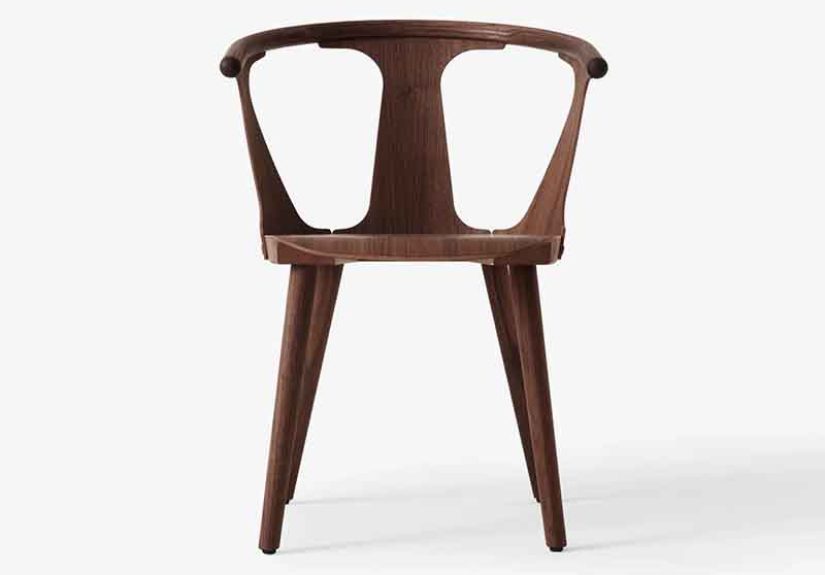
In Between (SK1 / SK2): sculptural, airy, and dining-friendly
The In Between chair family is known for its visual “lightness”: a crescent-like back and sides, with negative space doing half the
styling work for you. It’s the kind of chair that looks intentional from every angleimportant if your dining area is also your
Zoom-background area.
- Best for: dining rooms, open-plan kitchens, small spaces that need visual breathing room.
- Why walnut works here: it emphasizes the curves and contrasts beautifully against light walls, stone, or pale oak tables.
- Style tip: use walnut In Between chairs on the “host” ends of a table and mix a simpler side chair along the sides for a layered look.
Drawn (HM3 / HM4): Danish mid-century energy, updated for now
The Drawn chair is often described as a love letter to mid-century Danish designsimple, honest, and comfortable without being
bulky. A key signature is the hand-woven paper cord seat paired with a solid wood frame. In walnut, it becomes a little moodier
and more architectural (in a good way).
- HM3 is the armless dining chairgreat for tighter table spacing.
- HM4 adds armrests and a wider feelperfect for end chairs or desk seating.
- Why walnut works here: it makes the paper cord look even lighter and more graphic by contrast.
Betty (TK series): lighter profile, easy-going versatility
The Betty chair family is named after a Copenhagen theater, which feels appropriate because it’s a chair that knows how to behave in
a crowd. It often comes in variationswebbing, wood seats, and upholstered optionsmaking it easier to match your lifestyle.
Not every Betty configuration is walnut, but the family belongs in this conversation because it’s a frequent “second chair” choice
when people want a coordinated set without everything looking identical.
How to Choose the Right Oiled Walnut &Tradition Chair for Your Space
1) Start with how you actually live (not how you want Pinterest to think you live)
If your dining table is used daily and you host often, prioritize comfort, ease of moving chairs, and surfaces that won’t stress you
out. If your dining space is more “ceremonial,” you can lean harder into sculptural silhouettes.
2) Consider seat material: wood vs. paper cord vs. upholstery
- Wood seat: easiest to wipe, most durable for high-traffic households.
- Paper cord seat: breathable, visually light, comfortablejust avoid soaking it and keep spills moving (quickly).
- Upholstered seat: best for long dinners; choose performance fabrics if your home runs on tomato sauce and joy.
3) Think about proportions and table clearance
Dining chairs live and die by spacing. Armless chairs generally fit more easily and tuck in cleaner. Armchairs are fantastic for
ends of tables, desks, or as “statement” chairs in a corner, but measure carefully so arms don’t crash into the tabletop apron.
4) Decide how “matchy” you want to be
Walnut is a strong visual anchor. If you have walnut floors or a walnut table, matching chairs can look polishedbut sometimes too
uniform. A common designer move is to mix walnut chairs with a lighter table (oak, ash, stone, or painted wood) to keep the room
from going full “chocolate-on-chocolate.”
Oiled Walnut Care: Keep the Glow, Lose the Stress
Oiled walnut is not high-maintenanceit’s just honest. It will show life: tiny burnishes where hands touch, a soft patina where
sunlight hits, and occasional marks that remind you humans live here. The good news: oil finishes are often forgiving because you
can refresh them.
Daily/weekly routine
- Dust dry. Use a soft, dry cloth (microfiber works well). Dust is basically sand in tiny sweatersdon’t rub it in.
- Wipe gently. If needed, use a cloth lightly dampened with lukewarm water, wrung out well, and wipe with the grain.
- Dry immediately. Follow with a dry cloth so moisture doesn’t linger.
Things to avoid (your chairs will thank you)
- Standing water (wet cloth draped over the back = tiny tragedy in slow motion).
- Harsh cleaners like bleach, ammonia, strong degreasers, or anything that smells like it could remove paint from a boat.
- Abrasive pads that can scratch or dull the finish.
- Random “miracle polishes” unless the product is recommended for oiled woodsome leave sticky residue.
How often should you re-oil?
A common rule of thumb for oil-and-wax or oil-finished furniture is once or twice a yearor whenever the surface looks dull or feels
dry. High-touch areas (chair arms, top rails) may need attention sooner than legs or undersides.
Spot fixes: the realistic approach
If you get a light scuff or a dry-looking patch, you can often improve it with gentle cleaning and a small refresh of the finish.
If you’re not sure what your chair’s oil system is, or you want to preserve warranty guidance, follow the brand’s maintenance
instructions or ask the retailer for the recommended care kit.
Safety note: If you ever use oil-based products at home, treat oily rags responsibly. Lay them flat to dry in a safe,
ventilated area or dispose of them according to local guidance. Don’t ball them up and toss them in a bin.
Design Ideas: How to Style Oiled Walnut &Tradition Chairs
1) The “bright Scandinavian” kitchen-dining combo
Pair walnut chairs with a light table (white oak, pale ash, or a simple painted top). Add linen textiles, a matte ceramic vase, and
one dramatic pendant light. Walnut becomes the warm accent that keeps the space from feeling cold.
2) The “modern classic” dining room
Combine Drawn HM3 chairs in walnut with a rectangular table in stone, marble-look quartz, or dark-stained wood. Add soft lighting,
framed art, and a textured rug. The paper cord seats keep the look from getting too heavy.
3) The mixed-chair set that looks designed (not accidental)
Use In Between SK1 walnut chairs on the ends of the table and simpler side chairs along the sides. Or mix Drawn HM4 armchairs at
the heads with HM3 armless chairs on the sides. The shared walnut finish keeps it cohesive while the silhouettes add variety.
Buying Tips: What to Check Before You Commit
Confirm materials: solid wood, veneer, and seat construction
Many premium chairs blend solid wood with form-pressed veneer components for strength and precise curves. That’s not a downgradeit’s
often the point. Just be aware that veneer should be treated gently (no soaking, no harsh scrubbing) and maintained thoughtfully.
Ask about glides and floor protection
Felt glides can be your floors’ best friend, especially with chairs you move daily. If your home has tile, hardwood, or polished
concrete, confirm whether glides are included and replace them when they wear.
Order swatches when possible
Walnut varies. Lighting varies. Screens lie. If a retailer offers finish samples or swatches, it’s worth itespecially if you’re
matching a walnut table, cabinetry, or floors.
Owner-Style “Experiences” With Oiled Walnut &Tradition Chairs (Extra Section)
Let’s talk about what it’s actually like living with oiled walnut chairsbecause a chair isn’t just an object; it’s a supporting
character in the daily sitcom of your house.
The first week: You notice the finish immediately. Oiled walnut doesn’t scream for attention, but it quietly upgrades
everything around it. Your dining table suddenly looks like it got a promotion. You catch yourself walking past the chairs and
doing the “casual hand glide” along the top railpartly to feel the grain, partly to confirm you didn’t hallucinate buying something
this nice.
The first dinner party: Someone asks where you got them. This is inevitable. If the chairs are Drawn with paper cord
seats, you’ll hear, “Waitwhat is that woven part?” followed by at least one person gently pressing the seat like it’s a new
mattress in a showroom. If the chairs are In Between, people comment on how “light” they feel visually. Someone will take a photo.
Nobody will photograph the salad.
Month two (aka the reality arc): A small scuff appears. Not a disastermore like a tiny reminder that chairs are used
by humans, not museum curators. The nice part about an oil finish is that it doesn’t feel like the end of the world. With a heavy
lacquer, damage can look like a chip in glass. With oil, a mark often blends into the grain and patina. You start to understand why
people call it a “living finish.” It’s not code for “high-maintenance.” It’s code for “this will age like a good leather jacket.”
Spills and panic management: You will eventually spill something. The trick is speed and calm. Quick wipe, dry it, move
on with your life. If you have paper cord seats, you learn to blot rather than scrub, and you stop putting dripping dish towels on
chair backs. (A habit you didn’t know you had until you owned chairs that politely refuse that kind of drama.)
Sunlight surprises: Over time, you may notice subtle shifts in tone depending on where light hits. Walnut can deepen
and mellow, and oil finishes can develop a richer look with age. If you rearrange the room and suddenly see a slightly different
shade where a chair always sat, congratulations: you have discovered patina. This is not a flawit’s your home developing character,
like laugh lines for furniture.
The “refresh day” ritual: Once or twice a year, you do the grown-up thing: a gentle clean, then a refresh according to
the recommended care approach. It’s oddly satisfying. Like resetting your phone but for your dining room. Afterward, the wood looks
hydrated, the grain pops, and you feel accomplished in a very specific, very niche way.
Long-term comfort verdict: &Tradition chairs tend to earn loyalty because they balance aesthetics with actual
sitting comfort. The curves that look pretty often support your back better than you expect. Paper cord seats can be surprisingly
comfortable for long meals. And when you add optional cushions (especially on a chair you use for work), you get that rare combo:
“design-object energy” with “I can sit here for an hour without regrets.”
What owners tend to love most: Oiled walnut chairs don’t feel precious. They feel premium, but not fragile. They age
in a way that tells a storytiny marks become part of the texture of living, not a reason to spiral. If you like your home to feel
warm, intentional, and a little bit timeless, this is the kind of furniture choice that keeps paying you back in everyday
satisfaction.
Conclusion
Oiled walnut &Tradition chairs hit a rare sweet spot: design-forward shapes, honest materials, and a finish that looks better with
a little life in it. Choose a model that matches how you actually use your space, treat the wood like the natural material it is,
and you’ll end up with chairs that feel less like “furniture” and more like part of your home’s identity.